


Water quality has become a crucial concern for both municipal authorities and industrial operators worldwide. Ensuring the delivery of clean, safe, and high-quality water is not just a regulatory requirement, but also a fundamental aspect of sustainable development. One of the most effective technologies for achieving this goal is the multi-media filter (MMF), a versatile water treatment solution widely applied in municipal and industrial projects. In this article, we explore the applications of multi-media filters, their advantages, and how companies like Pengxiang Huixing are driving innovation in water treatment and beverage production systems.
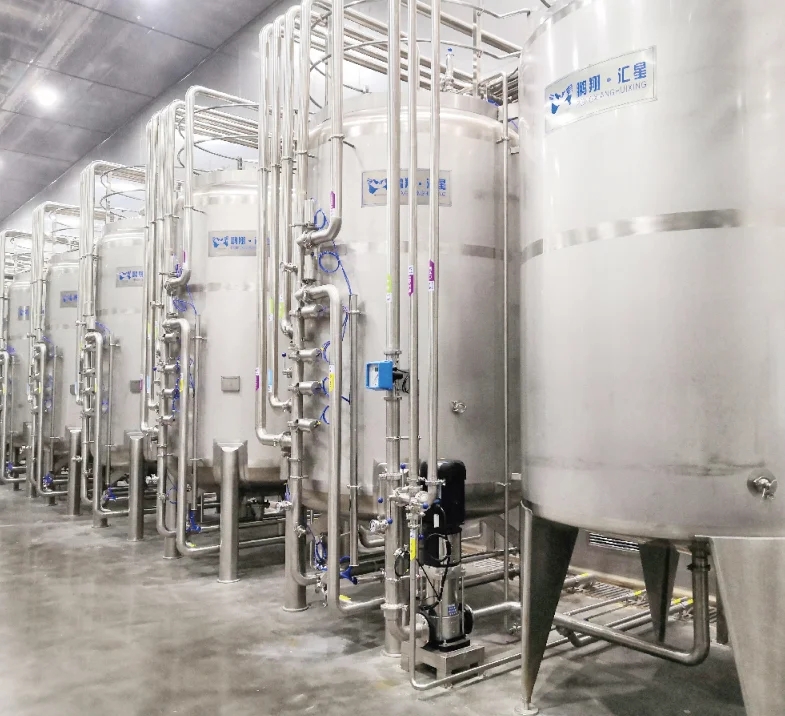
Understanding Multi-media Filters
Multi-media filters are water treatment devices that use multiple layers of media, such as sand, anthracite, gravel, and garnet, to remove suspended solids, turbidity, and particulate matter from water. Unlike conventional single-media filters, which may struggle with varying particle sizes, MMFs provide superior filtration efficiency by leveraging the graded layers of media to trap particles of different sizes at various depths. This results in longer filter runs, reduced maintenance, and higher water clarity.
The operation of a multi-media filter is straightforward. Water enters the filter bed, passes through each layer, and emerges purified at the outlet. The media layers are carefully selected and arranged according to particle size, density, and water quality requirements. Periodic backwashing is performed to remove accumulated solids and maintain optimal performance.
For more technical details and specifications, see the Pengxiang Huixing multi-media filter page.
Municipal Applications of Multi-media Filters
Municipal water supply systems face the challenge of providing safe drinking water to large populations. Multi-media filters play a pivotal role in ensuring consistent water quality and regulatory compliance.
1. Drinking Water Treatment
One of the primary applications of multi-media filters in municipalities is in drinking water treatment plants. MMFs efficiently remove suspended solids, silt, and colloidal particles from raw water sources, including rivers, lakes, and reservoirs. The multi-layer design ensures that both large and microscopic particles are captured, reducing turbidity and improving taste and clarity. Many municipal plants integrate multi-media filters as a pre-treatment step before disinfection, enhancing the effectiveness of downstream processes.
2. Industrial Water Reuse
Municipal authorities are increasingly focusing on sustainability and water reuse. Multi-media filters are critical in treating wastewater for secondary use, such as irrigation, industrial processes, or non-potable applications. By removing suspended solids and organic matter, MMFs help municipalities comply with environmental discharge standards while promoting resource efficiency.
3. Stormwater and Runoff Management
Urban development often leads to increased stormwater runoff, carrying sediments, debris, and pollutants. Multi-media filtration systems can be installed in stormwater treatment facilities to capture these contaminants before water enters natural bodies or municipal treatment plants. This reduces environmental pollution and protects aquatic ecosystems.
Industrial Applications of Multi-media Filters
Industries across sectors, from beverage production to chemical manufacturing, rely on consistent water quality to maintain product integrity and operational efficiency. Multi-media filters are versatile tools that address these needs effectively.
1. Beverage Production
Companies like Pengxiang Huixing specialize in designing and manufacturing water treatment and beverage pre-treatment systems for factories producing bottled water, carbonated drinks, and juices. In beverage production, water is not only a primary ingredient but also a critical factor in product safety and taste. Multi-media filters remove turbidity and particulate matter from raw water, ensuring that subsequent processes, including reverse osmosis, sterilization, and bottling, operate smoothly.
Moreover, these filters are often integrated into automated production lines, such as the bottle blowing and filling machines, to support high-volume operations while maintaining hygiene standards.
2. Industrial Process Water
Many industrial processes, including chemical manufacturing, pharmaceuticals, and food processing, require high-quality water for cooling, cleaning, or ingredient preparation. Multi-media filters help prevent equipment fouling and scaling by removing suspended solids, thereby extending the lifespan of heat exchangers, boilers, and other critical equipment. Pengxiang Huixing provides custom water treatment solutions tailored to the specific requirements of these industrial applications, ensuring operational efficiency and compliance with industrial standards.
3. Pre-treatment for Reverse Osmosis Systems
Reverse osmosis (RO) systems are commonly used in industries requiring ultrapure water. However, RO membranes are highly sensitive to particulate matter. Multi-media filters act as an essential pre-treatment step, reducing the load of suspended solids and protecting membranes from clogging and damage. This not only improves water recovery rates but also reduces maintenance costs and downtime.
4. Cooling Tower and Boiler Feed Water
Industrial cooling towers and boilers require clean water to prevent scaling and microbial growth. Multi-media filters effectively remove suspended solids from feed water, improving heat transfer efficiency and reducing the frequency of chemical treatment. Pengxiang Huixing offers integrated solutions, combining filtration, softening, and sterilization equipment to meet the demanding needs of modern industrial facilities.
Advantages of Multi-media Filters in Municipal and Industrial Settings
The widespread adoption of multi-media filters is due to several compelling advantages:
-
High Filtration Efficiency – Multi-layer media captures particles of varying sizes, producing consistently clear water.
-
Extended Filter Runs – The graded media design allows longer operation between backwashes.
-
Cost-Effectiveness – Reduced maintenance, longer media life, and lower energy consumption make MMFs economically attractive.
-
Scalability – Multi-media filters can be designed for small-scale municipal plants or large industrial facilities.
-
Integration with Automation – Modern MMFs can be integrated into smart water treatment systems and automated production lines, improving operational reliability.
Pengxiang Huixing: Advancing Water Treatment and Beverage Production
Pengxiang Huixing, located in Songgang, Baoan District, Shenzhen, China, has been a leader in water treatment and beverage machinery for over two decades. The company provides a comprehensive range of equipment, including water treatment production lines, on-site cleaning systems, sterilization units, and complete beverage bottling lines. Their solutions cover the entire production chain, from procurement to distribution, ensuring efficiency and quality at every stage.
With ISO9000 quality certification and recognition as a high-tech enterprise in China, Pengxiang Huixing combines innovation with practical experience. Their multi-media filters and integrated systems are exported to countries including the UAE, Oman, Vietnam, the Philippines, and Malaysia, demonstrating their global impact and industry reputation.
By integrating advanced multi-media filtration technology into beverage production and industrial water systems, Pengxiang Huixing enables clients to achieve operational excellence, regulatory compliance, and sustainable water management practices. For more information on their multi-media filter solutions, visit this link.
Conclusion
Multi-media filters are indispensable in both municipal and industrial water treatment projects. Their ability to efficiently remove suspended solids, reduce turbidity, and protect downstream equipment makes them a critical component of modern water management strategies. Companies like Pengxiang Huixing have demonstrated how integrating multi-media filters into smart, automated systems enhances operational efficiency, product quality, and environmental sustainability.
As water demands continue to rise, and industries face stricter regulatory standards, the role of multi-media filtration will only grow in importance. By investing in advanced filtration solutions, municipalities and industries can ensure safe, reliable, and high-quality water for years to come.