


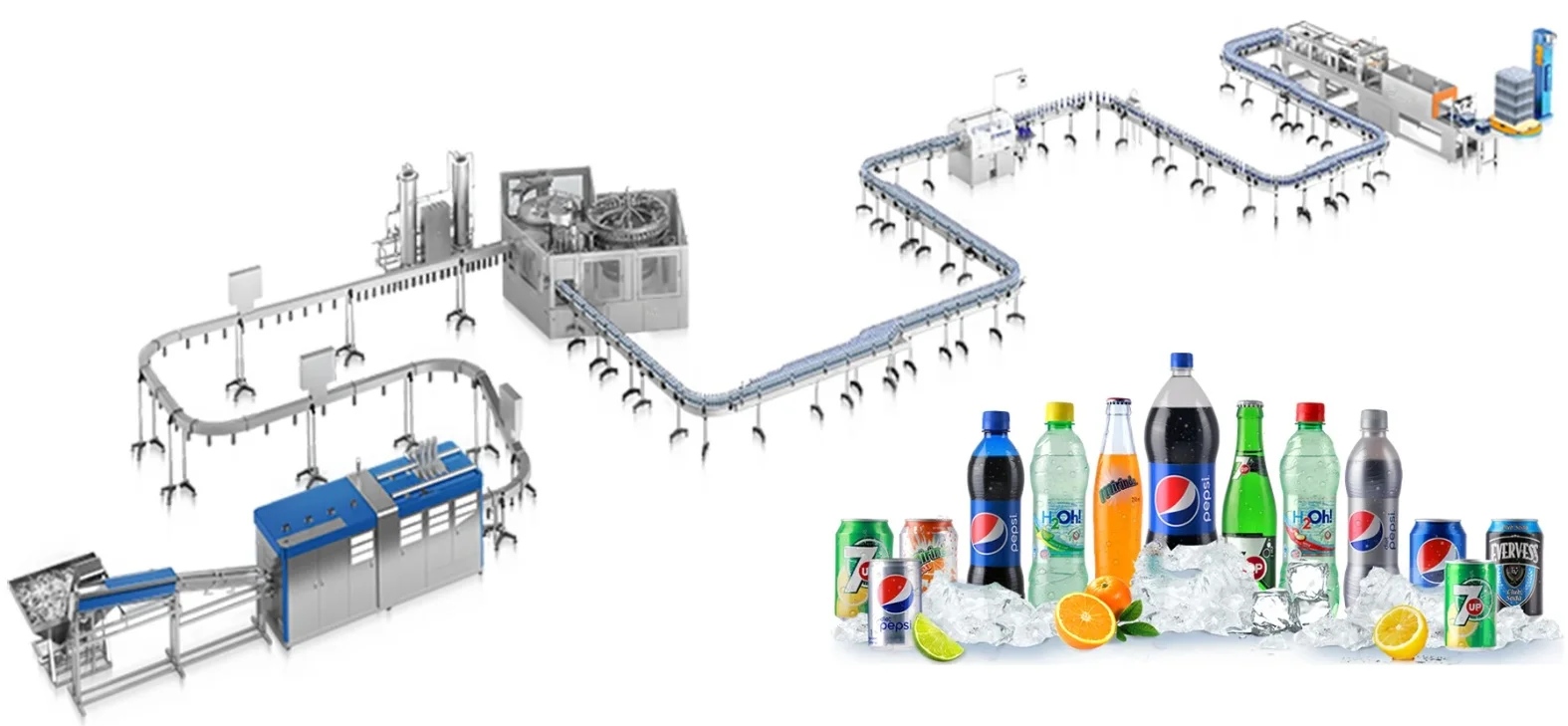
Juice & Tea Hot Filling Line
For fruit juice, pulp drinks, ready-to-drink tea and functional beverages. Adds a full processing section — sugar dissolving, blending, homogenizing and UHT sterilizing — ahead of hot filling and the cooling tunnel.
Five Things That Decide Your Configuration
Most quotation revisions come from one of these five being unclear at the start. Settling them early gives you a proposal you can actually compare.
Water source decides the entire treatment train. High turbidity needs stronger pre-filtration; high hardness needs softening or reverse osmosis; groundwater with iron or manganese needs dedicated media filters. Without a recent analysis, treatment can only be estimated, and estimates are where budgets go wrong.
A line quoted for 500 ml will not automatically run 350 ml and 1.5 L. Tell us every size you intend to produce and the expected split between them, so change parts, star wheels and label sizes are included from the start rather than added later.
Sleeve, BOPP hot-glue and roll-fed labels use completely different machines and consumables. Sleeve gives full-body decoration at higher material cost; BOPP hot-glue runs faster with lower running cost. Choosing after the line is built means replacing a machine.
A 12,000 BPH line running 8 hours produces less than a 6,000 BPH line running 20 hours, at a much higher capital cost. Working backwards from your monthly volume and shift pattern often points to a smaller, better-utilized line.
Voltage, frequency and plug standards vary by country. Confirm the destination early so motors, control cabinets and protection devices are built to the correct standard rather than modified on site.
If you expect to add a second line or a juice line within a few years, the water treatment capacity, utility headers and workshop layout should be planned for it now. Retrofitting a treatment room is far more expensive than oversizing it at the start.
What Your Building Needs to Provide
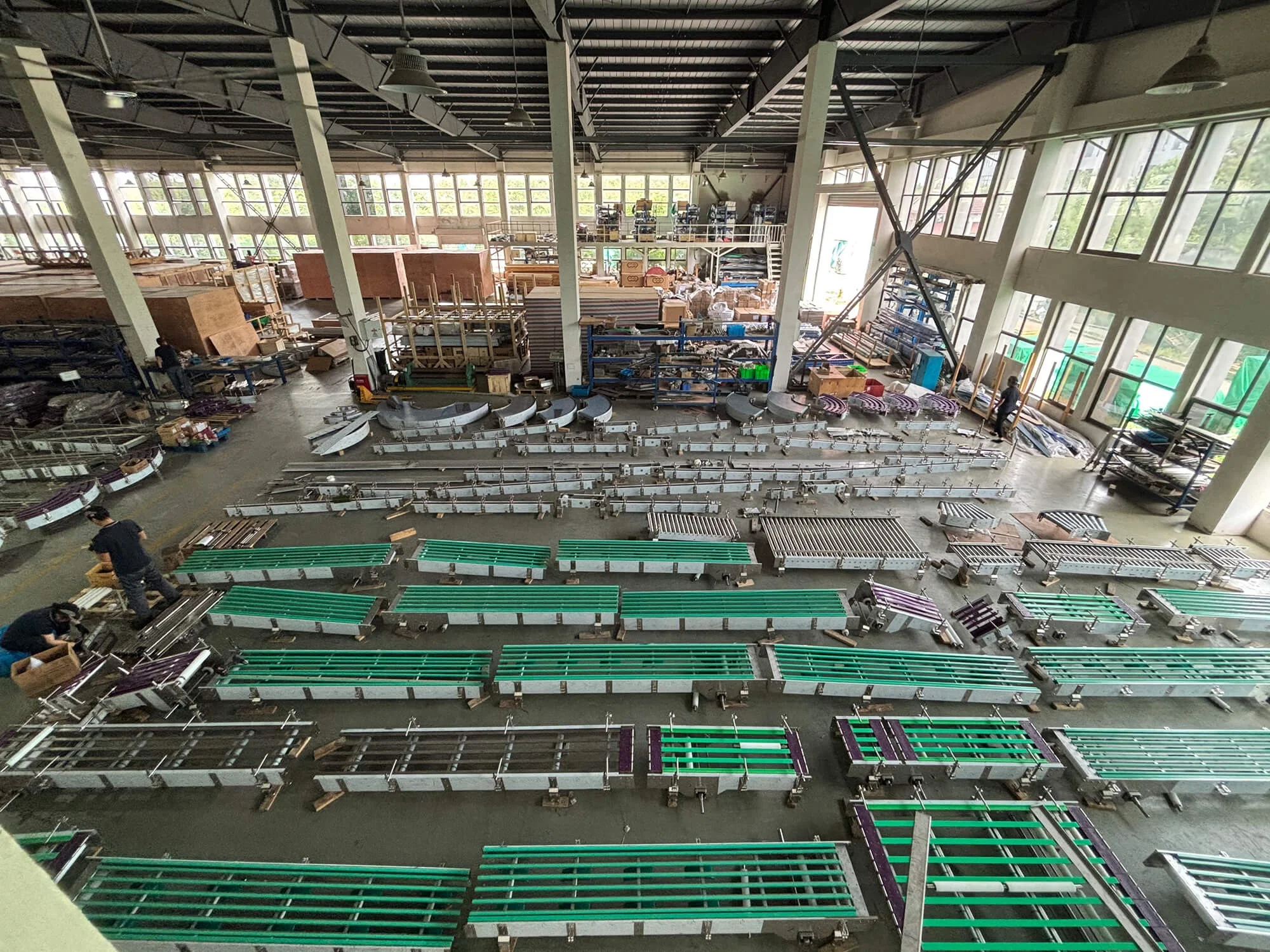
Send us these six items and we can produce a CAD layout with equipment positions, utility routing and product flow.
- Workshop dimensionsLength, width and clear ceiling height, with column positions marked
- Power supplyVoltage, frequency, phases and available capacity in kW
- Compressed airBlow molding needs high-pressure air; low-pressure air runs the pneumatics
- Water supplySource, daily volume available and a recent laboratory analysis
- Steam or hot waterRequired for CIP; boiler capacity if already installed
- Drainage & floorFloor drains, slope and load-bearing capacity of the slab
Juice Pre-treatment Section (Front-end)
Concentrated juice thawing → Dilution → Mixing in blending tank → Filtration → Homogenization → UHT ultra-high temperature sterilization
1.Concentrated juice thawing → Dilution: Concentrated juice is diluted with purified water.
2.Sugar dissolving + sugar liquid filtration (sugar solution preparation).
3.Mixing in blending tank: diluted juice + sugar solution + flavorings / pigments / other additives.
4.Post-blending filtration (removal of suspended solids).
5.Homogenization (20–25 MPa, performed after blending completion).
6.UHT ultra-high temperature instant sterilization (130~135°C, 4~6 s).
Packaging & Filling Section (Back-end)
Bottle Rinsing → Hot Filling → Bottle Inverting → Cooling → Light Inspection
1. Bottle Rinsing (bottle washing by three-in-one unit)
2. Hot Filling (≥90°C) and Capping
3. Bottle Inverting (sterilizing bottle neck and cap by residual heat)
4. Cooling tunnel cooling down to 38±2°C 5. Light Inspection
Questions From Buyers
Specific to this production line. General company questions are answered on the about page.
Ask Our EngineersQ1: What beverage can this hot filling line produce?
Suitable for fruit juice, tea drinks, fruit tea, pulp-containing juice and other high-acid beverages (pH<4.6). It can run clarified juice and juice with fine pulp by changing filling valve design.
Q2: What is the standard hot filling temperature?
Normally 85–92°C. Temperature & holding time are adjusted based on your product formula to achieve commercial sterility for ambient shelf life without preservatives.
Q3: Can we use normal PET bottles?
No. Ordinary water PET bottles will deform or collapse under hot filling. You need heat-set PET bottles (crystallized neck) or glass bottles.
Q4: Why bottles invert after capping?
After capping, bottles invert and keep 15–30s. Hot product sterilizes the inner cap and bottle neck thread, eliminating microbial dead zones.
Q5: What is the shelf life of hot-filled juice/tea?
Normally 6–9 months under ambient storage, subject to formula, packaging and hygiene control.
Q6: Can the line handle multiple bottle sizes?
Yes. It supports multiple bottle volumes, e.g. 250ml, 500ml, 1L, 1.5L. Change parts (star wheel, gripper, guide rails) for size switching
Q7: Is CIP cleaning available?
Yes. The product contact parts (hopper, filling valves, pipeline) support full CIP without disassembly.
Q8: What utilities are required for the hot filling line?
Steam /hot water, cooling water, compressed air, power supply, treated RO water and floor drainage.
Q9: Can this line connect with RO water treatment system?
Yes. We can integrate upstream RO water system, juice pre-treatment (concentrate thawing, mixing, pasteurization) and downstream cooling, labelling, packing & palletizing as a complete turnkey plant.
Q10: What is the difference between hot filling and aseptic filling?
Hot fill has lower investment cost, no strict clean room requirement, but needs heat-resistant bottles. Aseptic cold filling preserves better flavour, longer shelf life, yet higher CAPEX and stricter cleanroom.
Q11: Why bottle deformation / vacuum paneling occurs?
Mainly from non-heat-resistant bottles, improper headspace or uneven cooling. We adopt staged spray cooling to avoid rapid temperature shock.
Q12: What control system do you supply?
PLC + touchscreen, with temperature closed-loop control, product recycle system, automatic alarm for abnormal temperature.
Q13: What is your warranty and after-sales service?
12-month warranty. Remote technical support, online training, spare parts supply. Overseas on-site commissioning & training available upon request.
Q14: What is your line capacity range?
3,000 ~ 18,000 BPH, customized according to your required output
Send Your Requirements
Our engineers will return a line configuration, equipment list and budgetary quotation.
- Type of beverage — clear juice / tea / fruit tea / pulp-containing juice?
- pH value, target Brix, Required filling temperature —
- Target line speed (BPH), Monthly/annual output —
- Bottle material: Heat-set PET / Glass —
- Bottle dimensions & neck size —
- Cap type? Label type? (BOPP / Sleeve / Roll-fed) —
- Need front juice pre-treatment? — concentrate thawing, mixing tank, pasteurizer
- Full CIP for product contact parts? —
- Raw water source (municipal / borehole) —
- Raw water laboratory report available? —
- Steam pressure & capacity, Cooling water temperature & pressure, Compressed air pressure & flow —
- Voltage, frequency, phases? Certification requirement —