


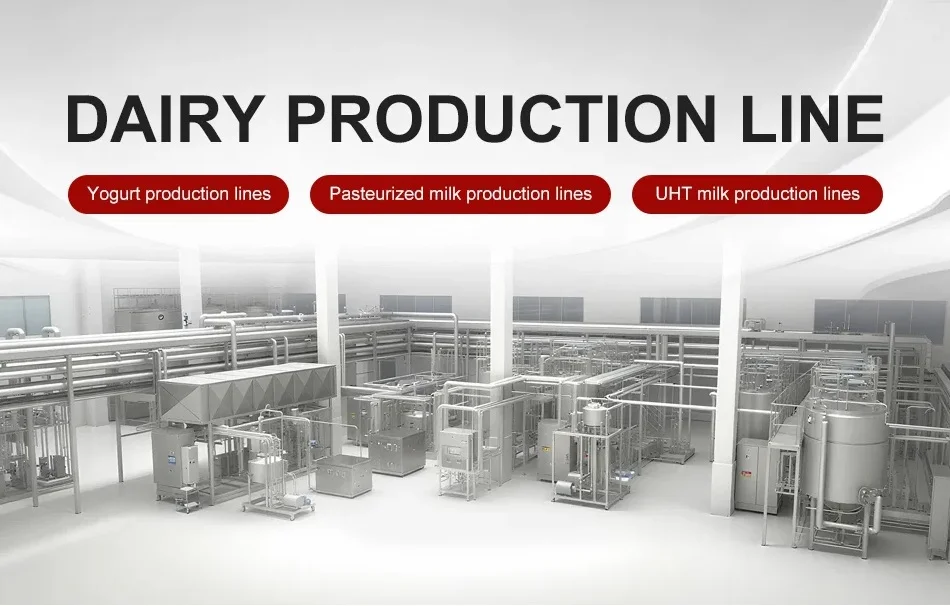
Dairy Production Line
Five Things That Decide Your Configuration
Most quotation revisions come from one of these five being unclear at the start. Settling them early gives you a proposal you can actually compare.
Water source decides the entire treatment train. High turbidity needs stronger pre-filtration; high hardness needs softening or reverse osmosis; groundwater with iron or manganese needs dedicated media filters. Without a recent analysis, treatment can only be estimated, and estimates are where budgets go wrong.
A line quoted for 500 ml will not automatically run 350 ml and 1.5 L. Tell us every size you intend to produce and the expected split between them, so change parts, star wheels and label sizes are included from the start rather than added later.
Sleeve, BOPP hot-glue and roll-fed labels use completely different machines and consumables. Sleeve gives full-body decoration at higher material cost; BOPP hot-glue runs faster with lower running cost. Choosing after the line is built means replacing a machine.
A 12,000 BPH line running 8 hours produces less than a 6,000 BPH line running 20 hours, at a much higher capital cost. Working backwards from your monthly volume and shift pattern often points to a smaller, better-utilized line.
Voltage, frequency and plug standards vary by country. Confirm the destination early so motors, control cabinets and protection devices are built to the correct standard rather than modified on site.
If you expect to add a second line or a juice line within a few years, the water treatment capacity, utility headers and workshop layout should be planned for it now. Retrofitting a treatment room is far more expensive than oversizing it at the start.
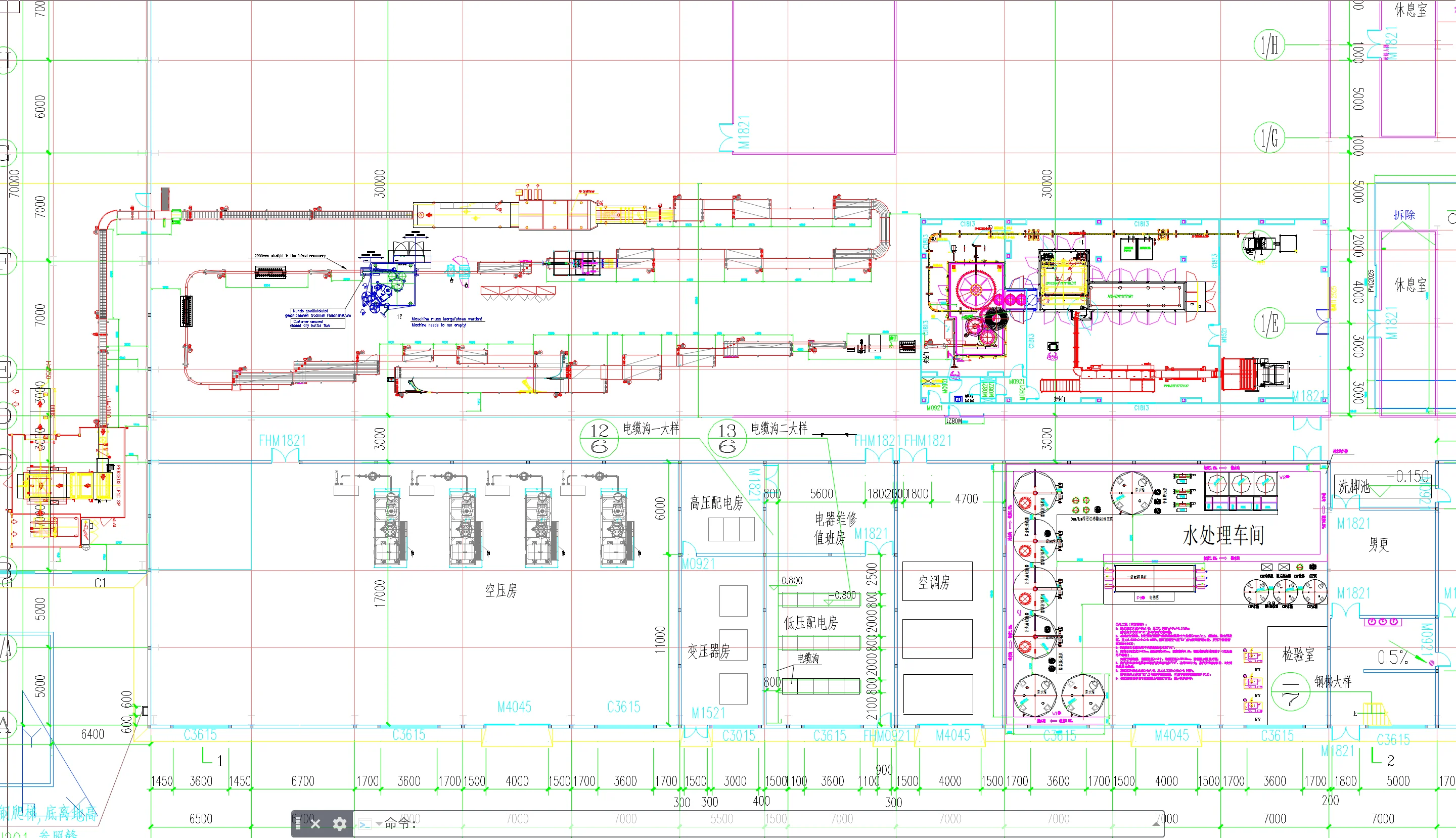
What Your Building Needs to Provide
Send us these six items and we can produce a CAD layout with equipment positions, utility routing and product flow.
- Workshop dimensionsLength, width and clear ceiling height, with column positions marked
- Power supplyVoltage, frequency, phases and available capacity in kW
- Compressed airBlow molding needs high-pressure air; low-pressure air runs the pneumatics
- Water supplySource, daily volume available and a recent laboratory analysis
- Steam or hot waterRequired for CIP; boiler capacity if already installed
- Drainage & floorFloor drains, slope and load-bearing capacity of the slab
Questions From Buyers
Specific to this production line. General company questions are answered on the about page.
Ask Our EngineersQ1: What dairy products can this line produce?
It can handle pasteurized milk, UHT long-life milk, yogurt, cream, condensed milk, fruit dairy beverages and other liquid dairy products.
Q2: What capacity range is available?
Custom capacity from 500 L/H up to 20,000 L/H. We design according to your daily output and working shifts.
Q3: What packaging formats does it support?
Carton, PET bottle, plastic cup. Different fillers for different package types.
Q4: What sterilization options can you provide?
Pasteurizer for fresh dairy (refrigerated shelf life); UHT sterilizer for ambient long shelf-life products.
Q5: Is homogenizer included? What is the typical homogenization pressure?
Homogenizer is optional. Usual working pressure: 150–250 bar for milk, higher for cream
Q6: Does the line support CIP or SIP?
Full CIP is standard. SIP (Steam-In-Place) is available as option for UHT and yogurt process
Q7: What raw milk parameters do you need for design?
Raw milk fat, protein, pH value and full raw milk analysis report
Q8: What is the target shelf life you can achieve?
Pasteurized dairy: 3–14 days under refrigeration. UHT dairy: 6–12 months at room temperature.
Q9: Can we change package size on the same line?
Yes, multi-size compatible. Quick changeover parts are supplied for different volumes.
Q10: What utilities are required on site?
Steam, chilled water, cooling water, compressed air and power supply.
Q11: What auxiliary units can be supplied?
Milk reception tank, raw milk storage tank, batching tank, homogenizer, sterilizer, filler, packaging machine, CIP station.
Q12: Is it a turnkey solution?
Yes, full turnkey service including process design, manufacturing, installation guidance, commissioning and operator training
Q13: Control system & electrical standard
PLC + touch screen control. Electrical system customized to your country’s voltage, frequency and local certification.
Send Your Requirements
Our engineers will return a line configuration, equipment list and budgetary quotation.
- Required hourly capacity (L/H or BPH) —
- Dairy product type — Pasteurized milk / UHT milk / yogurt etc.
- Package type and volume —
- Raw milk specification and target shelf life —
- Sterilization type & homogenization requirement —
- Local voltage & frequency, Workshop size —
- Available on-site utilities (steam, chilled water, compressed air) —
- Destination country for certification & electrical standard —