Get a Quote
Complete Beverage Production Line Solutions
Production Line Solutions

Complete Beverage Production Line Solutions

Four line configurations covering still water, juice and tea, carbonated drinks and full plant engineering — from 2,000 to 36,000 bottles per hour, designed around your product, container and factory.

I know what I'm producing

Pick the beverage type below. Each line page shows the full process, equipment list and how the configuration changes with output.

Browse by beverage
I know my target output

Compare all four lines side by side on capacity, container, process and typical footprint before choosing.

Compare by capacity
By Beverage Type

Four Complete Lines

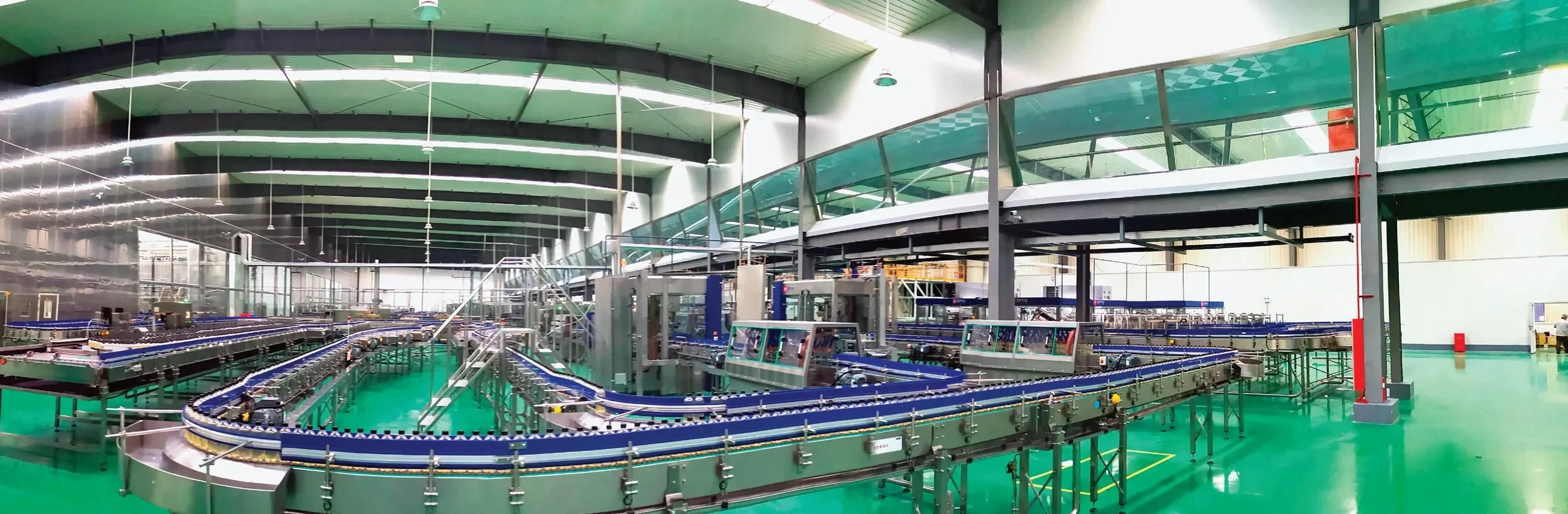
Every line is engineered, assembled and trial-run as a connected system in our Shenzhen factory before shipment.

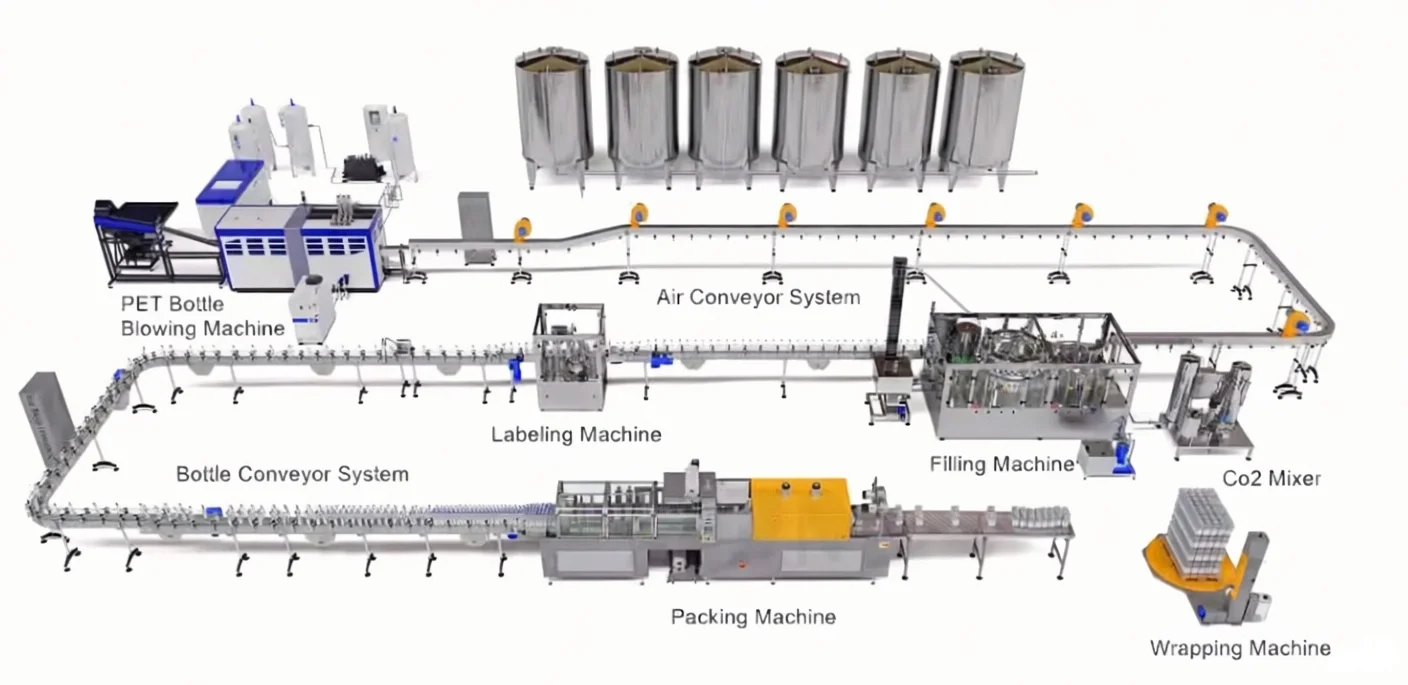
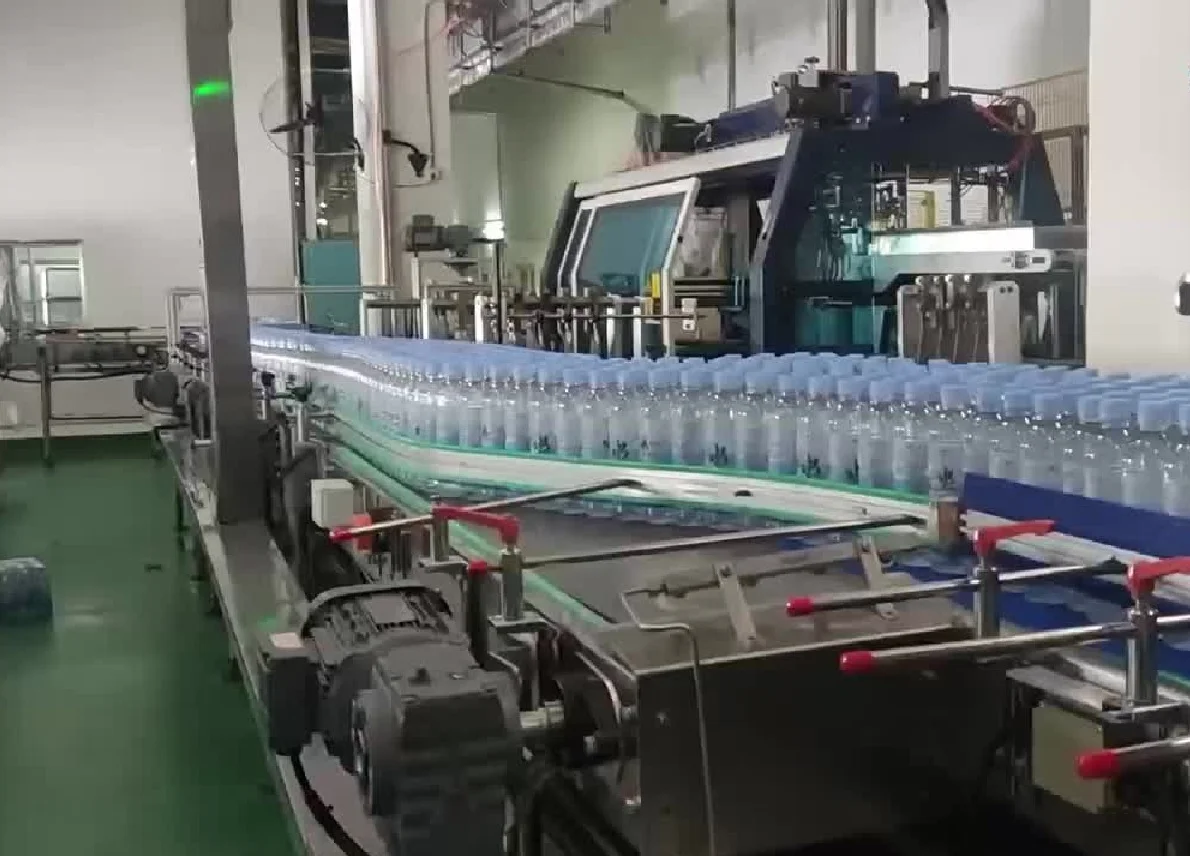
Bottled Water Production Line

Bottled Water Production Line

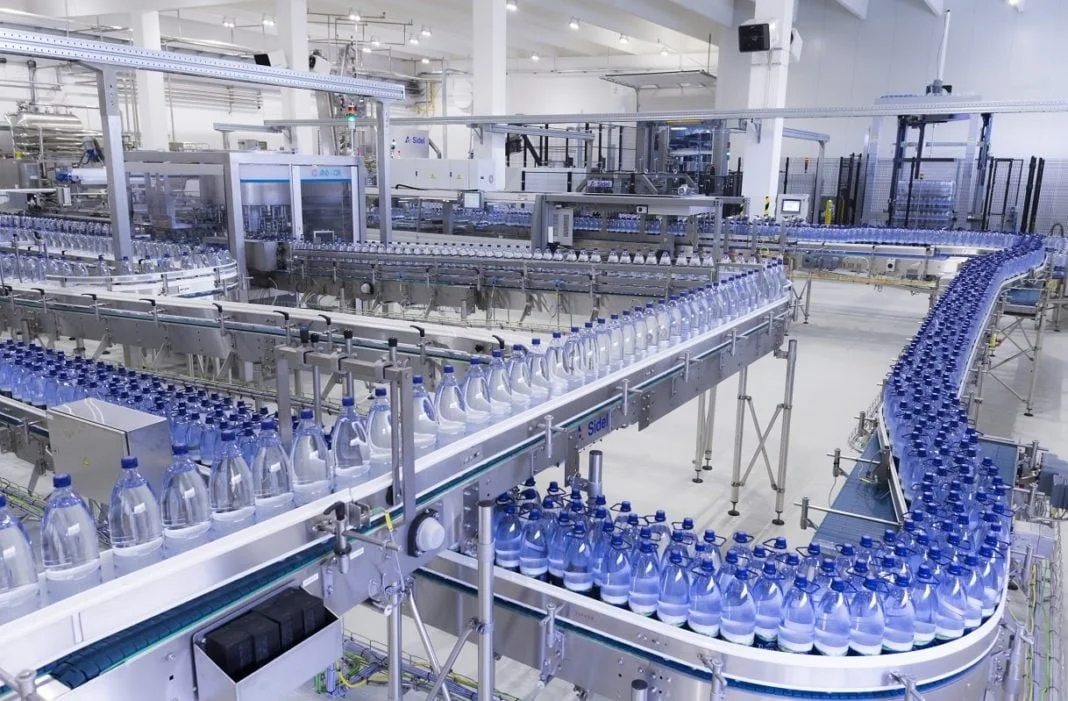
A complete PET water bottling plant — raw-water treatment, bottle blowing, rinsing–filling–capping, labeling, packing and palletizing, engineered and factory-tested as one connected line.

2,000–36,000 BPHPET 200 ml – 2 LStill water
  • ✓RO or ultrafiltration treatment
  • ✓PET blow molding or combi-block
  • ✓3-in-1 rinse · fill · cap
  • ✓Sleeve or BOPP labeling
  • ✓PE film shrink packing
  • ✓Gantry or robotic palletizing
Juice & Tea Hot Filling Line

Juice & Tea Hot Filling Line

For fruit juice, pulp drinks, ready-to-drink tea and functional beverages. Adds a full processing section — sugar dissolving, blending, homogenizing and UHT sterilizing — ahead of hot filling and the cooling tunnel.

5,000–36,000 BPHPET / glassHot fill
  • ✓Sugar dissolving system
  • ✓Pulp blending system
  • ✓UHT sterilizer / pasteurizer
  • ✓Hot filling monoblock
  • ✓Bottle inverting & cooling tunnel
  • ✓CIP system
Carbonated Drink (CSD) Line

Carbonated Drink (CSD) Line

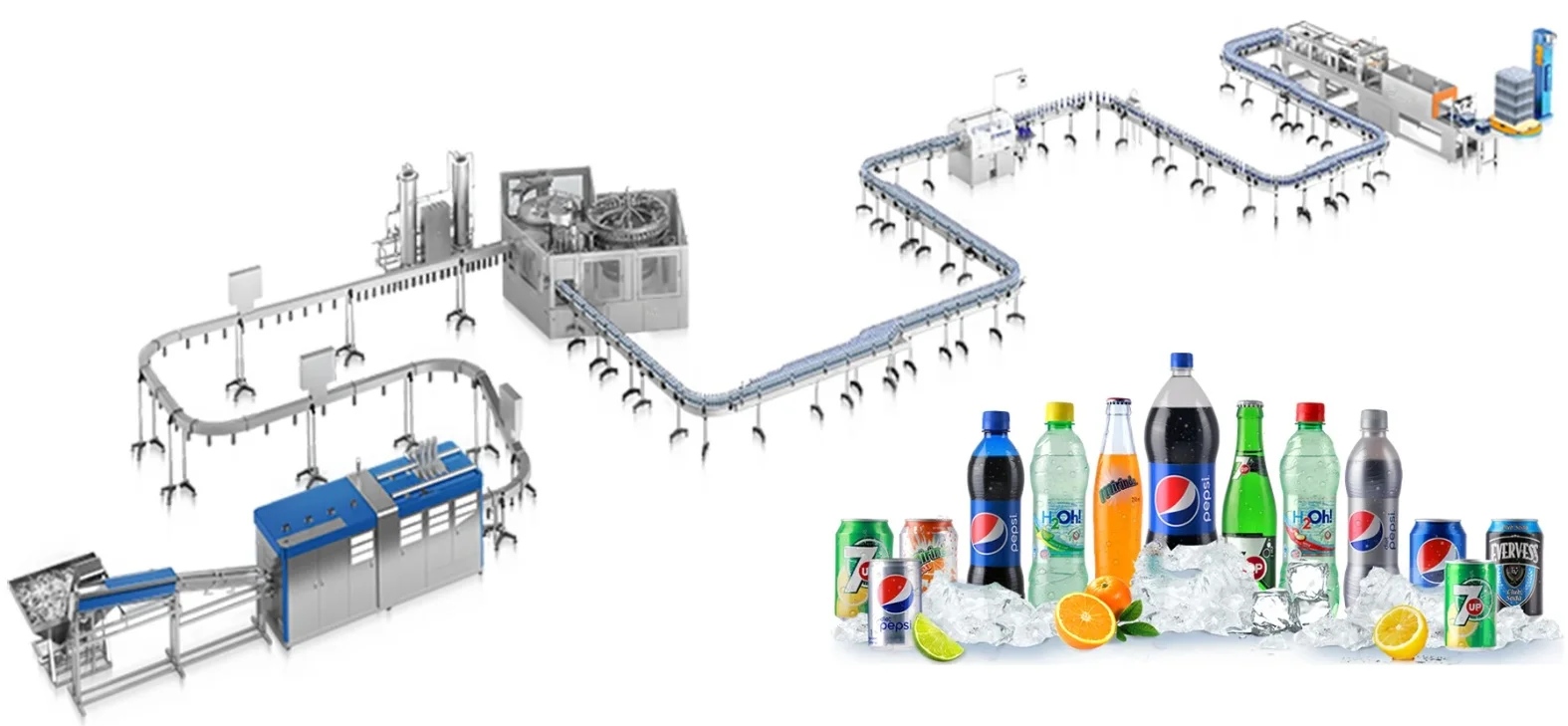
Our CSD line adopts advanced isobaric filling technology to keep stable CO₂ volume, low foaming and accurate filling level. It supports full CIP, multi bottle sizes, PLC intelligent control and full turnkey integration, customized for your local electrical standard.

4,000–36,000 BPHPET / GLASS / CANIsobaric filling
  • ✓Syrup preparation
  • ✓Electronic flowmeter mixer
  • ✓Carbonation & chilling
  • ✓Isobaric filling monoblock
  • ✓Warming tunnel
  • ✓Packing & palletizing
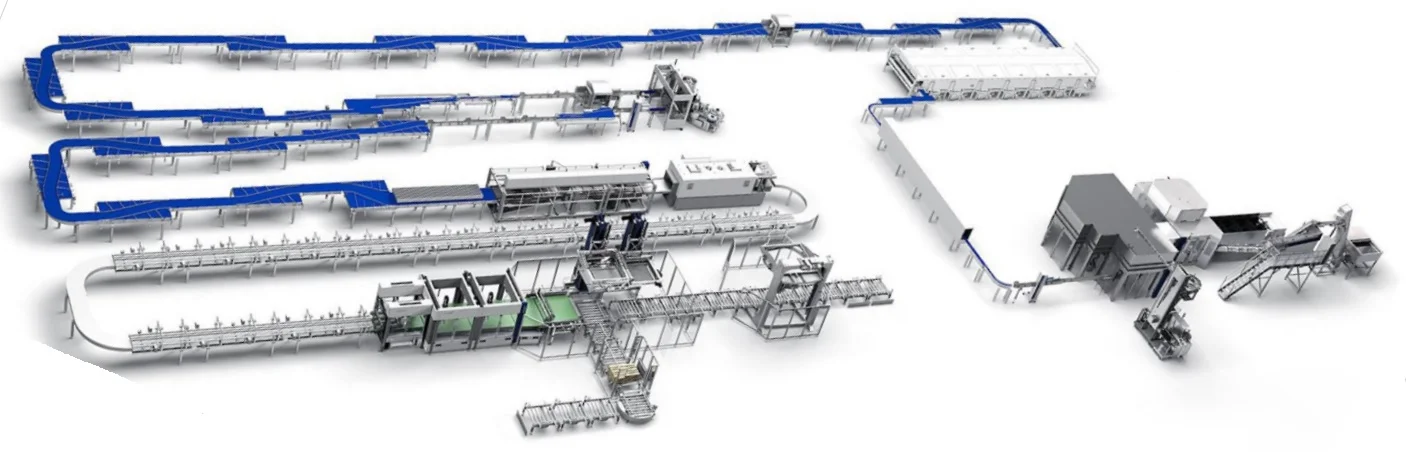
Integrated Turnkey Line

Integrated Turnkey Line

For greenfield plants and multi-product factories. Beyond equipment supply, this covers engineering consulting, process design, workshop layout, utility planning, auxiliary systems, installation and operator training as one project.

Multi-productCAD / 3D layoutPlant engineering
  • ✓Process & equipment configuration
  • ✓Workshop layout drawings
  • ✓Utility & auxiliary planning
  • ✓Multi-line integration
  • ✓Installation & commissioning
  • ✓Operator training
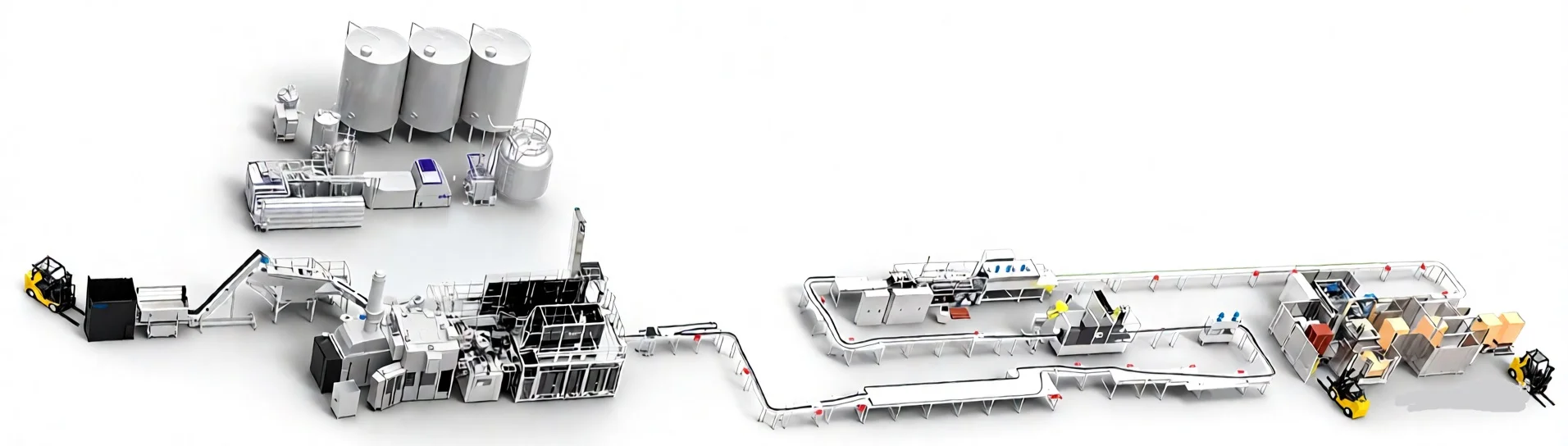
Dairy Production Line

Dairy Production Line

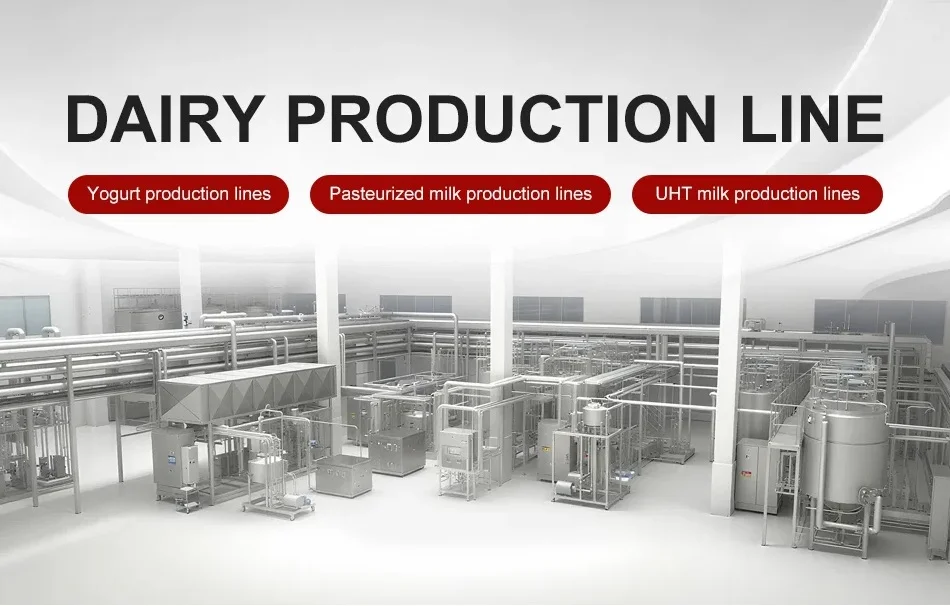
5,000–36,000 BPHPETUHT sterilization / Pasteurization
  • ✓Raw milk receiving tank
  • ✓Milk filter
  • ✓Milk pre‑heater
  • ✓Centrifugal separator /cream separator
  • ✓Homogenizer
  • ✓Pasteurizer
  • ✓UHT sterilizer (Ultra‑High‑Temperature sterilizer)
  • ✓Vacuum deaerator
  • ✓Aseptic storage tank
  • ✓Aseptic filler
  • ✓Bottle /carton rinser
  • ✓Capper /sealer
  • ✓Date coding machine
  • ✓Labeling machine
  • ✓Case packer /carton packer
  • ✓Palletizer
Side by Side

Comparing the Four Lines

The main differences are in the processing section and the filling principle. Everything downstream of the filler is broadly common.

Output based on 500 ml PET bottles. Final configuration follows technical review.
Bottled Water Juice & Tea Carbonated (CSD) Turnkey
Output range2,000–36,000 BPH5,000–36,000 BPH4,000–36,000 BPHBy project
ContainerPET 200 ml – 2 LPET / glassPET / glass / canMultiple formats
Processing sectionWater treatment onlySugar dissolving, blending, UHT sterilizingSyrup preparation, carbonation mixingConfigured per product
Filling principleGravity or micro-pressureHot fillingIsobaric, counter-pressurePer line
Post-fill treatmentNoneInverting + cooling tunnelWarming tunnelPer line
CIP requirementBasicFull CIP essentialFull CIP essentialCentral CIP
Relative complexityLowestHighestHighProject-dependent
View → View → View → View →
Every Project

The Same Five Stages, Whichever Line You Choose

A fixed workflow so you know what happens next at every point of the project.

Service & Support
Requirement reviewProduct, container, output, water report and plant conditions.
Line proposalEquipment list, CAD layout and budgetary quotation.
ManufacturingProduction, assembly and in-process inspection.
Factory testingConnected trial run and buyer acceptance.
Start-up supportInstallation, commissioning and operator training.
Choosing a Line

Common Questions

Line-specific questions are answered on each solution page.

Ask Our Engineers
Can one line produce more than one beverage?

Some combinations work, others do not. Water and juice can share a line if the filler is specified for hot filling and a full CIP system is installed. Carbonated drinks need isobaric valves and counter-pressure filling, which a standard water filler cannot do. Tell us every product you intend to make at the proposal stage, because retrofitting is far more expensive than specifying it up front.

How do I decide between output levels?

Work backwards from monthly sales volume and your realistic shift pattern rather than from a target BPH figure. A 12,000 BPH line running eight hours produces less than a 6,000 BPH line running twenty hours, at much higher capital cost. Line utilisation usually matters more than headline speed.

Do you supply single machines as well as complete lines?

Yes. Individual machines can be supplied for plant expansion or to replace existing equipment, provided the interface conditions with your current line are confirmed. Browse the equipment catalog for the full range.

What is included in a line proposal?

An equipment list with capacities, a process description, a CAD workshop layout, utility requirements and a budgetary quotation. Producing it requires your product, container, output, plant dimensions and a raw-water analysis.

Can the line be expanded later?

Yes, if planned for at the start. Water treatment capacity, utility headers and workshop layout should be sized with expansion in mind, since retrofitting a treatment room or re-routing utilities after production begins is significantly more expensive.

Not Sure Which Line You Need?

Tell us the beverage, container and target output. Our engineers will recommend a configuration and return a budgetary quotation.

Request a Proposal WhatsApp an Engineer
YouTube