


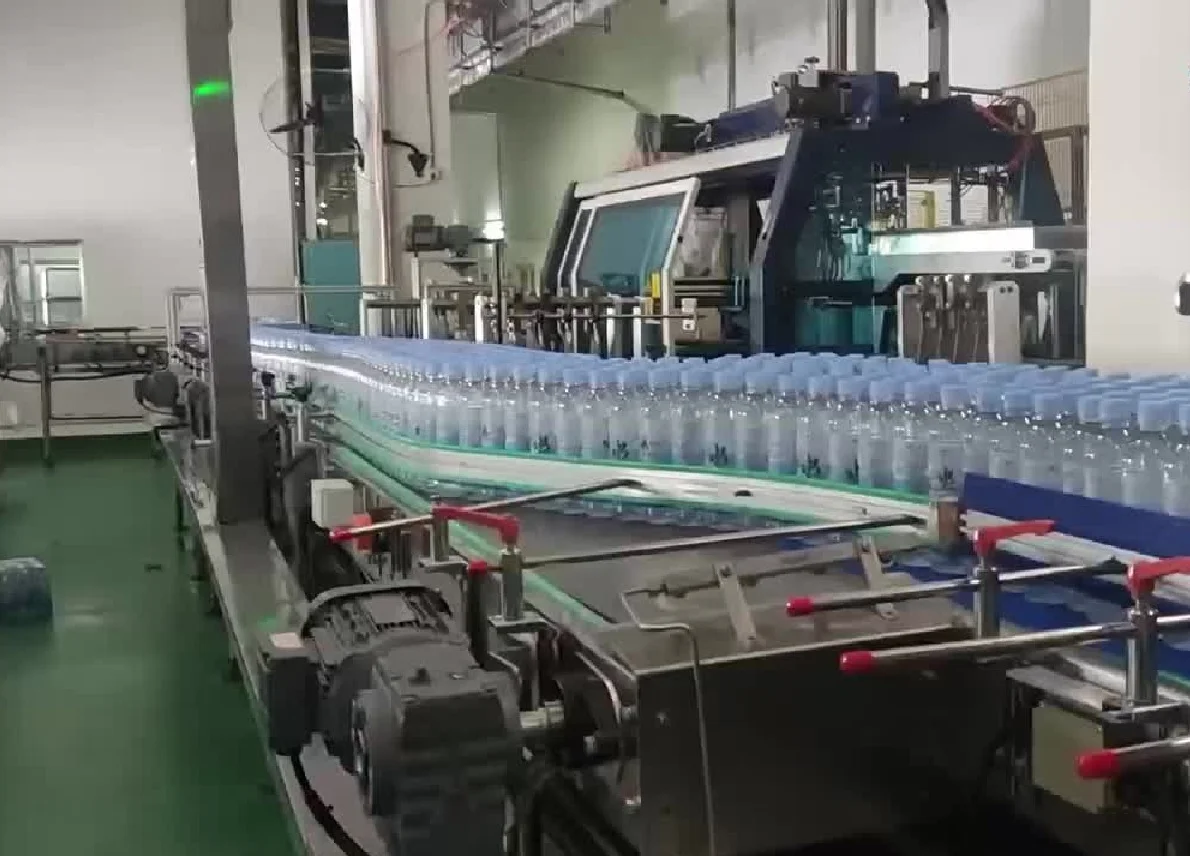
Bottled Water Production Line
A complete PET water bottling plant — raw-water treatment, bottle blowing, rinsing–filling–capping, labeling, packing and palletizing, engineered and factory-tested as one connected line.
How Raw Water Becomes a Palletized Pack
Eight process stages. Each one sets a constraint on the next, which is why the line is designed as a system rather than a set of separate machines.
What Changes as Output Goes Up
The process stays the same at every speed. What changes is how the machines are combined, and where automation replaces manual handling.
| Stage | 2,000–6,000 BPH | 6,000–12,000 BPH | 12,000–24,000 BPH | 24,000–36,000 BPH |
|---|---|---|---|---|
| Bottle forming | Separate blow molder | Separate blow molder | Blow-fill-cap combi-block | High-speed combi-block |
| Filling | 3-in-1 monoblock | 3-in-1 monoblock | Integrated in combi-block | Integrated in combi-block |
| Labeling | Linear hot-glue | Sleeve or rotary BOPP | Rotary roll-fed BOPP | Rotary roll-fed, dual head |
| Inspection | Optional | Optional | Recommended | Recommended |
| Secondary packing | Semi-automatic shrink | Automatic PE shrink | Automatic PE shrink | Shrink + carton option |
| Palletizing | Manual | Columnar palletizer | Gantry palletizer | Robotic palletizer |
| Typical footprint | ~350 m² | ~600 m² | ~900 m² | ~1,300 m² |
| Line operators | 6–8 | 5–7 | 4–6 | 3–5 |
⚠ Footprint and operator numbers are engineering estimates; have the client's technical department check them against the actual project before publishing.
Every Machine, Built and Tested In-House
Open any category for models, capacities and technical specifications.
Multi-media and activated carbon filtration, precision filtration, reverse osmosis or ultrafiltration, UV and ozone disinfection, treated-water storage and CIP.
13 machines Blow Molding MachineAutomatic PET bottle forming from 2,000 to 18,000 BPH, and blow-fill-cap combi-blocks from 12,000 to 36,000 BPH for bottles 200 ml to 20 L.
2 machines Water Filling MachinePET rinsing–filling–capping monoblock using gravity or micro-pressure filling, from 2,000 to 30,000 bottles per hour.
1 machine Labeling MachineSleeve labelers to 450 BPM, BOPP hot-glue and rotary roll-fed labelers to 600 BPM, plus linear single-side units for lower speeds.
6 machines Conveyor SystemAir conveying for empty bottles, full-bottle chain transfer, pack conveying and drying units, controlled by PLC with buffer management.
6 machines Packing MachinePE film shrink wrapping and carton packing, configured for your pack pattern, film width and downstream palletizing method.
2 machines Palletizing MachineGantry palletizers at roughly 30% lower cost than robotic units, plus columnar and robot palletizers for higher-speed lines.
3 machinesFive Things That Decide Your Configuration
Most quotation revisions come from one of these five being unclear at the start. Settling them early gives you a proposal you can actually compare.
Water source decides the entire treatment train. High turbidity needs stronger pre-filtration; high hardness needs softening or reverse osmosis; groundwater with iron or manganese needs dedicated media filters. Without a recent analysis, treatment can only be estimated, and estimates are where budgets go wrong.
A line quoted for 500 ml will not automatically run 350 ml and 1.5 L. Tell us every size you intend to produce and the expected split between them, so change parts, star wheels and label sizes are included from the start rather than added later.
Sleeve, BOPP hot-glue and roll-fed labels use completely different machines and consumables. Sleeve gives full-body decoration at higher material cost; BOPP hot-glue runs faster with lower running cost. Choosing after the line is built means replacing a machine.
A 12,000 BPH line running 8 hours produces less than a 6,000 BPH line running 20 hours, at a much higher capital cost. Working backwards from your monthly volume and shift pattern often points to a smaller, better-utilized line.
Voltage, frequency and plug standards vary by country. Confirm the destination early so motors, control cabinets and protection devices are built to the correct standard rather than modified on site.
If you expect to add a second line or a juice line within a few years, the water treatment capacity, utility headers and workshop layout should be planned for it now. Retrofitting a treatment room is far more expensive than oversizing it at the start.
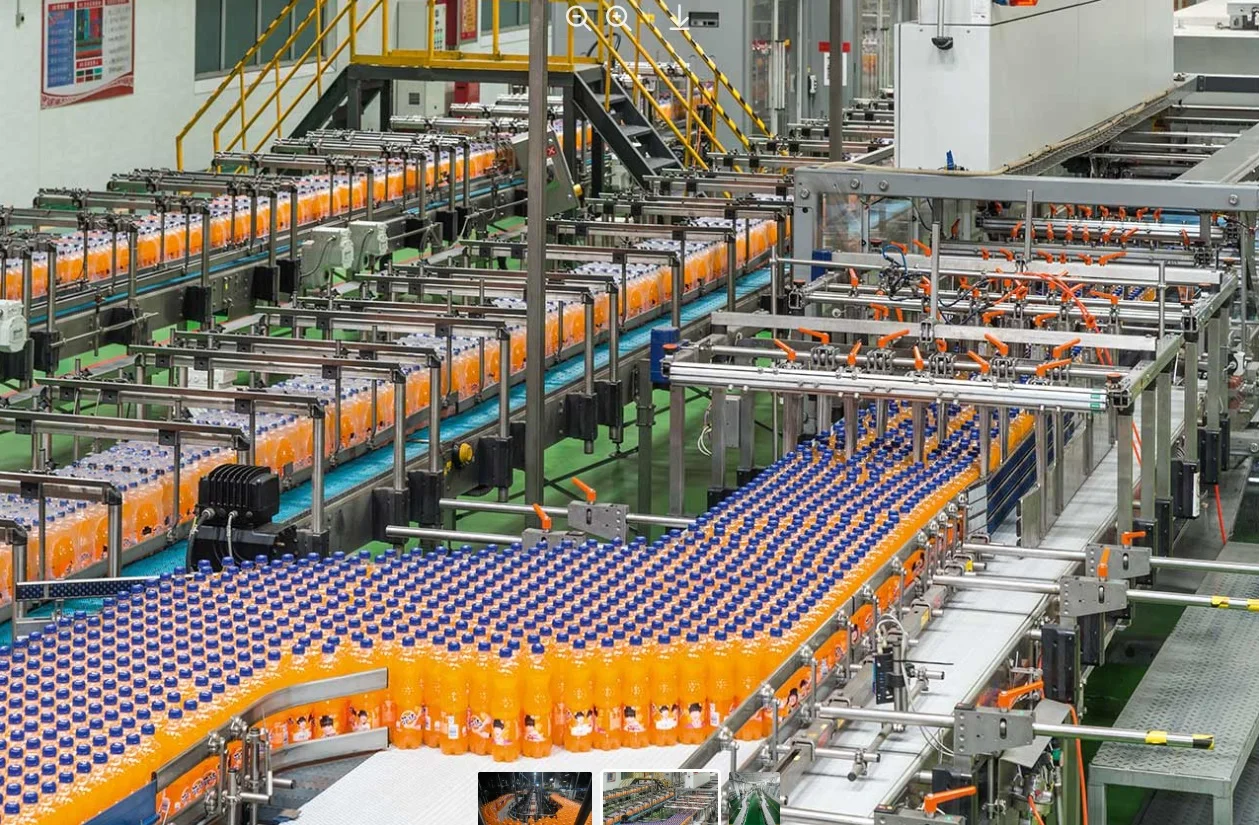
What Your Building Needs to Provide
Send us these six items and we can produce a CAD layout with equipment positions, utility routing and product flow.
- Workshop dimensionsLength, width and clear ceiling height, with column positions marked
- Power supplyVoltage, frequency, phases and available capacity in kW
- Compressed airBlow molding needs high-pressure air; low-pressure air runs the pneumatics
- Water supplySource, daily volume available and a recent laboratory analysis
- Steam or hot waterRequired for CIP; boiler capacity if already installed
- Drainage & floorFloor drains, slope and load-bearing capacity of the slab
Bottled water filling line content to be completed.
A Reference Project at Production Scale
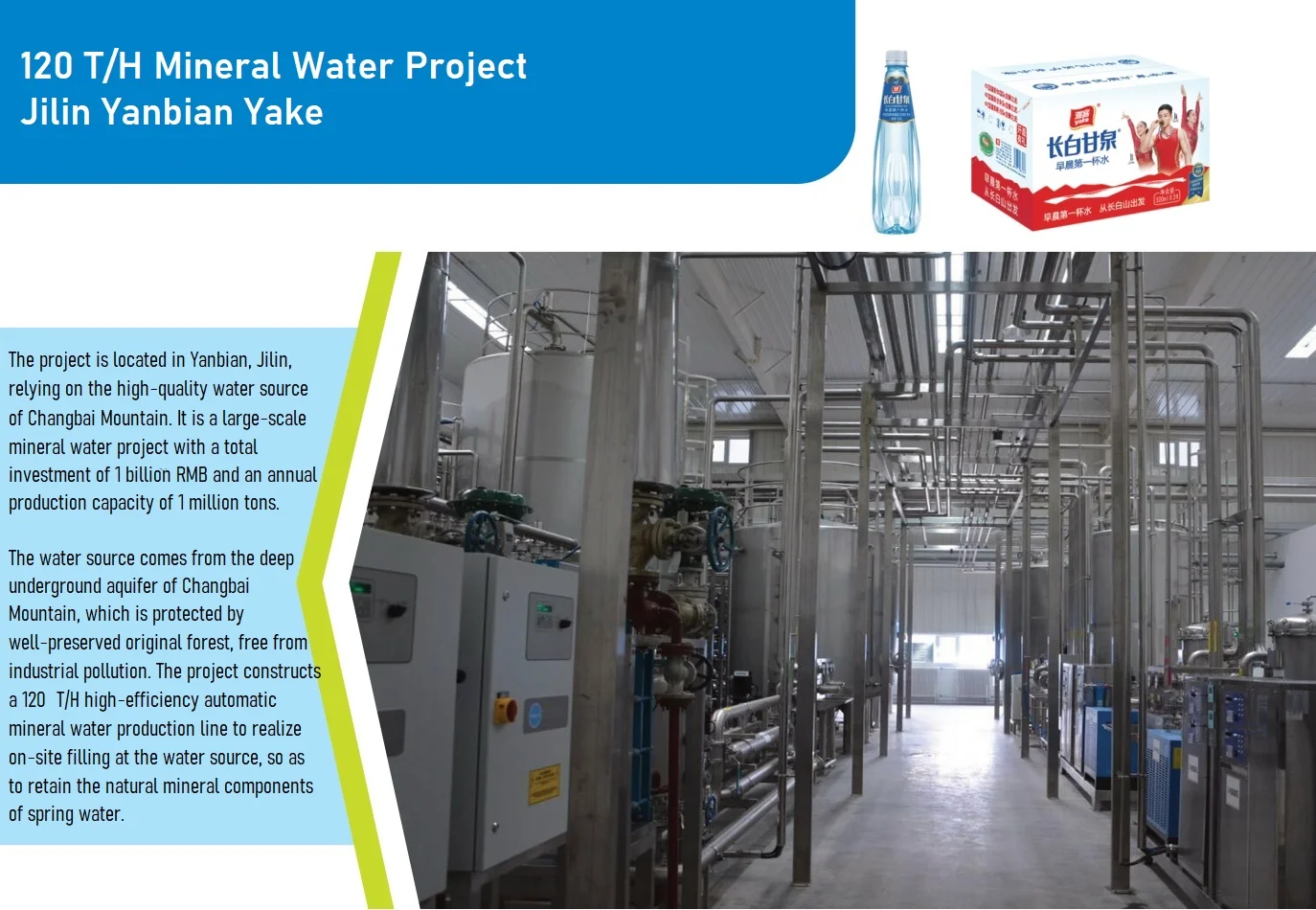
Yanbian Yake Changbai Mountain Mineral Spring
Antu County, Jilin. A 1-billion-RMB plant with 1 million tonnes annual capacity, in China's mineral water heartland.
Read the full project →
Questions From Buyers
Specific to this production line. General company questions are answered on the about page.
Ask Our EngineersDo I need reverse osmosis, or is ultrafiltration enough?
It depends on your water source and the product you are selling. Reverse osmosis removes dissolved salts and is used for purified water. Ultrafiltration removes suspended solids, colloids and microorganisms but keeps dissolved minerals, which is what natural mineral water requires. Your water analysis and product standard decide it, not the budget.
Should I buy a combi-block or separate blow molder and filler?
Combi-blocks remove the air conveyor between blowing and filling, saving floor space and reducing contamination risk, and they become the better choice at around 12,000 BPH and above. Below that, separate machines cost less and allow the blow molder to also feed other lines or supply bottles for sale.
How long does a complete water line take to deliver?
Typical manufacturing time runs from confirmation of the technical agreement through assembly to factory acceptance testing, followed by sea freight to your port and on-site installation. Exact lead time depends on line size and configuration and is stated in the quotation.
Can the line run both purified and mineral water?
Yes, if the treatment section is designed for it. This normally means parallel treatment trains or a bypass around the RO stage, so both product types can be produced without rebuilding the water room. Tell us both products at the proposal stage.
What is included in installation support?
Installation guidance, commissioning assistance, operator training and remote troubleshooting. The scope of on-site engineer attendance, duration and cost responsibility is defined in the project agreement.
Send Your Requirements
Our engineers will return a line configuration, equipment list and budgetary quotation.
- Water source — municipal, borehole or spring, with analysis if available
- Bottle sizes — every size you intend to produce
- Target output — BPH and daily operating hours
- Label type — sleeve, BOPP or roll-fed
- Workshop — dimensions, power supply and destination country