

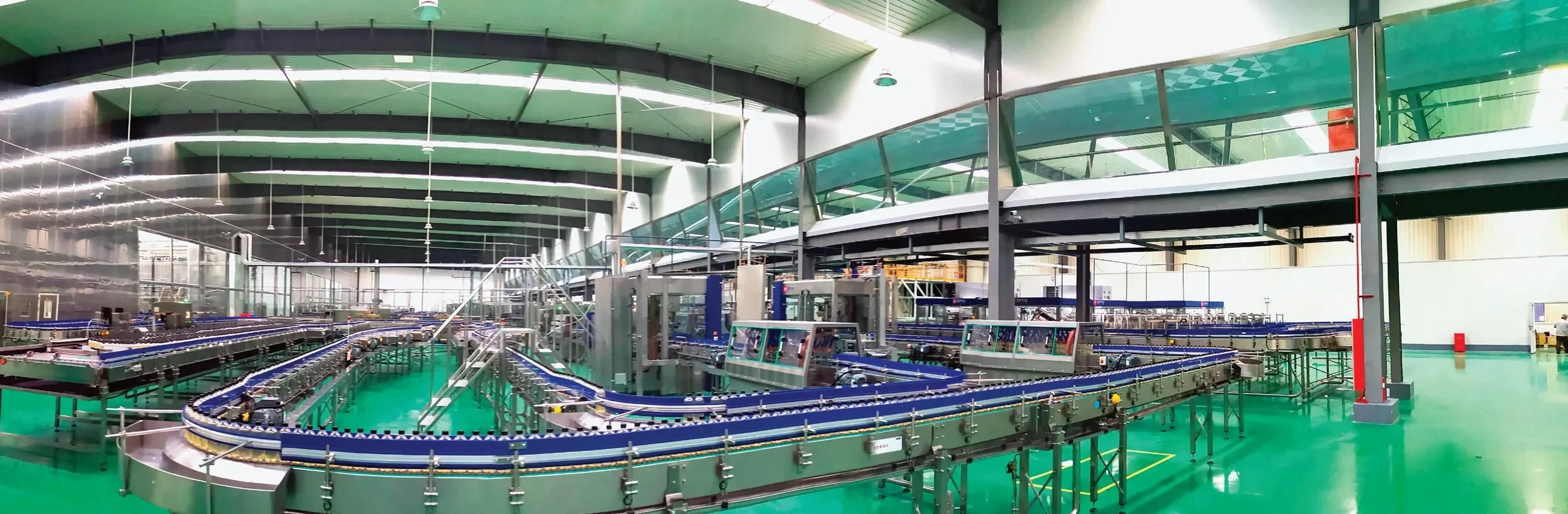
Carbonated Drink (CSD) Line
Our CSD line adopts advanced isobaric filling technology to keep stable CO₂ volume, low foaming and accurate filling level. It supports full CIP, multi bottle sizes, PLC intelligent control and full turnkey integration, customized for your local electrical standard.
Five Things That Decide Your Configuration
Most quotation revisions come from one of these five being unclear at the start. Settling them early gives you a proposal you can actually compare.
Water source decides the entire treatment train. High turbidity needs stronger pre-filtration; high hardness needs softening or reverse osmosis; groundwater with iron or manganese needs dedicated media filters. Without a recent analysis, treatment can only be estimated, and estimates are where budgets go wrong.
A line quoted for 500 ml will not automatically run 350 ml and 1.5 L. Tell us every size you intend to produce and the expected split between them, so change parts, star wheels and label sizes are included from the start rather than added later.
Sleeve, BOPP hot-glue and roll-fed labels use completely different machines and consumables. Sleeve gives full-body decoration at higher material cost; BOPP hot-glue runs faster with lower running cost. Choosing after the line is built means replacing a machine.
A 12,000 BPH line running 8 hours produces less than a 6,000 BPH line running 20 hours, at a much higher capital cost. Working backwards from your monthly volume and shift pattern often points to a smaller, better-utilized line.
Voltage, frequency and plug standards vary by country. Confirm the destination early so motors, control cabinets and protection devices are built to the correct standard rather than modified on site.
If you expect to add a second line or a juice line within a few years, the water treatment capacity, utility headers and workshop layout should be planned for it now. Retrofitting a treatment room is far more expensive than oversizing it at the start.
What Your Building Needs to Provide
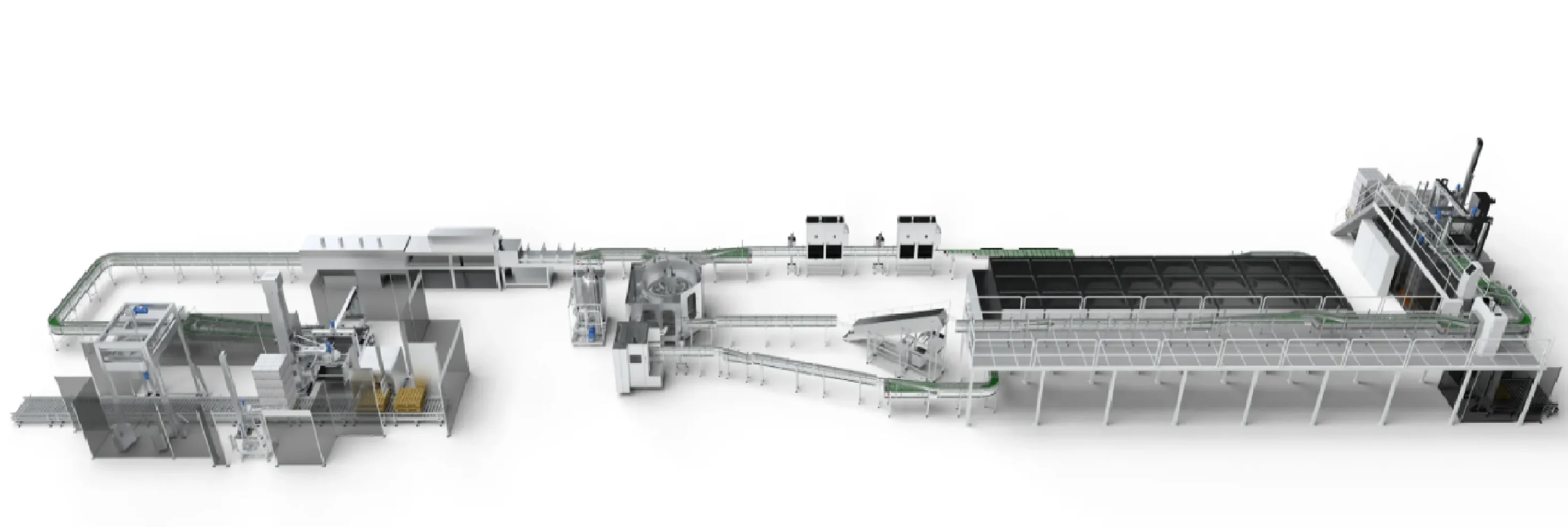
Send us these six items and we can produce a CAD layout with equipment positions, utility routing and product flow.
- Workshop dimensionsLength, width and clear ceiling height, with column positions marked
- Power supplyVoltage, frequency, phases and available capacity in kW
- Compressed airBlow molding needs high-pressure air; low-pressure air runs the pneumatics
- Water supplySource, daily volume available and a recent laboratory analysis
- Steam or hot waterRequired for CIP; boiler capacity if already installed
- Drainage & floorFloor drains, slope and load-bearing capacity of the slab
Key Advantages of Carbonated Soft Drink (CSD) Line
- Isobaric filling system
Pre-pressurization with CO₂ before filling, minimize foaming and CO₂ loss. Stable gas content & consistent fill level, low product waste.
- Precise carbonation & syrup mixing unit
Accurate control of Brix and CO₂ volume. Product recipe saved in HMI for quick formula switch.
- Sanitary design with full CIP
Product contact parts SUS304 / SUS316 stainless steel, no dead corners. Full CIP without machine disassembly, comply with food hygiene requirements.
- Flexible for multiple bottle sizes
Works for PET & glass bottles from 250ml to 2L. Quick changeover by swapping star wheels & guides, less downtime.
- Reliable capping against micro-leakage
Constant-torque capper with neck air blow-off to remove foam residue, prevent slow CO₂ leakage after packaging.
- PLC automatic control
SIEMENS / Schneider electric components, touchscreen HMI. Real-time monitoring for pressure, flow & CO₂; auto alarm & stop for faults / missing bottles.
- Modular turnkey integration
Can connect upstream RO water treatment, bottle air conveyor, downstream labelling, coding, film wrapping, case packing and palletizing with interlock control.
- High uptime & easy maintenance
World-class pneumatic & electric parts, common spare parts, low failure rate and convenient overseas spare support.
- Custom electrical standard
Voltage, frequency & protection devices built to destination country requirement, no on-site modification.
- Optional bottle warmer tunnel
Eliminate condensation on cold bottles for better label adhesion.
Questions From Buyers
Specific to this production line. General company questions are answered on the about page.
Ask Our EngineersQ1: What products can this CSD line produce?
It is suitable for cola, lemon soda, sparkling water and other carbonated soft drinks. It handles PET bottles, glass bottles
Q2: What is the filling technology adopted?
Adopt isobaric counter-pressure filling technology. It ensures stable CO₂ retention, low foaming and precise filling level.
Q3: Does the line support CIP cleaning?
Yes, full CIP system is standard. No need to disassemble pipelines and tanks during cleaning, to meet food hygiene requirements.
Q4: How to control Brix and gas volume?
Equipped with electronic flowmeter mixer. It monitors and controls Brix and CO₂ gas volume online continuously.
Q5: Can it run different bottle sizes?
Yes, multi bottle sizes compatible. Quick changeover between different bottle specifications
Q6: What about the control system?
PLC intelligent control with touch screen. Real-time display of running parameters, alarm for faults
Q7: Is the electrical system customizable?
Yes. We customize electrical components and wiring to match your local electrical standard (voltage, frequency).
Q8: Is it a turnkey project?
Yes, full turnkey integration. Our scope includes process design, equipment manufacturing, installation guidance, commissioning and worker training.
Q9: What about drainage of the CIP system?
The pipeline layout is designed with independent drainage. Drainage valves are fitted for fast liquid discharge during CIP.
Q10: What capacity options are available?
We supply customized capacity from 2,000 BPH up to 24,000 BPH, based on your requirement.
Send Your Requirements
Our engineers will return a line configuration, equipment list and budgetary quotation.
- Production capacity (BPH) —
- Bottle type & material — PET / glass / aluminum can; bottle volume (ml/L); bottle neck spec
- Product type — Cola, sparkling water, fruit soda or other CSD drinks.
- CO₂ volume requirement — Target gas volume (g/L or CO₂ ratio).
- Brix range — Required sugar concentration range
- Target beverage filling temperature. —
- Local voltage & frequency —
- Length & width for line layout —
- Target filling accuracy & acceptable foaming limit. —
- Auxiliary machines required (blower, water treatment, packer etc.) —
- Destination country for standard & certification —