


Reverse Osmosis Water Treatment Equipment Process
Your summary of the core process of reverse osmosis (RO) water treatment equipment is highly accurate! Based on practical application scenarios (e.g., drinking water production, industrial ultrapure water preparation, wastewater reuse, etc.), the complete process can be refined into three stages: pretreatment, core reverse osmosis, and post-treatment. We have also supplemented the function and selection key points of each link to facilitate flexible configuration according to water quality requirements:
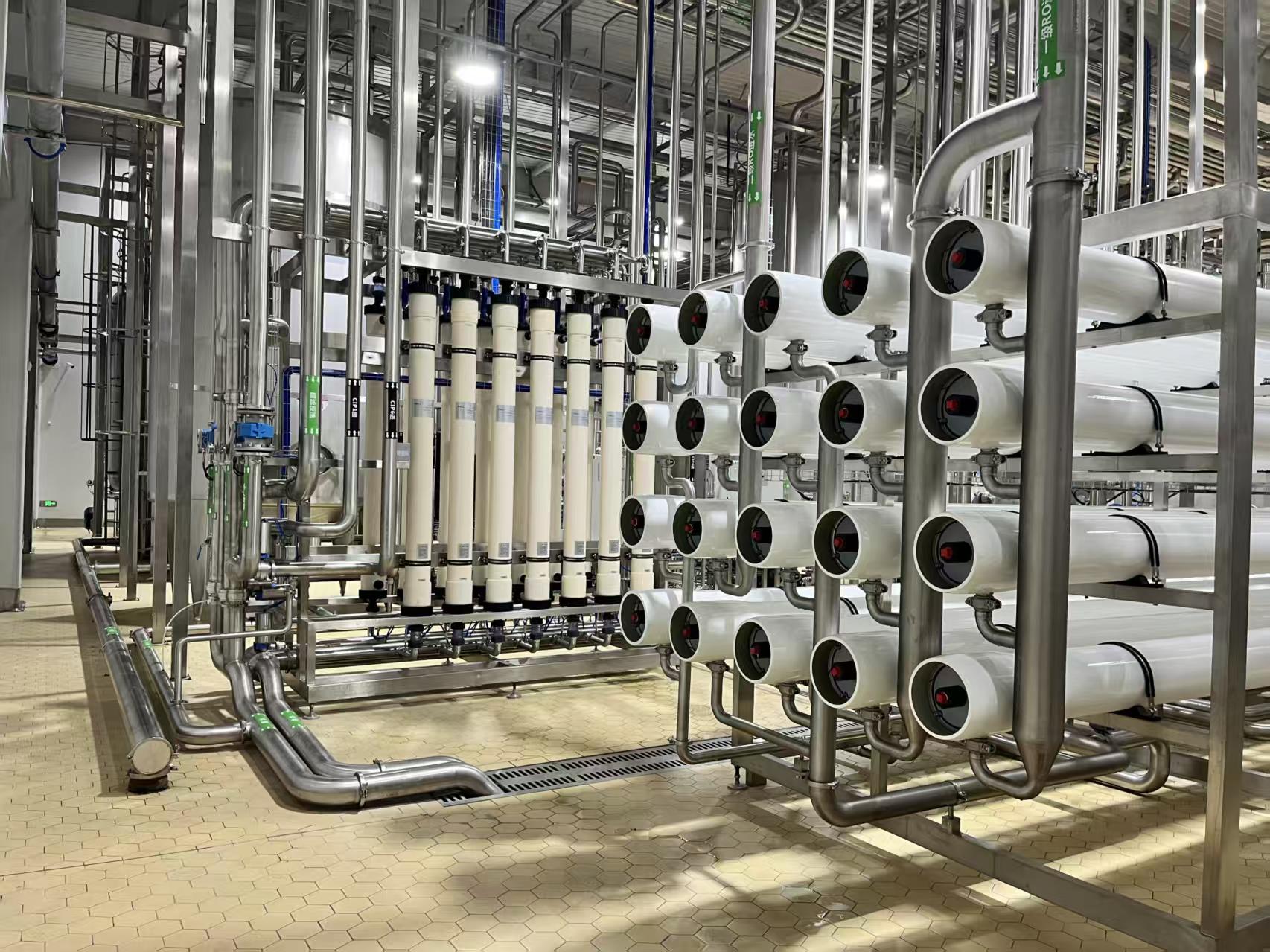
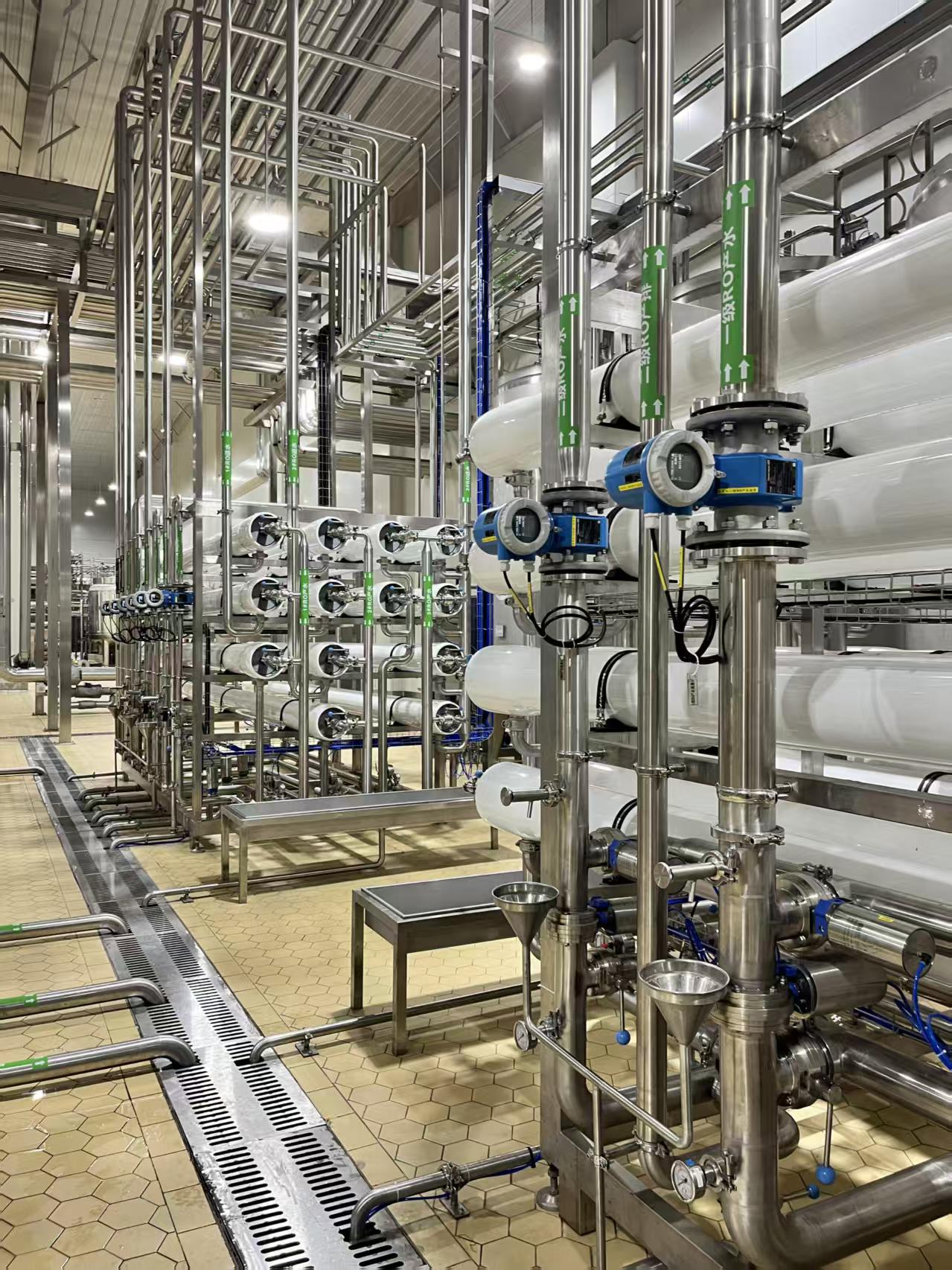
I. Pretreatment Stage: Protect the RO Membrane and Extend Its Service Life
The core objective of pretreatment is to remove impurities in raw water that may damage the RO membrane, preventing membrane fouling, scratching, or oxidation.
1. Raw Water Tank + Raw Water Pump
Function: Store raw water (tap water/groundwater/surface water), stabilize water supply pressure, and provide a constant water flow for subsequent equipment.
2. Multi-media Filter (Quartz Sand Filter)
Filter Media: Multi-layer filter materials such as quartz sand and anthracite.
Function: Remove large particle impurities like suspended solids, sediment, rust, and colloids from raw water, reducing water turbidity (turbidity ≤ 1 NTU).
Operation Mode: Regular backwashing to avoid filter media clogging.
3. Activated Carbon Filter
Filter Media: Fruit shell carbon/coconut shell carbon (with strong adsorption capacity).
Function:
Adsorb free chlorine, organic matter, odor, and chromaticity in raw water;
Free chlorine is the "natural enemy" of RO membranes, as it can oxidize the polymer materials of the membrane. Free chlorine content must be reduced to below 0.1 mg/L.
4. Water Softener (Optional, Configured Based on Raw Water Hardness)
Principle: Sodium ion exchange resin adsorbs calcium and magnesium ions (main components of scale) in water to reduce water hardness.
Application Scenario: Must be added when raw water hardness exceeds 300 mg/L (calculated as CaCO₃). Otherwise, calcium and magnesium ions will scale on the RO membrane surface, leading to a decline in water production.
Regeneration Method: Regenerate the resin with NaCl solution.
5. Cartridge Filter (Precision Filter)
Filter Cartridge Pore Size: 5 μm or 1 μm.
Function: Intercept tiny particles (e.g., activated carbon powder, resin debris) that slip through the pretreatment process, preventing large particles from entering the high-pressure pump and RO membrane and causing scratches on the membrane surface.
Maintenance: Replace filter cartridges regularly (generally every 1–3 months).
II. Core Reverse Osmosis (RO) Stage: Separate Water from Impurities
This is the core of the entire process, which uses the nanoscale pore size of the RO membrane and pressure-driven force to achieve desalination and purification.
1. High-Pressure Pump
Function: Provide the operating pressure required by the RO membrane (adjusted according to water quality):
Tap water/groundwater: Operating pressure 0.8–1.5 MPa;
Seawater desalination: Operating pressure 4–8 MPa.
Requirement: Equipped with high-pressure protection function to prevent membrane damage due to overpressure.
2. RO Membrane Module
Membrane Type: Spiral-wound RO membrane (commonly used in industry, e.g., Dow BW30, Hydranautics CPA3), rolled by RO membrane sheets, flow distributors, and central tubes.
Working Principle: Driven by pressure, water molecules penetrate the semi-permeable membrane layer of the RO membrane and enter the permeate side; inorganic salt ions, bacteria, viruses, organic matter, etc., are retained and discharged with the concentrated water.
Key Parameters:
Salt Rejection Rate: Conventional RO membrane has a salt rejection rate ≥ 99%;
Recovery Rate: Adjusted according to raw water quality (recovery rate 50–75% for tap water, 30–50% for seawater). Excessively high recovery rate is prone to scaling on the concentrated water side.
3. RO Permeate Tank + Concentrated Water Recirculation Device (Optional)
Permeate Tank: Store RO permeate (pure water) for subsequent use or post-treatment.
Concentrated Water Recirculation: Recycle part of the concentrated water to the inlet of the raw water pump to improve water resource utilization and reduce the concentration of discharged concentrated water.
III. Post-Treatment Stage: Improve Water Quality as Required
Post-treatment links can be added according to the purpose of water production to prepare higher-purity water:
1. UV Sterilizer/Ozone Generator
Application Scenario: Drinking water production.
Function: Kill trace bacteria and viruses in RO permeate to ensure water quality meets hygiene standards.
2. EDI (Electrodeionization) System
Application Scenario: Industrial ultrapure water preparation (e.g., electronics, pharmaceuticals, boiler feedwater).
Function: Further remove trace ions in RO permeate to produce ultrapure water with a resistivity of 15–18.2 MΩ·cm, without the need for acid-base regeneration, which is environmentally friendly and efficient.
3. Mixed Bed (Ion Exchange Resin Bed)
Alternative Solution: If continuous water production is not required, a mixed bed can be used instead of EDI for deep desalination through cation and anion resins, but regular acid-base regeneration is necessary.
IV. Typical Process Flowchart (For Industrial Ultrapure Water Demand)
Raw Water → Raw Water Tank → Raw Water Pump → Multi-media Filter → Activated Carbon Filter → Water Softener → Cartridge Filter → High-Pressure Pump → RO Membrane Module → RO Permeate Tank → EDI System → Ultrapure Water Tank → Water Consumption Point
V. Key Notes for Process Operation
1. Membrane Fouling Prevention: Perform regular acid cleaning (to remove inorganic scaling) and alkali cleaning (to remove organic fouling) to restore membrane flux.
2. Operating Parameter Monitoring: Real-time monitoring of inlet pressure, permeate flow rate, and salt rejection rate; adjust promptly in case of abnormalities.
3. Pretreatment Criticality: Free chlorine and turbidity are core indicators affecting the service life of RO membranes and must be strictly controlled.