


In modern industrial production, water is far more than a basic utility. It is a critical raw material, a cleaning medium, a heat transfer agent, and in many sectors—especially food and beverage—a core component of the final product. Poor water quality can directly lead to equipment corrosion, product inconsistency, higher operating costs, and even regulatory non-compliance. This is why industrial water treatment systems have become an essential part of sustainable and efficient manufacturing operations.
This article explores how water treatment systems improve water quality in industrial applications, with a particular focus on beverage and liquid food production. It also highlights how Pengxiang Huixing leverages two decades of engineering experience to deliver integrated, reliable, and intelligent water treatment solutions for global customers.
The Importance of Water Quality in Industrial Applications
Industrial water quality requirements vary by sector, but they all share one common goal: consistency. Variations in mineral content, suspended solids, microorganisms, or organic contaminants can disrupt production processes and compromise product quality.
For example:
-
In beverage production, impurities can alter taste, clarity, and shelf life.
-
In packaging and bottling lines, untreated water can cause scale buildup and reduce equipment lifespan.
-
In cleaning and sterilization processes, poor water quality reduces effectiveness and increases chemical consumption.
Industrial water treatment systems are designed to address these challenges by converting raw water—often drawn from municipal supplies, groundwater, or surface sources—into process water that meets precise technical standards.
Core Functions of Industrial Water Treatment Systems
A well-designed water treatment system is not a single piece of equipment, but a carefully engineered combination of technologies. These systems work together to remove physical, chemical, and biological contaminants.
Removal of Suspended Solids and Turbidity
The first step in most industrial water treatment processes is the removal of visible and microscopic particles. These include sand, silt, rust, and organic matter.
Through multi-media filtration, sand filters, or cartridge filters, suspended solids are effectively reduced. This protects downstream equipment such as membranes, pumps, and valves, ensuring stable system operation and lower maintenance requirements.
Reduction of Dissolved Salts and Hardness
Excessive hardness and dissolved salts can lead to scaling, heat exchanger inefficiency, and inconsistent product quality. Membrane technologies such as reverse osmosis (RO) and nanofiltration play a critical role here.
By precisely controlling mineral content, water treatment systems allow industrial users to achieve stable conductivity and hardness levels, which is especially important in beverage production where taste consistency is critical.
Control of Microbiological Contamination
Microorganisms are a major concern in food, beverage, and pharmaceutical industries. Untreated water may carry bacteria, algae, or biofilm-forming organisms that compromise hygiene standards.
Industrial water treatment systems integrate disinfection processes such as UV sterilization, ozone treatment, or chemical dosing. These methods ensure microbial safety without negatively impacting product characteristics.
Water Treatment Systems in Beverage and Liquid Food Production
In beverage manufacturing, water quality directly affects every stage of production—from ingredient preparation to final packaging. Even minor fluctuations can lead to noticeable differences in flavor, appearance, or stability.
Water treatment systems designed for beverage applications typically include:
-
Raw water pretreatment units
-
Membrane filtration systems
-
Precision mineral adjustment
-
Sterilization and hygienic control
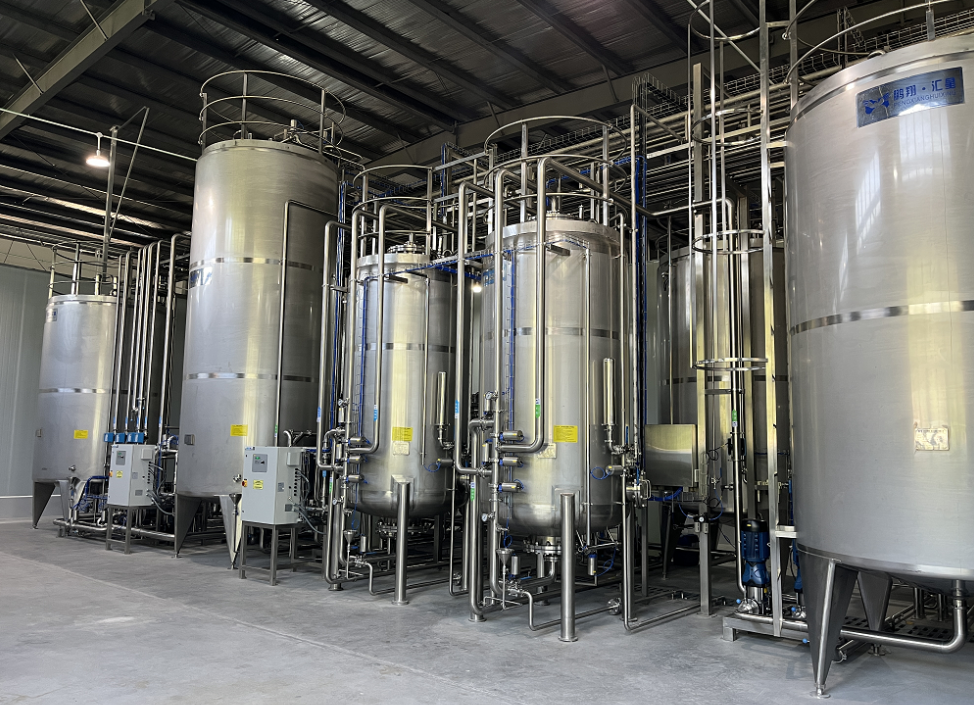
Pengxiang Huixing specializes in complete water treatment production lines tailored to bottled water, juice, carbonated drinks, and other liquid beverages. These systems are engineered to integrate seamlessly with PET blow molding machines, filling and capping lines, labeling systems, conveying systems, and secondary packaging equipment, forming a unified and efficient production ecosystem.
Enhancing Equipment Protection and Operational Efficiency
One of the most overlooked benefits of industrial water treatment is equipment protection. Untreated or poorly treated water accelerates corrosion, scaling, and fouling, leading to frequent downtime and higher repair costs.
By delivering stable, clean water, treatment systems:
-
Extend the service life of filling valves, nozzles, and pipelines
-
Reduce unplanned shutdowns
-
Improve the reliability of CIP (Clean-In-Place) systems
-
Lower overall maintenance workload
Pengxiang Huixing’s on-site automatic cleaning systems and intelligent cleaning solutions are designed with water quality optimization in mind, ensuring cleaning efficiency while minimizing water and energy consumption.
Supporting Smart Factories and Intelligent Workshops
As industrial manufacturing moves toward digitalization and automation, water treatment systems must also evolve. Modern facilities require real-time monitoring, precise control, and seamless integration with overall factory management systems.
Pengxiang Huixing focuses on high-end planning and design for intelligent workshops and smart factories. Its water treatment systems can be integrated with automated production lines, enabling:
-
Real-time monitoring of water quality parameters
-
Automated alarms and fault diagnostics
-
Data-driven optimization of water usage
-
Consistent production quality across shifts and batches
This intelligent approach not only improves water quality but also enhances overall operational transparency and efficiency.
Compliance, Sustainability, and Global Standards
Industrial water treatment systems also play a key role in helping manufacturers meet regulatory and sustainability goals. Strict hygiene and quality standards apply to food and beverage production in both domestic and international markets.
With ISO9000 quality management system certification and recognition as a Chinese High-Tech Enterprise, Pengxiang Huixing ensures that its water treatment and beverage packaging machinery meets international technical and quality requirements.
Additionally, efficient water treatment reduces waste, minimizes chemical usage, and supports water recycling strategies—an increasingly important consideration for environmentally responsible manufacturing.
A Proven Partner with Global Experience
Over the past 20 years, Pengxiang Huixing has continuously introduced and improved beverage packaging machinery technologies from around the world. Guided by the philosophy of “introduction and improvement, driven by technological progress,” the company has developed a strong competitive edge in the market.
Based in Songgang Street, Bao’an District, Shenzhen, Pengxiang Huixing is a comprehensive manufacturer integrating research, development, and production. Its product portfolio includes:
-
Fully automatic bottle blowing, filling, and capping machines
-
Water treatment production lines
-
Gallon barrel production lines
-
Beverage filling and packaging equipment
-
Juice and carbonated drink complete production lines
-
Intelligent and industrial cleaning solutions
These solutions are widely used across more than 20 provinces in China and exported to countries such as the United Arab Emirates, Oman, Vietnam, the Philippines, and Malaysia, earning strong customer recognition worldwide.
Conclusion
Water treatment systems are a foundational element of modern industrial production. By improving water quality, they protect equipment, ensure product consistency, support hygiene standards, and enable efficient, intelligent manufacturing.
For beverage and liquid food producers, investing in a well-engineered water treatment system is not just about compliance—it is about long-term operational stability and brand credibility. With its comprehensive product range, advanced engineering capabilities, and global project experience, Pengxiang Huixing continues to help industrial customers achieve higher water quality and smarter production worldwide.