

What Equipment Do You Need to Build a Beverage Production Line?
Building a beverage production line is not simply about buying a few machines. It is about creating a synchronized, hygienic, and intelligent system that can turn raw ingredients into safe, high-quality packaged drinks at scale. Whether you produce bottled water, carbonated soft drinks, juices, teas, energy drinks, dairy beverages, or plant-based drinks, the line must be designed around product characteristics, container type, output capacity, and food-safety standards.
The filling line is the heart of the entire beverage production system. In a modern plant, the filling machine is no longer just a mechanical device. It is an advanced, automated, data-driven center that determines the line’s speed, accuracy, hygiene level, and flexibility. This is where the greatest technological progress is visible.
1. Water Treatment and Ingredient Preparation
Every beverage line begins with water treatment and ingredient preparation. Typical equipment includes activated carbon filters, softeners, reverse osmosis (RO) systems, ultraviolet (UV) sterilizers, ozone generators, and EDI units. For beverages with sugar, juice, or additives, a syrup room or blending system is required. It may include sugar dissolving tanks, mixing tanks, filters, deaerators, and carbonation units.
Advanced systems use inline blending, mass-flow meters, automatic recipe management, and CIP (Clean-in-Place) integration. This reduces human error, improves consistency, and allows faster product changeovers.
2. Container Handling Equipment
Containers must be moved smoothly and hygienically through the line. Essential equipment includes depalletizers, unscramblers, rinsers, air conveyors, and accumulation tables. Advanced container handling uses servo-driven motion, gentle transfer technology, and “no container, no rinse” logic to save water and reduce damage.
3. The Advanced Filling Line: The Core of the System
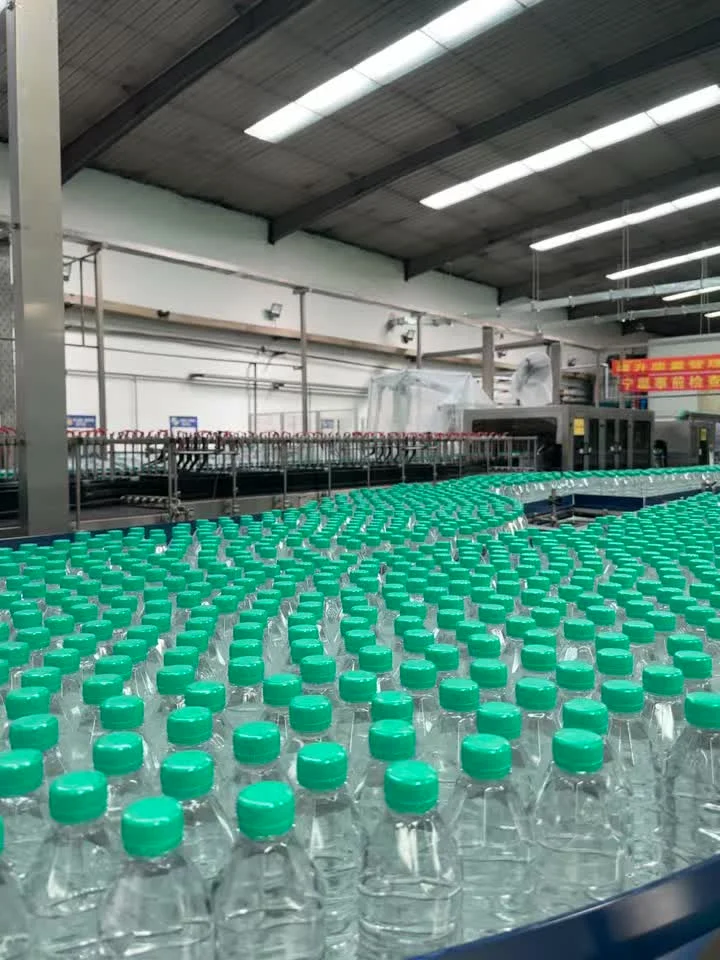
The filling machine is the most important equipment in a beverage production line. Depending on the product, it may be a gravity filler, pressure filler, volumetric filler, flowmeter filler, hot-fill filler, cold-fill filler, or aseptic filler.
A truly advanced filling line stands out through several key features:
-
Servo-driven filling and capping for precise, repeatable motion and fast changeovers.
-
Magnetic flowmeters or mass-flow meters for highly accurate fill volumes, often within ±0.5%.
-
Monoblock design combining rinser, filler, and capper in one compact, hygienic unit.
-
Aseptic or ultra-clean filling with HEPA filtration, sterile air, and closed filling chambers.
-
CIP/SIP (Clean-in-Place / Sterilize-in-Place) with automatic control of temperature, concentration, flow, and return conductivity.
-
No bottle, no fill; no cap, no fill logic to prevent waste and contamination.
-
Recipe-driven operation allowing one line to handle multiple products and container sizes.
-
High-speed capability, from 12,000 to 60,000 bottles per hour or more, depending on configuration.
-
Low oxygen pickup and drip-free valves to protect flavor, shelf life, and product quality.
-
Real-time data collection for fill accuracy, downtime, and efficiency.
In short, the advanced filling line is not just faster. It is smarter, cleaner, more flexible, and more sustainable. It reduces product loss, minimizes downtime, and ensures every bottle, can, or pouch meets strict quality standards.
4. Capping, Sealing, and Closing Equipment
After filling, containers must be closed reliably. This requires cap sorters, capping machines, seaming machines for cans, and sealing systems for pouches or cups. Advanced cappers use servo torque control, cap inspection cameras, and automatic rejection systems. For cans, advanced seamers monitor seam quality in real time.
5. Labeling, Coding, and Marking
Labeling equipment may include self-adhesive labelers, shrink-sleeve labelers, and hot-melt labelers. Coding systems apply dates, batch numbers, and QR codes. Advanced labelers use servo drives, vision inspection, and print verification to ensure every label is correct and traceable.
6. Inspection and Quality Control
Quality control equipment is essential for food safety and brand protection. Common devices include checkweighers, metal detectors, X-ray inspection systems, vision inspection systems, leak detectors, and fill-level inspectors. Advanced systems connect directly to the line’s control system, automatically rejecting defective products and recording data for traceability.
7. Packaging and Palletizing Equipment
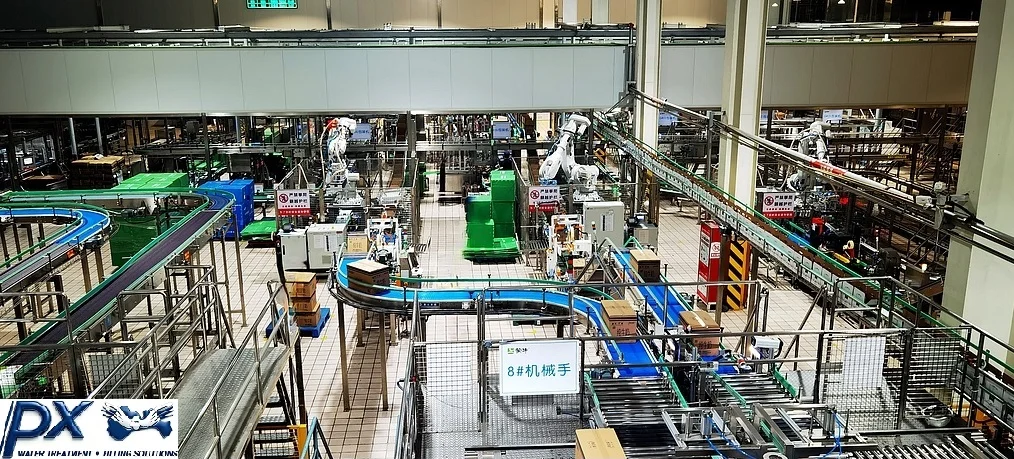
End-of-line equipment includes shrink wrappers, carton erectors, case packers, robotic palletizers, and stretch wrappers. Modern packaging lines use robotic arms, automatic changeover, and collaborative robots. In highly advanced plants, AGVs (automated guided vehicles) and AS/RS (automated storage and retrieval systems) connect packaging to warehouse operations.
8. CIP/SIP Systems and Utilities
A beverage line also needs CIP/SIP systems, steam boilers, compressed air systems, chilled water units, CO₂ and nitrogen systems, and power distribution. Advanced CIP systems monitor conductivity, temperature, flow, and chemical concentration, and they generate validation reports automatically. Energy recovery and water reuse systems further improve sustainability.
9. Control, Automation, and Digital Intelligence
The nervous system of a modern beverage line is its control architecture. This includes PLCs, HMIs, SCADA, MES, and IIoT sensors. Advanced lines use OEE monitoring, predictive maintenance, digital twins, remote diagnostics, and full batch traceability. This allows managers to see performance in real time, predict failures before they happen, and optimize the entire line.
Conclusion
To build a beverage production line, you need water treatment, blending, container handling, filling, capping, labeling, inspection, packaging, palletizing, CIP/SIP, utilities, and automation systems. But the filling line is the decisive component. An advanced filling line transforms a conventional plant into a high-speed, high-accuracy, hygienic, and intelligent operation. It protects product quality, reduces waste, enables flexible production, and provides the data needed for continuous improvement. In today’s competitive beverage market, investing in an advanced filling line is not a luxury—it is a strategic advantage.
⚠ Bio to be added — 2–3 sentences suggested: years in the industry, process specialities, representative projects. A named engineer is a far stronger E-E-A-T signal than "Engineering Team", and it is one of the things AI search uses to judge how authoritative the content is.