


Water is the cornerstone of life, industry, and modern society. However, increasing population, industrial growth, and climate change have put unprecedented pressure on global water resources. Efficient water management has become a necessity rather than a choice, and advanced water treatment systems are at the heart of this solution. Companies like Pengxiang Huixing, based in Shenzhen, China, are pioneering in this field, offering comprehensive water treatment solutions that support sustainable water use in both industrial and beverage production sectors.
The Importance of Sustainable Water Management
Sustainable water management is the practice of using water resources responsibly to meet current needs without compromising the ability of future generations to meet theirs. The consequences of mismanaged water resources are far-reaching: contamination, scarcity, and environmental degradation. For industries, particularly those involved in food and beverage production, water quality directly affects product safety, operational efficiency, and regulatory compliance.
In this context, water treatment systems serve as the first line of defense. They ensure that water used in production lines, such as those for bottled water, fruit juice, and carbonated beverages, is free from contaminants, bacteria, and impurities. This not only safeguards public health but also minimizes wastage, reduces operational costs, and enhances sustainability credentials.
Key Roles of Water Treatment Systems
1. Ensuring Consistent Water Quality
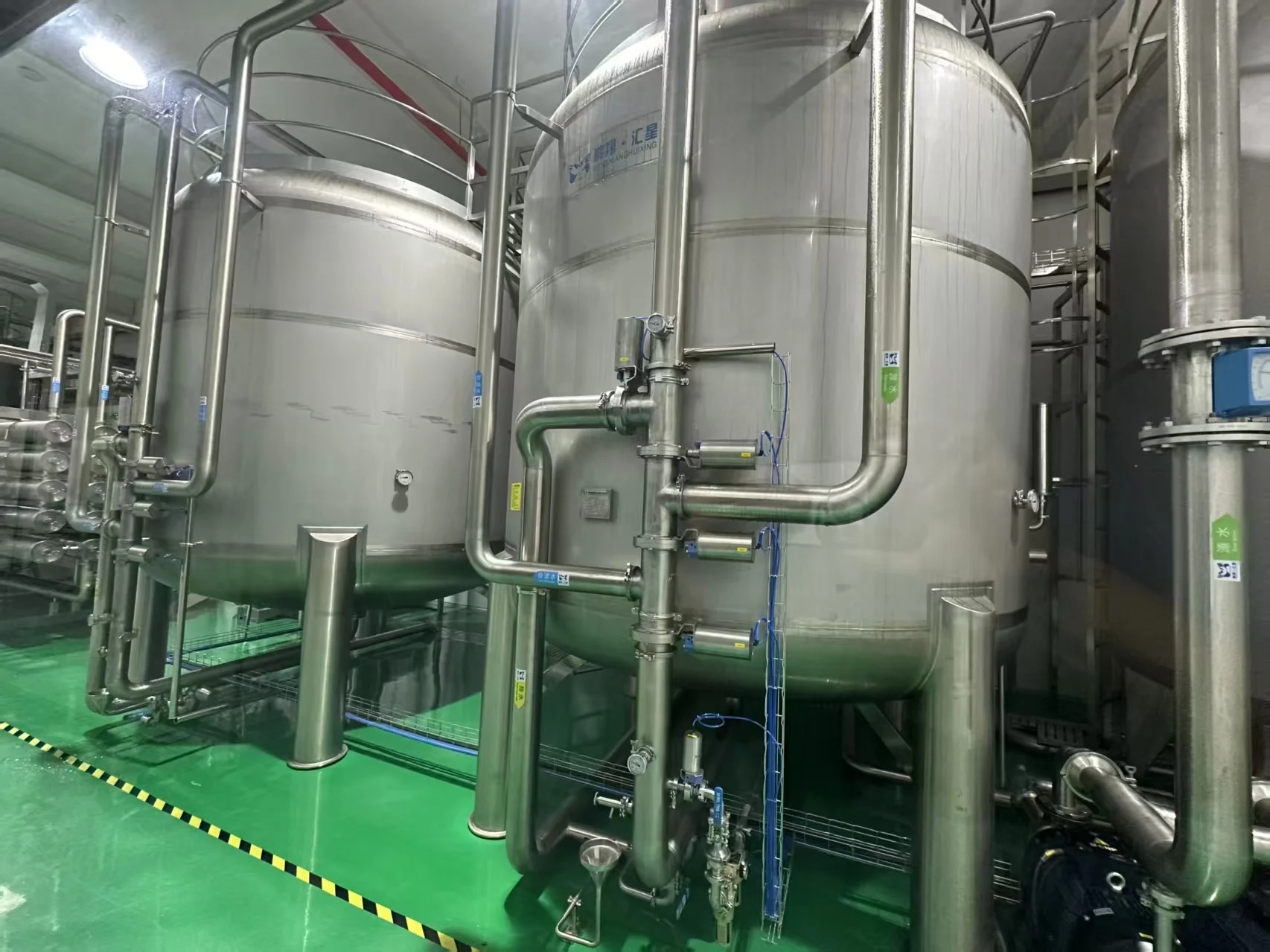
Industrial processes, especially beverage manufacturing, require water of consistent quality. Fluctuations in water hardness, mineral content, or microbial load can affect taste, safety, and equipment longevity. Advanced water treatment systems, such as those developed by Pengxiang Huixing, are designed to provide stable water quality, removing sediments, dissolved solids, and microbial contaminants effectively.
Through multi-stage filtration, reverse osmosis, and automated cleaning technologies, these systems ensure that every drop of water meets strict industry standards. For companies operating PET bottle blow-molding and filling lines, maintaining consistent water quality is critical to avoid defects, contamination, or downtime.
2. Reducing Environmental Impact
Modern water treatment systems are not just about purification—they also contribute to environmental sustainability. By recycling and reusing water within production lines, industries can significantly reduce freshwater withdrawal from natural sources. For example, beverage manufacturers using Pengxiang Huixing’s integrated water treatment solutions can recover a large portion of water used in rinsing, cleaning, and production processes, thus conserving precious resources.
3. Supporting Compliance and Safety Standards
Regulatory compliance is essential in any industry that interacts with water, particularly food and beverage production. Waterborne contaminants can lead to product recalls, legal penalties, and damage to brand reputation. Comprehensive water treatment systems, equipped with advanced monitoring and control technologies, help companies meet national and international water safety standards. This includes automated cleaning-in-place (CIP) systems, sterilization units, and continuous quality monitoring that minimizes human error.
4. Enhancing Operational Efficiency
Unclean or poorly treated water can lead to scaling, corrosion, and microbial growth in industrial equipment. Over time, this causes equipment failures, increased maintenance costs, and production downtime. High-quality water treatment systems mitigate these risks, ensuring the smooth operation of critical machinery such as PET blow-molding machines, filling lines, and labeling equipment. This reliability not only improves productivity but also extends the lifespan of expensive machinery.
5. Integrating Smart Technology
Pengxiang Huixing’s approach goes beyond traditional water treatment. Their systems are part of smart factory and intelligent workshop designs that integrate IoT, automated monitoring, and real-time control. These innovations allow managers to track water usage, quality parameters, and system performance remotely. By leveraging smart technology, companies can identify inefficiencies, predict maintenance needs, and implement water-saving strategies proactively.
Water Treatment in Beverage Production
Beverage manufacturing is highly water-intensive, making water treatment a central aspect of production. Companies require systems that can handle multiple stages: pre-treatment of source water, purification for bottling, and post-production cleaning. Pengxiang Huixing provides end-to-end solutions, including:
-
Bottle Filling and Capping Lines: Ensuring treated water maintains beverage quality and hygiene standards.
-
Blow-Molding Equipment: Producing PET bottles with minimal contamination risk.
-
Sanitation Systems: Automated CIP and sterilization units reduce human error and enhance safety.
-
Fruit Juice and Carbonated Beverage Lines: Ensuring water used for mixing, dilution, and cleaning meets precise standards.
By integrating water treatment into every step of beverage production, manufacturers can minimize water waste, improve product quality, and reduce operational risk.
Global Impact and Adoption
The significance of water treatment systems extends beyond individual factories. On a global scale, industrial adoption of such technologies reduces freshwater stress and mitigates pollution in rivers and groundwater. Pengxiang Huixing has successfully exported its systems and solutions to over ten countries, including the UAE, Oman, Vietnam, the Philippines, and Malaysia. Their approach demonstrates how well-designed water treatment solutions can have a positive impact on both local communities and international markets.
Key Takeaways
Water treatment systems are indispensable for sustainable water management. They provide consistent quality, reduce environmental impact, ensure compliance, improve operational efficiency, and enable smart factory integration. For industries, particularly beverage manufacturing, the adoption of advanced water treatment technologies is no longer optional—it’s a strategic imperative.
Companies like Pengxiang Huixing exemplify how innovative water treatment and beverage production systems can support sustainability while driving efficiency and profitability. Their integrated approach—from water treatment to production, packaging, and distribution—serves as a model for modern industrial water management.
For more information about advanced water treatment systems, visit:Water treatment system.