


In modern beverage production, water treatment, and industrial liquid processing, filtration quality directly influences product safety, equipment lifespan, and operational efficiency. Among the many filtration technologies available today, Multi-media filters have become a cornerstone of high-performance filtration systems. Their ability to remove suspended solids, reduce turbidity, and improve downstream processing makes them essential for industries such as beverage manufacturing, food processing, and water purification.
As production lines become increasingly automated and quality standards rise globally, companies are investing in reliable filtration technologies that support stable and scalable operations. Multi-media filtration systems offer a practical and efficient solution for handling large volumes of water while maintaining consistent filtration performance.
This article explores how multi-media filters work, why they outperform traditional single-media filters, and why they are widely adopted in modern beverage and water treatment facilities.
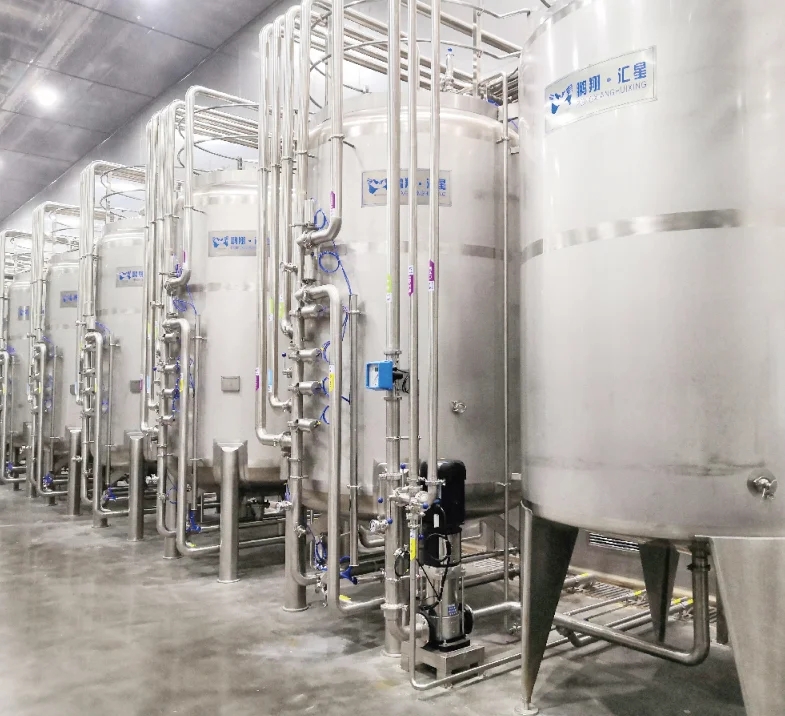
Understanding Multi-media Filtration
A multi-media filter is a filtration system that uses multiple layers of filtration media with different densities and particle sizes to capture impurities at various depths within the filter bed.
Typical filtration media layers include:
-
Anthracite coal (top layer)
-
Silica sand (middle layer)
-
Garnet or fine sand (bottom layer)
Each layer performs a specific function. Larger particles are trapped near the top of the filter, while finer particles are captured deeper within the media layers. This depth filtration approach significantly improves filtration efficiency compared with conventional single-layer sand filters.
In beverage production and industrial water treatment, this layered structure helps maintain stable flow rates while achieving higher clarity and lower turbidity levels.
Why Single-Media Filters Are No Longer Enough
Traditional sand filters rely on a single layer of sand to capture particles. While this method can remove larger suspended solids, it often suffers from several limitations:
Limited filtration depth
Particles accumulate primarily on the surface of the sand layer, which quickly leads to clogging.
Frequent backwashing
Because contaminants accumulate on the surface, filters require frequent cleaning cycles.
Reduced filtration efficiency
Fine particles may pass through the filter bed, especially during high-flow operations.
In high-capacity beverage plants or water treatment systems, these limitations can reduce productivity and increase maintenance requirements.
Multi-media filtration addresses these problems by distributing particle capture across multiple layers, significantly extending filter run time and improving water quality.
Key Advantages of Multi-media Filters
1. Higher Filtration Efficiency
The layered structure allows particles of different sizes to be captured at different depths within the filter bed.
This means:
-
Larger particles are trapped at the upper layers.
-
Medium particles settle in the middle layers.
-
Fine particles are captured at the bottom layers.
This staged filtration process leads to more complete removal of suspended solids and better overall water clarity.
2. Longer Filtration Cycles
Because contaminants are distributed throughout the filter bed rather than accumulating on the surface, multi-media filters can operate for longer periods before requiring backwashing.
For beverage production facilities, this results in:
-
Reduced downtime
-
Higher operational efficiency
-
Lower maintenance workload
Longer filtration cycles also mean lower water consumption during backwash operations.
3. Higher Flow Rates
Multi-media filters can handle higher flow velocities compared with traditional sand filters without sacrificing filtration quality.
This capability is particularly important in industries such as:
-
Bottled water production
-
Juice and carbonated beverage manufacturing
-
Industrial water reuse systems
High-flow filtration allows production lines to maintain stable water supply even during peak production periods.
4. Improved Water Quality for Downstream Processes
Many industrial processes require water that meets strict clarity and purity standards.
Multi-media filtration helps protect downstream equipment such as:
-
Reverse osmosis systems
-
UV sterilization units
-
Beverage mixing systems
-
Bottle rinsing stations
By removing suspended solids and reducing turbidity, the filter prevents fouling and extends the lifespan of sensitive equipment.
Role of Multi-media Filters in Beverage Production
In beverage manufacturing, water is not only a raw ingredient but also a critical component used throughout the production process. Filtration systems must ensure that water quality remains consistent at every stage.
Multi-media filters are commonly used in:
Raw Water Pretreatment
Before advanced purification steps such as reverse osmosis or sterilization, raw water must be pre-filtered to remove suspended solids.
Multi-media filters serve as the first line of defense, protecting downstream systems from contamination and clogging.
Beverage Ingredient Water Treatment
For products such as bottled water, carbonated drinks, and fruit beverages, water quality directly affects flavor stability and product safety.
Filtration ensures that water entering the production line meets clarity and hygiene requirements.
Equipment Cleaning Systems
Modern beverage factories rely heavily on CIP (Clean-in-Place) systems to maintain hygiene standards. These cleaning systems require high-quality filtered water to avoid introducing new contaminants during the cleaning process.
Integration with Modern Beverage Production Lines
As beverage factories move toward automation and intelligent manufacturing, filtration systems must integrate smoothly with other equipment across the production line.
Companies like Pengxiang Huixing, a beverage packaging machinery manufacturer based in Shenzhen, China, design integrated production systems that combine water treatment, bottle blowing, filling, labeling, and packaging technologies.
Their production solutions cover the entire lifecycle of beverage manufacturing, including:
-
Water treatment systems
-
PET bottle blowing equipment
-
Blow-fill-cap production lines
-
Blow-label-fill-cap systems
-
Labeling systems
-
Conveying systems
-
Secondary packaging equipment
Within these integrated facilities, multi-media filters play a vital role in maintaining stable water quality throughout the production process.
Supporting Smart Factory Development
Over the past two decades, beverage manufacturers have increasingly adopted smart factory concepts to improve productivity, traceability, and operational control.
Pengxiang Huixing has focused on intelligent workshop and factory planning, integrating advanced beverage packaging technologies into scalable production environments.
Their product portfolio includes:
-
Fully automatic bottle blowing machines
-
Bottled filling and capping production lines
-
Mineral water production lines
-
Juice and carbonated beverage processing systems
-
Industrial cleaning solutions
-
Sterilization equipment
-
Automatic CIP cleaning systems
By combining high-performance filtration technologies with intelligent production systems, beverage manufacturers can maintain product consistency while increasing production efficiency.
Applications Beyond the Beverage Industry
Although multi-media filters are widely used in beverage production, their applications extend across many industries, including:
Municipal water treatment
Used for turbidity reduction and pretreatment before advanced purification.
Industrial process water
Provides clean water for manufacturing operations.
Food processing plants
Ensures hygienic water for ingredient mixing and equipment cleaning.
Pharmaceutical manufacturing
Supports high-purity water systems used in drug production.
Their versatility and reliability make multi-media filters a standard component in many industrial water treatment infrastructures.
Maintenance and Operational Considerations
To maintain optimal performance, multi-media filters require regular monitoring and maintenance.
Important operational practices include:
Scheduled backwashing
Periodic cleaning removes accumulated particles and restores filtration efficiency.
Media inspection and replacement
Filtration media gradually wears over time and must be replaced periodically.
Pressure monitoring
A rising pressure drop across the filter often indicates that cleaning is required.
Water quality testing
Regular testing ensures that filtration performance meets production requirements.
When properly maintained, multi-media filtration systems can operate reliably for many years.
The Future of Industrial Filtration
As industries continue to focus on sustainability and resource efficiency, filtration technologies are evolving to support:
-
Lower water consumption
-
Reduced chemical usage
-
Higher filtration precision
-
Integration with automated monitoring systems
Multi-media filters remain highly relevant in this evolving landscape due to their simplicity, durability, and adaptability.
For beverage manufacturers seeking to modernize their production infrastructure, combining robust filtration systems with integrated packaging and processing equipment is a key step toward achieving efficient, scalable, and hygienic operations.
Conclusion
Multi-media filters have become an essential technology for high-performance filtration in modern industrial and beverage production environments. By utilizing multiple filtration layers, these systems provide superior particle removal, longer operating cycles, and improved water clarity.
In integrated beverage manufacturing facilities, they support consistent water quality across every stage of production—from raw water pretreatment to equipment cleaning and product formulation.