


Water scarcity, rising industrial demand, and tightening environmental regulations are reshaping how businesses think about water. For beverage producers, food processors, and manufacturers, water is not just a raw material—it is a critical operational asset. Ensuring consistent water quality while minimizing waste is no longer optional. It is a strategic necessity.
Membrane treatment systems have emerged as one of the most reliable and sustainable solutions to this challenge. By combining high-efficiency filtration with intelligent system integration, these technologies enable companies to reduce water consumption, lower discharge loads, and secure long-term operational stability.
The Growing Pressure on Water Resources
Industrial water use continues to increase, particularly in rapidly developing regions. Beverage production alone requires significant volumes of treated water—not only for product formulation but also for cleaning, sterilization, and cooling processes.
Traditional water treatment methods such as sand filtration and chemical dosing can remove suspended solids and certain contaminants. However, they often struggle with dissolved salts, microorganisms, and fine organic compounds. As discharge standards become stricter and consumers demand safer products, these limitations become more evident.
Membrane-based technologies address these issues with precision filtration at the molecular level, offering higher water recovery rates and more consistent output quality.
What Is a Membrane Treatment System?
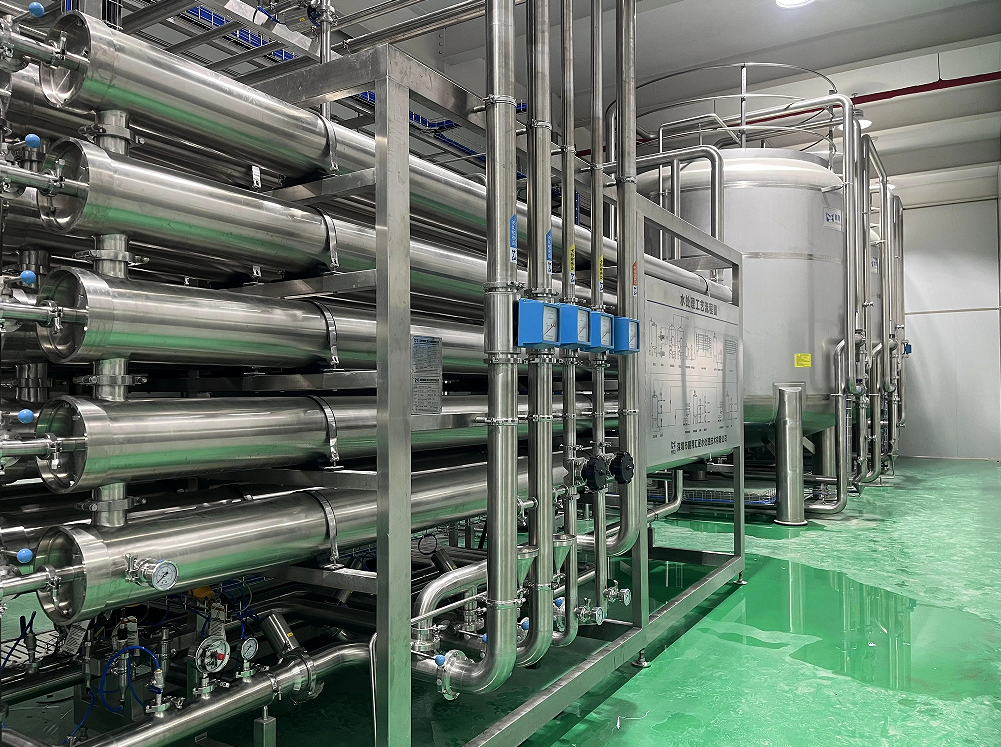
A membrane treatment system uses semi-permeable membranes to separate contaminants from water. Depending on the required filtration level, the system may include:
-
Microfiltration (MF)
-
Ultrafiltration (UF)
-
Nanofiltration (NF)
-
Reverse Osmosis (RO)
Each stage targets specific impurities. For example, ultrafiltration removes bacteria and suspended particles, while reverse osmosis can eliminate dissolved salts and heavy metals. In beverage production, RO systems are widely used to ensure stable mineral content and eliminate taste inconsistencies.
Modern membrane systems are modular, automated, and designed for integration into complete production lines. They are particularly suitable for industries that demand high hygiene standards and stable output.
Sustainability Benefits of Membrane Technology
1. Higher Water Recovery Rates
Membrane systems are designed to maximize permeate output while minimizing reject water. Advanced configurations allow water recovery rates exceeding those of conventional systems. This directly reduces raw water consumption and lowers wastewater discharge volumes.
For beverage plants operating in water-stressed regions, this improvement can significantly reduce environmental impact and regulatory risk.
2. Reduced Chemical Dependency
Traditional treatment often relies heavily on chemical coagulants and disinfectants. Membrane filtration physically removes contaminants, reducing the need for excessive chemical dosing. This lowers operational risks, decreases sludge generation, and simplifies compliance with environmental standards.
3. Energy Efficiency Through Intelligent Design
While reverse osmosis systems require pressure, modern membrane systems incorporate energy recovery devices, variable frequency drives, and smart monitoring. When integrated into a well-designed production facility, energy consumption can be optimized across the entire water cycle.
Companies that adopt intelligent plant planning benefit from centralized monitoring, predictive maintenance, and better system lifespan management.
4. Consistent Product Quality
In beverage manufacturing, water quality consistency is critical. Variations in mineral content or microbial presence can affect taste, shelf life, and safety. Membrane systems provide stable filtration performance, ensuring that every production batch meets defined quality parameters.
This consistency reduces rework, lowers product recalls, and enhances brand reputation.
Application in Beverage and Liquid Packaging Industry
Sustainable water management becomes even more important in integrated beverage plants. A complete production facility includes:
-
Raw water treatment
-
Beverage pre-treatment systems
-
Bottle blowing equipment
-
Blow-fill-cap production lines
-
Labeling systems
-
Conveying systems
-
Secondary packaging equipment
-
Automatic cleaning systems (CIP)
When membrane treatment is integrated at the beginning of the production process, it supports the entire downstream operation. Stable water quality ensures reliable sterilization, efficient cleaning, and precise filling.
Companies specializing in intelligent workshop and factory planning are able to design systems where water treatment, filling, packaging, and logistics operate in a coordinated and optimized way.
Engineering Integration: Beyond Standalone Equipment
Sustainable water management is not just about installing a membrane unit. It requires system-level thinking.
A comprehensive solution provider integrates:
-
Water treatment production lines
-
On-site automatic cleaning systems
-
Complete sterilization equipment
-
Bottled water production lines
-
Juice and carbonated beverage production systems
-
Industrial cleaning solutions
For example, membrane-treated water can be reused in cleaning cycles or utility systems after secondary polishing, reducing overall freshwater demand. In modern intelligent factories, sensors continuously monitor conductivity, turbidity, and flow rate, ensuring real-time adjustments.
This integration transforms water treatment from a supporting function into a central component of sustainable manufacturing.
Industrial Expertise and Long-Term Innovation
Manufacturers with strong R&D capabilities play a crucial role in advancing membrane system performance. Companies that combine research, production, and engineering integration are better positioned to deliver stable, scalable solutions.
Based in Shenzhen, China, Pengxiang Huixing has over 20 years of experience in beverage packaging machinery technology. The company focuses on high-end planning and design of intelligent workshops and factories, as well as the research and development of liquid beverage packaging machinery technologies and services.
Its product portfolio covers the full production chain—from procurement and manufacturing to packaging, warehousing, logistics, distribution, and consumption. Core offerings include:
-
Fully automatic bottle blowing and filling machines
-
Gallon barrel production lines
-
Water treatment production lines
-
On-site automatic cleaning systems
-
Complete sterilization systems
-
Beverage filling machinery
-
Mineral water production lines
-
Intelligent cleaning and industrial cleaning solutions
All products are certified under ISO9000 quality management standards, and the company has been recognized as a national high-tech enterprise in China. With exports to the UAE, Oman, Vietnam, the Philippines, Malaysia, and other regions, its systems are deployed across diverse water conditions and regulatory environments.
For businesses seeking integrated membrane filtration solutions within a complete beverage production ecosystem, Pengxiang Huixing provides detailed technical specifications and engineering support through its dedicated <a href="https://www.szpxhx.com/membrane-treatment-system.html">membrane treatment system</a> platform.
Real-World Impact: From Source to Consumer
The sustainability impact of membrane treatment systems extends across the entire supply chain:
-
Reduced extraction of raw water resources
-
Lower wastewater discharge loads
-
Improved cleaning efficiency
-
Stable beverage quality
-
Reduced downtime due to contamination
-
Enhanced regulatory compliance
When water treatment is aligned with packaging automation and intelligent monitoring, companies achieve measurable reductions in waste and operational risk.
In practice, this means fewer shutdowns due to microbial contamination, improved filling accuracy, and more reliable sterilization cycles. It also means greater flexibility when expanding capacity or introducing new beverage formulations.
The Future of Sustainable Water Management
As global environmental standards tighten, membrane technologies will continue to evolve. Future systems are likely to incorporate:
-
AI-assisted performance optimization
-
Advanced anti-fouling membrane materials
-
Higher recovery rates with lower pressure requirements
-
Smart integration with energy management systems
For beverage producers and liquid packaging manufacturers, investing in membrane treatment is no longer a short-term upgrade. It is a strategic decision that supports long-term competitiveness, regulatory compliance, and environmental responsibility.
Conclusion
Membrane treatment systems are essential for sustainable water management because they combine precision filtration, operational efficiency, and environmental responsibility. In industries where water quality directly influences product integrity—such as beverage manufacturing—the role of membrane technology becomes even more critical.
When integrated into intelligent production facilities that include bottle blowing, filling, sterilization, labeling, and packaging systems, membrane treatment forms the backbone of a reliable and sustainable operation.
Companies that adopt a system-level approach—combining water treatment expertise with advanced packaging machinery and smart factory planning—are better equipped to meet both market demand and environmental expectations.
Sustainable water management is not a future trend. It is a present-day operational requirement. Membrane treatment systems provide the technical foundation to achieve it.