

Carbonated soft drinks remain one of the world's most popular beverage categories. From sparkling water and flavored soda to cola, tonic water, and energy drinks, manufacturers are constantly expanding production to meet growing consumer demand. Behind every bottle is a filling system specifically designed to preserve carbonation, maintain hygiene, and ensure consistent product quality.
Choosing the right carbonated soft drink filling machine is not simply about production speed. It also affects product stability, packaging flexibility, operating costs, maintenance requirements, and future scalability. Whether you are building a new beverage plant or upgrading an existing production line, understanding the different types of filling equipment is essential.
This article compares the major types of carbonated soft drink filling machines, explains their advantages and limitations, and highlights the factors manufacturers should consider before making an investment.
Why Carbonated Beverage Filling Is Different
Unlike still water or juice, carbonated beverages contain dissolved carbon dioxide under pressure. During filling, excessive foaming or pressure changes can cause carbonation loss, inconsistent fill levels, and product waste.
An effective carbonated beverage filling system should be capable of:
-
Maintaining stable filling pressure
-
Minimizing CO₂ loss
-
Preventing excessive foaming
-
Ensuring accurate filling volume
-
Supporting sanitary production standards
-
Integrating seamlessly with downstream packaging equipment
Because of these technical requirements, carbonated beverage filling machines are specially engineered to handle pressure-sensitive products.
Main Types of Carbonated Soft Drink Filling Machines
1. Gravity Filling Machines
Gravity filling is commonly used for non-carbonated beverages such as purified water, edible oil, or juice without gas.
Since carbonated beverages require pressure control, gravity filling is generally not suitable for sparkling drinks.
Advantages include:
-
Simple structure
-
Low maintenance
-
Suitable for low-viscosity liquids
However, for carbonated beverages, gravity filling often results in severe foaming and carbonation loss, making it an unsuitable choice for soda production.
2. Isobaric Filling Machines
The isobaric filling machine is the industry standard for carbonated soft drinks.
This technology equalizes the pressure inside the bottle with the pressure inside the filling valve before liquid enters the container. By maintaining identical pressure throughout the filling process, carbon dioxide remains dissolved in the beverage.
Key benefits include:
-
Excellent carbonation retention
-
Reduced foaming
-
Accurate filling levels
-
High production efficiency
-
Consistent product quality
Most large beverage manufacturers use fully automatic isobaric filling systems for products such as:
-
Cola
-
Sparkling water
-
Soda beverages
-
Flavored carbonated drinks
-
Carbonated energy drinks
-
Beer (with specialized configurations)
3. Rotary Filling Machines
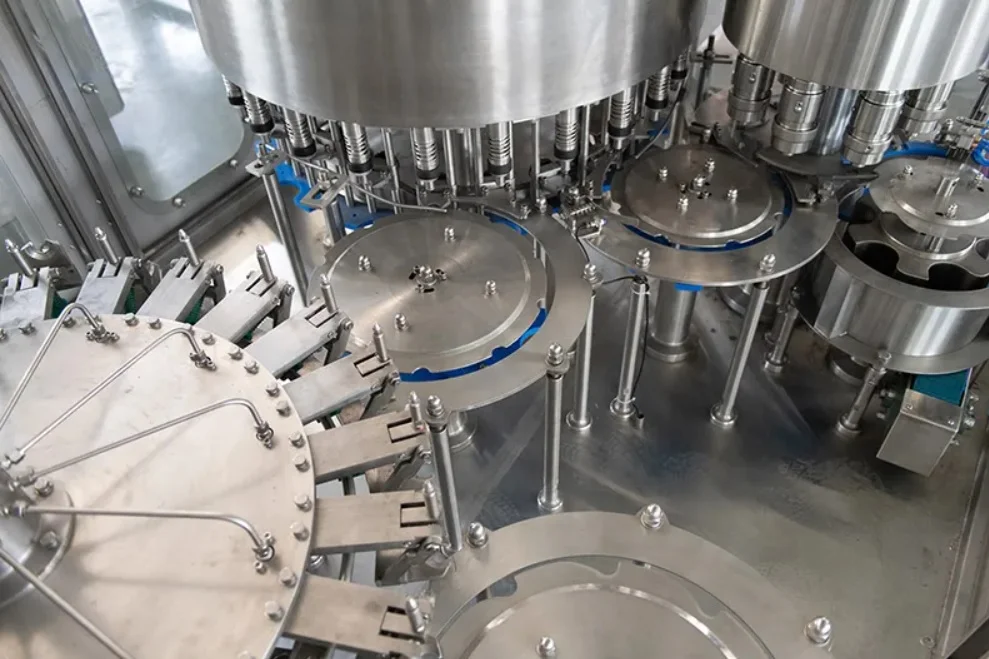
Rotary filling machines combine multiple filling valves on a rotating carousel, allowing bottles to move continuously through the filling process.
Compared with linear machines, rotary systems provide significantly higher production capacity.
Typical advantages include:
-
Continuous production
-
High filling accuracy
-
Stable operation
-
Reduced labor requirements
-
Compact equipment layout
Rotary isobaric fillers are especially suitable for medium and large beverage factories producing thousands of bottles per hour.
4. Linear Filling Machines
Linear filling systems move bottles in a straight line instead of rotating around a central turret.
These machines are often selected by:
-
Small beverage startups
-
Pilot production facilities
-
Specialty beverage manufacturers
Advantages include:
-
Easier maintenance
-
Flexible bottle size adjustment
-
Lower initial investment
-
Simple operation
Although production speed is lower than rotary systems, linear filling machines offer excellent flexibility for manufacturers with multiple product varieties.
Automatic vs Semi-Automatic Filling Machines
Another important comparison involves automation level.
Semi-Automatic Machines
Semi-automatic equipment requires operators to manually load bottles or complete certain production steps.
Suitable for:
-
Small-scale production
-
Product testing
-
Seasonal manufacturing
Advantages:
-
Lower investment
-
Easier installation
-
Flexible operation
Disadvantages:
-
Higher labor costs
-
Lower productivity
-
Greater dependence on operator skill
Fully Automatic Machines
Fully automatic production lines integrate:
-
Bottle feeding
-
Bottle rinsing
-
Filling
-
Capping
-
Labeling
-
Inspection
-
Packaging
Benefits include:
-
Higher efficiency
-
Reduced labor
-
Improved consistency
-
Better hygiene
-
Lower operating costs over time
For beverage companies planning long-term growth, fully automatic systems generally provide the best return on investment.
PET Bottle Filling Systems
PET bottles dominate today's carbonated beverage market because they are lightweight, durable, and economical.
Modern PET filling lines usually integrate several processes:
-
PET bottle blowing
-
Bottle conveying
-
Air rinsing
-
Isobaric filling
-
Capping
-
Labeling
-
Shrink wrapping
-
Carton packing
-
Palletizing
An integrated production line minimizes bottle handling while improving production efficiency.
Complete Beverage Production Solutions
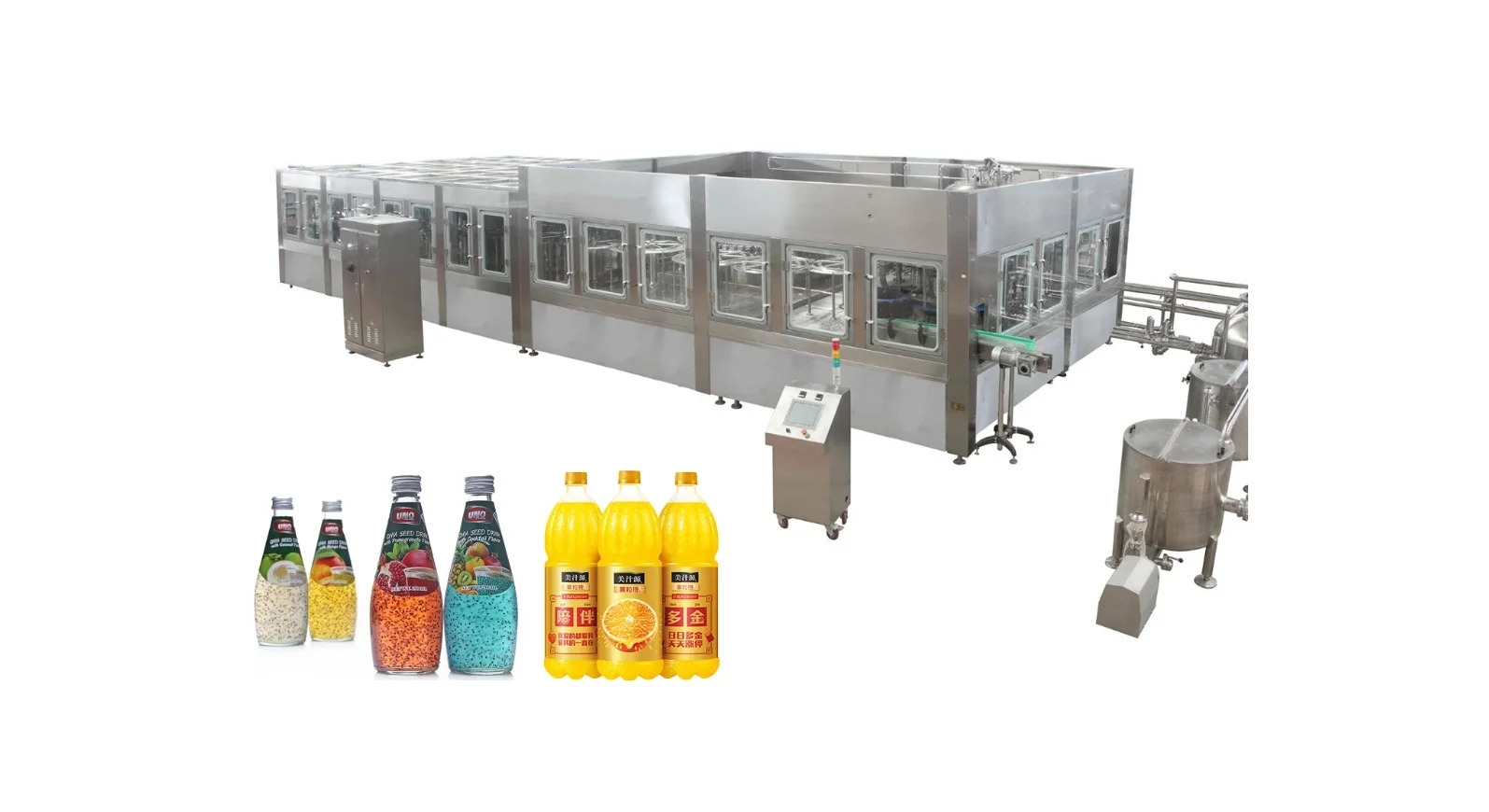
Many beverage producers now prefer purchasing complete production lines instead of individual machines.
A complete solution typically includes:
-
Water treatment systems
-
Beverage pre-treatment systems
-
Syrup mixing equipment
-
CO₂ mixing systems
-
PET blow molding equipment
-
Carbonated beverage filling machines
-
Bottle labeling systems
-
Conveyor systems
-
Secondary packaging equipment
-
Automatic cleaning systems (CIP)
-
Warehouse logistics integration
This approach simplifies project management while ensuring compatibility across the entire production process.
Factors to Consider Before Choosing a Filling Machine
Production Capacity
Estimate both current demand and future expansion.
A machine that is too small quickly becomes a bottleneck, while oversized equipment may increase unnecessary operating costs.
Bottle Compatibility
Check whether the machine supports:
-
Different bottle volumes
-
Multiple bottle shapes
-
PET bottles
-
Glass bottles
Greater flexibility reduces future upgrade expenses.
Filling Accuracy
High filling precision helps manufacturers:
-
Reduce product waste
-
Improve consistency
-
Meet regulatory standards
-
Increase customer satisfaction
Modern servo-controlled filling systems typically provide excellent accuracy.
Hygiene Standards
Food safety is critical in beverage manufacturing.
Look for machines featuring:
-
Stainless steel construction
-
Hygienic piping
-
Easy cleaning design
-
Automatic CIP systems
-
Food-grade sealing components
These features reduce contamination risks and simplify maintenance.
Energy Efficiency
Today's beverage factories increasingly focus on reducing operating costs.
Energy-efficient equipment can lower:
-
Water consumption
-
Electricity usage
-
Compressed air demand
-
Maintenance frequency
This contributes to both sustainability goals and long-term profitability.
Working with an Experienced Equipment Manufacturer
Selecting the right machine is only part of building a successful beverage production facility. The experience of the equipment supplier is equally important.
With more than two decades of experience in beverage packaging machinery, Pengxiang Huixing has become a comprehensive manufacturer integrating research, development, and production. Located in Shenzhen, China, the company specializes in intelligent workshop planning, intelligent factory design, and advanced liquid beverage packaging technologies.
Its solutions cover every stage of beverage production, including water treatment, beverage pre-treatment, PET blow molding equipment, blow-fill-cap production lines, blow-label-fill-cap systems, labeling equipment, conveyor systems, secondary packaging equipment, industrial cleaning solutions, sterilization systems, gallon water production lines, bottled beverage filling lines, mineral water production lines, and automated CIP systems.
Certified under the ISO9000 quality management system and recognized as a Chinese High-Tech Enterprise, Pengxiang Huixing continuously introduces advanced beverage packaging technologies from around the world while combining independent innovation. Today, its equipment is widely used across more than twenty provinces in China and exported to countries including the UAE, Oman, Vietnam, the Philippines, Malaysia, and many other international markets.
For beverage manufacturers seeking complete carbonated drink production solutions, choosing an experienced supplier capable of delivering integrated engineering, installation, technical support, and intelligent manufacturing solutions can significantly reduce project risks and improve long-term operational efficiency.
Conclusion
Different carbonated soft drink filling machines serve different production needs. Gravity fillers are generally unsuitable for carbonated beverages, while isobaric filling technology remains the preferred solution for preserving carbonation and ensuring consistent quality. Rotary systems offer exceptional efficiency for high-volume production, whereas linear machines provide flexibility for smaller manufacturers.
When evaluating equipment, beverage producers should consider production capacity, automation level, bottle compatibility, hygiene standards, energy efficiency, and after-sales technical support. Investing in a complete, intelligently integrated production line not only improves operational efficiency but also creates a stronger foundation for future business growth.