

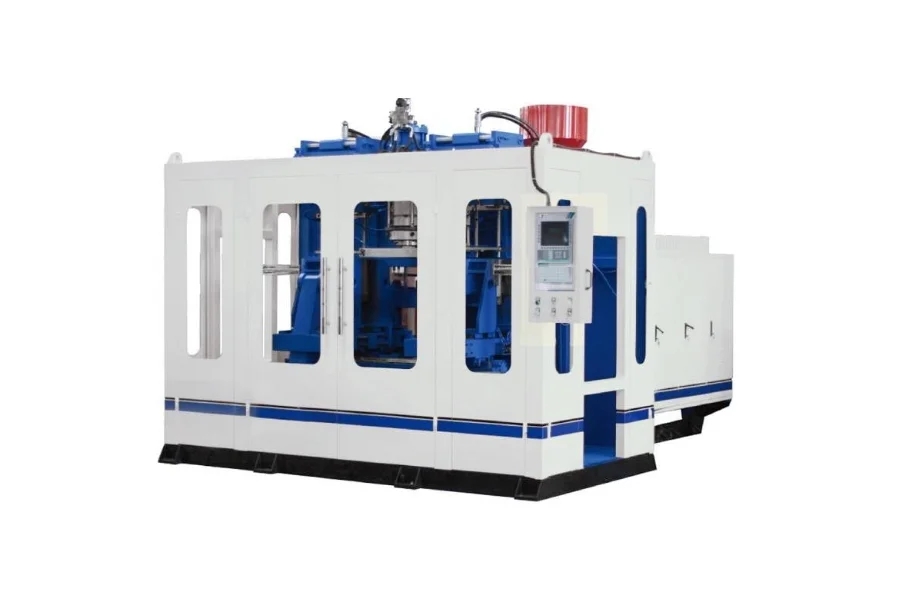
Choosing the right blow molding machine is an important decision for any beverage manufacturer planning to produce PET bottles efficiently and consistently. The machine affects not only bottle quality, but also production capacity, energy consumption, material utilization, line compatibility, and long-term operating stability.
For companies producing mineral water, carbonated soft drinks, juice, tea, or other liquid beverages, the best choice is rarely determined by machine speed alone. A practical selection should consider the bottle design, preform specifications, production volume, filling system, factory layout, and future expansion plans.
With the right approach, an automatic PET blow molding machine can become a reliable part of an integrated beverage production line rather than an isolated piece of equipment.
1. Start With Your PET Bottle Requirements
Before comparing machines, define exactly what bottles you need to produce.
Bottle volume is one of the first factors to consider. A production line making 350 mL and 500 mL water bottles has different requirements from one producing 1.5 L bottles or large containers. Bottle neck size, body diameter, height, wall thickness, and overall shape also affect the required mold configuration and machine parameters.
The bottle application matters as well. A bottle designed for carbonated beverages may require different mechanical strength and pressure resistance from a bottle used for still water.
Prepare a clear specification covering:
-
Bottle capacity and dimensions
-
Neck finish and preform type
-
Bottle weight
-
Material characteristics
-
Required bottle output
-
Bottle shape and mold design
-
Intended beverage application
-
Filling and downstream packaging requirements
Having these specifications ready makes it much easier to identify a suitable machine configuration.
2. Match Machine Capacity With Actual Production Demand
Machine output should be evaluated against your real production requirements rather than a headline speed alone.
An automatic blow molding machine may be described by its number of cavities and theoretical bottles-per-hour output. However, actual production depends on several factors, including preform heating performance, mold design, bottle specifications, operator settings, changeover time, and line synchronization.
For example, a machine configured for high-speed production may not be the best option for a plant with relatively moderate demand if the equipment is difficult to operate or poorly matched to the downstream filling line.
A useful approach is to calculate the required hourly output based on your filling capacity and planned operating schedule. The blow molding section should provide enough bottles to keep the filling line supplied without creating unnecessary bottleneck conditions.
3. Check Compatibility With Your Preforms
Preform compatibility is another key consideration.
PET preforms are available in different weights, neck finishes, lengths, and designs. The blow molding machine must be capable of properly heating and stretching the selected preform.
The heating system deserves particular attention. PET needs controlled and uniform heating before it enters the mold. If the heating process is inconsistent, bottles can suffer from uneven wall distribution, deformation, insufficient strength, or unstable dimensions.
When evaluating a machine, ask whether its preform heating system allows accurate control of heating zones and whether the configuration can be adjusted for different bottle designs.
For beverage manufacturers producing several bottle types, flexible preform and mold changeover can also reduce production downtime.
4. Evaluate the Heating and Stretch-Blow System
The heart of PET bottle production is the stretch-blow process. The machine must accurately control preform heating, stretching, and high-pressure air blowing.
A well-designed system should provide stable process control from one production cycle to the next. Important factors include heating-zone control, stretching mechanism, blowing pressure, exhaust management, and mold cooling.
Bottle quality should be consistent across the entire production run. Look for a machine that can maintain stable operating parameters and provides convenient access for adjustment and maintenance.
The stretch rod, blowing valve, mold, and related components should also be designed for reliable long-term operation. These details can have a significant effect on bottle quality and equipment uptime.
5. Consider Energy Consumption and Compressed Air Requirements
Energy efficiency should be considered during machine selection, especially for plants operating continuously.
PET blow molding typically involves electrical heating and high-pressure compressed air. The air compression system can represent an important part of the overall production infrastructure.
When comparing equipment, look beyond the machine's electrical power rating. Consider the complete utility requirements, including:
-
Heating power
-
High-pressure compressed air
-
Low-pressure compressed air where applicable
-
Cooling water or cooling systems
-
Air compressor capacity
-
Air recovery options
-
Factory ventilation and environmental requirements
An efficient machine should make effective use of utilities while maintaining stable bottle quality. Proper matching between the blow molding machine and air compressor system is particularly important for avoiding unnecessary energy consumption.
6. Make Sure the Machine Fits Your Filling Line
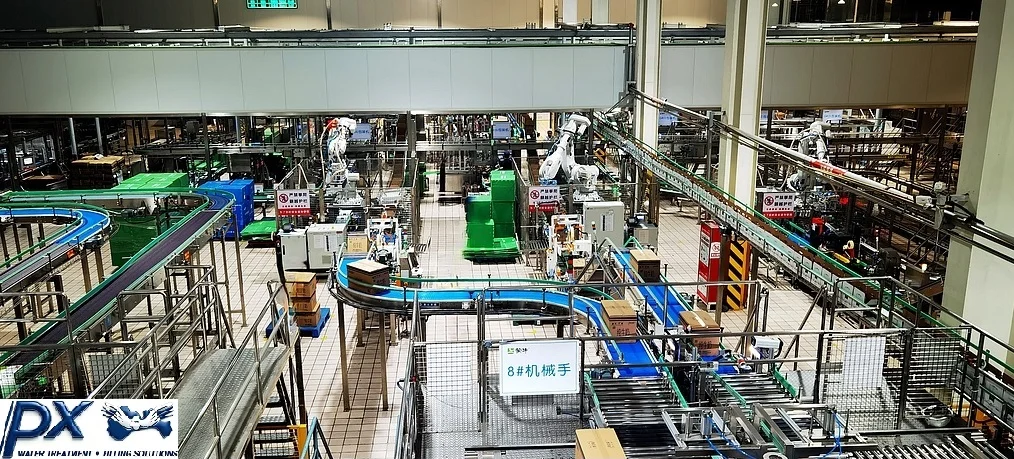
A blow molding machine does not operate independently in a modern beverage factory. It is part of a larger production system.
The machine should be compatible with the downstream filling and packaging equipment in terms of production speed, bottle specifications, conveyor interfaces, control systems, and layout.
For example, manufacturers may integrate PET bottle blowing with filling and capping equipment to create a more compact production process. Depending on the application, this can help reduce bottle handling between different stages.
When planning a complete beverage line, consider the relationship between:
Water Treatment → Beverage Pretreatment → PET Blowing → Filling → Capping → Labeling → Conveying → Secondary Packaging
This integrated approach is particularly valuable when building a new beverage factory or upgrading an existing plant.
7. Think About Factory Layout and Automation
The physical installation environment is often overlooked during equipment selection.
Check the available floor space, machine height, material flow, maintenance access, utility connections, and relationship between the blow molding area and the filling section.
For modern beverage factories, automation is also becoming increasingly important. A suitable machine should support centralized control, production monitoring, fault diagnosis, and communication with other line equipment where required.
Pengxiang Huixing focuses on high-end planning and design for smart workshops and smart factories. Its solutions cover not only PET blowing equipment, but also water treatment, beverage pretreatment, filling systems, labeling, conveying, and secondary packaging. This system-level experience can be useful when the objective is to build a coordinated production line rather than simply purchase a standalone machine.
8. Pay Attention to Mold Changeover and Maintenance
Production flexibility matters when a factory needs to manufacture multiple bottle formats.
If operators need to change molds frequently, the changeover process should be straightforward and practical. Easy access to key components can reduce downtime and make routine maintenance more manageable.
Ask the equipment supplier about:
-
Mold replacement procedures
-
Recommended maintenance intervals
-
Spare parts availability
-
Access to heating components
-
Blowing valve maintenance
-
Lubrication requirements
-
Electrical and control-system troubleshooting
-
Technical training and after-sales support
A machine that is easy to maintain can save considerable production time over its operating life.
9. Choose a Supplier With Complete Beverage Line Experience
The machine itself is important, but the supplier's engineering capability should not be ignored.
A beverage manufacturer may eventually need water treatment, beverage preparation, bottle blowing, filling, sterilization, labeling, conveying, and secondary packaging. If these systems are supplied and engineered separately, compatibility problems can arise during installation and commissioning.
Pengxiang Huixing is a beverage packaging machinery manufacturer based in Songgang, Bao'an District, Shenzhen, China. With around 20 years of experience in beverage packaging machinery, the company provides solutions covering water treatment systems, beverage pretreatment, PET blow molding equipment, blow-fill-cap production lines, blow-label-fill-cap lines, labeling systems, conveying systems, and secondary packaging equipment.
Its product range also includes bottled water production lines, gallon bottle production lines, juice and carbonated beverage systems, beverage filling machinery, sterilization equipment, automatic cleaning systems, and industrial cleaning solutions.
For manufacturers looking for PET bottle production equipment, the company's PET blow molding machine solutions can be considered as part of a broader beverage production setup.
10. Consider Quality Certification and Manufacturing Capability
Equipment quality is closely related to manufacturing processes, component selection, assembly standards, and quality control.
When evaluating suppliers, check whether the manufacturer has an established quality management system and a dedicated engineering and production team. It is also useful to understand where the equipment has been installed and whether the supplier has experience with similar production requirements.
Pengxiang Huixing has obtained ISO9000 quality management system certification and has been recognized as a Chinese high-tech enterprise. Its equipment has been supplied to customers in more than 20 provinces in China and exported to markets including the United Arab Emirates, Oman, Vietnam, the Philippines, and Malaysia.
Such project experience can provide useful evidence of a manufacturer's ability to handle different operating environments and beverage production requirements.
11. Plan for Future Production Expansion
Your current production requirements should not be the only consideration.
If your beverage business is expected to add new bottle sizes, increase production capacity, or introduce additional products, choose equipment with reasonable flexibility.
For example, a machine may need to support different molds or bottle specifications, while the overall line should have sufficient space and utility capacity for future upgrades.
It is also worth considering whether the supplier can provide additional equipment as your production requirements grow. Working with a supplier capable of providing integrated systems can simplify future expansion.
A Practical Selection Checklist
Before placing an order, review the following points:
-
Does the machine support your bottle size and neck finish?
-
Is the preform specification compatible?
-
Does the actual output match your filling line capacity?
-
Is the heating system suitable for your bottle design?
-
Are compressed air and electrical requirements acceptable?
-
Can the machine integrate with your existing production line?
-
Is mold changeover practical?
-
Are maintenance points easy to access?
-
Can the supplier provide installation and technical support?
-
Does the supplier have experience with complete beverage production systems?
-
Can the solution accommodate future capacity or product changes?
-
Does the machine fit your factory layout and automation strategy?
Conclusion
Selecting an automatic blow molding machine should be based on the complete production process, not simply the machine's maximum output. Bottle specifications, preform compatibility, heating performance, compressed air consumption, production capacity, maintenance requirements, automation, and downstream filling integration all influence the final result.
For beverage manufacturers planning a new PET bottle production line, an integrated approach can make equipment selection much more practical. By evaluating the blow molding machine together with water treatment, beverage preparation, filling, labeling, conveying, and packaging systems, manufacturers can build a more coordinated and reliable production operation.
With its experience in beverage packaging machinery, smart factory planning, and integrated production solutions, Pengxiang Huixing provides equipment and engineering services for customers developing or upgrading PET bottle beverage production lines.