


In today’s highly competitive beverage market, production accuracy is no longer just a technical metric—it is a decisive factor that impacts product quality, operational efficiency, and brand reputation. For manufacturers of bottled water and other liquid beverages, even minor inconsistencies in filling volumes can lead to product waste, compliance issues, and customer dissatisfaction. This is where automatic water filling equipment plays a critical role.
Modern filling systems are designed not only to increase output but also to deliver consistent precision across every bottle. With advancements in automation, sensor technology, and intelligent control systems, manufacturers can now achieve a level of accuracy that was once difficult to maintain in high-speed production environments.
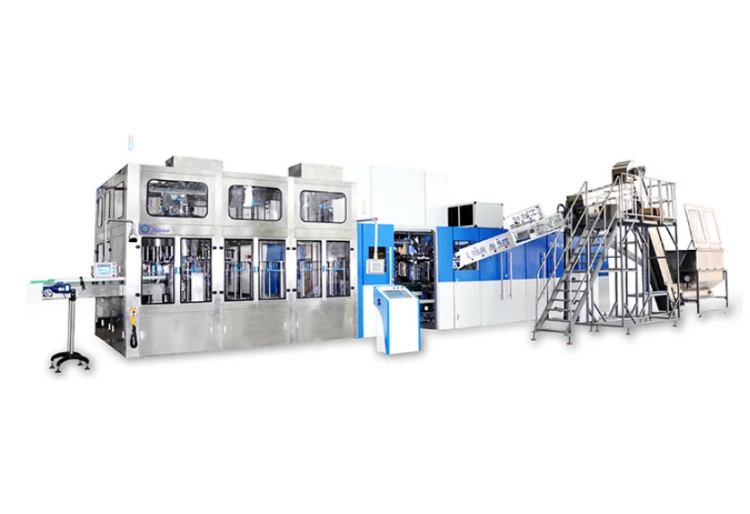
Why Production Accuracy Matters
Production accuracy in water filling operations directly affects several aspects of manufacturing:
-
Regulatory compliance: Overfilling or underfilling can violate labeling and packaging standards in many markets.
-
Cost control: Excess product loss due to overfilling increases raw material costs.
-
Brand consistency: Uniform fill levels create a professional appearance and build consumer trust.
-
Operational efficiency: Accurate systems reduce rework, waste, and downtime.
In high-volume production lines, even a deviation of a few milliliters per bottle can translate into significant losses over time. Therefore, investing in precise filling equipment is not optional—it is essential.
Key Technologies Behind Automatic Water Filling Equipment
Automatic water filling machines integrate several advanced technologies to ensure high precision and reliability:
1. Flow Meter Control Systems
Flow meters measure the exact volume of liquid passing through the system. These devices provide real-time data, allowing the machine to stop filling at the precise moment the target volume is reached. This method is especially effective for still water production where consistency is critical.
2. Level Control Filling
Level-based filling systems ensure that each bottle appears visually uniform by maintaining a consistent liquid level. This is particularly useful for transparent bottles where visual presentation matters as much as volume accuracy.
3. Servo Motor Precision
Servo-driven systems enable fine control over filling valves and timing. Compared to traditional mechanical systems, servo motors offer faster response times and higher repeatability, reducing deviations across production cycles.
4. PLC and HMI Integration
Programmable Logic Controllers (PLC) combined with Human-Machine Interfaces (HMI) allow operators to monitor and adjust parameters easily. These systems support automated diagnostics, reducing human error and ensuring stable operation.
5. Clean-in-Place (CIP) Systems
Integrated CIP systems maintain hygiene without disassembling equipment. This not only ensures food safety but also prevents contamination that could affect filling accuracy.
How Automation Improves Accuracy
Automation minimizes human intervention, which is one of the main causes of inconsistency in manual or semi-automatic systems. Fully automated water filling lines handle the entire process—from bottle feeding and rinsing to filling and capping—with synchronized precision.
By eliminating manual adjustments and standardizing workflows, automated systems ensure:
-
Consistent fill volumes across all bottles
-
Reduced product loss
-
Stable operation even at high speeds
-
Lower dependency on skilled labor
Moreover, modern machines can automatically compensate for variations in pressure, temperature, and liquid characteristics, maintaining accuracy under different operating conditions.
Integrated Production Lines for Better Performance
Accuracy does not depend solely on the filling machine itself. It is the result of a well-coordinated production line where each component works in harmony. This includes:
-
Water treatment systems ensuring consistent liquid quality
-
Bottle blowing machines producing uniform containers
-
Filling and capping units maintaining precise volumes
-
Labeling and packaging systems ensuring final product consistency
A fully integrated approach allows manufacturers to optimize the entire workflow, reducing bottlenecks and maintaining accuracy from start to finish.
Pengxiang Huixing: A Comprehensive Solution Provider
Pengxiang Huixing has established itself as a comprehensive manufacturer specializing in beverage packaging machinery and intelligent factory solutions. With over 20 years of experience, the company combines research, development, and production to deliver reliable and efficient systems for global clients.
Based in Shenzhen, China, Pengxiang Huixing offers a wide range of equipment and services, including:
-
Water treatment systems
-
Beverage pre-treatment systems
-
PET blow molding machines
-
Blow-fill-cap integrated production lines
-
Blow-label-fill-cap systems
-
Labeling systems and conveying systems
-
Secondary packaging equipment
Their flagship solutions include fully automatic bottle blowing machines, gallon barrel production lines, mineral water production lines, and complete beverage filling systems for juice and carbonated drinks.
What sets Pengxiang Huixing apart is its focus on intelligent workshop and factory planning. By integrating automation, digital control, and process optimization, the company helps clients achieve higher production accuracy and efficiency across the entire lifecycle—from procurement and manufacturing to packaging, warehousing, logistics, and distribution.
Real-World Benefits for Manufacturers
Companies that adopt advanced automatic water filling equipment often experience immediate and measurable improvements:
Reduced Waste
Accurate filling minimizes overfill losses, which can significantly reduce raw material costs over time.
Improved Throughput
High-speed automated systems maintain accuracy even at increased production rates, enabling manufacturers to scale operations without compromising quality.
Enhanced Product Quality
Consistent fill levels and hygienic processing ensure that each product meets quality standards and consumer expectations.
Lower Maintenance Costs
Modern machines are designed for durability and ease of maintenance, with predictive diagnostics that prevent unexpected downtime.
Global Compliance
With precise control systems, manufacturers can meet international standards and expand into new markets with confidence.
The Role of Innovation in Future Accuracy
As the beverage industry continues to evolve, the demand for smarter and more efficient equipment will only increase. Technologies such as IoT (Internet of Things), AI-driven analytics, and real-time monitoring are beginning to play a larger role in filling systems.
Future developments may include:
-
Self-adjusting machines that optimize parameters automatically
-
Predictive maintenance powered by data analytics
-
Fully digitalized production lines with real-time performance tracking
Companies like Pengxiang Huixing, which emphasize continuous innovation and technology integration, are well-positioned to lead this transformation.
Conclusion
Improving production accuracy with automatic water filling equipment is not just about upgrading machinery—it is about transforming the entire production process. By adopting advanced technologies and integrated systems, manufacturers can achieve consistent quality, reduce costs, and enhance operational efficiency.
With its strong technical foundation, comprehensive product portfolio, and commitment to innovation, Pengxiang Huixing provides reliable solutions that help businesses stay competitive in a demanding market. For companies looking to optimize their filling operations, investing in high-precision automated equipment is a strategic move that delivers long-term value.