


Clean, safe, and consistent water is the foundation of modern beverage production, food processing, and many industrial operations. As quality standards become stricter and consumers pay closer attention to product safety, water treatment systems are no longer simple filtration units. They are integrated, intelligent systems designed to deliver stable water quality, reduce operational risk, and support efficient, large-scale production.
This article explains the key components of a modern water treatment system, how they work together, and why an integrated approach is essential for today’s beverage and liquid processing plants. Drawing on the practical experience of Pengxiang Huixing, a comprehensive beverage packaging and water treatment equipment manufacturer based in Shenzhen, China, we will look at water treatment not as a standalone process, but as a critical part of the entire production ecosystem.
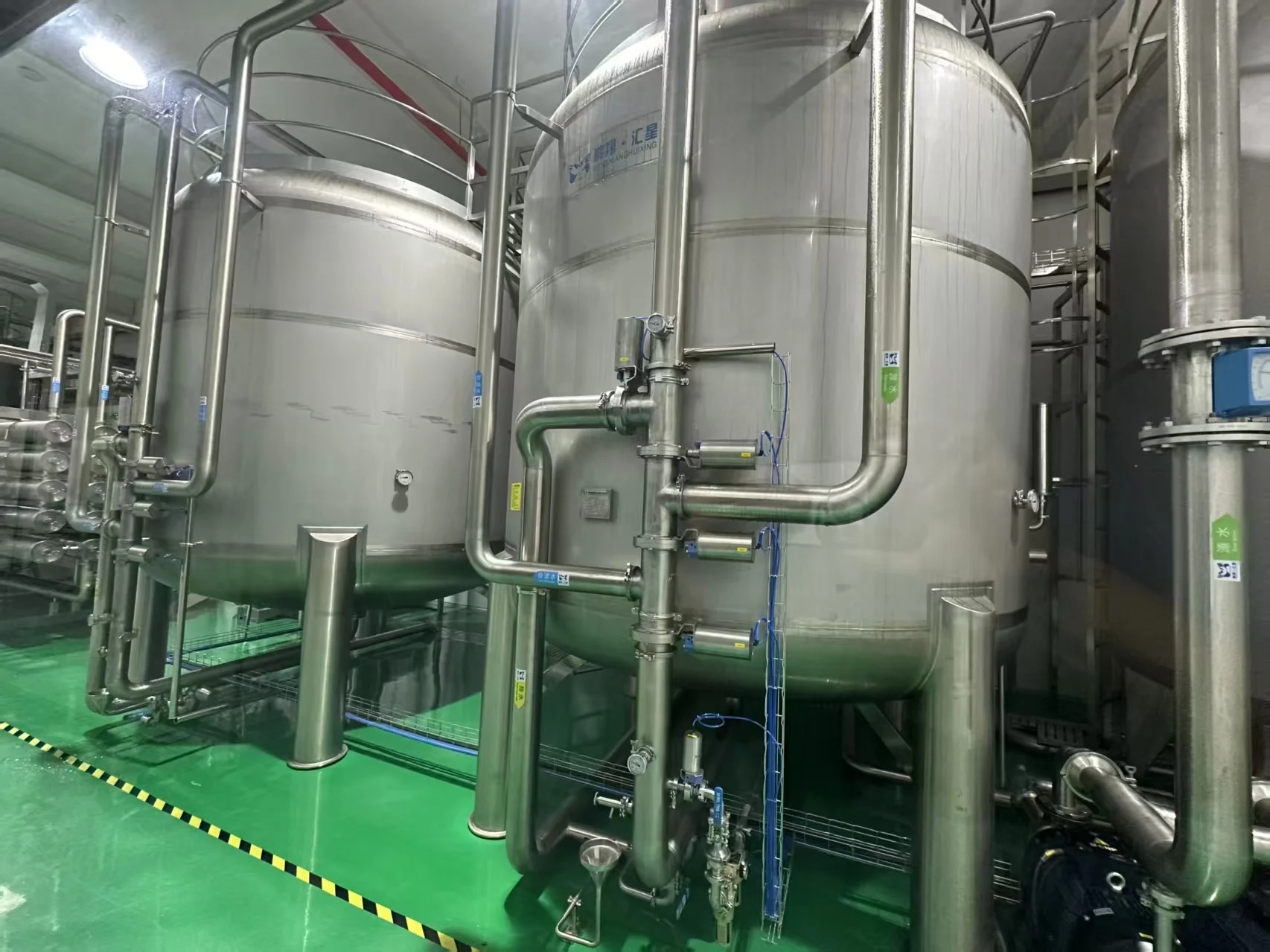
1. Raw Water Intake and Pretreatment
Every water treatment system begins with raw water intake. The quality of source water can vary significantly depending on whether it comes from municipal supplies, groundwater, rivers, or reservoirs. Pretreatment is designed to stabilize incoming water quality and protect downstream equipment.
Key pretreatment components typically include:
-
Raw water pumps to ensure stable flow and pressure
-
Coarse strainers or screens to remove large particles such as sand, leaves, or debris
-
Balancing tanks to equalize fluctuations in flow and turbidity
At this stage, the goal is not to produce drinking-grade water, but to remove large contaminants and create consistent operating conditions for more precise treatment steps.
2. Chemical Dosing and Coagulation Systems
Modern water treatment relies heavily on controlled chemical dosing. Automated dosing systems add precise amounts of coagulants, flocculants, pH adjusters, or oxidizing agents based on real-time water quality data.
Core elements include:
-
Chemical storage tanks
-
Metering pumps with adjustable flow
-
Inline mixers or reaction tanks
-
Online sensors for pH, turbidity, and conductivity
Coagulation and flocculation allow fine suspended particles to bind together into larger flocs, which can then be removed efficiently by filtration or sedimentation. Intelligent dosing reduces chemical consumption while maintaining stable water quality, an important factor in long-term operating cost control.
3. Multi-Media Filtration Units
Multi-media filters are a cornerstone of modern water treatment systems. Using layers of quartz sand, anthracite, or other filter media, these units remove suspended solids, colloids, and residual flocs.
Key characteristics of advanced filtration systems include:
-
High filtration efficiency with low pressure loss
-
Automatic backwashing controlled by pressure differential or time
-
Durable internal structures designed for continuous operation
In beverage plants, stable filtration performance is essential to protect membranes, sterilization units, and filling equipment downstream.
4. Activated Carbon Filtration
Activated carbon filters play a critical role in improving water taste, odor, and chemical purity. They are particularly important for beverage production, where sensory quality directly affects the final product.
Functions of activated carbon filters include:
-
Removal of residual chlorine and chloramines
-
Adsorption of organic compounds
-
Reduction of color and odor
Well-designed carbon filtration systems ensure that water entering the production process does not negatively impact flavor profiles or interfere with sterilization and filling operations.
5. Membrane Separation Systems
Membrane technology is one of the defining features of modern water treatment. Depending on application requirements, systems may include microfiltration (MF), ultrafiltration (UF), nanofiltration (NF), or reverse osmosis (RO).
Reverse osmosis systems, in particular, are widely used for bottled water, beverage processing, and industrial applications. Their advantages include:
-
High removal rates for dissolved salts, heavy metals, and microorganisms
-
Stable and repeatable water quality
-
Compatibility with automated control systems
Pengxiang Huixing integrates membrane systems into complete water treatment lines, ensuring that membrane selection, pretreatment, and cleaning systems are properly matched for long service life and reliable performance.
For a closer look at integrated solutions, you can explore their complete
water treatment system offerings, which are designed to support beverage plants from raw water intake through final packaging.
6. Sterilization and Disinfection Systems
Even after advanced filtration and membrane treatment, sterilization remains essential to ensure microbiological safety. Modern systems use a combination of physical and chemical disinfection methods, including:
-
Ultraviolet (UV) sterilizers
-
Ozone generators
-
Hot water or chemical sanitation loops
UV sterilization is commonly used for its effectiveness and lack of chemical residue, while ozone provides powerful disinfection and extended protection in storage tanks and pipelines. The choice depends on product type, regulatory requirements, and plant operating philosophy.
7. Clean-in-Place (CIP) and System Hygiene
Hygiene management is often overlooked when discussing water treatment, but it is a key component of modern systems. Clean-in-place (CIP) systems allow internal cleaning and disinfection of tanks, pipelines, membranes, and filters without disassembly.
Advanced CIP systems offer:
-
Automated cleaning sequences
-
Controlled temperature, flow, and chemical concentration
-
Reduced downtime and labor requirements
Pengxiang Huixing’s experience in intelligent cleaning systems and industrial cleaning solutions ensures that water treatment equipment remains reliable and compliant throughout its lifecycle.
8. Automation and Intelligent Control
Modern water treatment systems are no longer manually operated. Automation and digital monitoring are now standard requirements, especially in large-scale beverage plants and smart factories.
Core automation features include:
-
PLC-based control systems
-
Human-machine interfaces (HMI) for real-time monitoring
-
Data logging for quality tracking and audits
-
Remote diagnostics and fault alerts
By integrating water treatment into the broader intelligent workshop and intelligent factory design, manufacturers can achieve consistent quality, traceability, and optimized energy use across the entire production line.
9. Storage, Distribution, and Integration with Packaging Lines
Treated water must be stored and delivered to production lines without contamination or quality loss. Modern systems include:
-
Hygienic storage tanks with level control
-
Circulation loops to prevent stagnation
-
Sanitary pipelines and valves
One of Pengxiang Huixing’s key strengths lies in integrating water treatment with downstream processes such as blowing, filling, capping, labeling, conveying, and secondary packaging. This end-to-end approach reduces interface risks and ensures smooth coordination between water quality and filling performance.
10. A System-Level Approach to Water Treatment
A modern water treatment system is not a collection of isolated devices. It is a carefully engineered system that supports product quality, operational efficiency, and long-term reliability.
With over 20 years of experience, Pengxiang Huixing has built its competitive advantage by combining global beverage packaging technologies with continuous improvement and innovation. From bottled water and gallon lines to juice, carbonated beverages, and industrial cleaning solutions, the company’s integrated approach helps customers manage water quality across procurement, production, packaging, storage, logistics, and distribution.