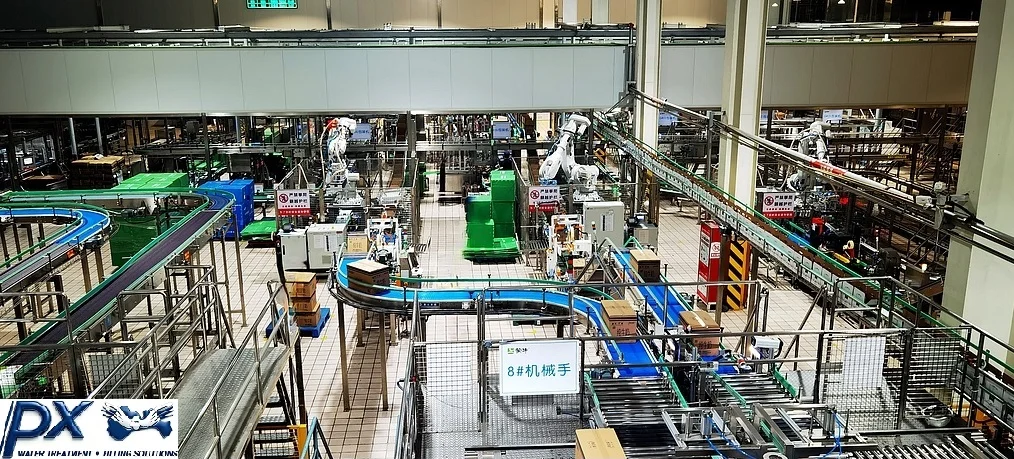


Selecting an automatic water filling machine is one of the most important decisions for any bottled water manufacturer. Whether you are launching a new production facility or expanding an existing operation, the right equipment directly influences production efficiency, product quality, labor costs, maintenance requirements, and future scalability.
Many manufacturers focus only on filling speed when comparing machines. In reality, production capacity is only one part of the equation. Factory size, bottle types, water treatment requirements, automation level, energy efficiency, maintenance accessibility, and integration with downstream packaging equipment all play equally important roles.
This guide explains how to choose an automatic water filling machine according to your factory scale while avoiding common purchasing mistakes.
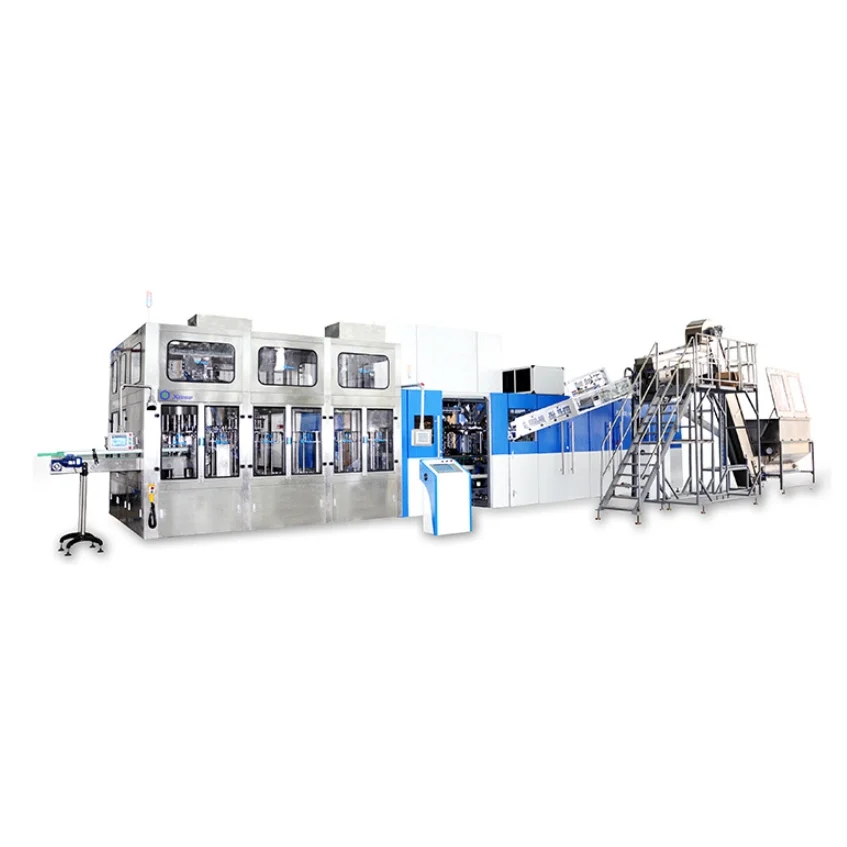
Understand Your Current Production Requirements
Before selecting equipment, define your actual production goals instead of purchasing based solely on future expectations.
Ask yourself several practical questions:
-
How many bottles will be produced per hour?
-
What bottle sizes will be filled?
-
Will production operate one shift or multiple shifts?
-
Is the water purified, mineral, spring, or drinking water?
-
What packaging formats are required?
-
Is factory expansion planned within the next five years?
Clear answers help prevent both underinvestment and unnecessary overspending.
A machine that perfectly matches today's production while allowing moderate expansion often provides the highest return on investment.
Small-Scale Factories
Small production facilities usually serve local markets, private labels, or regional distributors.
Typical characteristics include:
-
Lower production volumes
-
Limited factory space
-
Smaller workforce
-
Flexible bottle specifications
-
Moderate investment budgets
For these operations, compact automatic filling systems offer excellent efficiency while minimizing installation space.
Key considerations include:
-
Easy operation
-
Simple maintenance
-
Fast bottle format changes
-
Stable filling accuracy
-
Low water loss
Instead of pursuing maximum speed, stability and reliability become more valuable.
Medium-Scale Production Facilities
As production grows, operational efficiency becomes increasingly important.
Medium-sized factories often supply supermarkets, restaurants, wholesalers, and commercial distributors.
Production usually includes:
-
Multiple bottle sizes
-
Continuous daily operation
-
Higher sanitation standards
-
Larger storage areas
-
Automated packaging
At this stage, manufacturers benefit from integrating several production processes into one complete line.
These may include:
-
Water treatment
-
Bottle blowing
-
Air conveying
-
Bottle rinsing
-
Filling
-
Capping
-
Labeling
-
Inkjet coding
-
Shrink wrapping
-
Carton packaging
-
Palletizing
Integrated automation reduces manual handling while improving production consistency.
Large-Scale Manufacturing Plants
Large beverage producers require complete intelligent production systems rather than standalone filling machines.
Important priorities include:
-
Maximum uptime
-
High production speeds
-
Predictive maintenance
-
Automated quality inspection
-
Digital production monitoring
-
Energy optimization
-
Remote diagnostics
Large factories also need equipment capable of operating continuously for extended periods while maintaining precise filling accuracy.
Smart production management systems become essential for monitoring productivity, equipment status, maintenance schedules, and production efficiency.
Consider Bottle Types
Bottle compatibility affects machine selection more than many buyers realize.
Questions include:
-
PET bottles only?
-
Round bottles?
-
Square bottles?
-
Lightweight bottles?
-
Different neck finishes?
-
Multiple bottle capacities?
Choosing equipment with flexible bottle handling allows future product expansion without replacing major production equipment.
Evaluate Filling Accuracy
Water filling may appear straightforward, but inaccurate filling creates several problems.
Underfilled bottles may violate packaging standards.
Overfilled bottles waste product and reduce profitability.
Modern automatic filling machines use advanced flow control technology to ensure consistent filling levels across thousands of bottles every hour.
Stable filling also improves downstream labeling and packaging performance.
Hygiene Standards Matter
Water production requires strict sanitary conditions.
Look for equipment featuring:
-
Stainless steel construction
-
Food-grade contact surfaces
-
Smooth internal pipe design
-
Easy cleaning structure
-
Closed filling environment
-
Automatic sanitation systems
Cleanability reduces contamination risks while shortening maintenance downtime.
Factories producing premium bottled water especially benefit from hygienic equipment design.
Don't Ignore Water Treatment
Excellent filling equipment cannot compensate for poor water quality.
A complete production solution should include suitable water treatment systems based on the incoming water source.
These may include:
-
Sand filtration
-
Activated carbon filtration
-
Reverse osmosis
-
UV sterilization
-
Ozone sterilization
-
Precision filtration
Proper treatment ensures product safety while protecting filling equipment from scaling and contamination.
Think Beyond the Filling Machine
A modern water production facility consists of multiple connected systems rather than one standalone machine.
Production efficiency depends on smooth coordination between:
-
PET bottle production
-
Air conveying
-
Bottle unscrambling
-
Filling
-
Capping
-
Labeling
-
Conveying
-
Secondary packaging
-
Warehousing
Selecting a supplier capable of delivering complete production lines simplifies installation, commissioning, and long-term technical support.
Automation Reduces Operating Costs
Automation is no longer reserved for massive beverage companies.
Today's intelligent systems help factories of various sizes improve efficiency through:
-
Automatic bottle feeding
-
Intelligent fault detection
-
Touchscreen operation
-
Production monitoring
-
Automatic CIP cleaning
-
Remote maintenance support
Automation also reduces operator errors while improving production consistency.
Plan for Future Expansion
One common purchasing mistake is selecting equipment that exactly matches today's production needs without considering future growth.
Business expansion often happens faster than expected.
Choosing modular equipment allows manufacturers to:
-
Increase production capacity
-
Add packaging equipment
-
Expand warehouse automation
-
Introduce new bottle sizes
-
Upgrade production software
Scalable production systems reduce future upgrade costs.
Why Integrated Solutions Offer Long-Term Value
Working with multiple equipment suppliers can create compatibility issues during installation and production.
Integrated solution providers simplify the entire process by designing equipment that works together from the beginning.
Pengxiang Huixing has spent more than two decades specializing in beverage packaging machinery and intelligent factory solutions. The company provides comprehensive systems including water treatment, beverage pretreatment systems, PET blow molding equipment, blow-fill-cap production lines, blow-label-fill-cap production lines, labeling systems, conveyor systems, secondary packaging equipment, industrial cleaning solutions, and complete bottled water production lines.
As an integrated manufacturer combining research, development, and production, Pengxiang Huixing focuses on intelligent workshops and smart factory planning for liquid beverage packaging. Its products have obtained ISO9000 Quality Management System certification and the company has been recognized as a Chinese High-Tech Enterprise.
Over the past 20 years, the company has continuously introduced and improved advanced beverage packaging technologies while developing its own competitive innovations. Today, its equipment serves customers throughout more than 20 Chinese provinces and has been exported to the UAE, Oman, Vietnam, the Philippines, Malaysia, and many other international markets.
Manufacturers looking for a complete solution rather than standalone equipment can benefit from suppliers capable of integrating every stage—from water treatment and bottle production to filling, packaging, warehousing, logistics, and distribution—into one coordinated production system.
Questions to Ask Before Making Your Final Decision
Before placing an order, discuss these topics with your equipment supplier:
-
Can the production line accommodate future expansion?
-
How quickly can bottle sizes be changed?
-
What maintenance support is available?
-
Is operator training included?
-
What spare parts are commonly required?
-
Can the system integrate with existing equipment?
-
How is production data monitored?
-
What sanitation procedures are recommended?
These questions often reveal the true long-term value of a production system.
Final Thoughts
Choosing the right automatic water filling machine involves much more than comparing production speeds. The ideal solution should match your factory's current production requirements while supporting future business growth.
By considering production capacity, bottle compatibility, hygiene standards, automation, water treatment, intelligent manufacturing, and complete production line integration, manufacturers can build efficient operations that remain competitive for years to come.
A trusted equipment partner with extensive engineering experience and comprehensive production capabilities can significantly simplify factory planning while ensuring reliable long-term performance. Investing in a well-designed automatic water filling solution today creates a stronger foundation for future expansion, improved operational efficiency, and consistent product quality.