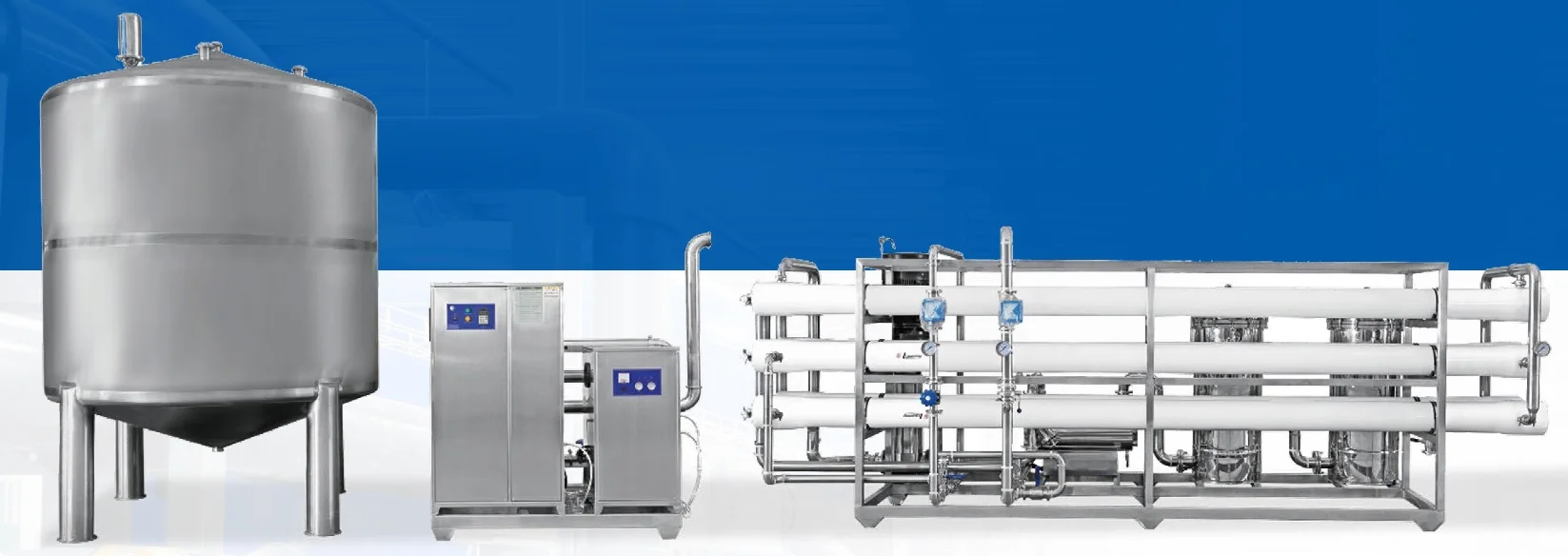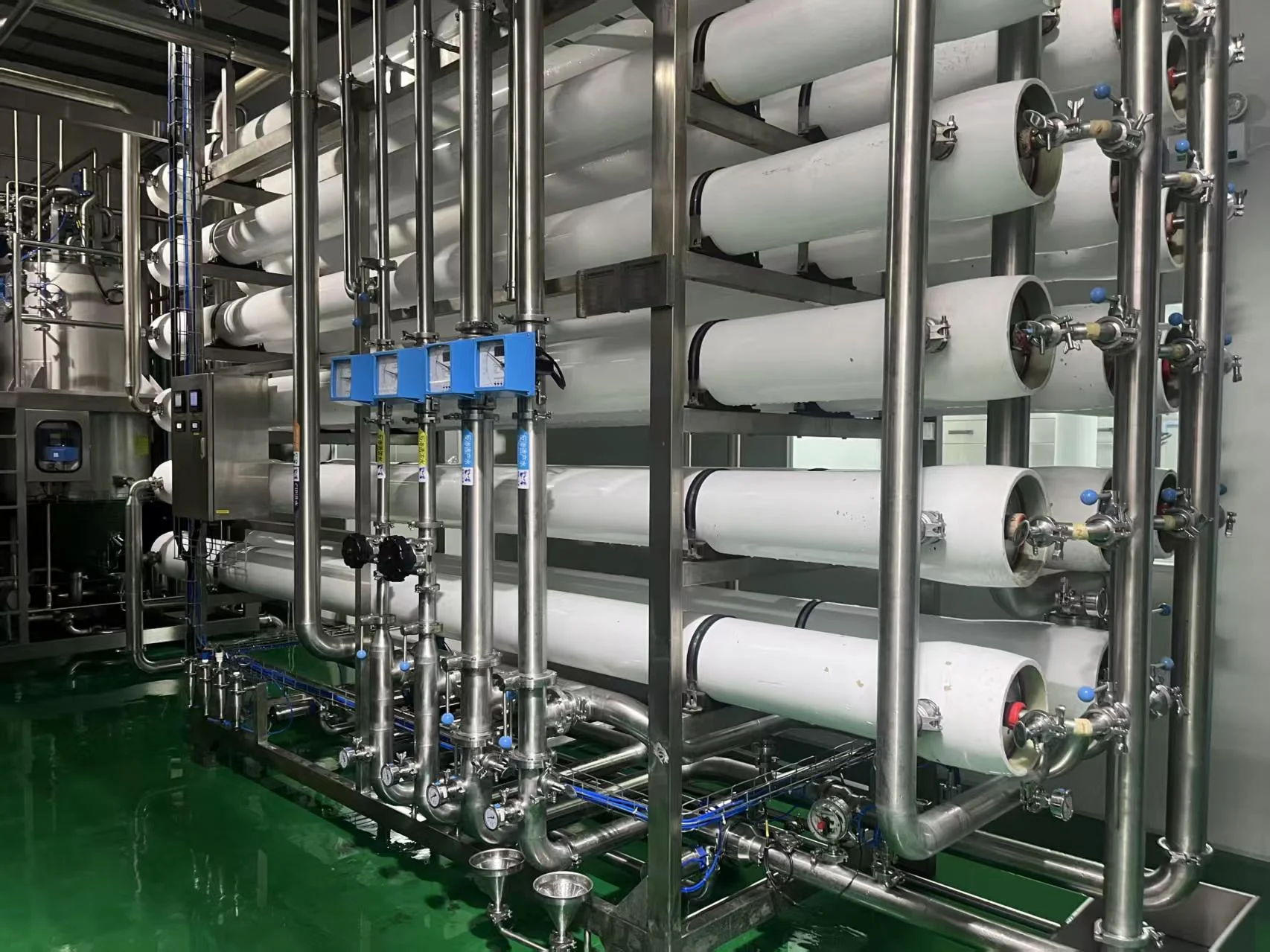


Water quality is one of the most important factors in any beverage production process. Before water reaches a filling machine, mixing system, sterilization unit, or finished product, it often needs to pass through several treatment stages. Among these stages, multi-media filtration is widely used to remove suspended solids, turbidity, and other particulate impurities from raw water.
However, not every multi-media filter is suitable for every water source or production line. Selecting the right equipment requires more than simply looking at filtration capacity. Raw water quality, required flow rate, media configuration, operating pressure, backwashing requirements, and the downstream process all need to be considered.
For beverage manufacturers planning a new water treatment system or upgrading an existing one, understanding these factors can help avoid unstable operation and unnecessary maintenance.
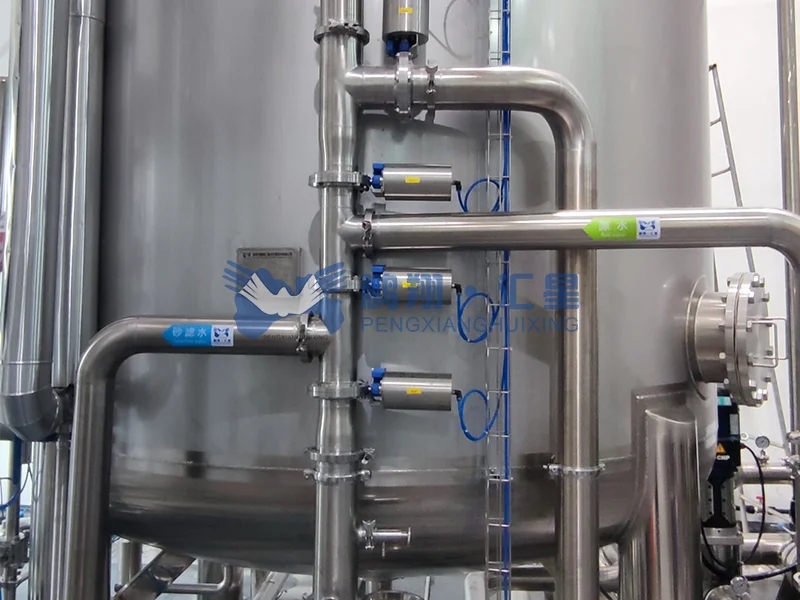
What Is a Multi-media Filter?
A multi-media filter is a pressure filtration system that uses several layers of filtration media with different densities and particle sizes. Common media include anthracite, quartz sand, manganese sand, or other specialized materials selected according to the characteristics of the raw water.
During normal operation, untreated water enters the top of the filter and flows downward through the media bed. Larger suspended particles are retained near the upper layers, while finer particles are captured deeper in the filter. The treated water then exits through the lower collection system.
Compared with a single-media sand filter, a properly designed multi-media filter can provide better use of the entire media bed. This helps maintain filtration performance while allowing the system to handle changes in suspended solids more effectively.
For beverage plants, multi-media filtration is generally used as a pretreatment step rather than as the final purification process. Depending on the water source and product requirements, it may be followed by activated carbon filtration, softening, ultrafiltration, reverse osmosis, ultraviolet treatment, ozone treatment, or other processes.
Start with Raw Water Analysis
The first step in selecting a multi-media filter should always be understanding the water that needs to be treated.
Municipal water, groundwater, surface water, and process-recycled water can have very different characteristics. A system designed without considering actual water quality may experience rapid pressure increases, frequent backwashing, or inconsistent filtration results.
Important parameters to check include:
-
Turbidity and suspended solids
-
Iron and manganese levels
-
Hardness
-
Organic matter
-
pH
-
Seasonal changes in water quality
-
Raw water temperature
-
Required treated-water quality
For example, if the raw water contains a high concentration of suspended solids, the filtration system may require a larger media volume or a suitable pretreatment stage. If iron or manganese is a major concern, specialized filtration media and oxidation processes may be required instead of relying on standard sand filtration alone.
A water analysis report provides a practical starting point for equipment selection and system design.
Match the Filter to the Required Flow Rate
Flow rate is another critical factor.
A beverage production facility may have different water demands for production, cleaning, sterilization, bottle rinsing, ingredient preparation, and other operations. Designing the filter only according to average water consumption can create problems when the plant operates at peak demand.
The required filtration capacity should therefore consider:
-
Normal production flow
-
Peak water consumption
-
Operating hours
-
Backwashing water requirements
-
Future production expansion
A filter that is too small may operate at excessive loading rates, resulting in faster pressure loss and shorter filtration cycles. A filter that is unnecessarily large may increase equipment footprint and complicate system management.
The goal is to select a filtration vessel and media bed that can provide stable performance under actual operating conditions.
Choose the Right Media Configuration
The filtration media is at the heart of a multi-media filter.
A typical configuration may use a coarse, low-density material at the top and finer, denser materials below it. The exact combination depends on the water quality and treatment objectives.
Anthracite is commonly used as an upper layer because of its relatively low density and larger particle structure. Quartz sand can provide finer filtration in the lower layer. In some applications, additional media may be selected for specific contaminants.
The important point is that media selection should not be based solely on a standard configuration. Particle size, density, bed depth, loading rate, and water characteristics all influence performance.
Incorrect media selection can lead to channeling, poor filtration, excessive pressure drop, or media loss during backwashing.
Consider Backwashing from the Beginning
Backwashing is a routine part of multi-media filter operation.
As suspended particles accumulate in the media bed, the pressure difference between the inlet and outlet gradually increases. At a certain point, the filter needs to be cleaned by reversing the water flow and expanding the media bed.
A practical filtration system should therefore include adequate provisions for:
-
Backwash water flow
-
Drainage capacity
-
Air or water-assisted cleaning when required
-
Automatic valve operation
-
Pressure monitoring
-
Backwash cycle control
The backwash process should be strong enough to remove trapped impurities without causing excessive media loss.
For an automated beverage production facility, automatic backwashing can also reduce operator workload. Pressure sensors, programmable controls, and automatic valves can be integrated into the treatment system so that cleaning cycles are performed according to preset conditions.
Think About the Complete Water Treatment Process
A multi-media filter should never be evaluated as an isolated piece of equipment.
Its performance directly affects downstream treatment units. If excessive suspended solids pass through the filter, subsequent equipment may become overloaded.
For example, in a system using reverse osmosis, effective pretreatment helps reduce the particulate load reaching the membrane system. This can contribute to more stable operation and reduce the risk of premature fouling.
A beverage water treatment line may therefore include a sequence such as:
Raw Water → Multi-media Filter → Activated Carbon Filter → Softener or Other Pretreatment → Precision Filtration → RO System → Disinfection → Treated Water Tank → Beverage Production
The actual configuration should be determined by raw water characteristics and the final application.
Automation and Monitoring Matter
Modern water treatment systems are increasingly designed around automatic operation rather than manual adjustment.
A well-integrated multi-media filtration system can monitor parameters such as inlet pressure, outlet pressure, differential pressure, flow rate, and operating status. These signals can be connected to a central control system to improve visibility of equipment performance.
For larger beverage plants, this approach becomes especially useful when the water treatment system is integrated with the rest of the production line.
Operators can identify abnormal pressure increases, delayed backwashing, valve problems, or insufficient flow before these issues have a significant effect on production.
Automation also supports consistent operation between different shifts and reduces dependence on manual experience.
Hygiene and Equipment Construction Are Important
For beverage manufacturers, equipment hygiene cannot be treated as an afterthought.
The filter vessel, pipelines, valves, connections, and drainage system should be designed with suitable materials and structures for the intended application. The system should also allow convenient inspection and maintenance.
Although the multi-media filter is normally part of the pretreatment section, its cleanliness can still influence the overall reliability of the water treatment process.
The surrounding piping should also be arranged logically to minimize dead zones and make maintenance easier. Where the water treatment system is part of a larger beverage plant, equipment layout should take into account access, drainage, cleaning, and connection to downstream systems.
How Pengxiang Huixing Approaches Water Treatment
Pengxiang Huixing is a beverage packaging machinery manufacturer based in Songgang, Bao'an District, Shenzhen, China. With around 20 years of experience in beverage packaging machinery technology, the company provides integrated solutions covering water treatment, beverage pretreatment, PET blow molding, filling and capping, blow-fill-seal production, blow-label-fill-seal production, labeling, conveying, and secondary packaging.
For customers evaluating filtration equipment, the company provides multi-media filter solutions as part of broader water treatment planning.
This integrated approach is useful because water treatment is closely connected with beverage production. The treated water may eventually be used in product preparation, bottle rinsing, equipment cleaning, or other production processes. Therefore, filtration capacity and water quality need to match the requirements of the entire production system.
Pengxiang Huixing also focuses on smart workshop and smart factory planning, helping customers connect equipment, production processes, cleaning systems, packaging machinery, storage, logistics, and other production stages into a more coordinated operation.
Its product range includes water treatment production lines, automatic CIP systems, sterilization equipment, bottled water production lines, gallon bottle production lines, juice and carbonated beverage production equipment, beverage filling machinery, and intelligent cleaning solutions.
The company's products have obtained ISO9000 quality management system certification and the company has been recognized as a Chinese high-tech enterprise. Its equipment has been supplied to customers in more than 20 provinces in China and exported to markets including the United Arab Emirates, Oman, Vietnam, the Philippines, and Malaysia.
Practical Questions to Ask Before Purchasing
Before selecting a multi-media filter, beverage manufacturers should prepare several basic pieces of information for the equipment supplier.
These include:
-
What is the raw water source?
-
What is the current raw water quality?
-
What flow rate is required during normal and peak production?
-
What contaminants need to be reduced?
-
What treatment equipment will be installed downstream?
-
How often can the system be backwashed?
-
Is automatic operation required?
-
What are the available installation space and utility conditions?
-
Is future production expansion expected?
Providing accurate information at the design stage makes it easier to determine the appropriate filter vessel size, media combination, control method, piping configuration, and backwashing arrangement.
Conclusion
Choosing the right multi-media filter is not simply a matter of selecting a larger filtration vessel. The right solution must be matched to raw water quality, flow requirements, filtration objectives, media characteristics, backwashing conditions, downstream equipment, and the overall production environment.
For beverage manufacturers, this is particularly important because water treatment is an upstream process that can influence the stability of the entire