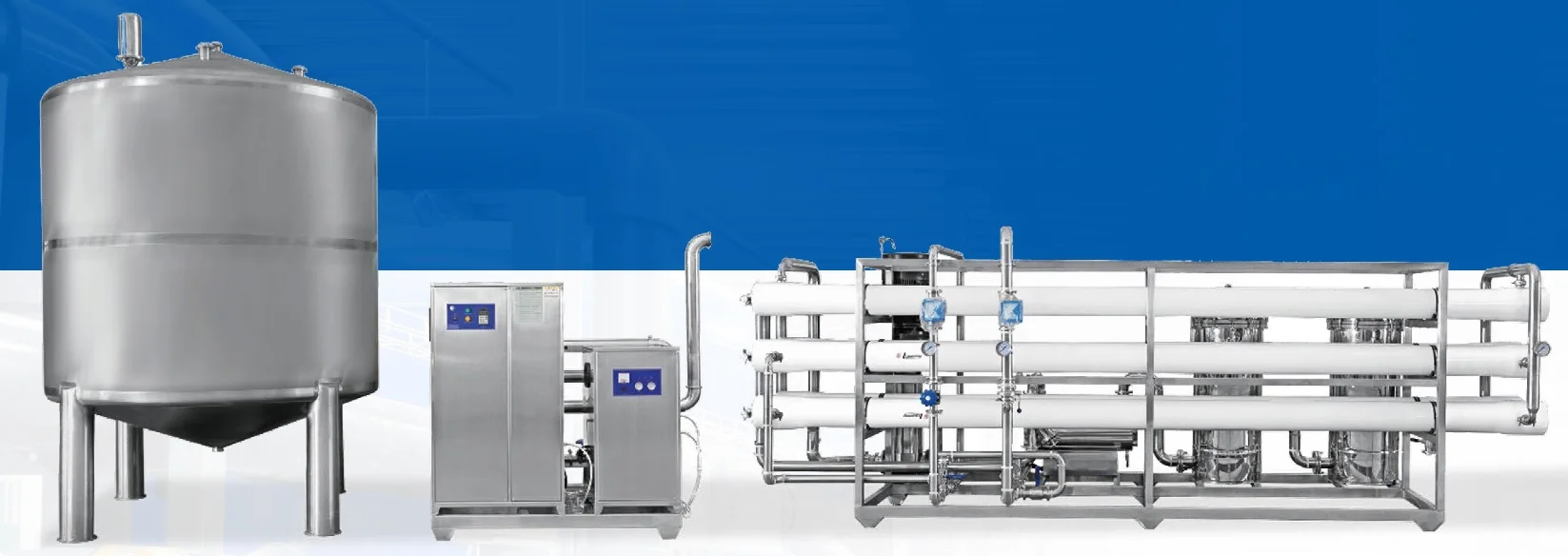


Water treatment is no longer simply a supporting process in beverage manufacturing. As water quality requirements become stricter and beverage producers face growing pressure to improve production efficiency, reduce resource consumption, and maintain stable product quality, water treatment systems are becoming a central part of modern beverage production.
For bottled water, juice, carbonated soft drinks, functional beverages, and other liquid products, the quality of process water directly affects taste, safety, equipment performance, and production consistency. At the same time, beverage manufacturers are looking for treatment systems that are easier to operate, more automated, and better integrated with filling and packaging lines.
These changes are driving several important trends in water treatment system technology. From intelligent monitoring and membrane treatment to energy efficiency and integrated plant design, the next generation of water treatment systems will focus not only on water quality, but also on the overall performance of the production facility.
1. Smarter Water Treatment Through Automation
One of the most practical trends is the increasing use of automation.
Traditional water treatment systems often depend heavily on manual inspection and operator experience. Operators may need to check pressure, flow rate, conductivity, tank levels, filter conditions, and other parameters at different points in the process. This approach can work for smaller facilities, but it becomes increasingly difficult to manage as production capacity grows.
Modern systems are moving toward centralized control and real-time monitoring. Sensors can continuously collect operating data, while control systems can adjust pumps, valves, dosing equipment, and treatment stages according to actual production conditions.
For beverage manufacturers, this means fewer unnecessary manual adjustments and faster responses to abnormal conditions. Operators can also identify problems earlier, before they develop into major production interruptions.
The future of automation is not simply about adding more sensors. The more important goal is to make the data useful. A well-designed system should help operators understand what is happening and provide practical information for maintenance and production decisions.
2. More Efficient Membrane Treatment Technologies
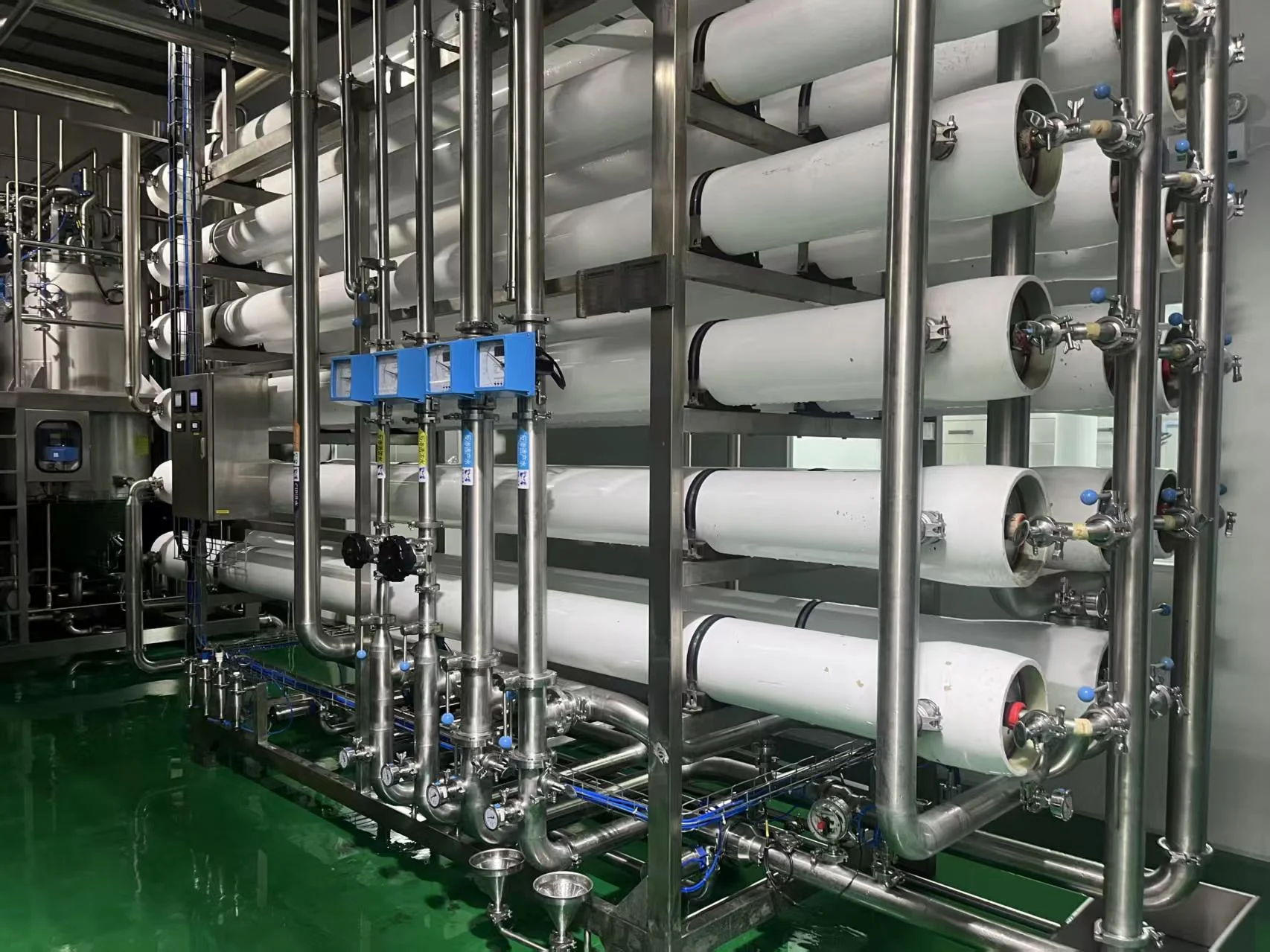
Membrane technologies such as ultrafiltration, nanofiltration, and reverse osmosis have already become important in industrial water treatment. Their role is expected to grow as manufacturers seek more consistent water quality and better control over impurities.
Reverse osmosis, for example, can remove a wide range of dissolved substances and provide a stable water source for beverage production. Ultrafiltration can be used for separating suspended solids and microorganisms, depending on the application and process design.
However, membrane equipment also creates challenges. Membrane fouling, pressure changes, cleaning requirements, and water recovery rates can affect system performance.
Future systems will therefore place greater emphasis on membrane protection, optimized pretreatment, automatic cleaning, and operating-condition monitoring. Instead of treating membrane equipment as an isolated unit, manufacturers will increasingly design the entire treatment process around the long-term performance of the membranes.
This approach can improve system stability while making maintenance more predictable.
3. Greater Focus on Water Recovery and Resource Efficiency
Water is one of the most important resources in beverage manufacturing. It is used not only as an ingredient but also for equipment cleaning, bottle and container handling, cooling, and other production processes.
As environmental requirements and resource management become more important, beverage plants will increasingly focus on reducing unnecessary water consumption.
Future water treatment systems will therefore be designed with water recovery in mind. Depending on local regulations and the intended application, treated water from certain processes may be recovered and reused for suitable non-product-contact operations.
The key is proper separation and quality control. Water intended for beverage production must meet the required quality standards, while recovered process water may be suitable only for specific applications. A practical system should clearly define these water streams and prevent cross-contamination.
This is where engineering design becomes especially important. Water-saving technology is only useful when it can be integrated safely into the actual production environment.
4. Integration of Water Treatment with Beverage Production
Another important trend is the integration of water treatment with the rest of the beverage production line.
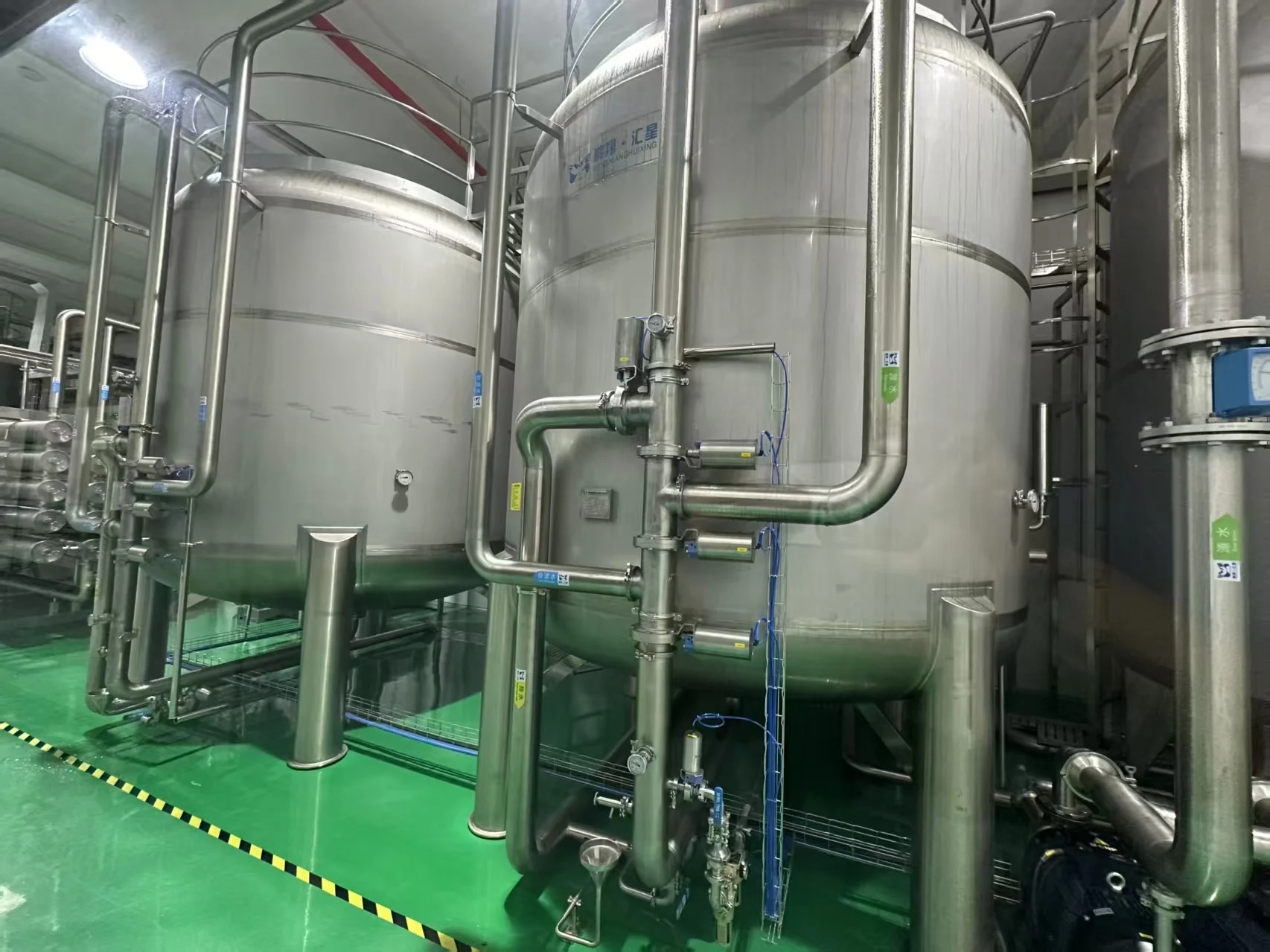
In a modern beverage factory, water treatment does not operate independently. Treated water may be transferred to beverage preparation, syrup processing, filling, cleaning, sterilization, and other production areas.
For this reason, equipment suppliers are increasingly expected to provide complete system solutions rather than individual machines.
Pengxiang Huixing, for example, provides water treatment systems together with beverage pretreatment systems, PET blow molding equipment, blow-fill-cap lines, blow-label-fill-cap lines, labeling systems, conveyors, and secondary packaging equipment. This allows water treatment to be considered as part of the complete production process.
For manufacturers planning a new facility or upgrading an existing plant, an integrated approach can simplify equipment coordination and make the relationship between water treatment capacity and production capacity clearer.
More information about the company's solutions can be found through the water treatment system page.
5. Intelligent CIP and Cleaning Management
Cleaning is another area where water treatment technology and automation will become increasingly connected.
Beverage production equipment requires regular cleaning to maintain hygiene and prevent product contamination. CIP, or Clean-in-Place, systems allow tanks, pipelines, fillers, and other equipment to be cleaned without extensive dismantling.
Future cleaning systems will focus on accurate control of cleaning time, temperature, chemical concentration, flow rate, and water consumption.
Instead of relying on fixed cleaning cycles for every situation, intelligent systems can use operating data and predefined recipes to manage different cleaning procedures. This can help reduce over-cleaning while maintaining the required hygiene level.
Pengxiang Huixing also develops automatic cleaning systems and industrial cleaning solutions, supporting beverage manufacturers that need coordinated solutions across water treatment and production equipment.
6. Better Energy Management
Water treatment consumes energy through pumps, pressure systems, heating equipment, air systems, and other components. As factories become more automated, energy management will become an increasingly important design consideration.
Future systems will use more efficient pumps, improved process layouts, variable-frequency drives, and optimized operating parameters to reduce unnecessary energy consumption.
For reverse osmosis systems in particular, pump efficiency and operating pressure have a direct effect on energy use. Better pretreatment can also help maintain membrane performance and avoid excessive pressure caused by fouling.
Energy efficiency should therefore be considered during system design rather than treated as an afterthought.
7. Predictive Maintenance Based on Operating Data
Maintenance is also moving from reactive repair toward preventive and predictive strategies.
A water treatment system generates a large amount of operating information, including pressure, flow, conductivity, pump status, filter differential pressure, tank levels, and other parameters. When this information is monitored over time, changes in equipment performance can be identified.
For example, a gradual increase in differential pressure across a filter may indicate that the filter is becoming loaded. An unusual change in pump pressure or flow may indicate a developing mechanical or process problem.
With suitable monitoring systems, operators can plan maintenance based on actual equipment conditions instead of waiting for a failure.
This can be particularly valuable for beverage plants where unexpected downtime can affect the entire production line.
8. Modular Systems for Flexible Factory Expansion
Beverage businesses do not always grow at a predictable rate. A plant may initially produce one type of beverage and later add bottled water, juice, carbonated drinks, or other products.
Water treatment systems therefore need to support future expansion.
Modular system design can provide greater flexibility. Treatment capacity, storage, filtration, pumping, and control sections can be planned according to current requirements while leaving room for future upgrades.
This is especially useful for manufacturers building new facilities in developing markets, where production demand may increase significantly after market expansion.
Rather than installing an oversized system from the beginning, manufacturers can work with equipment suppliers to create a phased development plan.
9. Stronger Emphasis on System Integration and Smart Factories
The future of water treatment will also be closely connected to smart factory development.
A smart beverage factory is not simply a building filled with automated machines. Its major systems need to communicate and work together. Water treatment, beverage processing, filling, packaging, cleaning, warehousing, and logistics should be considered as interconnected processes.
Pengxiang Huixing focuses on high-end planning and design for smart workshops and smart factories, with solutions covering production, packaging, storage, logistics, and distribution. This broader perspective is important because water treatment capacity must match the actual requirements of the entire beverage production line.
For example, increasing filling capacity without upgrading the water treatment system may create a production bottleneck. Conversely, an unnecessarily large treatment system can increase equipment and operating complexity.
A coordinated engineering approach helps manufacturers avoid these mismatches.
10. What Beverage Manufacturers Should Prepare for
The future of water treatment technology will not be defined by a single machine or treatment method. Instead, it will be shaped by better system integration, automation, resource efficiency, intelligent monitoring, and flexible engineering.
When selecting or upgrading a water treatment system, beverage manufacturers should consider several practical questions:
-
What is the required raw water quality?
-
What water quality is required at each production stage?
-
How much treated water does the factory actually consume?
-
How will the system respond to changes in production capacity?
-
What cleaning method will be used for filters and membranes?
-
How will operators monitor system performance?
-
Which components require regular maintenance?
-
Can the system be expanded in the future?
-
How well can the water treatment system integrate with beverage processing and filling equipment?
Answering these questions before equipment selection can prevent many problems later.
Conclusion
Water treatment technology is moving toward a more integrated, intelligent, efficient, and flexible model. Advanced membrane processes, automated control, water recovery, intelligent CIP, predictive maintenance, and smart factory integration will continue to influence the design of beverage production facilities.
For manufacturers, the most valuable innovation is not necessarily the most complicated technology. A successful water treatment system should be stable, practical, easy to maintain, compatible with the production process, and capable of meeting future capacity requirements.
With around 20 years of experience in beverage packaging machinery, Pengxiang Huixing has continued to develop solutions covering water treatment, beverage production, filling, packaging, cleaning, conveying, and related systems. The company combines R&D and manufacturing capabilities and has obtained ISO9000 quality management system certification and recognition as a Chinese high-tech enterprise.
Its equipment has been supplied to more than 20 provinces in China and exported to markets including the UAE, Oman, Vietnam, the Philippines, and Malaysia. By combining water treatment technology with complete beverage production and packaging solutions, Pengxiang Huixing helps manufacturers build production systems that are designed not only for today's requirements, but also for tomorrow's expansion.