


Energy efficiency has become one of the most important considerations in modern beverage manufacturing. As water consumption continues to grow globally, bottled water producers are under increasing pressure to improve production efficiency, reduce resource waste, and maintain stable product quality. Traditional manual or semi-automatic filling processes often involve higher energy consumption, inconsistent operation, and greater labor requirements. In contrast, modern automatic water filling machines provide advanced solutions that help manufacturers optimize production while reducing unnecessary energy usage.
Automatic filling technology integrates precision control systems, intelligent sensors, automated operation processes, and energy-saving components to improve the overall performance of bottled water production lines. These machines are no longer only designed for high-speed filling; they are part of a complete intelligent manufacturing system that supports sustainable production.
As a professional beverage packaging machinery manufacturer, Pengxiang Huixing provides comprehensive solutions including water treatment systems, beverage pre-processing systems, PET blowing equipment, blow-fill-seal production lines, blow-label-fill-seal production lines, labeling systems, conveyor systems, and secondary packaging equipment. The company focuses on smart workshop and smart factory planning, as well as the research and development of liquid beverage packaging machinery technology and services.
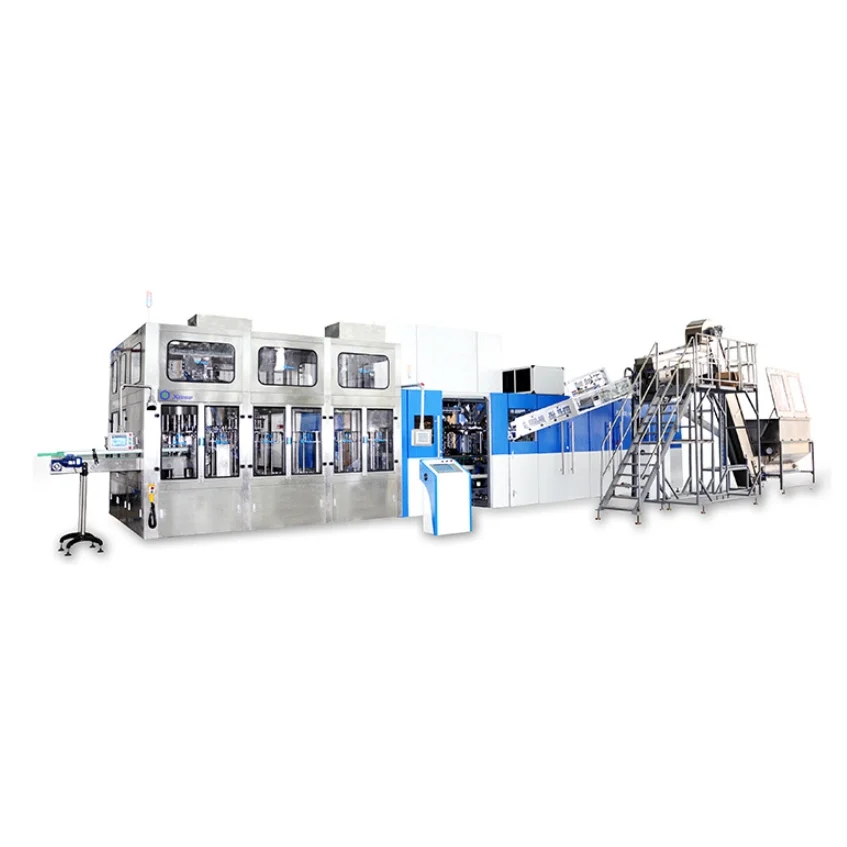
How Automatic Water Filling Machines Improve Energy Efficiency
1. Optimized Motor and Drive Systems
One of the key energy-saving advantages of modern automatic water filling machines is the use of advanced motor control technology. Traditional production equipment often operates at a fixed speed regardless of actual production requirements, resulting in unnecessary power consumption.
Modern filling machines use variable frequency drives and intelligent control systems to automatically adjust operating speed according to production conditions. When production demand decreases, the machine can reduce energy output without affecting filling accuracy. This dynamic adjustment helps lower electricity consumption while extending equipment service life.
For large-scale bottled water manufacturers, even small improvements in motor efficiency can create significant long-term benefits because filling machines typically operate continuously for many hours each day.
2. Intelligent Automation Reduces Energy Waste
Automation plays an important role in improving energy utilization. Modern automatic water filling machines are equipped with PLC control systems, sensors, and intelligent monitoring functions that coordinate different production stages.
For example, the machine can automatically stop certain operations when bottles are not detected on the conveyor system. This prevents unnecessary operation of filling valves, pumps, and other components during production interruptions.
In addition, automated systems can accurately control filling volume, reducing product waste and avoiding repeated production caused by quality issues. Stable operation means fewer rejected products and more efficient use of raw materials, water resources, and energy.
3. Higher Filling Accuracy Reduces Resource Consumption
Precision filling technology is another major advantage of modern equipment. Inaccurate filling levels can lead to product loss, packaging waste, and additional energy consumption during reprocessing.
Advanced automatic water filling machines use high-precision flow control and monitoring systems to maintain consistent filling levels across thousands of bottles. This ensures that every bottle meets production standards while reducing unnecessary consumption of water and packaging materials.
For beverage factories producing large volumes of bottled water, improved filling accuracy directly contributes to higher production efficiency and better resource management.
Energy Efficiency Across the Complete Bottled Water Production Line
Energy saving is not limited to the filling process itself. A modern bottled water production line includes multiple connected systems, and overall efficiency depends on how these systems work together.
Pengxiang Huixing develops integrated beverage production solutions covering water treatment, bottle production, filling, packaging, storage, and logistics processes. By connecting different production stages through intelligent control systems, manufacturers can achieve better coordination and lower overall energy consumption.
For example, a complete production solution may include:
-
Water treatment systems for purification and quality control
-
PET blowing machines for bottle manufacturing
-
Automatic water filling and capping systems
-
Labeling and packaging equipment
-
Intelligent conveyor systems
-
Automated cleaning systems
When these systems are properly designed and integrated, unnecessary energy loss caused by inefficient connections between different production stages can be minimized.
4. Reduced Downtime and Improved Production Stability
Energy efficiency is also closely related to equipment reliability. Frequent equipment shutdowns and maintenance interruptions can cause energy waste because production lines often require additional startup procedures after downtime.
Modern automatic water filling machines are designed with durable components, intelligent fault detection systems, and improved mechanical structures. These features help identify potential problems before they become serious failures.
Stable operation allows factories to maintain continuous production schedules and avoid repeated energy consumption caused by frequent machine restarting.
Pengxiang Huixing has more than 20 years of experience in beverage packaging machinery technology. By continuously introducing and improving advanced global beverage equipment technologies, the company has developed competitive solutions that combine reliability, automation, and energy efficiency.
5. Smart Factory Integration Enhances Energy Management
The development of smart factories is changing the way beverage manufacturers manage energy consumption. Instead of operating individual machines separately, intelligent production environments connect equipment through centralized management systems.
Modern automatic water filling machines can become part of a larger digital production network. Manufacturers can monitor production speed, equipment status, energy usage, and maintenance requirements in real time.
This data-driven approach allows factory managers to identify inefficient operations and make improvements based on actual production information.
Pengxiang Huixing specializes in high-level planning and design of intelligent workshops and smart factories. Its solutions cover the complete process from equipment procurement, production, packaging, warehousing, logistics, distribution, and final consumption, helping customers build more efficient beverage manufacturing systems.
6. Energy-Saving Benefits of Automated Cleaning Systems
Cleaning and sanitation are essential in bottled water production. However, traditional cleaning methods may consume large amounts of water and energy.
Modern beverage factories increasingly use automated cleaning solutions such as CIP (Clean-in-Place) systems. These systems automatically control cleaning procedures, including water circulation, temperature adjustment, and cleaning time.
By accurately controlling each cleaning stage, automated cleaning systems reduce excessive water use and unnecessary heating energy consumption while maintaining strict hygiene standards.
Pengxiang Huixing provides intelligent cleaning systems and industrial cleaning solutions designed for beverage production environments. These solutions help manufacturers achieve efficient sanitation management while improving operational sustainability.
Choosing the Right Automatic Water Filling Machine
When selecting an automatic water filling machine, manufacturers should consider several important factors:
Production Capacity
The machine should match the factory’s production requirements. Oversized equipment may lead to unnecessary energy consumption, while insufficient capacity can reduce production efficiency.
Equipment Integration Capability
A filling machine should work smoothly with upstream and downstream equipment, including water treatment systems, bottle blowing machines, labeling machines, and packaging systems.
Control System Performance
Advanced control systems improve automation levels and allow better monitoring of production efficiency and energy consumption.
Maintenance Requirements
Reliable equipment design and easy maintenance help reduce downtime and maintain long-term energy efficiency.
Manufacturers should choose suppliers with complete technical capabilities rather than focusing only on individual machines. Integrated engineering experience is essential for creating an efficient beverage production environment.
Pengxiang Huixing: Supporting Efficient Beverage Manufacturing Solutions
Located in Songgang Street, Bao'an District, Shenzhen, China, Pengxiang Huixing is a comprehensive beverage packaging machinery manufacturer integrating research, development, and production. The company’s products have obtained ISO9000 quality management system certification and it has been recognized as a China High-Tech Enterprise.
Its main products include automatic blow molding machines, bottle filling and capping three-in-one production lines, gallon bottle production lines, water treatment production lines, on-site automatic cleaning systems, sterilization equipment, bottled beverage filling lines, juice and carbonated beverage production lines, and intelligent packaging solutions.
Through continuous innovation and the philosophy of “introducing and improving, advancing through technology,” Pengxiang Huixing has developed unique market advantages in beverage packaging machinery. Its solutions are widely used in domestic markets and exported to countries and regions including the UAE, Oman, Vietnam, the Philippines, and Malaysia.
For companies looking to improve production efficiency and build sustainable beverage factories, modern automatic water filling technology provides an effective path toward lower energy consumption, higher reliability, and smarter manufacturing.
Conclusion
Modern automatic water filling machines represent an important development direction for the beverage industry. Through intelligent control, precise filling technology, optimized energy management, and integrated production solutions, these machines help manufacturers reduce waste and improve operational efficiency.
As beverage production continues moving toward automation and smart manufacturing, energy-efficient filling equipment will play an increasingly important role in building competitive and sustainable factories. Choosing the right technology partner can help companies achieve higher productivity while meeting future requirements for quality, efficiency, and environmental responsibility.