


In the modern beverage industry, manufacturers face growing pressure to increase production efficiency while maintaining strict quality standards. Whether producing bottled drinking water, mineral water, flavored water, or other liquid beverages, the ability to deliver consistent products at high speeds is a key competitive advantage. This is why automation has become an essential component of water filling lines worldwide.
Automated water filling systems are transforming production facilities by reducing manual intervention, minimizing human error, improving product quality, and enabling manufacturers to meet increasing market demand. From bottle blowing and water treatment to filling, capping, labeling, and packaging, automation connects every stage of production into a seamless process.
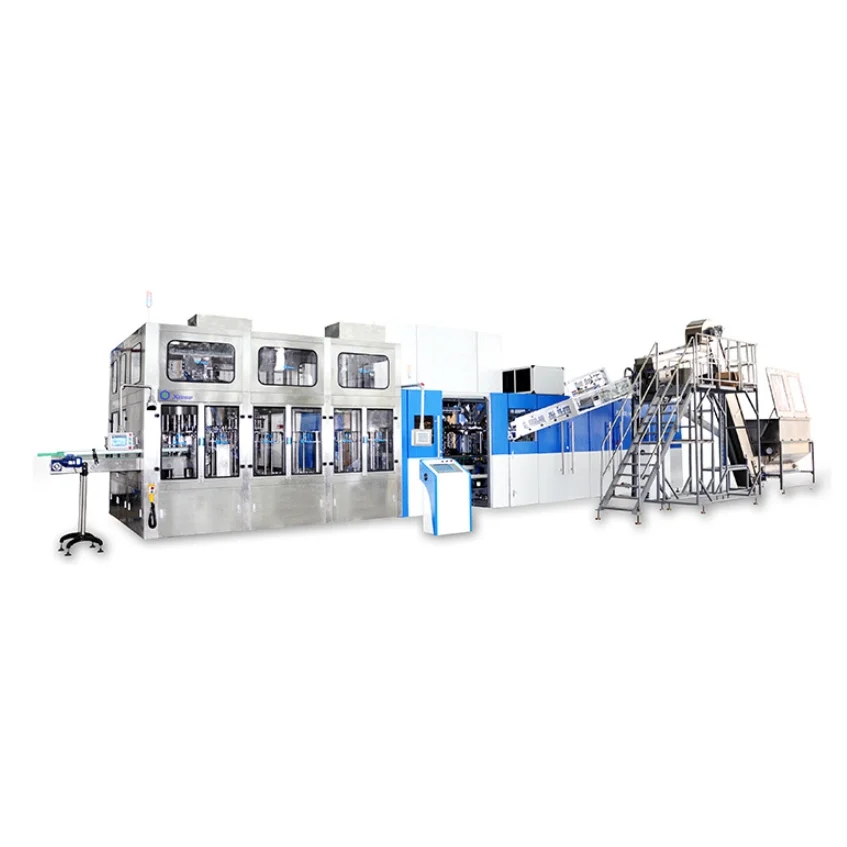
The Growing Demand for Efficient Water Filling Lines
Consumer demand for bottled beverages continues to rise across both developed and emerging markets. At the same time, manufacturers must comply with stricter hygiene regulations, reduce operational costs, and maintain consistent product quality.
Traditional semi-automatic production methods often struggle to keep pace with these requirements. Manual handling can introduce contamination risks, production delays, inconsistent fill levels, and higher labor costs.
Automated water filling lines address these challenges by integrating advanced control systems, sensors, and intelligent monitoring technologies that keep production running smoothly and efficiently.
For companies seeking modern solutions, advanced water filling machine systems provide the foundation for high-speed, reliable, and scalable beverage production.
What Automation Means in a Water Filling Line
Automation in water filling lines involves the use of programmable control systems, servo-driven mechanisms, sensors, robotics, and data monitoring software to manage production processes with minimal human intervention.
A fully automated line typically includes:
-
Water treatment systems
-
PET bottle blowing machines
-
Bottle rinsing units
-
Filling machines
-
Capping systems
-
Labeling equipment
-
Conveyor systems
-
Inspection systems
-
Secondary packaging equipment
-
Palletizing solutions
Each piece of equipment communicates with the others, creating a synchronized workflow that maximizes throughput while maintaining quality standards.
How Automation Increases Production Speed
1. Continuous Production Flow
One of the biggest advantages of automation is the ability to maintain uninterrupted production.
In manual or semi-automatic operations, production often slows down due to bottle handling, operator fatigue, equipment adjustments, or inconsistent workflow. Automated systems eliminate many of these bottlenecks by coordinating every production stage in real time.
For example:
-
Bottles move automatically between stations.
-
Filling speeds adjust according to line capacity.
-
Capping machines synchronize with filling equipment.
-
Conveyors regulate bottle spacing automatically.
This continuous flow significantly increases overall production efficiency.
2. Faster Filling Cycles
Modern filling machines utilize advanced flow control technologies that accurately dispense water at high speeds.
Automated filling valves can:
-
Detect bottle presence instantly
-
Start and stop filling precisely
-
Adjust flow rates automatically
-
Maintain stable filling performance
Because these operations occur within fractions of a second, manufacturers can process thousands of bottles per hour while maintaining precise fill levels.
3. Reduced Downtime
Downtime is one of the most costly issues in beverage manufacturing.
Automated systems help minimize downtime through:
-
Automatic fault detection
-
Real-time equipment monitoring
-
Predictive maintenance alerts
-
Self-diagnostic functions
When a problem occurs, operators receive immediate notifications, allowing corrective actions before small issues develop into major production interruptions.
4. Rapid Product Changeovers
Many beverage manufacturers produce multiple bottle sizes and product variations.
Advanced automated filling lines can store production recipes for different products. Operators can quickly switch between configurations through a control interface rather than performing extensive manual adjustments.
This flexibility improves productivity and allows manufacturers to respond faster to market demand.
How Automation Improves Consistency
Speed alone is not enough. Every bottle leaving the production line must meet the same quality standards.
Automation plays a crucial role in ensuring consistency throughout production.
1. Accurate Fill Levels
Consumers expect every bottle to contain the correct volume.
Automated filling machines use precision sensors and control systems to maintain accurate fill levels across every production batch.
Benefits include:
-
Reduced product waste
-
Improved compliance with regulations
-
Enhanced customer satisfaction
-
Lower risk of underfilling or overfilling
Even at high production speeds, automated systems maintain excellent filling accuracy.
2. Consistent Product Quality
Automation reduces variations caused by human operation.
Key quality parameters that can be automatically controlled include:
-
Filling volume
-
Temperature
-
Pressure
-
Flow rate
-
Capping torque
-
Sterilization conditions
By maintaining stable production conditions, manufacturers achieve greater product uniformity and reduce quality defects.
3. Improved Hygiene Control
Hygiene is critical in bottled water production.
Automated systems help reduce contamination risks by minimizing direct human contact with bottles and production equipment.
Features commonly found in modern automated water filling lines include:
-
Closed filling environments
-
Automatic Clean-in-Place (CIP) systems
-
Sterile air management
-
Automated bottle rinsing
-
Touch-free product handling
These measures support compliance with food safety standards while protecting product quality.
4. Automated Inspection Systems
Quality control no longer relies solely on manual inspections.
Modern production lines incorporate inspection technologies such as:
-
Vision inspection systems
-
Fill level detection
-
Cap integrity verification
-
Label position inspection
-
Leak detection
Defective products are automatically identified and removed from the production line, ensuring that only compliant products reach consumers.
The Role of Smart Manufacturing
Automation is evolving beyond equipment control and entering the era of smart manufacturing.
Industry 4.0 technologies allow water filling plants to collect and analyze production data in real time.
Key capabilities include:
Real-Time Monitoring
Managers can monitor:
-
Production output
-
Equipment performance
-
Energy consumption
-
Downtime events
-
Quality metrics
This visibility helps identify inefficiencies and improve decision-making.
Data-Driven Maintenance
Instead of relying solely on scheduled maintenance, smart systems monitor equipment conditions continuously.
Predictive maintenance can identify wear patterns before failures occur, reducing unexpected shutdowns and extending equipment life.
Production Optimization
Advanced analytics can reveal opportunities to:
-
Increase line speed
-
Reduce waste
-
Improve energy efficiency
-
Optimize staffing requirements
-
Enhance product quality
These improvements contribute to long-term operational excellence.
Automation Across the Entire Beverage Production Process
Leading manufacturers increasingly seek integrated solutions rather than standalone equipment.
A fully automated beverage facility may include:
Water Treatment Systems
Automated filtration, reverse osmosis, sterilization, and mineral adjustment ensure stable water quality.
PET Bottle Blowing Systems
Automatic bottle production reduces transportation costs and improves production flexibility.
Blow-Fill-Cap Technology
Integrated blow-fill-cap systems combine bottle manufacturing, filling, and capping into a single process, reducing contamination risks and improving efficiency.
Labeling Systems
Automated labeling ensures accurate placement and consistent product appearance.
Conveyor Systems
Intelligent conveyors maintain smooth product movement throughout the production line.
Secondary Packaging
Automated shrink wrapping, carton packing, and palletizing increase efficiency while reducing labor requirements.
Pengxiang Huixing's Approach to Intelligent Beverage Manufacturing
With more than two decades of experience in beverage packaging machinery, Pengxiang Huixing has established itself as a comprehensive manufacturer specializing in research, development, and production of advanced liquid beverage packaging solutions.
Located in Shenzhen, China, the company focuses on intelligent workshop and smart factory planning while providing complete solutions that cover the entire beverage production chain. Its offerings include water treatment systems, beverage pretreatment systems, PET blow molding equipment, blow-fill-cap production lines, blow-label-fill-cap production lines, labeling systems, conveying systems, and secondary packaging equipment.
Pengxiang Huixing's flagship products include:
-
Automatic bottle blowing machines
-
Bottled filling and capping production lines
-
Water treatment production lines
-
Intelligent cleaning systems
-
Industrial cleaning solutions
-
Gallon barrel production lines
-
Juice and carbonated beverage production lines
-
Sterilization equipment
-
Beverage filling machinery
The company's products have obtained ISO9000 quality management certification and have been recognized as part of China's High-Tech Enterprise program. Through continuous technological innovation and the introduction of advanced beverage packaging technologies from around the world, Pengxiang Huixing serves customers across more than 20 Chinese provinces and multiple international markets, including the UAE, Oman, Vietnam, the Philippines, and Malaysia.
Its commitment to intelligent manufacturing reflects the broader industry trend toward automation, efficiency, and sustainable growth.
Conclusion
Automation has fundamentally changed how modern water filling lines operate. By increasing production speed, improving consistency, reducing contamination risks, minimizing downtime, and enabling smart manufacturing capabilities, automated systems provide beverage manufacturers with a powerful tool for maintaining competitiveness in a demanding market.
As production requirements continue to evolve, companies investing in intelligent filling technologies will be better positioned to meet customer expectations, improve operational efficiency, and achieve long-term growth. From water treatment and bottle production to filling, packaging, and logistics, automation is no longer simply an advantage—it has become a critical requirement for successful beverage manufacturing.