


Clean, reliable water is the foundation of modern beverage production, food processing, and many industrial operations. As water quality standards become stricter and operating costs continue to rise, manufacturers are under pressure to adopt purification technologies that are both efficient and sustainable. Among the available solutions, membrane treatment systems have proven to be one of the most effective ways to improve water purification efficiency across a wide range of applications.
This article explores how membrane treatment systems work, why they outperform many traditional filtration methods, and how they are applied in real production environments—particularly within integrated beverage and liquid packaging operations.
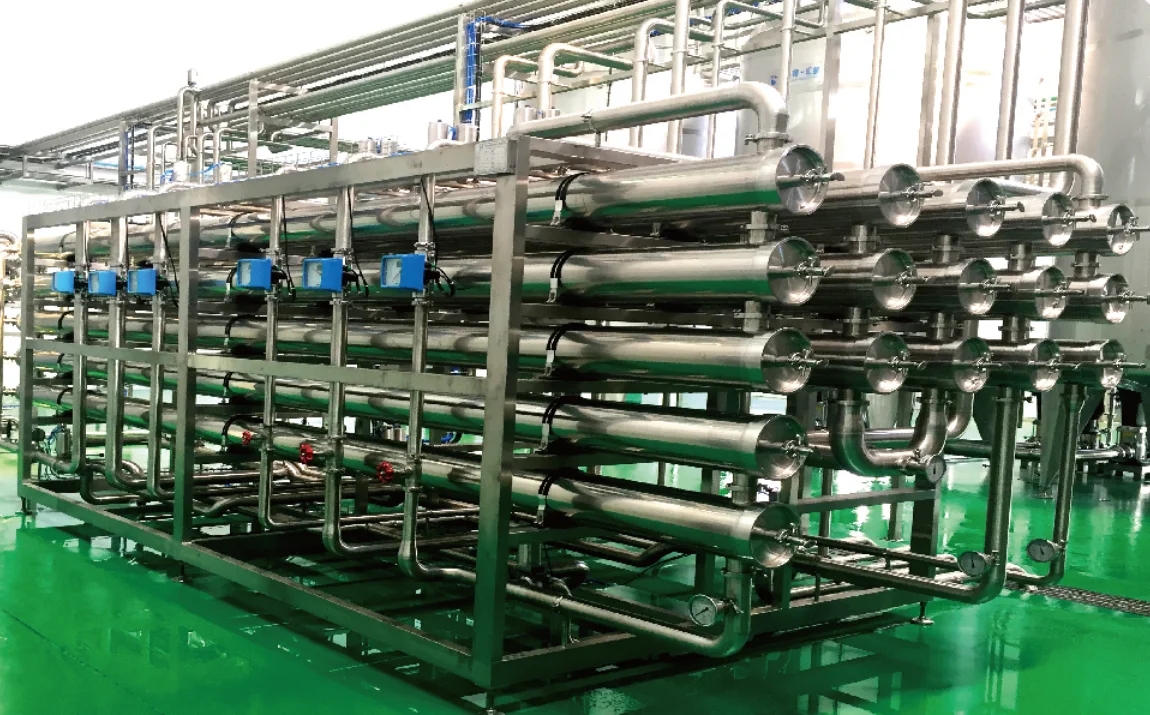
Understanding Membrane Treatment Systems
A membrane treatment system uses semi-permeable membranes to separate contaminants from water at the molecular or ionic level. Unlike conventional filtration, which mainly removes visible particles, membrane technology targets dissolved solids, microorganisms, organic compounds, and even salts.
Common membrane technologies include:
-
Microfiltration (MF): Removes suspended solids and larger microorganisms
-
Ultrafiltration (UF): Eliminates bacteria, viruses, and macromolecules
-
Nanofiltration (NF): Reduces hardness, organic matter, and some salts
-
Reverse Osmosis (RO): Achieves deep purification by removing dissolved salts and most contaminants
By selecting and combining these processes, membrane treatment systems can be tailored to meet specific water quality requirements, from process water to high-purity drinking water.
Why Membrane Systems Improve Purification Efficiency
1. Higher Removal Accuracy
Membrane filtration works at the micron or nanometer level, enabling precise removal of contaminants that traditional sand or carbon filters cannot fully capture. This results in more stable water quality and better compliance with food and beverage safety standards.
For beverage producers, consistent water composition directly affects product taste, shelf life, and brand reputation. Membrane systems provide repeatable results that are less dependent on raw water fluctuations.
2. Reduced Chemical Usage
Traditional water treatment often relies heavily on chemicals for coagulation, disinfection, and scale control. Membrane treatment systems significantly reduce this dependency by physically separating impurities rather than chemically neutralizing them.
Lower chemical usage not only cuts operating costs but also minimizes the risk of chemical residues entering the final product, which is especially critical for bottled water and beverage applications.
3. Energy and Resource Efficiency
Modern membrane systems are designed with energy recovery devices, optimized pump configurations, and automated controls. When properly engineered, they deliver high water recovery rates while maintaining stable performance.
Compared with older purification technologies, membrane systems can achieve higher output per unit of energy and water consumed, making them suitable for large-scale continuous production lines.
Integration into Beverage and Liquid Production Lines
Water purification does not operate in isolation. In advanced beverage factories, it is part of a fully integrated production ecosystem that includes pre-treatment, filling, packaging, cleaning, and logistics.
Pengxiang Huixing has extensive experience in delivering complete solutions that integrate membrane treatment systems with beverage pre-treatment, PET blow molding, blow-fill-cap production lines, labeling systems, conveying systems, and secondary packaging equipment. This integrated approach ensures that purified water flows seamlessly into downstream processes without contamination risks or efficiency losses.
For example, a well-designed membrane water treatment line can be directly connected to:
-
Bottled water filling and capping lines
-
Juice and carbonated beverage production systems
-
CIP (clean-in-place) and intelligent cleaning systems
-
Industrial cleaning and sanitation processes
This level of integration reduces downtime, simplifies operation, and supports consistent product quality across the entire plant.
Smart Control and Automation Advantages
One of the key trends in membrane water treatment is intelligent control. Advanced systems now incorporate sensors, PLC control, and data monitoring to automatically adjust operating parameters such as pressure, flow rate, and recovery ratio.
As a company focused on intelligent workshops and smart factory planning, Pengxiang Huixing integrates membrane treatment systems into digitally managed production environments. Operators can monitor water quality, system status, and maintenance needs in real time, which helps prevent unexpected failures and reduces labor intensity.
Automation also ensures that membrane systems operate at optimal efficiency throughout their service life, extending membrane lifespan and stabilizing production costs.
Long-Term Reliability and Maintenance Benefits
A common concern about membrane systems is maintenance. In practice, when systems are properly designed and operated, membranes offer long service life and predictable maintenance cycles.
Key factors that improve reliability include:
-
Proper pre-treatment to protect membranes
-
Automated backwashing and cleaning sequences
-
On-site CIP systems for chemical cleaning
-
Real-time monitoring of fouling indicators
Pengxiang Huixing supplies complete water treatment production lines and on-site automatic cleaning systems that work together to keep membrane systems running efficiently. This holistic design approach reduces unplanned shutdowns and supports long-term stable operation.
Applications Beyond Bottled Water
While bottled water production is a primary application, membrane treatment systems are equally valuable in other industries:
-
Juice and beverage processing: Stable base water quality ensures consistent flavor profiles
-
Carbonated drinks: Low mineral content improves carbonation control
-
Industrial cleaning solutions: High-purity water enhances cleaning effectiveness
-
Food processing: Meets strict hygiene and safety standards
Because membrane systems are modular, they can be scaled or upgraded as production demands change, protecting the customer’s long-term investment.
Proven Manufacturing and Global Experience
Located in Songgang Street, Bao’an District, Shenzhen, Pengxiang Huixing is a comprehensive beverage packaging machinery manufacturer integrating R&D and production. With over 20 years of experience, the company has continuously introduced and improved advanced beverage packaging and water treatment technologies from around the world.
Its product portfolio includes water treatment production lines, gallon bottle lines, all-in-one automatic blow molding machines, beverage filling and sealing lines, sterilization systems, intelligent cleaning systems, and complete beverage production solutions. All products comply with ISO9000 quality management standards, and the company has been recognized as a Chinese High-Tech Enterprise.
Today, Pengxiang Huixing’s systems are operating in more than 20 provinces across China and have been exported to the UAE, Oman, Vietnam, the Philippines, Malaysia, and other international markets—earning strong customer recognition for reliability and performance.
Choosing the Right Membrane Treatment Partner
Selecting a membrane treatment system is not just about choosing membranes—it requires expertise in process design, integration, automation, and long-term service. A well-matched system improves purification efficiency, reduces operational risk, and supports sustainable production growth.
Conclusion
Membrane treatment systems have become a core technology for improving water purification efficiency in beverage and industrial applications. Through precise filtration, reduced chemical use, intelligent control, and seamless integration with production lines, they deliver measurable improvements in water quality and operational performance.
When combined with comprehensive engineering, smart factory planning, and proven manufacturing experience, membrane treatment systems are not just a water solution—they are a strategic asset for modern production facilities.