


In today’s beverage packaging industry, efficiency, consistency, and scalability are no longer optional—they are the foundation of competitiveness. Among the many innovations shaping modern production lines, automatic blow molding machines have become one of the most transformative technologies for PET bottle manufacturing. Their impact goes far beyond shaping plastic; they redefine how production systems are designed, integrated, and optimized from end to end.
For companies involved in beverage production, water bottling, and liquid packaging, the shift toward automation is not just about replacing manual labor. It is about building smarter, more connected factories that can respond to market demands with speed, precision, and stability.
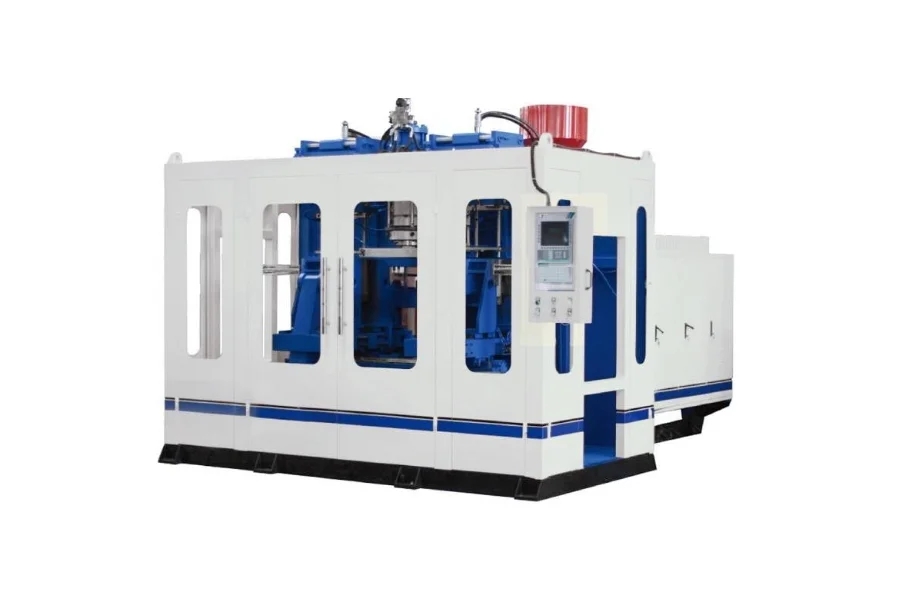
The Core Role of Automatic Blow Molding in PET Production
PET bottles are widely used in mineral water, carbonated drinks, juices, and edible oils. The quality of these bottles directly affects filling performance, shelf life, and consumer experience. Traditional semi-automatic processes often struggle with consistency, especially under large-scale production requirements.
Automatic blow molding machines solve these challenges by integrating preform heating, stretching, and blowing into a continuous, highly controlled process. This ensures that each bottle maintains uniform wall thickness, stable weight, and reliable structural integrity.
Modern systems are designed for high-speed production while minimizing human intervention. This reduces variability and increases repeatability, which is essential for large beverage manufacturers operating multiple production lines.
A typical advanced setup can be seamlessly connected with upstream and downstream systems such as preform feeding, air compression units, and bottle conveying systems, forming a fully automated production loop.
Integration with Smart Beverage Production Lines
One of the biggest advantages of automatic blow molding technology is its compatibility with fully integrated beverage production systems. Today’s factories are moving toward intelligent, interconnected ecosystems rather than isolated machines.
This is where companies like Pengxiang Huixing play a critical role. Based in Shenzhen, China, the company specializes in beverage packaging machinery and intelligent factory design. It provides comprehensive solutions covering water treatment systems, beverage pre-processing systems, PET blow molding equipment, blow-fill-cap production lines, labeling systems, conveying systems, and secondary packaging equipment.
By integrating automatic blow molding machines into a complete production ecosystem, manufacturers can streamline operations from raw water treatment to final packaging and logistics. This reduces production bottlenecks and improves overall plant efficiency.
For example, in a modern bottled water plant, water first passes through a purification and treatment system. It then moves into filling and packaging lines, where PET bottles are produced, filled, sealed, labeled, and packed—all within a synchronized system. The blow molding stage is no longer a standalone process but a critical upstream component of the entire workflow.
Why Automation Matters in Blow Molding
The shift from manual or semi-automatic systems to fully automatic blow molding machines brings several practical advantages that directly impact production performance:
-
Consistency in Bottle Quality
Automation ensures precise control over heating temperature, stretching ratio, and blowing pressure. This leads to uniform bottle thickness and improved durability. -
Higher Production Efficiency
Continuous operation reduces downtime between cycles. Machines can run at stable speeds for extended periods, supporting large-scale manufacturing needs. -
Reduced Labor Dependency
Operators focus more on system monitoring and maintenance rather than manual handling, reducing human error and improving safety. -
Energy Optimization
Modern blow molding systems are designed with energy-efficient heating and air recovery systems, helping reduce overall consumption. -
Improved Integration with Downstream Equipment
Bottles produced are immediately compatible with filling, labeling, and packaging lines, ensuring smooth production flow.
These advantages are particularly important for beverage companies that need to maintain high output while ensuring strict quality standards.
Role in Smart Factory Development
The concept of smart factories is becoming a key direction in manufacturing. In the beverage packaging industry, this means using automation, data integration, and system coordination to optimize every stage of production.
Pengxiang Huixing has been focusing on intelligent workshop planning and smart factory design for years. The company’s approach combines equipment manufacturing with system engineering, allowing clients to build fully integrated production environments rather than isolated machinery setups.
Automatic blow molding machines are a cornerstone of this vision. When connected with centralized monitoring systems, they can provide real-time production data such as output rate, energy consumption, and operational status. This data helps manufacturers make informed decisions, reduce downtime, and improve long-term efficiency.
In addition, integration with systems such as bottle conveying, labeling, and secondary packaging ensures that the entire production chain operates as a unified system rather than separate units.
Expanding Applications Across Beverage Industries
Automatic blow molding machines are widely used in multiple beverage sectors, including:
-
Bottled water production
-
Carbonated soft drinks
-
Fruit juice packaging
-
Edible oil bottling
-
Large-capacity gallon water systems
Each application requires different bottle specifications, from lightweight water bottles to high-strength carbonated drink containers. Advanced machines can quickly adapt to different mold designs and production requirements, making them highly versatile.
Pengxiang Huixing has developed a wide range of PET blow molding solutions, including fully automatic systems that support bottle manufacturing as part of complete blow-fill-cap production lines. These systems are designed to meet the needs of both domestic and international markets.
Quality Assurance and Global Reach
With over 20 years of experience in beverage packaging machinery, Pengxiang Huixing has built a strong reputation for reliability and technological innovation. The company is certified under ISO9000 quality management standards and recognized as a national high-tech enterprise in China.
Its products are widely used across more than 20 provinces in China and exported to countries including the United Arab Emirates, Oman, Vietnam, the Philippines, and Malaysia. This global presence reflects not only product quality but also the adaptability of its systems to different production environments and industry standards.
Future Trends in Blow Molding Technology
As demand for sustainable packaging and efficient production continues to grow, automatic blow molding machines are expected to evolve further in several key areas:
-
Greater energy efficiency through improved heating systems
-
Increased use of digital monitoring and predictive maintenance
-
Enhanced compatibility with fully automated smart factories
-
Lightweight PET bottle optimization for reduced material usage
Manufacturers are also focusing on reducing environmental impact while maintaining high production efficiency. This includes improving material utilization and reducing waste during the molding process.
Conclusion
Automatic blow molding machines have fundamentally changed the way PET bottles are produced. They are no longer just standalone machines but essential components of fully integrated beverage production systems.
By combining automation, precision engineering, and smart factory integration, companies like Pengxiang Huixing are helping manufacturers build efficient, scalable, and future-ready production environments. From water treatment to final packaging, every stage becomes more connected, more controlled, and more efficient.
As the beverage industry continues to evolve, automatic blow molding technology will remain at the center of innovation, driving improvements in quality, efficiency, and sustainability across global production lines.