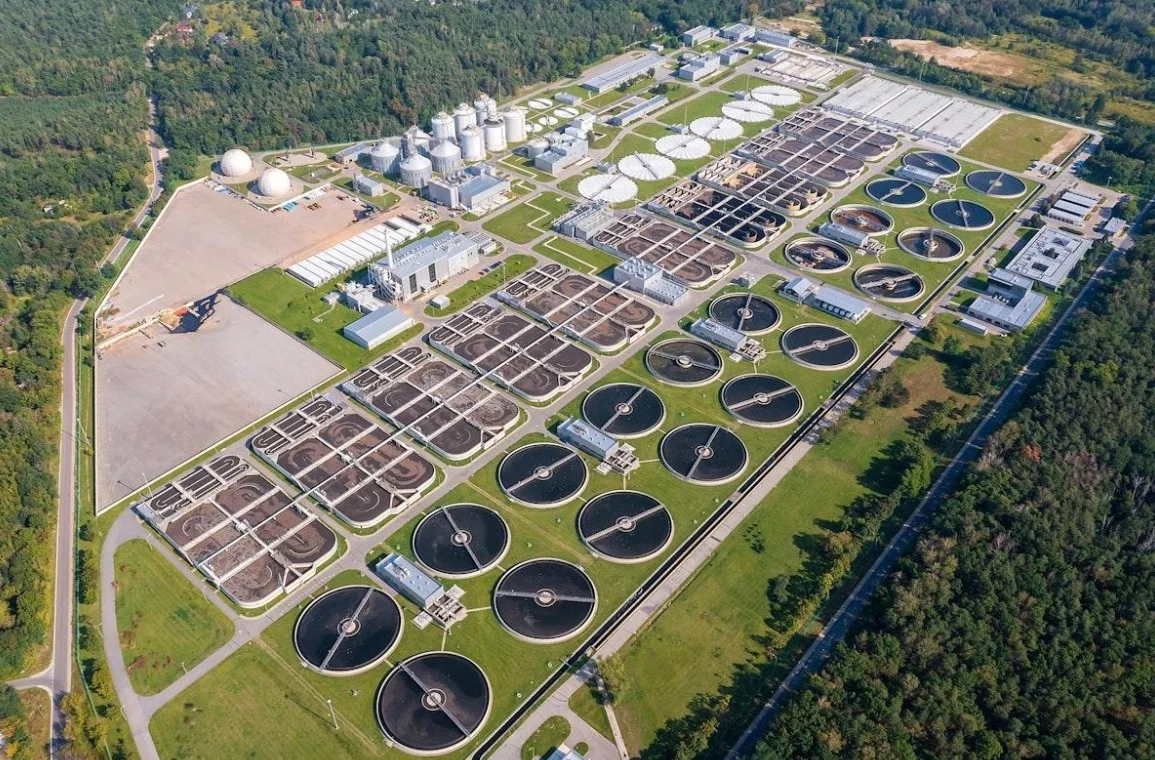


MBR(Membrane Bioreactor)Wastewater Treatment
MBR(Membrane Bioreactor)Wastewater Treatment
Process Flow
Raw Water → Pre-screening → Anaerobic Tank → Anoxic Tank → Aerobic Tank → MBR Membrane Tank → Suction Pump → Disinfection → Reuse / Discharge
Excess Sludge: Periodic sludge wasting
Process Introduction
Raw wastewater first passes through pre-treatment units, including coarse screen, fine screen and grit chamber. Large debris, hair, fibers and sand particles are removed to protect the MBR membrane modules from damage.
Then the wastewater flows into the biochemical tank group, generally consisting of anaerobic tank → anoxic tank → aerobic tank → MBR membrane tank.
- Anaerobic tank: Under anaerobic conditions, phosphorus release occurs. Mixing is adopted without aeration.
- Anoxic tank: Denitrification takes place. Nitrate nitrogen is converted into nitrogen gas to remove total nitrogen by using organic carbon source in wastewater.
- Aerobic tank: Aeration supplies oxygen. Aerobic microbes degrade BOD and COD; nitrification converts ammonia nitrogen into nitrate nitrogen. Mixed liquid recirculation pumps return nitrate-rich mixed liquid back to the anoxic tank.
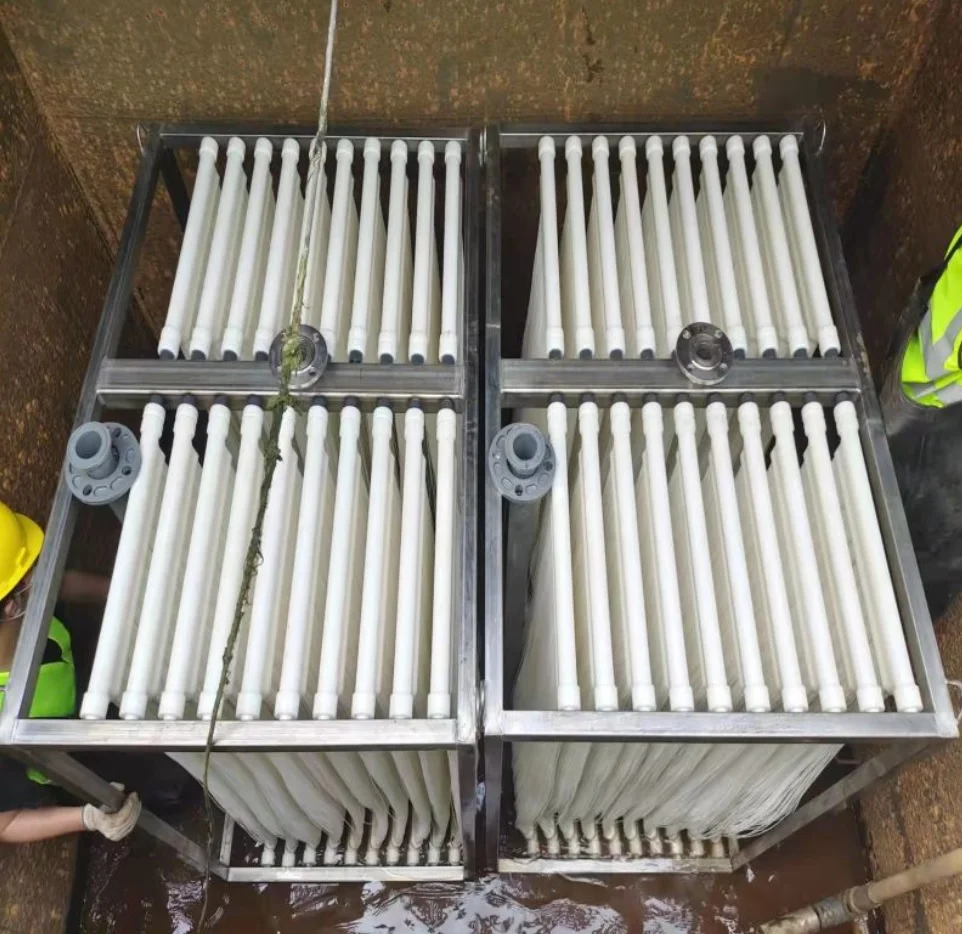
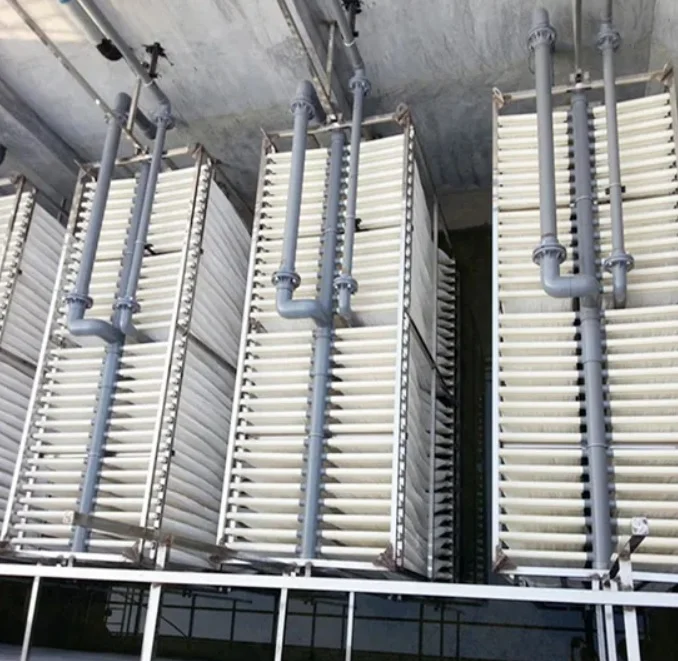
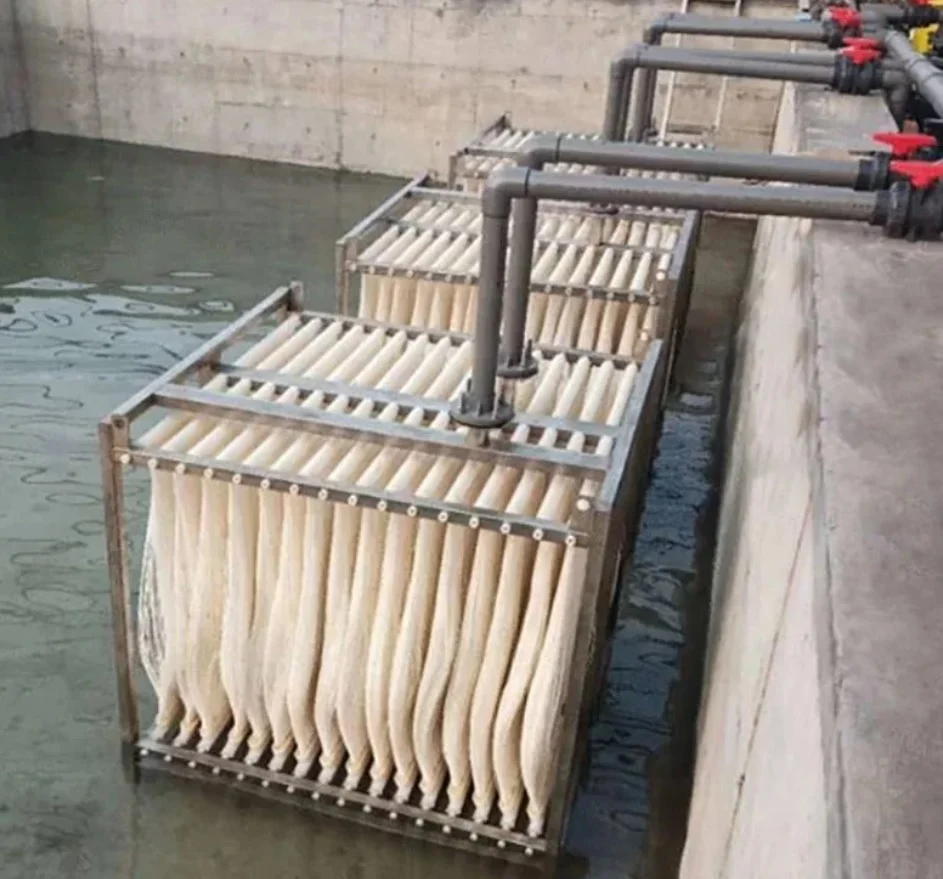
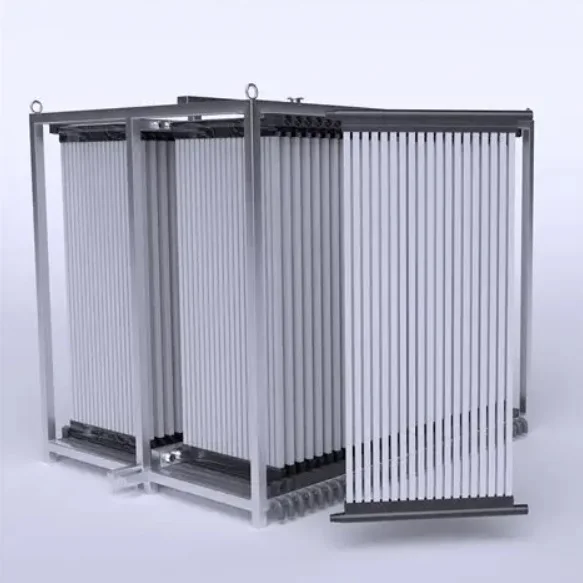
- MBR membrane tank: PVDF submerged membrane modules are installed here. Continuous aeration scours the membrane surface to reduce sludge fouling. The permeate (clean water) is extracted by suction pump through membrane pores. Sludge and solids are trapped inside the tank.
The produced clean water can be disinfected and reused. A small amount of excess sludge is discharged periodically.
Advantages
Application Fields
- ✓Municipal wastewater treatment
- ✓Industrial wastewater treatment
- ✓Landfill leachate treatment
- ✓Hospital wastewater treatment
- ✓Water reuse & reclamation
- ✓Decentralized sewage treatment
Working Principle
MBR Membrane Bioreactor
The MBR system combines activated sludge biological treatment with membrane separation technology, replacing the traditional secondary sedimentation tank used in conventional wastewater treatment.
Wastewater first enters the biological tank. Aerobic microorganisms (activated sludge) decompose and degrade organic pollutants such as BOD and COD in the wastewater under aeration conditions. Nitrification and denitrification reactions take place to remove ammonia nitrogen and total nitrogen.
Instead of settling sludge by gravity, the mixed liquor is filtered through submerged PVDF membrane modules. The membrane acts as a physical barrier, intercepting activated sludge, suspended solids, colloids and pathogens. Only clean permeate water passes through the membrane pores and is pumped out as treated effluent.
Sludge is retained inside the bioreactor, maintaining a high MLSS concentration. This enables efficient biodegradation and reduces the footprint of the whole plant. Periodic aeration scouring, backwashing and chemical cleaning are applied to mitigate membrane fouling and sustain stable operation.
The whole process is monitored and controlled by PLC, including TMP, flux, aeration, suction, relaxation and cleaning cycles.
MBR(Membrane Bioreactor)Wastewater Treatment Process Parameters
| Parameter | Unit | Typical Range | Recommended working value |
| MLSS(Mixed-Liquid Suspended Solids) | mg/L | 6000‑12000 | 8000‑10000 |
| MLVSS/MLSS | 0.65‑0.85 | 0.70 | |
| F/M (BOD₅) | kgBOD₅/(kgMLSS·d) | 0.05‑0.15 | 0.08‑0.10 |
| SRT (Sludge Retention Time) | day | 15‑30 | 18‑25 |
| Total HRT(Hydraulic Retention Time) | hour | 8‑14 | 10‑12 |
| DO‑Aerobic(Dissolved Oxygen in Aeration Tank) | mg/L | 1.5‑3.0 | 2.0 |
| DO‑Anoxic(Dissolved Oxygen Anoxic) | mg/L | <0.5 | 0.2‑0.4 |
| DO‑Anaerobic(Dissolved Oxygen Anaerobic) | mg/L | <0.2 | <0.1 |
| pH | ‑ | 6.5‑8.5 | 7.0‑7.8 |
| Temperature | ℃ | 10‑35 | 15‑28 |
| Mixed‑liquid recirculation | % | 200‑400 | 300 |
| Sludge waste | m³/d | Calculated by SRT |
Membrane Parameters
| Parameter | Unit | Typical Range | Recommended | Note |
| Net Flux | L/(m²·h) LMH | 12‑20 | 15‑17 | For submerged MBR, flux shall be calculated with backwash, relaxation and downtime conversion |
| Transmembrane Pressure | kPa | 5‑30 | <25 | Warning:>35 kPa; Alarm:>45‑50 kPa; Rising TMP means severe membrane fouling |
| Membrane pore size | μm | 0.03‑0.2 | 0.1 | PVDF Hollow Fiber / Flat Sheet Membrane (Microfiltration, MF) |
| Membrane scouring air flow rate | Nm³/(h·m²‑membrane) | 0.2‑0.5 | 0.3 | Membrane module scouring: the highest energy consumption in MBR system |
| Suction Cycle | min | 8‑12 | 10 | Suction 8–9 min + Relaxation 1–2 min (no suction, continuous aeration scouring) |
| Backwash | ‑ | 1‑2 times/day | 1‑2 times/day | Water backwash; Chemical‑in‑Place (CIP): once every 3‑6 months |
| Pre‑screen | mm | 1‑3 | ≤2mm | Pre-treatment is required upstream of MBR to prevent membrane filaments from being scratched by hair and fibrous materials |
Water Quality Parameters (Municipal Sewage: Influent & Effluent)
| Item | Unit | Typical Influent | Typical MBR Effluent |
| CODcr | mg/L | 250‑500 | ≤30‑50 |
| BOD₅ | mg/L | 120‑250 | ≤5‑10 |
| SS | mg/L | 150‑250 | <5 |
| NH₃‑N | mg/L | 25‑45 | ≤1‑5 |
| TN | mg/L | 35‑55 | ≤10‑15 |
| TP | mg/L | 3‑6 | ≤0.3‑1.0 |
| Turbidity | NTU | ‑ | <0.5,General 0.1‑0.3 |
Frequently Asked Questions
What is MBR?
MBR stands for Membrane Bioreactor. It combines biological activated sludge treatment with membrane filtration, replacing the traditional secondary sedimentation tank
What membrane types are available for MBR?
PVDF hollow fiber membrane or flat sheet membrane (Microfiltration, MF), submerged installation
What causes membrane fouling?
Suspended solids, colloids, extracellular polymer substances, hair and fiber debris. Hair/fibers must be removed by pre-filtration upstream of MBR to prevent scratching membrane filaments.
What is TMP? What are the set points for warning and alarm?
TMP means Transmembrane Pressure, which reflects membrane fouling level. Warning>35 kPa; Alarm>45–50 kPa. Rising TMP indicates increased membrane fouling
What is the standard suction cycle for submerged MBR?
Suction 8–9 min + Relaxation 1–2 min (suction stopped, continuous aeration scouring).
What is the recommended design flux?
Submerged type, calculated with backwash, relaxation & downtime conversion. Do not run long-term above 20 LMH; high flux accelerates membrane fouling
What are the membrane cleaning methods?
Routine water backwash; Clean-in-Place (CIP) chemical cleaning once every 3–6 months
Which item consumes the most energy in MBR system?
Membrane module scouring (membrane aeration)
What is the difference between aerobic tank and anoxic tank?
- Aerobic tank: DO 2~4 mg/L, for BOD/COD degradation, nitrification and phosphorus uptake. - Anoxic tank: DO<0.5 mg/L, no aeration, only mixing. For denitrification to remove total nitrogen.
What key process parameters should we provide for MBR design?
Wastewater type, influent & effluent water quality parameters, HRT, SRT (calculated by SRT), MLSS, DO in aerobic tank, membrane flux, TMP setting.
Send Your Requirements
- Project location(Country/City) —
- Application: Type of sewage — Domestic sewage / Industrial wastewater
- Treatment capacity — ____ m³/day or ___ m³/h
- Operation mode — 24h continuous / Intermittent operation
- Installation type — Buried / Above ground / Containerized
- Influent Quality — - CODcr: ____ mg/L - BOD5: ____ mg/L - SS Suspended solids: ____ mg/L - NH3-N Ammonia nitrogen: ____ mg/L - TP Total phosphorus: ____ mg/L - pH: ____ - Temperature:____ ℃ - Special contaminants:oil /heavy metal /color etc
- Effluent Discharge Standard — - Required discharge standard- Required effluent indexes COD____, BOD____, SS____, NH3-N____, TP____, pH____ - Purpose of effluent:Discharge to river / Reuse (irrigation, washing)
- Process preference — A/O/ A²O / MBR / SBR
- Membrane option ? — MBR / PVDF hollow fiber
- Automation — Manual / Semi-auto / Full automatic PLC+HMI
- Odor control requirement —
- Material requirement: — Carbon steel / SS304 / SS316
- Destination port & delivery term —