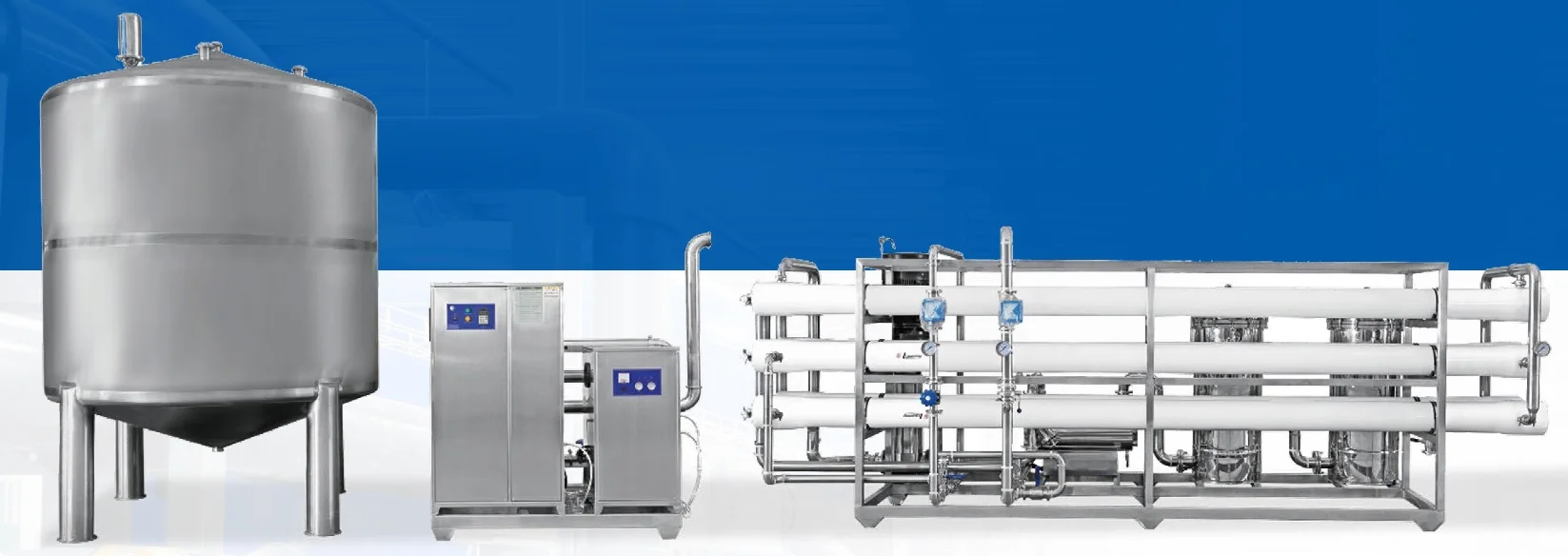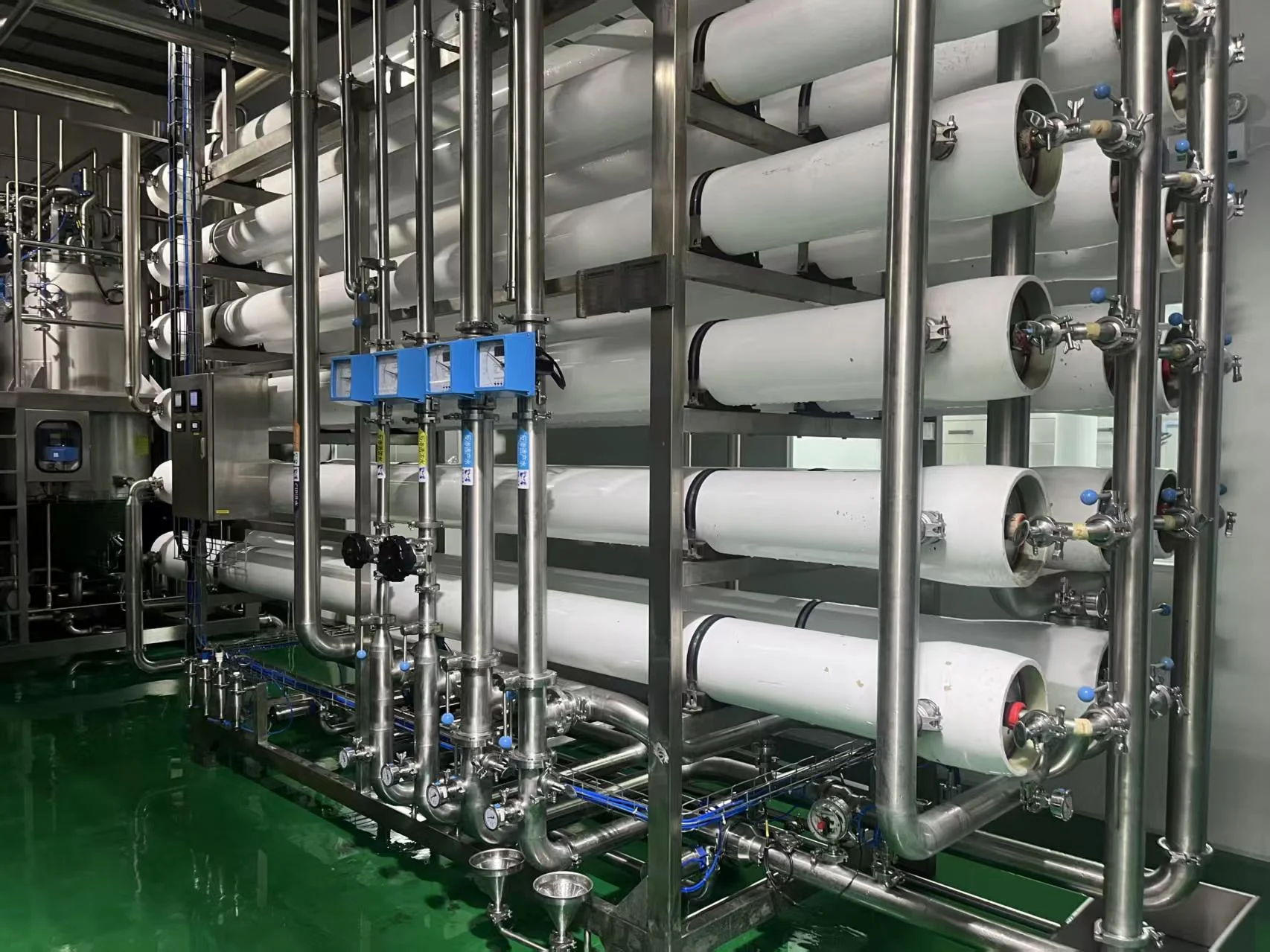


Membrane treatment systems are becoming an increasingly important part of modern water treatment and beverage production. As manufacturers face tighter requirements for water quality, production efficiency, resource conservation, and process control, traditional treatment methods alone are often not enough. Membrane technologies provide a practical way to improve water quality while supporting more efficient and flexible production processes.
For beverage manufacturers, the value of membrane treatment goes beyond producing clean water. Properly designed membrane systems can support pretreatment, process-water preparation, product recovery, wastewater treatment, and water reuse. As automation and intelligent manufacturing continue to develop, membrane systems are also moving toward more integrated, energy-efficient, and digitally controlled solutions.
Why Membrane Treatment Technology Is Evolving
Membrane treatment uses a selective barrier to separate unwanted substances from water or other liquids. Depending on the membrane type and application, the system can remove suspended solids, microorganisms, organic matter, dissolved salts, and other contaminants.
Common technologies include microfiltration (MF), ultrafiltration (UF), nanofiltration (NF), and reverse osmosis (RO). Each has a different separation capability and is normally selected according to the incoming water quality and the required final water quality.
The future development of membrane treatment is being driven by several practical factors:
-
Increasing demand for consistent water quality
-
Greater attention to water consumption and wastewater discharge
-
The need to reduce chemical and energy consumption
-
More stringent production and hygiene requirements
-
Growing demand for automated production lines
-
Expansion of water reuse and resource recovery
-
Increasing integration between treatment equipment and smart factories
These trends are particularly relevant to the beverage industry, where water is both a critical ingredient and an essential resource used throughout production and cleaning.
1. More Efficient and Application-Specific Membranes
One important direction is the development of membranes with improved separation performance and better resistance to fouling.
Membrane fouling can reduce filtration capacity and increase cleaning requirements. In practical production environments, this can affect operating stability if it is not properly controlled. Future membrane materials are expected to focus on smoother surfaces, improved chemical resistance, higher mechanical strength, and better resistance to organic and biological fouling.
However, membrane selection should not simply focus on achieving the highest filtration performance. The correct membrane needs to match the application. Feed-water characteristics, temperature, flow rate, operating pressure, cleaning procedures, and required water quality all influence the final system design.
For beverage producers, this application-specific approach is particularly important because raw water sources and production requirements can vary significantly between factories.
2. Greater Integration of Membrane Treatment with Pretreatment
Membrane systems perform best when upstream treatment is properly designed.
For example, suspended particles, hardness, chlorine, iron, organic matter, and microorganisms can affect membrane performance depending on the treatment process. A suitable pretreatment system can reduce the contaminant load entering the membrane stage and help maintain stable operation.
This is why future water treatment plants will increasingly be designed as complete treatment processes rather than as isolated membrane units.
For a beverage factory, a typical treatment process may combine raw-water pretreatment, multimedia filtration, activated carbon treatment, precision filtration, membrane filtration, reverse osmosis, disinfection, and final water storage. The exact configuration should be determined according to the source water and production requirements.
A well-integrated system can make operation easier because each treatment stage performs a clearly defined task.
3. Intelligent Monitoring and Automated Control
Automation is another major trend in membrane treatment systems.
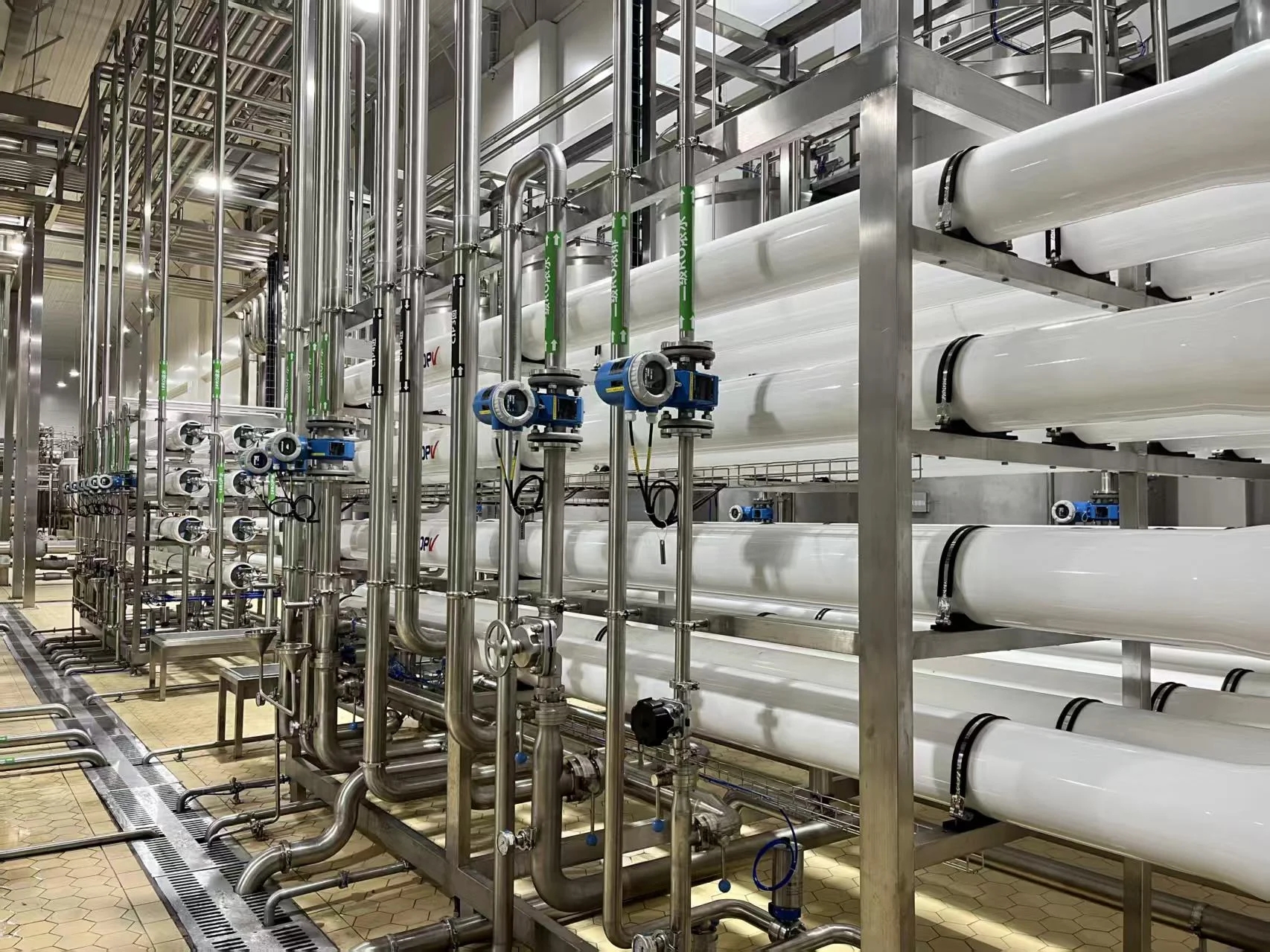
Modern equipment can monitor parameters such as pressure, flow, conductivity, temperature, water quality, and differential pressure. These measurements can be used to identify abnormal operating conditions before they develop into major problems.
Future systems are likely to make greater use of centralized control platforms and data analysis. Operators can use historical operating data to understand membrane performance, determine when cleaning is required, and identify changes in water quality.
For large beverage production facilities, this can be connected with broader factory automation. Water treatment equipment, production lines, cleaning systems, filling equipment, and other processes can exchange operating information through an integrated control architecture.
This approach is consistent with the development of smart workshops and smart factories, where equipment is expected to work as part of a connected production system rather than as independent machines.
4. Lower Energy Consumption
Energy efficiency will remain a key consideration for membrane technology.
Reverse osmosis, in particular, requires pressure to drive water through the membrane. Improvements in membrane materials, pump efficiency, process configuration, and energy recovery can help reduce energy requirements.
Future systems will increasingly focus on optimizing the entire process rather than improving only one component.
For example, a treatment system can be designed to avoid unnecessary pumping, minimize pressure losses, and adjust operation according to actual production demand. Variable-frequency drives can also help pumps operate closer to the required flow and pressure conditions.
For factories operating continuously, small improvements in energy efficiency can have a meaningful impact on long-term operating performance.
5. More Effective Membrane Cleaning
Cleaning is one of the most important aspects of membrane system operation.
Even high-performance membranes can gradually accumulate contaminants. If cleaning is delayed, filtration performance may decline and operating pressure may increase.
Future membrane systems will therefore place greater emphasis on automated cleaning strategies. Instead of relying entirely on fixed cleaning schedules, systems can use operating data to determine when cleaning is actually necessary.
This can work together with automated clean-in-place (CIP) systems. In beverage production, automated cleaning is especially valuable because hygiene requirements are high and manual intervention should be minimized where practical.
Pengxiang Huixing's broader expertise in intelligent cleaning systems and industrial cleaning solutions provides a useful foundation for integrating water treatment with automated cleaning processes. When water treatment, production, and cleaning are considered together during factory planning, the resulting system can be easier to operate and maintain.
6. Expansion of Water Reuse
Water reuse is likely to become one of the most important applications of membrane treatment.
A beverage factory uses water in many different areas, including ingredient preparation, equipment cleaning, bottle and container processing, cooling, and utility operations. Not every application requires the same water quality.
Instead of treating all water to the highest specification, future factories can classify water according to its intended use. Membrane treatment can then be applied where appropriate to recover and reuse water from selected processes.
This approach requires careful process design and strict separation between different water streams. Reuse should also comply with applicable quality, hygiene, and regulatory requirements.
The objective is not simply to recycle as much water as possible, but to create a controlled and reliable water management system.
7. Modular and Scalable System Design
Another important trend is modularization.
Different factories have different production capacities, water sources, product categories, and future expansion plans. A modular membrane treatment system allows manufacturers to adapt capacity more easily.
For example, a production facility may initially require a smaller water treatment capacity but plan to add new beverage lines in the future. A modular design can make later expansion more manageable than replacing an entire treatment plant.
Modular equipment can also simplify transportation, installation, commissioning, and maintenance, which is particularly useful for international projects.
8. Membrane Treatment as Part of a Complete Beverage Production Solution
The future of membrane technology is not only about better membranes. It is also about better system integration.
For beverage manufacturers, water treatment is closely connected to pretreatment, beverage processing, filling, sealing, labeling, conveying, secondary packaging, cleaning, warehousing, and logistics.
Pengxiang Huixing provides integrated solutions covering water treatment, beverage pretreatment systems, PET blow molding equipment, blow-fill-seal production lines, blow-label-fill-seal production lines, labeling systems, conveying systems, and secondary packaging equipment. This broader equipment capability allows water treatment to be considered as part of the overall beverage production process.
The company's product portfolio also includes automatic bottle blowing, filling and capping 3-in-1 machines, gallon bottle production lines, water treatment production lines, sterilization equipment, bottled beverage filling and sealing lines, juice and carbonated beverage production systems, mineral water production lines, intelligent cleaning systems, and industrial cleaning solutions.
This integrated approach is particularly valuable when designing a new production facility. Instead of selecting water treatment equipment separately from the rest of the factory, engineers can consider water demand, production capacity, cleaning requirements, equipment layout, utilities, and future expansion together.
What Manufacturers Should Consider When Planning a Membrane System
Although membrane technology is advancing quickly, choosing the latest technology does not automatically guarantee better results. Practical engineering remains essential.
Before selecting a system, manufacturers should evaluate:
-
Raw-water quality: Understand the source water and its seasonal variations.
-
Required water quality: Define the quality requirements for each application.
-
Production capacity: Calculate peak and average water demand rather than relying only on average consumption.
-
Pretreatment: Identify contaminants that may affect membrane performance.
-
Cleaning requirements: Establish suitable cleaning procedures and monitoring points.
-
Automation level: Determine which operating parameters should be monitored and controlled automatically.
-
Future expansion: Reserve sufficient space and utility capacity for potential production growth.
-
Maintenance: Ensure that membranes, pumps, valves, instruments, and other components can be inspected and serviced efficiently.
For companies looking for a complete solution, Pengxiang Huixing's <a href="https://www.szpxhx.com/membrane-treatment-system.html">membrane treatment system</a> solutions can be considered within a broader water treatment and beverage production project.
Looking Ahead
Membrane treatment systems are moving toward a future characterized by higher efficiency, smarter control, better integration, and more responsible water use. Improved membrane materials will help address fouling and durability challenges, while intelligent monitoring will make system operation more predictable. Energy optimization and water reuse will become increasingly important as manufacturers seek to improve resource efficiency.
For beverage producers, the most valuable innovation will not necessarily be a single new membrane technology. It will be the ability to combine membrane treatment with pretreatment, cleaning, production equipment, automation, and factory planning into one practical system.
With around 20 years of experience in beverage packaging machinery technology, Pengxiang Huixing has continued to develop solutions for water treatment and beverage production while integrating advanced technologies from around the world. The company is based in Songgang Subdistrict, Bao'an District, Shenzhen, and has achieved ISO9000 quality management system certification and recognition as a Chinese high-tech enterprise. Its equipment has been supplied to customers in more than 20 provinces in China and exported to markets including the UAE, Oman, Vietnam, the Philippines, and Malaysia.
As beverage manufacturing becomes more connected and resource-conscious, membrane treatment will play an increasingly important role in building reliable and efficient production facilities. The companies that approach membrane treatment as part of a complete production strategy, rather than as a standalone filtration process, will be better positioned to achieve stable water quality, efficient operation, and long-term production flexibility.