


In modern water treatment and beverage production systems, maintaining consistent water quality is not just a regulatory requirement but a fundamental factor that determines product stability, equipment performance, and overall production efficiency. Among the most common challenges faced by manufacturers is the presence of turbidity and suspended solids in raw water sources. These impurities, if not properly removed, can lead to clogging, scaling, microbial growth, and inconsistencies in downstream processing.
Multi-media filtration has become one of the most reliable and widely adopted solutions for addressing these issues. By combining different filtration media layers with varying densities and particle sizes, multi-media filters are able to capture a broad range of suspended particles more efficiently than traditional single-media systems.
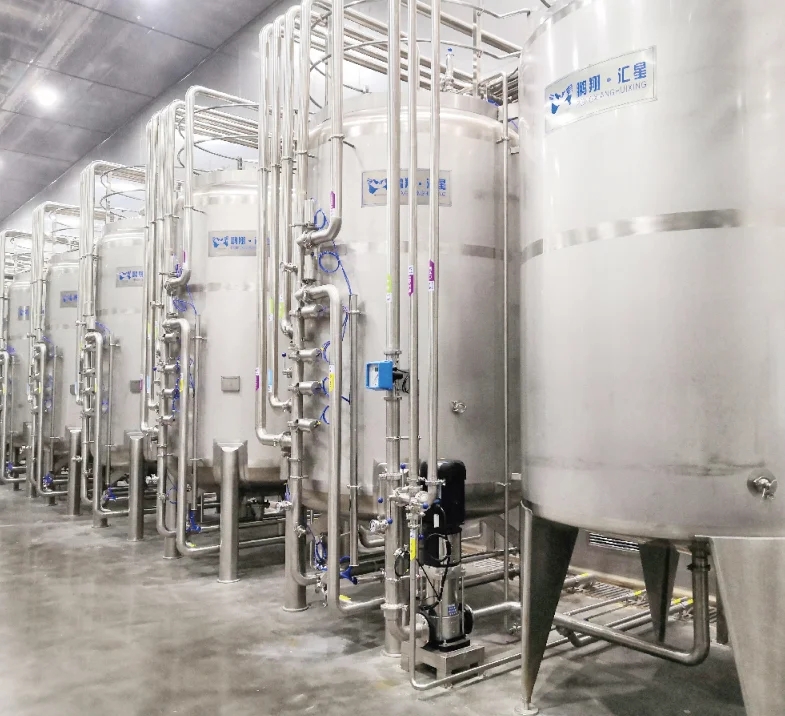
Understanding Turbidity and Suspended Solids in Industrial Water
Turbidity refers to the cloudiness or haziness of water caused by the presence of fine suspended particles such as silt, clay, organic matter, and microorganisms. Suspended solids, on the other hand, are the actual physical particles that remain undissolved in water.
In beverage manufacturing and bottled water production, even low levels of turbidity can negatively affect:
-
Product clarity and appearance
-
Taste consistency
-
Filtration membrane lifespan
-
Sterilization efficiency
-
Filling and packaging stability
For this reason, pre-treatment systems are essential before water enters processes such as reverse osmosis, UV sterilization, or bottling lines.
How Multi-media Filtration Works
A multi-media filter is designed with multiple layers of filtration media, typically including anthracite, sand, and garnet. Each layer serves a specific purpose based on particle size and density.
-
The top layer (usually anthracite) captures larger particles and organic matter
-
The middle layer (silica sand) removes medium-sized suspended solids
-
The bottom layer (garnet or heavier media) traps the finest particles
This gradation allows water to pass through a structured filtration gradient, improving filtration efficiency while reducing pressure loss and extending backwash cycles.
Unlike single-media filters that often trap particles only on the surface, multi-media filters utilize depth filtration. This means particles are captured throughout the filter bed, not just at the top layer, significantly increasing dirt-holding capacity.
Role of Multi-media Filters in Beverage Water Treatment
In beverage production, water is not just an ingredient—it is the foundation of every formulation. Any inconsistency in water quality directly affects product quality. This is where multi-media filtration plays a critical role in pre-treatment systems.
Companies like Pengxiang Huixing, a professional manufacturer specializing in water treatment systems and beverage packaging machinery, integrate multi-media filtration into complete production solutions. Their systems are designed to ensure that water entering downstream processes such as filling, sterilization, and blending meets strict clarity and purity standards.
Pengxiang Huixing provides integrated solutions that cover:
-
Water treatment and beverage pre-treatment systems
-
PET blow molding equipment
-
Blow-fill-cap production lines
-
Labeling and conveying systems
-
Secondary packaging equipment
-
Intelligent factory planning and digital workshop design
By combining filtration technology with fully automated production lines, the company helps manufacturers achieve end-to-end efficiency—from raw water intake to final packaged product distribution.
Why Multi-media Filters Are More Efficient Than Conventional Systems
One of the key advantages of multi-media filtration is its ability to handle high turbidity loads without rapid clogging. In conventional sand filters, particles accumulate quickly on the surface, causing frequent backwashing and reduced efficiency.
Multi-media systems improve performance in several ways:
-
Higher Dirt-Holding Capacity
The layered structure distributes particles throughout the filter bed, preventing surface blockage. -
Improved Flow Stability
Water flows more evenly through different media layers, maintaining consistent output. -
Longer Operational Cycles
Reduced frequency of backwashing leads to lower water waste and reduced operational downtime. -
Better Particle Size Removal Range
Multi-layer filtration captures both coarse and fine particles in a single process.
These advantages make multi-media filtration especially suitable for industries requiring continuous and stable water supply, such as bottled water production, juice manufacturing, and carbonated beverage processing.
Integration with Modern Beverage Production Lines
In modern industrial setups, filtration systems are no longer standalone units. Instead, they are integrated into complete automated production ecosystems.
Pengxiang Huixing has developed intelligent manufacturing systems that incorporate multi-media filters into broader beverage production lines, including:
-
Bottled water production lines
-
Juice and carbonated beverage processing systems
-
Bottle filling and sealing integrated lines
-
On-site automated cleaning systems
-
Sterilization and disinfection equipment
-
Industrial cleaning and CIP systems
These integrated systems ensure that water quality is maintained consistently throughout every stage of production.
For example, before water enters a PET bottling line, it typically passes through multi-media filtration, activated carbon treatment, and fine filtration. This ensures that downstream processes such as filling and sealing operate under optimal conditions.
The company’s advanced engineering approach focuses on combining mechanical design with intelligent control systems, enabling real-time monitoring of water quality parameters such as turbidity, pressure differential, and flow rate.
Contribution to Smart Factory Development
As industrial manufacturing moves toward automation and digitalization, water treatment systems are also evolving. Pengxiang Huixing emphasizes the development of smart workshops and intelligent factory solutions that integrate filtration systems with digital monitoring platforms.
Through centralized control systems, operators can:
-
Monitor filter performance in real time
-
Track turbidity levels at different stages
-
Optimize backwash cycles automatically
-
Reduce energy consumption and water waste
-
Improve overall system reliability
This approach not only enhances production efficiency but also aligns with global sustainability goals by reducing resource consumption.
Industrial Applications Beyond Beverage Production
While multi-media filters are widely used in beverage manufacturing, their applications extend to other industries as well:
-
Food processing plants
-
Pharmaceutical water systems
-
Industrial cooling water treatment
-
Municipal water purification systems
-
Pre-treatment for reverse osmosis systems
In each of these applications, the primary goal remains the same: reducing turbidity and protecting downstream equipment from damage or inefficiency.
Reliability, Certification, and Global Reach
Manufacturers like Pengxiang Huixing have established strong credibility in the global market through consistent quality and technological innovation. The company has obtained ISO9000 certification and has been recognized as a high-tech enterprise in China.
With over two decades of experience in beverage packaging machinery and water treatment technology, its products are widely exported to regions including the Middle East, Southeast Asia, and other international markets.
By continuously improving filtration technology and integrating it with complete beverage production systems, the company has built a competitive advantage in delivering reliable and scalable solutions for global clients.
Conclusion
Multi-media filtration plays a critical role in modern water treatment systems by effectively reducing turbidity and suspended solids. Its layered design, high efficiency, and adaptability make it an essential component in beverage production and industrial water processing.
When integrated into comprehensive systems developed by manufacturers like Pengxiang Huixing, multi-media filters become part of a larger ecosystem that supports intelligent production, operational efficiency, and consistent product quality.
For companies aiming to improve water clarity and protect downstream processes, adopting advanced multi-media filtration technology is not just a technical upgrade—it is a strategic investment in long-term production stability.