


In modern beverage manufacturing and industrial liquid processing, water quality is not just a utility concern—it is a core production parameter that directly affects product safety, taste stability, equipment lifespan, and regulatory compliance. As production lines become more automated and product standards more demanding, membrane treatment systems have become a critical technology for ensuring consistent, high-quality process water across the entire manufacturing chain.
For integrated equipment manufacturers such as Pengxiang Huixing, which provides water treatment systems, beverage pretreatment systems, PET blow molding equipment, blow-fill-cap (BFC) production lines, labeling systems, conveying systems, and secondary packaging equipment, membrane-based purification is a foundational part of delivering stable and intelligent beverage production solutions.
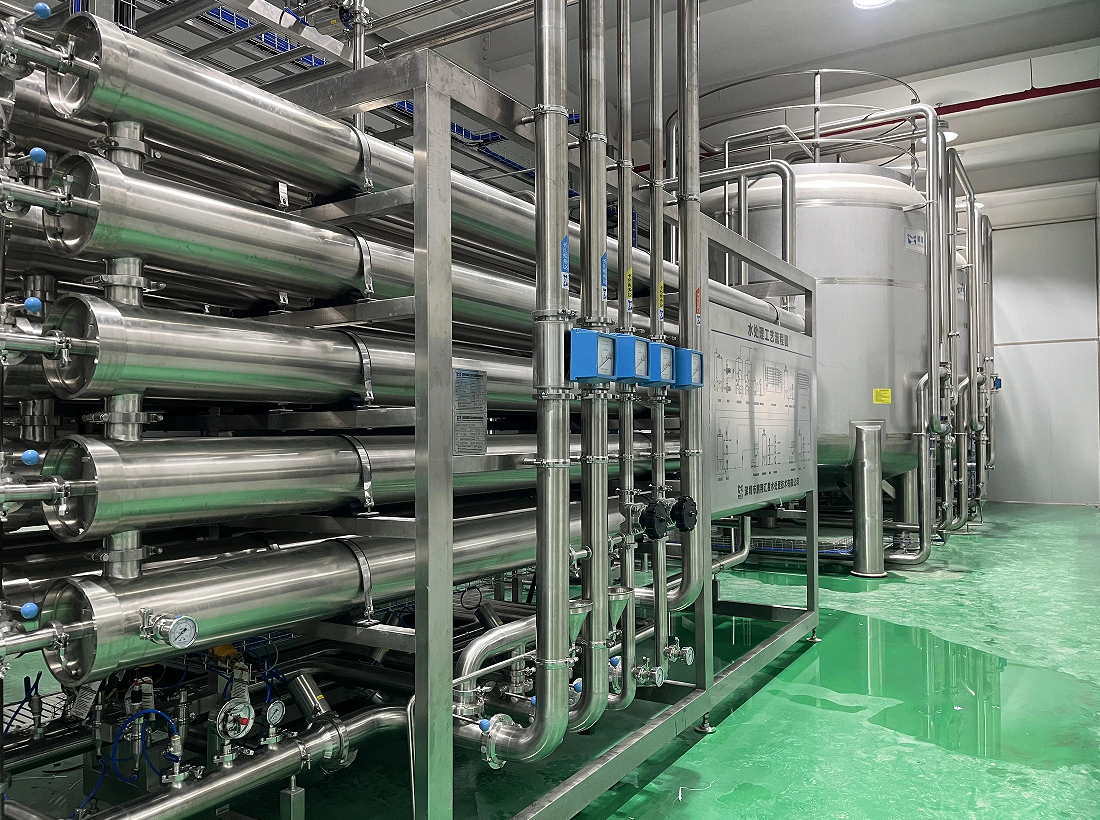
The Role of Process Water in Beverage Manufacturing
Process water is used at multiple stages in beverage production: ingredient mixing, bottle rinsing, equipment cleaning, sterilization, and sometimes as a direct ingredient in the final product. Any inconsistency in water quality can lead to serious issues such as microbial contamination, off-flavors, scaling in equipment, or instability in carbonation and juice formulations.
This is why leading manufacturers invest heavily in advanced water treatment technologies that go beyond basic filtration. Membrane treatment systems provide a multi-barrier approach that ensures water meets strict physical, chemical, and microbiological standards before entering production lines.
What Makes Membrane Treatment Systems Effective
Membrane treatment systems typically include processes such as microfiltration (MF), ultrafiltration (UF), nanofiltration (NF), and reverse osmosis (RO). Each stage plays a specific role in removing contaminants of different sizes and characteristics.
Microfiltration removes suspended solids and bacteria clusters. Ultrafiltration goes further by eliminating macromolecules, colloids, and viruses. Nanofiltration selectively removes hardness and organic compounds, while reverse osmosis provides the highest level of purification by removing dissolved salts and almost all impurities.
The combination of these technologies creates a layered purification structure that ensures water is consistently stable, regardless of variations in incoming raw water quality.
Why Beverage Production Depends on Stable Water Quality
In beverage manufacturing, even small variations in water composition can alter product outcomes. For example, mineral content affects taste balance in bottled water and soft drinks. Organic residues may interfere with flavor consistency in juices. Microbial presence can compromise shelf life and safety compliance.
Membrane systems provide a stable baseline by standardizing incoming water quality. This allows downstream production processes—such as blending, carbonation, and filling—to operate with greater precision and fewer adjustments.
For companies like Pengxiang Huixing, which designs complete beverage production lines including bottle blowing, filling, labeling, conveying, and packaging systems, consistent process water is essential to ensuring that each subsystem performs reliably as part of an integrated whole.
Integration with Modern Beverage Production Lines
One of the key advantages of membrane treatment systems is their compatibility with fully automated production environments. In modern smart factories, water treatment is not a standalone utility system; it is integrated into the production ecosystem.
Pengxiang Huixing specializes in intelligent factory planning and beverage packaging machinery technology, where water treatment systems are connected with upstream and downstream processes. For example, treated water is directly supplied to PET blow molding machines, bottle rinsing stations, and CIP (clean-in-place) systems used for sterilization and cleaning.
This integration reduces manual intervention, improves operational efficiency, and supports continuous production with minimal downtime.
Supporting CIP and Sterilization Processes
Clean-in-place systems are essential in beverage manufacturing to maintain hygiene standards without dismantling equipment. These systems rely heavily on high-quality water to prepare cleaning solutions and rinse production pipelines.
If water quality is unstable, scaling and microbial residues can accumulate in pipelines and tanks, leading to higher maintenance frequency and potential production interruptions. Membrane treatment systems ensure that CIP processes use purified water, improving cleaning efficiency and reducing chemical consumption.
This contributes to longer equipment life cycles and more stable production performance across filling and packaging systems.
Enhancing PET Blow Molding and Filling Accuracy
In PET bottle production, water quality indirectly affects bottle integrity and filling precision. Impurities in water used for cooling or rinsing can lead to surface defects or contamination risks.
By ensuring ultra-clean process water, membrane systems help maintain consistent conditions during PET blow molding and filling operations. This is especially important for high-speed production lines such as blow-fill-cap systems, where even minor deviations can affect synchronization and output efficiency.
Pengxiang Huixing’s integrated approach ensures that water treatment systems are designed in coordination with PET blow molding equipment and filling lines, enabling seamless operation across all stages.
Contribution to Smart Factory Development
Modern beverage manufacturing is moving toward smart factory models, where automation, data monitoring, and system integration play central roles. Membrane treatment systems are increasingly equipped with sensors and control units that monitor pressure, flow rate, and water quality in real time.
These data points can be integrated into factory management systems, allowing operators to adjust parameters proactively and reduce system downtime. Pengxiang Huixing focuses on intelligent workshop and smart factory design, ensuring that water treatment systems are not isolated units but part of a fully connected production ecosystem.
Global Application and Industrial Reliability
With more than 20 years of development in beverage packaging machinery technology, Pengxiang Huixing has delivered solutions to customers across China and international markets including the United Arab Emirates, Oman, Vietnam, the Philippines, and Malaysia.
In these regions, water quality conditions vary significantly, making membrane treatment systems even more critical. Whether dealing with high-mineral groundwater or surface water with organic impurities, membrane systems provide the flexibility and reliability needed for consistent beverage production.
The company’s ISO9000-certified manufacturing processes and high-tech enterprise status further reinforce its commitment to delivering stable and reliable industrial solutions.
A Fully Integrated Approach to Beverage Production
Beyond water treatment systems, Pengxiang Huixing provides a complete range of equipment including bottle blowing machines, filling and sealing production lines, labeling systems, conveying systems, secondary packaging equipment, and automated cleaning systems.
This full-chain integration allows manufacturers to build end-to-end production systems where every stage is optimized for efficiency and quality. Membrane treatment systems serve as the foundation of this ecosystem, ensuring that every drop of water entering the production line meets strict quality standards.
Conclusion
Membrane treatment systems are no longer optional components in beverage manufacturing—they are essential infrastructure for ensuring product quality, equipment reliability, and production efficiency. By delivering consistent, high-purity process water, these systems support every stage of production from PET bottle forming to final packaging.
With its expertise in water treatment, beverage processing systems, and intelligent factory design, Pengxiang Huixing provides integrated solutions that connect water purification with the entire production lifecycle. This holistic approach helps manufacturers achieve higher stability, improved efficiency, and long-term operational success in an increasingly competitive global market.