


In modern beverage production and water treatment industries, operational stability is no longer a competitive advantage—it is a basic requirement. Production lines are expected to run continuously, deliver consistent quality, and minimize unplanned interruptions. In this context, filtration is often underestimated. Yet in reality, filtration performance directly affects equipment lifespan, cleaning frequency, and overall maintenance cost.
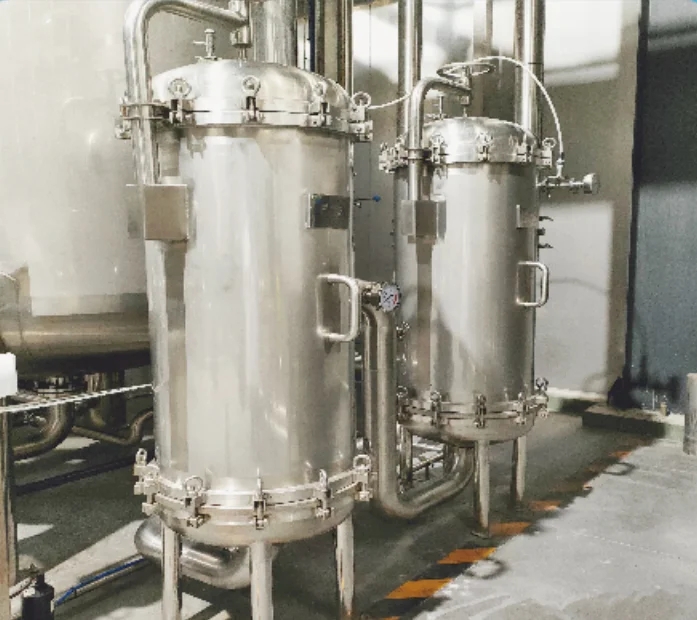
Precision filters, in particular, have become a critical component in reducing downtime and stabilizing production efficiency across water treatment and beverage processing systems.
The Hidden Cost of Poor Filtration
In many beverage factories and water treatment plants, filtration is treated as a supporting process rather than a core operational factor. However, when filtration is inefficient, the consequences accumulate quickly:
-
Pumps wear out faster due to abrasive particles
-
Valves and filling heads become clogged
-
Membranes and sterilization systems require frequent cleaning
-
Production lines experience unexpected shutdowns
-
Product quality becomes inconsistent, leading to waste
These issues rarely appear suddenly. Instead, they build gradually as small impurities pass through insufficient filtration stages. Over time, maintenance teams spend more hours troubleshooting than improving system efficiency.
This is where precision filtration changes the equation.
Why Precision Filtration Matters in Industrial Systems
Precision filters are designed to remove fine suspended solids, micro-particles, and contaminants that standard filtration systems often miss. By improving upstream water or liquid purity, they protect every downstream stage of production.
In beverage manufacturing, even small particles can impact taste stability, carbonation control, and sterilization efficiency. In water treatment systems, they directly influence membrane lifespan and system pressure stability.
For companies like Pengxiang Huixing, which specializes in water treatment systems, beverage pre-processing solutions, PET blow molding equipment, blow-fill-seal production lines, labeling systems, and intelligent factory design, precision filtration is integrated as a foundational layer of system engineering rather than an optional add-on.
This integrated approach ensures that filtration is not isolated, but aligned with the entire production workflow—from raw water intake to packaging and logistics.
Reducing Maintenance Frequency Through Stable Filtration
One of the most direct benefits of precision filters is the reduction in maintenance frequency. When contaminants are effectively removed early in the process, downstream equipment operates under less stress.
For example:
-
Filling machines experience fewer nozzle blockages
-
Sterilization systems require less frequent chemical cleaning
-
Pumps maintain stable pressure levels over longer cycles
-
Conveyor and packaging systems operate with fewer interruptions
This stability reduces the need for reactive maintenance, which is often more expensive and disruptive than planned servicing.
In large-scale beverage production lines, even a single hour of downtime can disrupt entire batches. Precision filtration reduces these interruptions by maintaining consistent fluid quality across the system.
Extending Equipment Lifespan Across the Production Line
Industrial beverage systems involve multiple interconnected machines, including water treatment units, mixing systems, filling equipment, and packaging lines. When unfiltered particles enter the system, they cause gradual mechanical wear.
Precision filters help extend equipment lifespan by:
-
Preventing abrasive damage to pumps and valves
-
Reducing scaling in heat exchangers and sterilization units
-
Protecting sensitive filling and dosing components
-
Maintaining cleaner internal pipeline surfaces
Over time, this leads to significantly lower capital replacement costs. Instead of replacing key components every few years, companies can extend operational life cycles with proper filtration strategy.
Supporting Smart Factory and Automated Production Systems
Modern beverage manufacturing is rapidly shifting toward intelligent and automated production environments. Companies like Pengxiang Huixing are actively involved in intelligent workshop planning and smart factory design, integrating equipment, software, and process control into unified systems.
In such environments, precision filtration plays an even more important role. Automated systems depend on stable flow rates, predictable pressure levels, and consistent fluid quality. Any fluctuation caused by contamination can disrupt sensors, mislead control systems, or trigger false alarms.
Precision filtration supports smart manufacturing by:
-
Stabilizing sensor readings in automated systems
-
Ensuring consistent flow in CIP (clean-in-place) processes
-
Reducing variability in filling accuracy
-
Improving reliability of real-time monitoring systems
Without stable filtration, even the most advanced automation systems cannot perform at their designed efficiency.
Lowering Downtime in Beverage Production Lines
Downtime in beverage production is extremely costly because it affects not only output but also packaging schedules, storage planning, and logistics coordination. Precision filters help reduce downtime in several practical ways:
First, they minimize clogging-related shutdowns in filling and sealing equipment. Second, they reduce cleaning cycles required for pipelines and tanks. Third, they stabilize upstream water quality, which prevents cascading system failures.
For integrated production solutions such as PET blow molding, blow-fill-seal systems, and bottled water production lines provided by Pengxiang Huixing, filtration stability ensures that each stage operates smoothly without interruption.
When filtration is consistent, production lines can run longer cycles with fewer stops, increasing overall equipment effectiveness (OEE).
A System-Level Approach to Filtration Design
One of the key advantages of working with integrated manufacturers like Pengxiang Huixing is the system-level approach to engineering. Instead of treating filtration as a standalone device, it is designed as part of a complete production ecosystem that includes:
-
Water treatment systems
-
Beverage pre-processing units
-
Filling and sealing equipment
-
Conveying and packaging systems
-
Secondary packaging and logistics integration
This ensures that filtration performance is aligned with production capacity, product type, and factory layout. It also allows for more efficient troubleshooting and system optimization.
In this context, precision filtration becomes not just a maintenance tool, but a strategic design element that influences the entire production chain.
Precision Filters in Real Industrial Applications
In practical applications, precision filters are widely used in:
-
Mineral water production lines
-
Carbonated beverage systems
-
Juice and functional drink processing
-
Industrial cleaning and CIP systems
-
Pre-treatment for PET bottle production lines
Each of these applications requires different filtration levels, but the goal remains the same: protect downstream systems and ensure consistent product quality.
For example, in juice production, precision filtration helps maintain clarity and prevent sedimentation issues. In carbonated beverage systems, it ensures stable carbonation and prevents nozzle blockage in filling machines.
Conclusion
Precision filtration is often overlooked, but it plays a foundational role in reducing maintenance costs and preventing production downtime. By improving fluid quality at the earliest stage, it protects equipment, stabilizes operations, and extends system lifespan.
For companies operating complex beverage production ecosystems, integrating precision filters into the system design is no longer optional—it is essential for long-term efficiency and competitiveness.
With integrated engineering capabilities and end-to-end production solutions, companies like Pengxiang Huixing demonstrate how filtration, automation, and smart factory design can work together to build more reliable and efficient beverage manufacturing systems.