


In modern industrial water treatment systems, achieving consistent water quality is not only a regulatory requirement but also a critical factor that affects production stability, equipment lifespan, and end-product quality. Among the many filtration technologies available, activated carbon filtration has remained one of the most reliable and widely used solutions for removing organic contaminants, chlorine, odor, and color from water.
For industries such as beverage manufacturing, bottled water production, food processing, and pharmaceutical applications, activated carbon filters serve as a key pre-treatment stage. They help create a stable and controlled water environment that downstream processes can depend on. Companies like Pengxiang Huixing, which specialize in integrated water treatment and beverage production systems, incorporate activated carbon filtration into complete production line solutions to ensure consistent quality from water intake to final packaging.
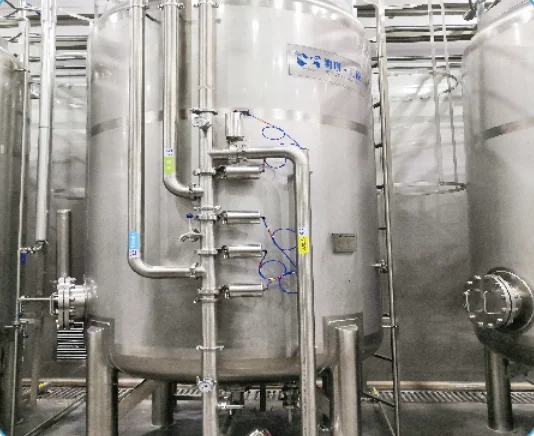
Why Activated Carbon Is Essential in Industrial Water Systems
Activated carbon is a highly porous material with an extremely large surface area. This structure allows it to adsorb a wide range of contaminants from water. Unlike simple mechanical filtration, which only removes suspended particles, activated carbon works at a molecular level.
In industrial environments, source water often contains:
-
Chlorine and chloramine from municipal treatment
-
Organic compounds that affect taste and odor
-
Industrial solvents or trace pollutants
-
Color-causing substances
-
Microscopic impurities that interfere with production processes
If these elements are not removed effectively, they can negatively impact product taste, cause corrosion in equipment, and reduce the efficiency of downstream sterilization or membrane systems.
Activated carbon filters act as a protective barrier, stabilizing water quality before it enters more sensitive stages such as reverse osmosis, UV sterilization, or filling systems.
How Activated Carbon Filtration Works
The effectiveness of activated carbon lies in a process called adsorption. Unlike absorption, where substances are soaked into a material, adsorption traps contaminants on the surface of carbon particles.
When water flows through a carbon bed:
-
Contaminants are drawn to the carbon surface.
-
Organic molecules adhere to microscopic pores.
-
Chlorine and odor compounds are chemically neutralized.
-
Clean water exits the system with improved clarity and stability.
This process is especially important in beverage production, where even small variations in water quality can change the final product’s flavor profile.
A typical industrial setup may use granular activated carbon (GAC) or carbon block systems depending on flow rate requirements and contamination levels.
Industrial Applications in Water-Dependent Manufacturing
Activated carbon filtration is widely applied across industries where water quality directly influences production outcomes. Some key applications include:
Beverage and Bottled Water Production
In bottled water and beverage industries, water is the primary ingredient. Activated carbon removes chlorine and organic compounds that could alter taste or react with flavoring agents. It is commonly installed as part of a multi-stage water treatment system before filling and packaging.
Food Processing Industry
Food processing plants require water that is free from odor and chemical residues. Activated carbon helps ensure that washing, mixing, and cooking processes are not affected by unwanted contaminants.
Pharmaceutical Manufacturing
In pharmaceutical environments, water purity standards are extremely strict. Activated carbon plays a role in pre-treatment systems, ensuring that downstream purification processes such as reverse osmosis operate efficiently.
Industrial Cleaning and Sterilization Systems
High-quality water is essential for CIP (Clean-in-Place) systems and industrial cleaning lines. Activated carbon ensures cleaning agents are not neutralized or compromised by residual chlorine or impurities.
Integration with Modern Beverage Production Systems
In fully automated beverage production lines, water treatment is not an isolated process. It is integrated into a continuous workflow that includes water intake, purification, mixing, filling, labeling, and packaging.
Pengxiang Huixing, a comprehensive beverage equipment and intelligent factory solution provider based in Shenzhen, China, designs systems that connect every stage of production. Their solutions include water treatment systems, PET blow molding equipment, blow-fill-cap production lines, labeling systems, conveying systems, and secondary packaging equipment.
Within such integrated systems, activated carbon filters play a foundational role. They ensure that the water entering production lines is stable, consistent, and suitable for high-speed automated filling systems. This integration reduces downtime, minimizes maintenance costs, and improves product consistency across large-scale production environments.
In many modern smart factory designs, activated carbon filtration units are also connected to digital monitoring systems. This allows operators to track water quality in real time and adjust filtration cycles based on operational demand.
Key Design Considerations for Industrial Systems
When implementing activated carbon filtration in an industrial environment, several engineering factors must be considered:
Flow Rate Requirements
Different production lines require different water volumes. The carbon bed must be sized correctly to ensure sufficient contact time between water and carbon media.
Contaminant Load
Water sources vary significantly. Surface water, groundwater, and municipal water each contain different levels of organic and chemical contaminants. System design must reflect these differences.
Backwashing Capability
Over time, carbon beds accumulate trapped particles. Automated backwashing systems are essential for maintaining efficiency and extending filter lifespan.
Integration with Other Systems
Activated carbon filters are typically part of a multi-stage system that may include sediment filtration, softening units, reverse osmosis, and UV sterilization. Proper sequencing is critical for optimal performance.
Maintenance and Operational Efficiency
Although activated carbon systems are relatively low-maintenance, they still require regular monitoring. Over time, the adsorption capacity of carbon media decreases, and replacement becomes necessary.
Key maintenance practices include:
-
Monitoring pressure drop across the filter bed
-
Testing chlorine breakthrough levels
-
Scheduling periodic backwashing cycles
-
Replacing carbon media at defined operational intervals
Well-maintained systems not only ensure consistent water quality but also protect downstream equipment such as membranes, pumps, and filling machines from damage or scaling.
The Role of Activated Carbon in Smart Manufacturing
As industrial production moves toward automation and digitalization, water treatment systems are also evolving. Modern facilities increasingly rely on smart monitoring tools that provide real-time data on water quality and system performance.
In this context, activated carbon filtration remains a stable and proven technology. When combined with intelligent control systems, it becomes part of a predictive maintenance ecosystem that improves operational efficiency and reduces unplanned downtime.
Manufacturers like Pengxiang Huixing continue to develop integrated solutions that combine traditional filtration methods with advanced automation technologies. Their focus on end-to-end beverage production systems ensures that every stage—from water treatment to final packaging—is optimized for efficiency and reliability.
Conclusion
Activated carbon filters remain a cornerstone of industrial water treatment systems due to their ability to effectively remove chlorine, organic compounds, and unwanted odors. In industries where water quality directly impacts product integrity, such as beverage manufacturing and food processing, their role is indispensable.
When integrated into complete production solutions, as seen in systems developed by Pengxiang Huixing, activated carbon filtration becomes more than just a treatment step - it becomes part of a larger ecosystem that ensures consistency, efficiency, and product quality across the entire manufacturing chain.
As industries continue to evolve toward smarter and more automated production environments, the importance of reliable pre-treatment technologies like activated carbon filtration will only continue to grow.