


Water quality management has become a critical challenge for both industrial facilities and municipal water authorities. With increasing demands for clean water, stricter environmental regulations, and the need for sustainable resource utilization, traditional water treatment methods are often no longer sufficient on their own. Membrane treatment systems have become an essential technology for removing contaminants, improving water quality, and supporting efficient water reuse.
Membrane technology uses specialized filtration membranes to separate unwanted substances from water based on particle size, molecular weight, or chemical properties. These systems are widely used in municipal drinking water treatment, industrial wastewater treatment, food and beverage production, pharmaceutical manufacturing, electronics processing, and many other industries.
As a comprehensive beverage packaging machinery manufacturer, Pengxiang Huixing provides integrated solutions covering water treatment, beverage pre-treatment systems, PET blowing equipment, filling production lines, labeling systems, conveyor systems, and secondary packaging equipment. The company focuses on intelligent workshop planning, smart factory solutions, and advanced liquid beverage packaging technologies to support customers throughout the entire process from production preparation to packaging, storage, and logistics.
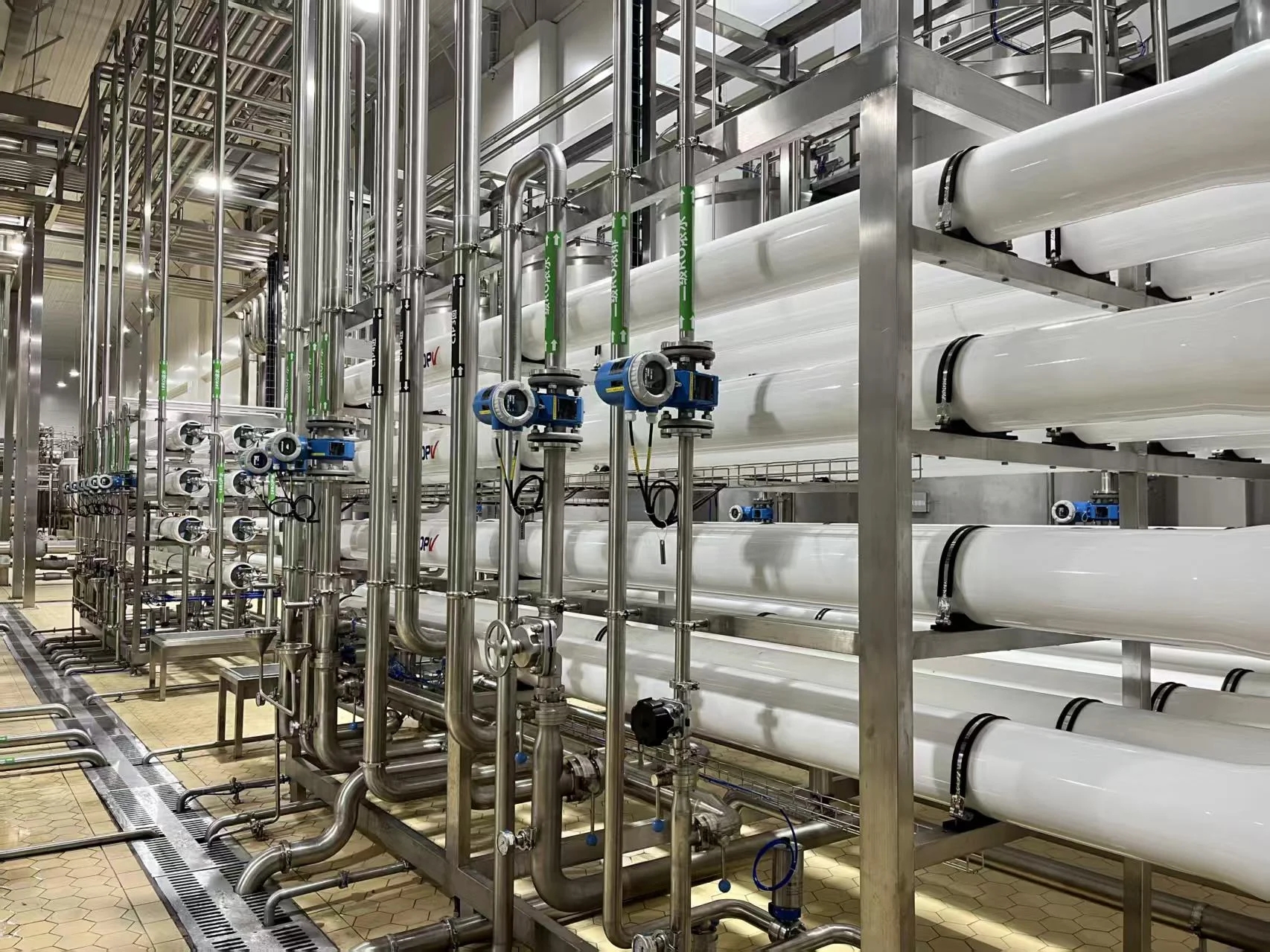
Understanding Membrane Treatment Systems
A membrane treatment system is a water purification process that uses semi-permeable membranes to separate impurities from water. Unlike conventional filtration methods that mainly remove suspended solids, membrane systems can effectively reduce dissolved substances, microorganisms, organic compounds, and other contaminants.
The main types of membrane technologies include:
Microfiltration (MF)
Microfiltration is commonly used for removing larger particles such as suspended solids, bacteria, and some microorganisms. It is often applied as a pre-treatment step before advanced purification processes.
Ultrafiltration (UF)
Ultrafiltration membranes have smaller pores compared with microfiltration systems. They can remove colloids, proteins, bacteria, and viruses while allowing water and small dissolved molecules to pass through.
Nanofiltration (NF)
Nanofiltration provides a higher level of purification by reducing hardness, heavy metals, organic substances, and certain dissolved salts. It is widely used in industrial water treatment applications.
Reverse Osmosis (RO)
Reverse osmosis is one of the most advanced membrane technologies. It removes dissolved salts, minerals, microorganisms, and other impurities, producing high-quality purified water suitable for drinking water production, industrial processes, and sensitive applications.
For beverage manufacturers, membrane treatment systems are especially important because water quality directly affects product taste, safety, and consistency.
Applications in Industrial Water Treatment
Industrial production requires stable water quality to maintain product performance and protect equipment. Different industries have different requirements, but membrane treatment systems provide flexible solutions for various applications.
Beverage and Food Production
Water is one of the most important raw materials in beverage manufacturing. Poor water quality can affect flavor, appearance, shelf life, and production efficiency.
In beverage factories, membrane systems are commonly integrated into water treatment production lines to remove impurities and ensure consistent water quality. These systems can work together with filtration, sterilization, and cleaning processes to create a complete water preparation solution.
Pengxiang Huixing provides complete beverage production solutions, including water treatment systems, beverage pre-processing equipment, filling machines, and intelligent cleaning systems. By integrating advanced water treatment technologies with beverage packaging equipment, manufacturers can achieve higher production stability and better product quality.
Pharmaceutical and Medical Industries
Pharmaceutical manufacturing requires extremely high water purity standards. Membrane technologies such as reverse osmosis and ultrafiltration are commonly used to produce purified water for production processes.
Reliable membrane systems help pharmaceutical companies maintain strict quality control while reducing contamination risks.
Electronics Manufacturing
The electronics industry requires ultra-pure water for cleaning and manufacturing processes. Even small amounts of dissolved minerals or particles can affect product performance.
Advanced membrane treatment systems help remove ionic impurities and particles, supporting stable manufacturing environments.
Industrial Wastewater Treatment
Many industrial facilities generate wastewater containing chemicals, oils, organic materials, or dissolved solids. Membrane filtration can help recover usable water and reduce wastewater discharge.
By implementing water reuse systems, companies can lower environmental impact and improve resource efficiency.
Applications in Municipal Water Solutions
Municipal water treatment plants face increasing pressure to provide safe drinking water for growing populations. Membrane treatment technology offers reliable solutions for modern water management.
Drinking Water Purification
Municipal water sources may contain suspended solids, microorganisms, organic pollutants, and dissolved contaminants. Membrane systems provide effective purification while maintaining consistent water quality.
Reverse osmosis and ultrafiltration technologies are increasingly adopted in areas where traditional treatment methods cannot meet water quality requirements.
Water Recycling and Reuse
Water scarcity has encouraged municipalities to explore water recycling solutions. Membrane treatment systems can recover wastewater and convert it into reusable water for industrial applications, agricultural irrigation, and urban services.
This approach reduces dependence on freshwater resources and supports sustainable development.
Advantages of Membrane Treatment Systems
High Filtration Efficiency
Membrane systems provide precise separation performance. They can remove contaminants that traditional filtration technologies may not effectively eliminate.
Stable Water Quality
Automated membrane systems can maintain consistent operation conditions, ensuring stable output water quality for different production requirements.
Compact System Design
Compared with some traditional treatment facilities, membrane systems require less installation space while providing high processing capacity.
This makes them suitable for factories and urban facilities where space utilization is important.
Reduced Chemical Usage
Many membrane processes rely mainly on physical separation rather than large amounts of chemical treatment agents. This helps reduce chemical consumption and environmental impact.
Support for Intelligent Operation
Modern membrane treatment systems can be integrated with automation platforms for real-time monitoring, data collection, and operational control.
This aligns with the development trend of smart factories, where production equipment, water treatment systems, and management platforms work together efficiently.
Key Factors When Selecting a Membrane Treatment System
Choosing the right membrane solution requires careful consideration of several factors.
Water Source Characteristics
The quality of the incoming water determines the required treatment process. Factors such as turbidity, dissolved solids, microorganisms, and chemical composition must be evaluated before selecting membrane technology.
Production Requirements
Different industries require different water quality levels. A beverage factory producing bottled water may require a different solution compared with a factory using process water for cleaning or cooling.
System Capacity
The treatment capacity should match production demand. An appropriately designed system ensures stable operation while avoiding unnecessary energy consumption.
Maintenance Requirements
Membrane systems require regular cleaning and maintenance to maintain performance. Equipment design should consider cleaning convenience, replacement requirements, and operational reliability.
Pengxiang Huixing develops complete solutions based on customer production requirements, combining water treatment technology with beverage manufacturing equipment and intelligent production planning.
The Role of Intelligent Water Treatment in Modern Manufacturing
The development of smart factories has changed how manufacturers manage production processes. Water treatment systems are no longer independent units but important parts of an integrated production ecosystem.
Modern intelligent water treatment solutions can monitor:
-
Water quality parameters
-
System operating conditions
-
Cleaning cycles
-
Energy consumption
-
Equipment performance
Through automation and data management, manufacturers can improve production efficiency, reduce downtime, and maintain consistent product quality.
Pengxiang Huixing has been dedicated to beverage packaging technology for more than 20 years. The company continuously introduces and improves global beverage machinery technologies while developing customized solutions for customers worldwide. Its products have passed ISO9000 quality management system certification and the company has been recognized as a China High-Tech Enterprise.
With manufacturing capabilities covering water treatment production lines, bottled water production equipment, beverage filling systems, sterilization equipment, automatic cleaning systems, and intelligent factory solutions, Pengxiang Huixing supports customers across the complete beverage production chain.
Conclusion
Membrane treatment systems have become a key technology for modern industrial and municipal water solutions. From beverage manufacturing and industrial processing to municipal drinking water and water recycling projects, membrane technology provides reliable purification performance, efficient resource utilization, and flexible application options.
As industries continue to focus on quality control, environmental responsibility, and intelligent production, advanced water treatment systems will play an increasingly important role.
By combining membrane treatment technologies with intelligent beverage production solutions, Pengxiang Huixing helps customers build efficient, reliable, and sustainable production environments that meet the requirements of modern manufacturing.