


In industrial water treatment and beverage production, filtration systems play a critical role in maintaining product quality, protecting downstream equipment, and improving operational efficiency. Among the most widely used filtration technologies are single media filters and multi-media filters. While both are designed to remove suspended solids and impurities from water, their structure, filtration efficiency, maintenance requirements, and long-term performance can vary significantly.
For manufacturers in industries such as bottled water, juice processing, carbonated beverages, and industrial cleaning systems, selecting the right filtration solution directly affects production reliability and operating costs. Understanding the differences between these two systems can help businesses optimize water treatment performance and improve production consistency.
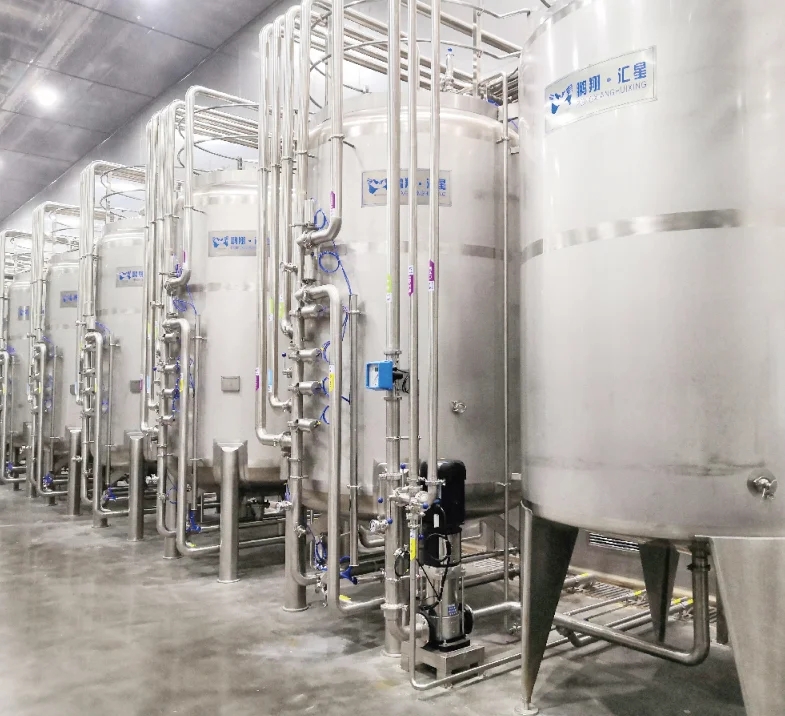
Understanding Single Media Filters
Single media filters use one type of filtration material throughout the filter bed. Common materials include silica sand, anthracite coal, or activated carbon, depending on the intended application.
In a traditional sand filter, water flows through a uniform layer of sand that traps suspended particles. As contaminants accumulate, the filter gradually experiences increased pressure drop and reduced filtration efficiency until backwashing is required.
Single media filters are widely used because of their:
-
Simple structure
-
Easy operation
-
Lower initial investment
-
Reliable basic filtration capability
These systems are suitable for applications where water quality requirements are moderate and contaminant loads are relatively stable.
However, because the filter bed contains only one media type with uniform particle size, the filtration depth is limited. Most particles are captured near the top layer, which can lead to faster clogging and more frequent maintenance.
What Are Multi-media Filters?
Multi-media filters use several layers of different filtration materials arranged according to density and particle size. A typical configuration may include:
-
Anthracite coal on the top layer
-
Fine sand in the middle
-
Coarse sand or garnet at the bottom
This layered design allows contaminants of different sizes to be captured throughout the entire filter bed rather than only at the surface.
As water passes through each layer, progressively smaller particles are removed, resulting in deeper filtration and improved dirt-holding capacity.
Modern beverage and industrial water treatment facilities increasingly prefer multi-media filter systems because they provide higher filtration precision, longer operational cycles, and better overall efficiency.
Filtration Efficiency Comparison
Particle Removal Capability
One of the biggest differences between the two systems lies in particle removal performance.
Single media filters primarily capture larger suspended solids near the top layer. Fine particles may penetrate deeper into the bed or pass through entirely if the filtration velocity is high.
Multi-media filters distribute contaminants across multiple layers. This allows the system to remove a wider range of particle sizes more effectively.
In many industrial applications, multi-media filters can achieve lower turbidity levels and more stable water quality than single media systems.
Flow Rate Stability
As contaminants accumulate in a single media filter, the upper layer becomes compacted, increasing resistance and reducing flow consistency.
Multi-media filters distribute solids more evenly throughout the filter bed, maintaining stable flow rates for longer periods. This helps reduce operational interruptions and improves production continuity.
For beverage manufacturing lines that require uninterrupted water supply, stable filtration performance is particularly important.
Backwashing Performance
Backwashing is necessary to clean accumulated contaminants from the filter media.
Single Media Filter Challenges
In single media filters, contaminants tend to accumulate mainly at the top surface. During backwashing, some trapped particles may remain embedded within the media layer, reducing cleaning efficiency over time.
Frequent backwashing also increases:
-
Water consumption
-
Energy usage
-
Downtime
-
Wear on system components
Advantages of Multi-media Filters
Because contaminants are distributed across multiple layers, multi-media filters typically allow more efficient backwashing.
The layered media design expands properly during backwash cycles, enabling contaminants to be removed more thoroughly. As a result:
-
Cleaning cycles are more effective
-
Backwash frequency is reduced
-
Water consumption decreases
-
Media lifespan is extended
This can significantly reduce operating costs in high-capacity production environments.
Application Performance in Beverage Production
Water quality directly impacts beverage taste, shelf life, and production safety.
In beverage processing facilities, filtration systems are often used before:
-
Reverse osmosis systems
-
UV sterilization
-
Filling machines
-
CIP cleaning systems
-
Mixing and blending equipment
Single media filters may be sufficient for preliminary filtration where raw water quality is relatively stable.
However, beverage manufacturers increasingly favor multi-media filtration systems because they provide:
-
Better turbidity reduction
-
Improved protection for RO membranes
-
Reduced fouling risks
-
More consistent water quality
-
Lower maintenance frequency
These benefits are especially important in bottled water, juice, tea beverages, and carbonated drink production lines.
Industrial Water Treatment Applications
Beyond beverage production, filtration systems are widely used in:
-
Industrial cleaning systems
-
Cooling water treatment
-
Pharmaceutical processing
-
Food manufacturing
-
Chemical production
-
Municipal water pretreatment
In industrial environments with fluctuating water quality, multi-media filters generally offer superior adaptability and operational stability.
Facilities handling high suspended solid loads often experience longer service cycles and improved filtration consistency with multi-media systems compared to traditional single media units.
Space and System Efficiency
Production facilities often face space limitations, especially when expanding existing lines.
Because multi-media filters provide higher dirt-holding capacity and more efficient filtration, they can often achieve the same performance with smaller system footprints or fewer maintenance interruptions.
This makes them suitable for:
-
Compact factory layouts
-
Automated production facilities
-
Smart manufacturing systems
-
High-capacity continuous operations
Long-Term Cost Considerations
Although single media filters usually have lower upfront costs, long-term operating expenses can sometimes outweigh the initial savings.
Factors influencing total cost include:
-
Backwash water usage
-
Labor requirements
-
Downtime frequency
-
Media replacement intervals
-
Equipment protection efficiency
Multi-media filters often deliver better long-term value because they reduce maintenance demands and improve downstream equipment protection.
In systems using reverse osmosis membranes, better pretreatment can significantly extend membrane lifespan and reduce replacement costs.
Smart Manufacturing and Advanced Water Treatment
As beverage and industrial production become increasingly automated, filtration systems must integrate seamlessly into intelligent manufacturing environments.
Companies like Pengxiang Huixing have focused extensively on combining advanced water treatment technologies with smart production systems.
With over 20 years of experience in beverage packaging machinery and liquid processing solutions, Pengxiang Huixing provides integrated systems covering:
-
Water treatment
-
Beverage pretreatment
-
PET blow molding equipment
-
Blow-fill-cap production lines
-
Blow-label-fill-cap systems
-
Labeling systems
-
Conveyor systems
-
Secondary packaging equipment
-
Intelligent cleaning systems
-
Industrial cleaning solutions
Located in Shenzhen, China, the company integrates research, development, and manufacturing capabilities while supporting customers through complete production chain solutions — from procurement and processing to packaging, warehousing, logistics, and final distribution.
Its products have received ISO9000 quality management certification and are widely used across domestic and international markets including the UAE, Oman, Vietnam, Malaysia, and the Philippines.
By integrating efficient multi-media filtration technology into intelligent beverage production lines, manufacturers can improve operational stability, product quality consistency, and equipment reliability.
Which Filter Is the Better Choice?
The ideal filtration system depends on several operational factors:
Single Media Filters May Be Suitable When:
-
Water quality is relatively stable
-
Filtration requirements are basic
-
Initial investment budget is limited
-
Production scale is smaller
-
Maintenance accessibility is high
Multi-media Filters Are Often Better When:
-
High filtration precision is required
-
Water quality fluctuates significantly
-
Continuous operation is important
-
RO membrane protection is critical
-
Water consumption reduction is desired
-
Production automation levels are high
For modern beverage and industrial manufacturing environments, multi-media filters increasingly offer the balance of efficiency, reliability, and operational flexibility required for long-term production success.
Conclusion
Both single media and multi-media filters play important roles in industrial and beverage water treatment systems. Single media filters remain a practical solution for basic filtration applications with moderate operational demands. However, as production standards continue to rise, multi-media filtration systems provide clear advantages in efficiency, water quality stability, maintenance reduction, and long-term operating performance.
For companies investing in intelligent manufacturing and high-capacity beverage production, advanced multi-media filtration systems have become an essential component of modern water treatment infrastructure. By selecting the appropriate filtration technology, manufacturers can enhance production reliability, protect critical equipment, and maintain consistent product quality in increasingly competitive markets.