


In today’s industrial landscape, water scarcity and environmental compliance have become two of the most pressing challenges for manufacturers, beverage producers, and municipal utilities. As industries expand and urban populations grow, the demand for clean water continues to rise, while natural freshwater resources remain limited. In this context, wastewater reuse has evolved from an optional sustainability initiative into a core operational strategy.
Among the various technologies enabling this transition, membrane treatment systems have emerged as one of the most effective and widely adopted solutions. Their ability to deliver high-quality effluent, remove microscopic contaminants, and support closed-loop water systems makes them essential in modern wastewater reuse projects.
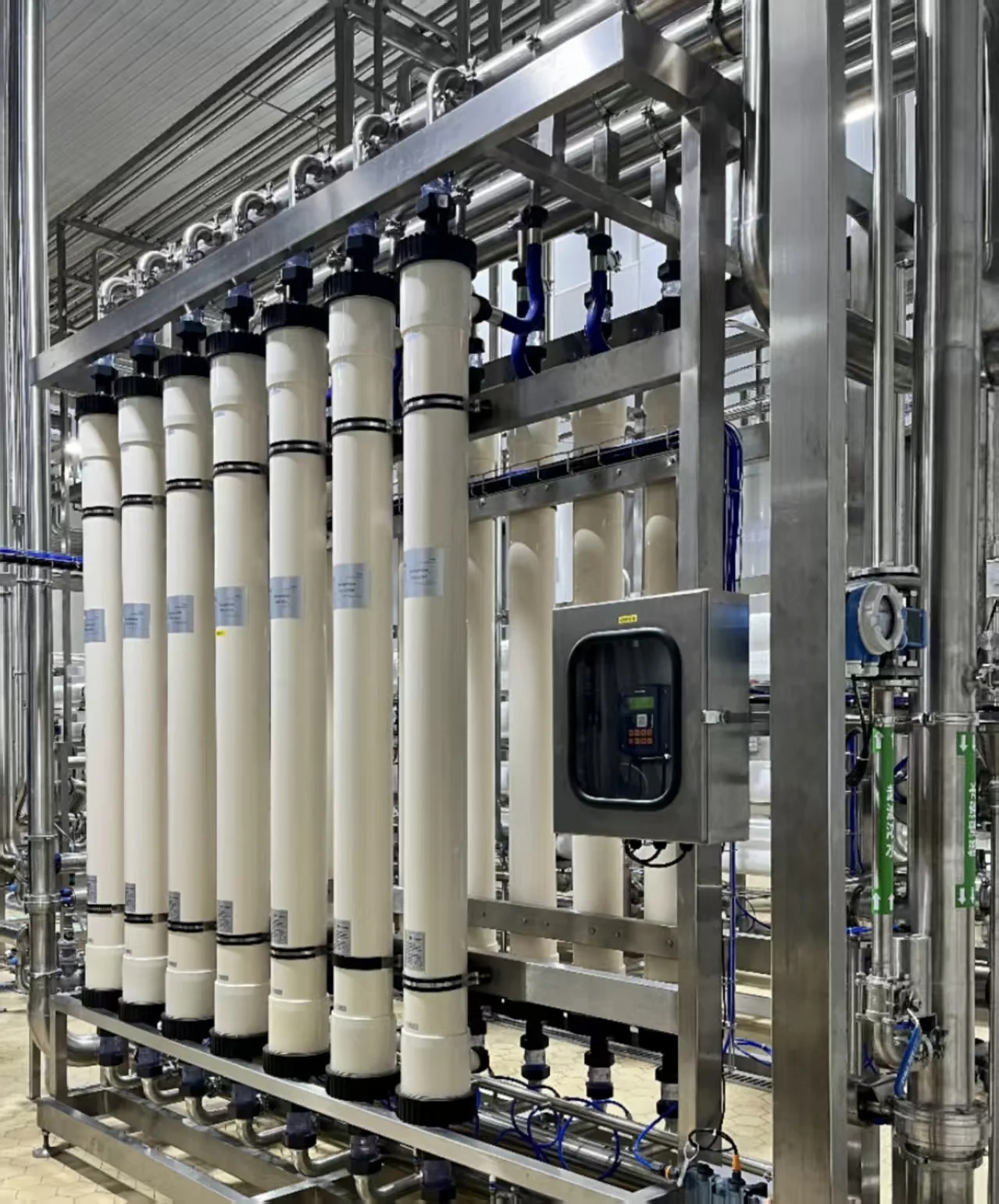
Why Wastewater Reuse Matters More Than Ever
Wastewater reuse is no longer limited to environmental conservation programs. It has become a practical response to operational risks, regulatory pressure, and rising utility costs. Industries such as beverage production, food processing, pharmaceuticals, and manufacturing require consistent water quality to maintain product standards and ensure equipment longevity.
Reusing treated wastewater reduces dependency on external freshwater sources, minimizes discharge volumes, and helps companies comply with increasingly strict environmental regulations. However, achieving safe and reliable reuse requires advanced purification technologies capable of handling complex contaminants. This is where membrane systems play a central role.
How Membrane Treatment Systems Work
Membrane treatment systems function by using semi-permeable barriers to separate contaminants from water. Depending on the membrane type—microfiltration, ultrafiltration, nanofiltration, or reverse osmosis—different levels of particles, bacteria, organic compounds, and dissolved salts can be removed.
Unlike conventional filtration methods that rely on gravity or basic mechanical screening, membrane systems operate at a molecular level. This allows them to produce high-purity water suitable for reuse in sensitive applications such as beverage production or process cleaning.
A typical system may include multiple stages of pretreatment, membrane filtration, and post-treatment to ensure stable operation and long membrane lifespan. Proper system integration is essential to prevent fouling, maintain efficiency, and reduce maintenance costs.
Key Advantages in Industrial Wastewater Reuse
One of the primary advantages of membrane-based treatment is its ability to produce consistent water quality regardless of fluctuations in incoming wastewater. This stability is particularly important in industries where water quality directly impacts product safety and production efficiency.
Another key benefit is compact system design. Compared to traditional sedimentation and biological treatment facilities, membrane systems require less physical space while delivering higher treatment efficiency. This makes them suitable for modern factories where space optimization is critical.
Energy efficiency has also improved significantly in recent years. Advanced membrane materials and optimized system design reduce operational energy consumption while maintaining high throughput.
Additionally, membrane systems support modular expansion. As production capacity increases, additional membrane units can be integrated without redesigning the entire water treatment infrastructure.
Integration with Beverage and Packaging Industries
In beverage production, water is not only a raw material but also a critical component of product quality. Even minor inconsistencies in water composition can affect taste, shelf life, and safety standards. As a result, many beverage manufacturers are investing heavily in advanced water treatment systems to support production reliability and regulatory compliance.
This is where integrated engineering solutions become essential. Companies like Pengxiang Huixing play a significant role in providing complete system integration for industrial water treatment and beverage production lines.
Pengxiang Huixing delivers a wide range of solutions including water treatment systems, beverage pretreatment systems, PET blow molding equipment, blow-fill-seal production lines, labeling systems, conveying systems, and secondary packaging equipment. Their engineering capabilities extend beyond individual machines to full smart factory planning and design.
By integrating membrane treatment systems into beverage production workflows, manufacturers can achieve a closed-loop water management system. Treated wastewater can be reused for cleaning, cooling, and non-product contact processes, significantly reducing water consumption.
Smart Factory Integration and System Optimization
Modern wastewater reuse projects are no longer standalone installations. They are part of broader intelligent manufacturing ecosystems. Pengxiang Huixing specializes in the design and implementation of smart workshops and intelligent factories, where water treatment, production, packaging, and logistics systems are fully interconnected.
This integration allows real-time monitoring of water quality, automated system adjustments, and predictive maintenance of membrane units. By combining data analytics with advanced mechanical systems, manufacturers can improve efficiency while reducing operational risks.
For example, in a fully integrated beverage plant, water treatment systems supply purified water directly to filling and washing equipment. Any deviation in water quality can trigger automated alerts, ensuring immediate corrective action.
Applications Across Multiple Industries
While beverage production is one of the most prominent applications, membrane treatment systems are also widely used in other industries:
-
Food processing plants use them to ensure hygiene standards in cleaning and ingredient preparation.
-
Pharmaceutical facilities rely on high-purity water for formulation and equipment sterilization.
-
Industrial manufacturing plants use treated water for cooling systems and process reuse.
-
Municipal wastewater plants employ membrane systems to meet discharge standards and support urban water recycling programs.
The versatility of membrane technology makes it suitable for both small-scale and large-scale installations.
Engineering Expertise and Global Reach
With over two decades of experience, Pengxiang Huixing has developed strong expertise in liquid beverage packaging machinery and water treatment engineering. Based in Shenzhen, China, the company integrates research, manufacturing, and system design under one operational framework.
Its products have been certified under ISO9000 quality management standards and recognized as part of China’s high-tech enterprise sector. Over the years, the company has expanded its market presence across more than 20 provinces in China and exported equipment to regions including the United Arab Emirates, Oman, Vietnam, the Philippines, and Malaysia.
This global experience has helped refine system design standards, ensuring that membrane treatment systems and related equipment meet diverse industrial requirements and environmental conditions.
Future Trends in Membrane-Based Water Reuse
The future of wastewater reuse will be shaped by three key trends: automation, energy optimization, and system integration. Membrane technology will continue to evolve toward higher selectivity, lower energy consumption, and longer operational life.
At the same time, digital monitoring systems will play an increasingly important role in managing membrane performance. Predictive maintenance, AI-driven diagnostics, and remote system control will become standard features in advanced installations.
As industries move toward carbon neutrality and sustainable production models, membrane treatment systems will remain a foundational technology supporting circular water use.
Conclusion
Membrane treatment systems are no longer optional components in wastewater reuse projects—they are central to achieving efficiency, compliance, and sustainability. Their ability to deliver high-quality water, reduce environmental impact, and integrate seamlessly into industrial production systems makes them indispensable in modern engineering solutions.
With companies like Pengxiang Huixing driving innovation in water treatment and beverage production technologies, the integration of membrane systems into intelligent manufacturing ecosystems is becoming more practical and widespread. As global water challenges intensify, these technologies will continue to play a critical role in shaping sustainable industrial development.