


In modern water treatment and beverage processing, filtration is more than a basic step—it is a critical control point that directly impacts product quality, safety, and operational efficiency. Among the many filtration solutions available today, Activated Carbon Filters stand out for their ability to remove chlorine, odors, organic compounds, and unwanted tastes. However, they are only one part of a broader filtration ecosystem.
This article explores how activated carbon filters compare with other common filtration technologies, where each performs best, and how integrated systems—such as those developed by Pengxiang Huixing—combine these technologies into efficient, end-to-end solutions for industrial applications.
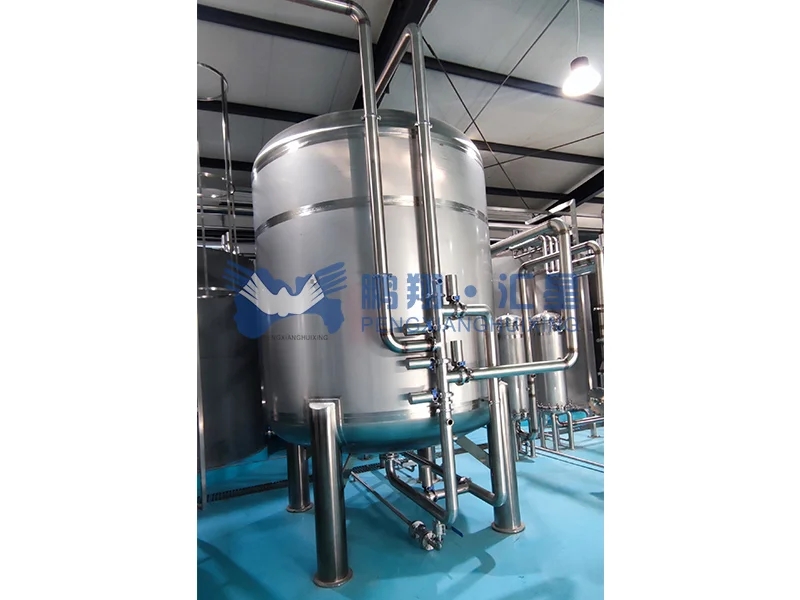
What Are Activated Carbon Filters?
Activated carbon filters use highly porous carbon materials (typically derived from coconut shells, coal, or wood) to adsorb contaminants from water or air. The adsorption process is physical and chemical, allowing the carbon surface to trap impurities such as:
-
Chlorine and chloramines
-
Volatile organic compounds (VOCs)
-
Pesticides and herbicides
-
Odor- and taste-causing substances
This makes activated carbon particularly valuable in beverage production, where flavor consistency and purity are essential.
Strengths of Activated Carbon Filtration
Activated carbon filters offer several practical advantages:
1. Excellent Taste and Odor Removal
They are highly effective at eliminating chlorine and organic compounds that affect taste and smell, which is crucial in bottled water, juice, and carbonated beverage production.
2. Chemical Adsorption Capability
Unlike mechanical filters, activated carbon removes dissolved contaminants through adsorption, not just physical trapping.
3. Versatility
They can be used in standalone units or integrated into multi-stage filtration systems.
4. Cost-Effective Operation
With proper maintenance and regeneration or replacement schedules, carbon filters provide a relatively low operating cost compared to advanced membrane technologies.
Limitations of Activated Carbon Filters
Despite their advantages, activated carbon filters are not a complete solution:
-
Limited removal of dissolved salts and minerals
-
Ineffective against microorganisms unless combined with other systems
-
Saturation over time, requiring replacement or regeneration
-
Performance dependent on contact time and flow rate
Because of these limitations, they are often paired with complementary technologies.
Comparison with Other Filtration Technologies
1. Sand and Multi-Media Filters
How they work:
These filters use layers of sand, gravel, and other media to remove suspended solids through mechanical filtration.
Comparison:
| Aspect | Activated Carbon | Multi-Media Filters |
|---|---|---|
| Removes suspended solids | Moderate | Excellent |
| Removes chlorine/organics | Excellent | Poor |
| Maintenance | Medium | Low |
| Application stage | Secondary/polishing | Primary filtration |
Use case:
Multi-media filters are typically used as a pre-treatment step before activated carbon to reduce turbidity and extend carbon lifespan.
2. Reverse Osmosis (RO)
How it works:
RO systems use semi-permeable membranes to remove dissolved salts, ions, and even microorganisms.
Comparison:
| Aspect | Activated Carbon | Reverse Osmosis |
|---|---|---|
| Removes dissolved salts | No | Yes |
| Removes chlorine | Yes | Limited (can damage membranes) |
| Energy consumption | Low | High |
| System complexity | Simple | Complex |
Key insight:
Activated carbon is often used before RO systems to remove chlorine and protect sensitive membranes.
3. Ultrafiltration (UF)
How it works:
UF membranes filter out bacteria, viruses, and suspended solids based on pore size.
Comparison:
| Aspect | Activated Carbon | Ultrafiltration |
|---|---|---|
| Removes bacteria | No | Yes |
| Removes organic chemicals | Yes | Limited |
| Maintenance | Medium | Medium-High |
Use case:
UF is ideal for microbial control, while activated carbon focuses on chemical purification.
4. Ion Exchange Systems
How they work:
Ion exchange resins replace undesirable ions (such as calcium and magnesium) with more desirable ones (such as sodium).
Comparison:
| Aspect | Activated Carbon | Ion Exchange |
|---|---|---|
| Removes hardness | No | Yes |
| Removes organics | Yes | Limited |
| Regeneration needed | No | Yes |
Use case:
Ion exchange is essential for softening water, while activated carbon improves taste and removes organics.
5. UV Sterilization
How it works:
UV systems use ultraviolet light to deactivate microorganisms.
Comparison:
| Aspect | Activated Carbon | UV Sterilization |
|---|---|---|
| Removes microbes | No | Yes |
| Removes chemicals | Yes | No |
| Residual effect | No | No |
Use case:
UV is often used as a final disinfection step after carbon filtration.
Integrated Filtration: The Real-World Approach
In practice, no single filtration technology can meet all requirements. Modern beverage and water treatment systems rely on multi-stage filtration, combining different technologies to achieve optimal results.
A typical process may include:
-
Multi-media filtration (remove large particles)
-
Activated carbon filtration (remove chlorine and organics)
-
Reverse osmosis or ultrafiltration (remove dissolved solids and microbes)
-
UV sterilization (final disinfection)
This layered approach ensures:
-
Consistent water quality
-
Protection of downstream equipment
-
Compliance with safety standards
-
Improved product taste and shelf life
The Role of Integrated System Providers
This is where companies like Pengxiang Huixing bring significant value. Rather than offering standalone equipment, they provide complete system solutions that integrate filtration technologies into a seamless production workflow.
Their capabilities include:
-
Water treatment systems tailored for beverage production
-
PET blow molding and filling lines
-
Blow-fill-cap and blow-label-fill-cap systems
-
Intelligent cleaning (CIP) systems
-
Conveyor and packaging systems
-
Smart factory planning and automation
By designing systems that cover the entire lifecycle—from raw water intake to final packaging—Pengxiang Huixing ensures that filtration is not an isolated process but part of a fully optimized production environment.
Choosing the Right Filtration Technology
Selecting the appropriate filtration solution depends on several factors:
1. Water Source Quality
Surface water, groundwater, and municipal water each require different treatment strategies.
2. End Product Requirements
Bottled water, carbonated drinks, and juice products have distinct quality standards.
3. Production Scale
Large-scale industrial systems require robust, automated solutions with minimal downtime.
4. Regulatory Compliance
Different regions have strict standards for water quality and food safety.
5. Operational Efficiency
Energy consumption, maintenance frequency, and system lifespan all impact long-term costs.
When Activated Carbon Is the Best Choice
Activated carbon filters are particularly effective in:
-
Beverage production requiring taste consistency
-
Pre-treatment before RO systems
-
Removal of chlorine in municipal water
-
Odor control in industrial processes
However, they should rarely be used alone in demanding industrial environments.
Future Trends in Filtration Technology
As industries move toward smarter and more sustainable operations, filtration technologies are evolving:
-
Smart monitoring systems for real-time performance tracking
-
Advanced carbon materials with higher adsorption capacity
-
Hybrid filtration systems combining multiple technologies in compact units
-
Automation and AI integration for predictive maintenance
Companies that integrate these advancements into complete production systems will gain a significant competitive edge.
Conclusion
Activated carbon filters play a vital role in modern filtration systems, especially in improving taste, removing chlorine, and eliminating organic contaminants. However, their true value is realized when combined with other technologies such as multi-media filtration, reverse osmosis, and UV sterilization.
In industrial applications—particularly in beverage production—success depends not on a single technology, but on how well different systems work together. Integrated solution providers like Pengxiang Huixing enable this synergy by delivering comprehensive, intelligent, and scalable filtration and production systems.
By understanding the strengths and limitations of each filtration method, manufacturers can design more efficient processes, ensure consistent product quality, and stay competitive in an increasingly demanding market.