


In water treatment and beverage production, filtration is often treated as one step among many. In practice, however, the performance of a filtration system can affect nearly every stage that follows it. Water quality influences cleaning, product consistency, equipment protection, filling performance, and even the stability of downstream production processes. When filtration is not properly selected or maintained, small problems can gradually become costly operational issues.
For beverage manufacturers, a precision filter is therefore more than a component used to remove particles. It is part of a practical strategy for maintaining stable production, protecting equipment, and reducing avoidable interruptions.
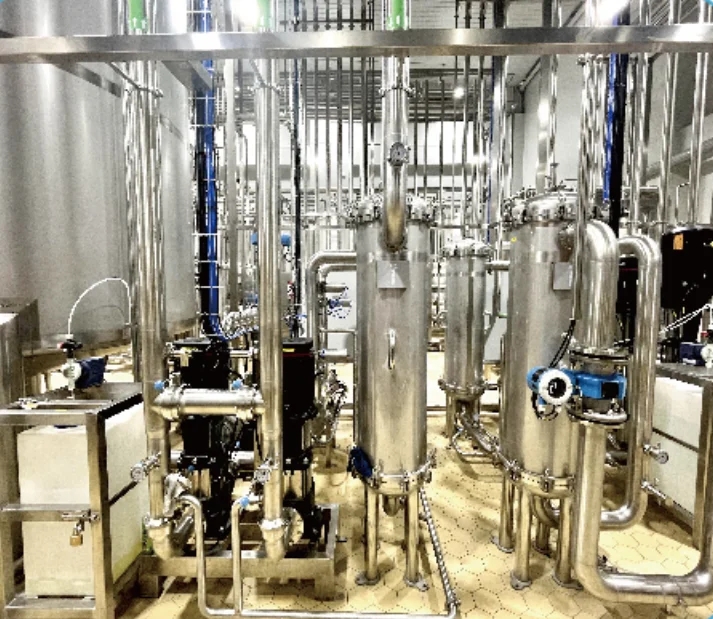
Why Precision Filtration Matters in Beverage Production
Water is a basic raw material in many beverage plants. It may be used directly in products, for rinsing bottles, for cleaning pipelines, or as part of production and processing operations. Even when incoming water appears clean, it can contain suspended particles, fine impurities, rust, sediment, or other contaminants that may affect production equipment.
A precision filtration system helps control these unwanted substances before they move further into the process.
For example, fine particles entering pumps, valves, filling machines, heat exchangers, or other process equipment can contribute to wear or blockage over time. In a beverage production line operating for long hours, these problems can become more noticeable because the same components are repeatedly exposed to the process fluid.
This is why filtration should be considered during the design of the complete production system rather than added only after problems occur.
The Connection Between Filtration and System Efficiency
System efficiency is not simply about how fast a machine runs. It also depends on how consistently the entire production line can operate.
A properly selected precision filter can contribute to efficiency in several practical ways.
1. Protecting Downstream Equipment
Pumps, valves, filling systems, pipelines, and other components all have operating limits. When particles accumulate inside these components, flow resistance can increase and operating conditions may become less stable.
By removing particles before they reach sensitive equipment, filtration reduces the amount of contamination entering downstream systems. This provides an additional layer of protection and can help maintain normal operating conditions.
For beverage manufacturers running automated production lines, this is particularly important. A problem with one small component can sometimes affect an entire section of the production process.
2. Maintaining Stable Flow
A production system needs stable fluid flow to operate predictably. When contaminants accumulate in pipes, valves, or other components, the flow rate may gradually change.
A well-designed filtration system helps control the amount of particulate matter entering the process. However, the filter itself must also be correctly sized. An undersized filter can create excessive pressure drop, while a filter with insufficient capacity may require frequent replacement or cleaning.
The goal is not simply to choose the finest filtration level available. The goal is to match filtration performance with actual process requirements.
3. Reducing Unplanned Downtime
Unexpected shutdowns are particularly disruptive in automated beverage plants. If a filling line stops, operators may need to inspect equipment, identify the cause, clean affected components, and restart the system.
Some of these interruptions can be associated with contamination and filtration problems.
Routine filtration management can reduce this risk. Monitoring pressure differences across filters, checking filter condition, and replacing or cleaning filter elements according to actual operating conditions are simple practices that can make maintenance more predictable.
Choosing the Right Precision Filter
Not every production application requires the same type of filter. Selection should begin with the actual operating conditions.
Important factors include:
-
Fluid type and characteristics
-
Required filtration accuracy
-
Flow rate
-
Operating pressure
-
Operating temperature
-
Expected contaminant load
-
Available installation space
-
Cleaning or replacement requirements
-
Compatibility with the existing process system
For example, a filter used for water treatment may have different requirements from one installed in a beverage processing line. A filter used as a protective stage for equipment may also have a different function from a filter used for final-stage product processing.
For this reason, filtration should be selected according to the complete process rather than based only on filter size or filtration rating.
For manufacturers evaluating filtration equipment and applications, precision filter solutions can be considered as part of a broader water treatment and beverage production system.
Filtration and Equipment Reliability
Reliability is closely connected to contamination control.
Modern beverage production lines often include a large number of interconnected components. Water treatment equipment, pumps, pipelines, sterilization systems, filling machines, capping equipment, labeling machines, conveyors, and packaging equipment must work together.
If contamination is allowed to circulate through the system, its effects may not be limited to one location. Deposits can accumulate in different parts of the process, making maintenance more difficult and increasing the possibility of component failure.
Precision filtration provides a controlled point where contaminants can be captured and managed.
This also makes maintenance easier to organize. Instead of waiting for contamination-related problems to appear throughout the production line, operators can monitor filtration points and address changes in pressure, flow, or filter condition at an earlier stage.
The Role of Filtration in Water Treatment Systems
Water treatment is an essential part of many beverage production projects. Depending on the source water and final product requirements, treatment may include multiple stages designed to remove different types of impurities.
Precision filtration can work as one stage within this overall treatment structure.
The important point is that no single filter should be expected to solve every water quality problem. A practical treatment system usually combines different technologies according to the characteristics of the incoming water and the requirements of the final application.
This is where system engineering becomes important. The filtration unit needs to work with pumps, pipes, storage tanks, monitoring equipment, cleaning systems, and other treatment components.
For a beverage factory, the objective is not merely to install a filter. The objective is to establish a stable water treatment process that supports continuous production.
Filtration and CIP Operations
Cleaning is another area where filtration can have a practical impact.
Beverage production facilities commonly use Clean-in-Place (CIP) systems to clean tanks, pipelines, valves, and other process equipment without extensive manual disassembly. During cleaning operations, the circulation of cleaning solutions needs to be controlled carefully.
An appropriately designed filtration and cleaning system can help manage particles and residues within relevant process stages. It can also support more consistent operation of the overall cleaning process.
Pengxiang Huixing provides solutions covering water treatment, automatic CIP systems, intelligent cleaning systems, industrial cleaning solutions, and beverage production equipment. This broader system approach is important because filtration performance cannot be separated from cleaning, piping, pumping, and process control.
Practical Maintenance of Precision Filters
Even a high-quality filter cannot maintain reliable performance without proper maintenance.
Operators should establish a routine inspection process based on actual production conditions. Useful checks include monitoring inlet and outlet pressure, observing changes in flow, checking for leakage, inspecting filter elements, and recording replacement or cleaning intervals.
A sudden increase in pressure difference can indicate that the filter element is becoming loaded with contaminants. If the filter is left in this condition for too long, pressure loss may increase and system efficiency can decline.
On the other hand, replacing filter elements too early can create unnecessary maintenance work. A better approach is to combine manufacturer recommendations with operating data from the actual production environment.
Maintenance records are also valuable. Over time, they can show whether a filter is becoming contaminated faster than expected, whether incoming water quality has changed, or whether the filtration stage needs to be redesigned.
Integrating Filtration into a Complete Production Line
The greatest value of precision filtration is achieved when it is integrated into the complete production system.
Pengxiang Huixing serves customers with water treatment systems, beverage pretreatment systems, PET blow molding equipment, blow-fill-seal production lines, filling and sealing lines, labeling systems, conveying systems, and secondary packaging equipment. The company also focuses on planning and designing intelligent workshops and smart factories.
This complete perspective allows filtration to be considered alongside other production requirements.
For instance, water treatment capacity should correspond with beverage production capacity. Pump selection should match required flow and pressure. Pipeline design should support hygienic operation and cleaning. Filtration equipment should be positioned where it can effectively protect the next process stage. Maintenance access should also be considered during equipment layout.
These details may seem small during the planning stage, but they can make a significant difference once a production line is operating every day.
Supporting Long-Term Reliability Through Better Filtration
A reliable beverage production system does not depend on one piece of equipment. It depends on how well different systems work together.
Precision filtration supports this objective by controlling particulate contamination, protecting downstream equipment, helping maintain stable flow, and providing a manageable point for routine maintenance.
Pengxiang Huixing has more than 20 years of experience in beverage packaging machinery and related technologies. Based in Songgang, Bao'an District, Shenzhen, the company integrates R&D and manufacturing and has obtained ISO9000 quality management system certification as well as recognition as a Chinese high-tech enterprise.
Its equipment and solutions cover applications from water treatment and beverage preparation to filling, packaging, warehousing, logistics, and distribution. Products have been supplied to customers across more than 20 provinces in China and exported to markets including the United Arab Emirates, Oman, Vietnam, the Philippines, and Malaysia.
For beverage producers, the practical lesson is straightforward: filtration should be designed around the process, not treated as an isolated component. When the filter type, capacity, installation position, monitoring method, and maintenance plan are properly matched to the production system, filtration can contribute directly to more stable operation and better equipment protection.
In a modern beverage plant, small improvements in contamination control can support larger improvements in reliability. Precision filtration is one of the practical building blocks for achieving that result.