


Carbonated soft drink production depends on more than simply having a high-speed filling machine. Stable carbonation, accurate filling, reliable sealing, clean production conditions, and consistent bottle handling all affect the final product. When a filling line operates continuously, small maintenance problems can quickly develop into filling inaccuracies, product loss, downtime, or quality issues.
For beverage manufacturers, a practical maintenance program should therefore focus on the entire production system rather than only individual components. The following tips can help operators maintain a carbonated soft drink filling machine in good working condition and keep production stable over the long term.
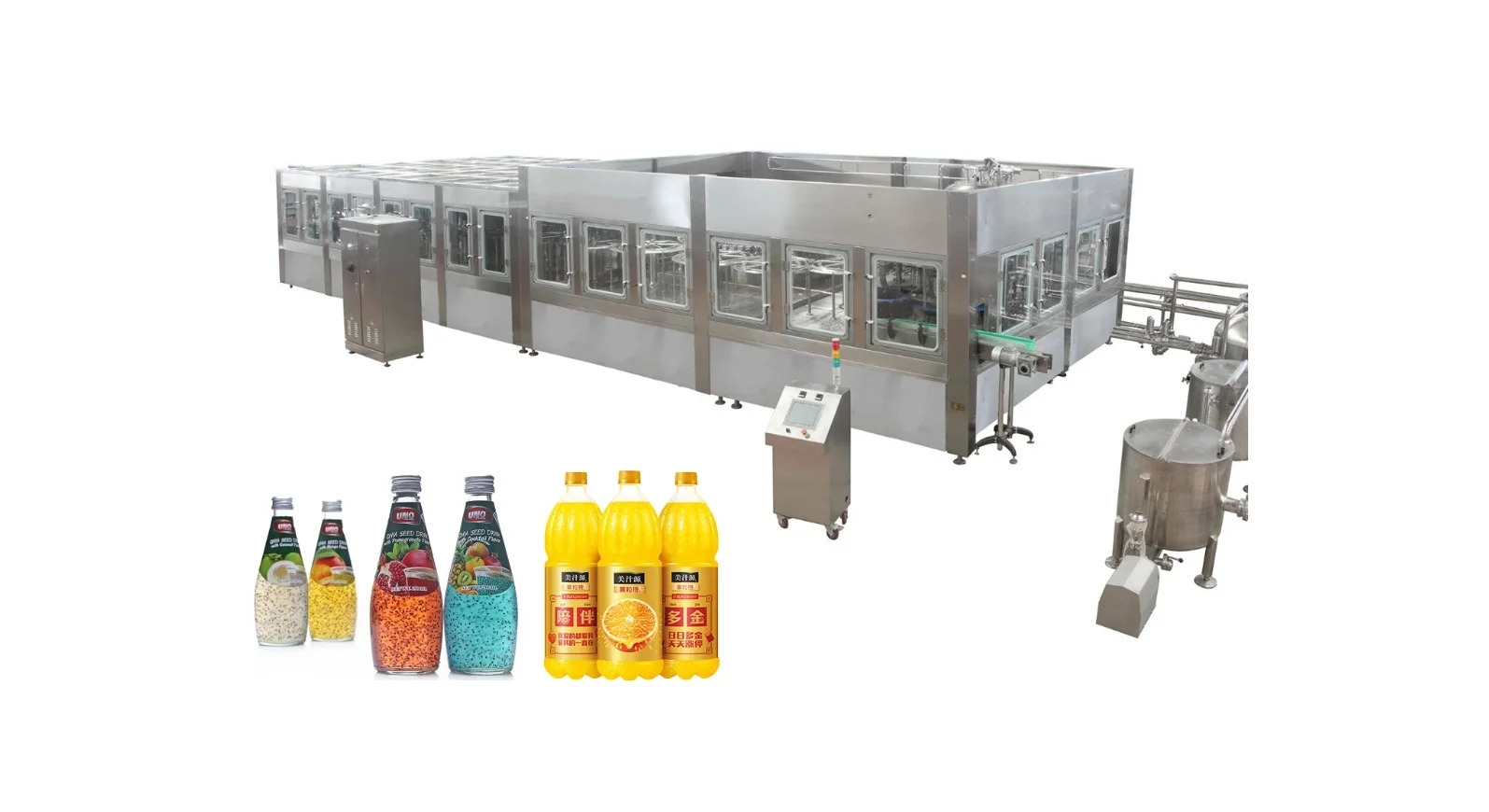
1. Keep the Filling Environment Clean
Carbonated soft drink filling involves direct contact between the product, filling valves, bottles, caps, and other components. Any buildup of syrup, sugar, product residue, or microorganisms can affect hygiene and machine performance.
After each production cycle, operators should follow the equipment manufacturer's cleaning procedures. Pay particular attention to:
-
Filling valves and product pipes
-
Carbonation-related product lines
-
Bottle contact components
-
Cap handling and capping areas
-
Product tanks and transfer pipelines
-
Drainage areas around the filling machine
A proper cleaning routine should not rely on visual inspection alone. Areas that appear clean may still contain product residue, particularly around seals, valve seats, pipe connections, and difficult-to-reach surfaces.
This is where an effective CIP system becomes important. Automated cleaning can help standardize cleaning procedures, reduce manual intervention, and improve the repeatability of sanitation operations.
2. Check Carbonation and Product Temperature
Carbonated beverages are sensitive to temperature and pressure. If the product temperature becomes too high, maintaining the required level of dissolved carbon dioxide can become more difficult. Changes in carbonation conditions may result in excessive foaming, inconsistent filling, or variations in finished product quality.
Operators should regularly monitor:
-
Product temperature before filling
-
Carbonation pressure
-
Product pressure
-
CO₂ supply pressure
-
Filling bowl pressure
-
Pressure stability during production
If foaming suddenly increases, do not immediately assume that the filling valve is defective. Check the product temperature, carbonation conditions, pressure balance, and bottle condition first. A change in any of these factors can influence filling performance.
Stable operating parameters are particularly important for high-speed production because even a small deviation can affect a large number of bottles within a short period.
3. Inspect Filling Valves Regularly
Filling valves are among the most important components in a carbonated soft drink filling machine. Their condition directly affects filling accuracy, product loss, and production efficiency.
During routine maintenance, inspect the valves for:
-
Product leakage
-
Damaged seals
-
Worn valve seats
-
Blockages
-
Unusual movement
-
Inconsistent filling behavior
If one valve repeatedly produces different filling results from the others, investigate it rather than compensating for the problem through machine settings.
Seals and gaskets should also be replaced according to actual operating conditions and manufacturer recommendations. Waiting until a seal fails completely can lead to product leakage and unnecessary downtime.
4. Maintain Accurate Pressure Control
Pressure balance is critical during carbonated beverage filling. The filling process normally requires coordinated control of the product, bottle, and filling chamber pressures.
If pressure changes unexpectedly, operators may notice symptoms such as:
-
Excessive foaming
-
Slow filling
-
Incomplete filling
-
Product splashing
-
Unstable filling speed
-
Increased CO₂ loss
Pressure gauges, sensors, valves, and control components should therefore be checked as part of preventive maintenance.
It is also useful to record normal operating parameters for each beverage or bottle format. When production performance changes, operators can compare current readings with established working values instead of troubleshooting without reference data.
5. Check the Capping System
A correctly filled bottle still requires reliable sealing. Poor capping can lead to carbonation loss, leakage, contamination, and customer complaints.
Inspect the capping system for proper:
-
Cap feeding
-
Cap positioning
-
Torque control
-
Cap alignment
-
Bottle-neck handling
-
Reject operation
If caps are frequently tilted, loose, or damaged, check the cap chute, capper head, bottle positioning, and cap supply rather than simply increasing or decreasing capping force.
For PET bottles in particular, bottle-neck dimensions and preform quality can influence capping performance. Consistency throughout the upstream bottle production process is therefore important.
6. Pay Attention to Bottle Handling
A filling machine does not operate independently. Bottles move through conveyors, rinsing systems, filling stations, capping units, inspection systems, and packaging equipment. Poor bottle transfer can create jams even when the filling unit itself is operating correctly.
Operators should regularly inspect:
-
Conveyor belts and chains
-
Guide rails
-
Transfer wheels
-
Star wheels
-
Bottle spacing
-
Sensors
-
Bottle accumulation areas
Guide rails should be correctly adjusted for the bottle format. Excessive pressure can deform or damage bottles, while insufficient guidance may cause bottles to fall or enter the filling area incorrectly.
When changing bottle sizes, make sure all relevant format parts are adjusted rather than relying on only one machine setting.
7. Inspect PET Bottle Quality
Bottle quality has a direct effect on filling line stability. Lightweight PET bottles can provide material savings, but they may also require more precise handling.
Common bottle-related problems include:
-
Deformed bottle bodies
-
Irregular bottle necks
-
Incorrect dimensions
-
Weak bases
-
Inconsistent wall thickness
-
Poor preform heating or stretching
If the filling line experiences frequent bottle jams, unstable transfers, or sealing problems, investigate the bottle itself as part of the troubleshooting process.
For beverage manufacturers operating integrated production lines, combining PET blow molding with filling and packaging can provide better control over bottle quality and line coordination.
8. Maintain Sensors and Automation Components
Modern beverage filling lines rely heavily on sensors and automated controls. Sensors detect bottles, monitor product levels, control machine timing, and trigger safety or reject functions.
Dust, moisture, product residue, vibration, or incorrect positioning can cause sensor failures.
During routine inspections:
-
Clean sensor surfaces.
-
Check sensor mounting positions.
-
Inspect cables and connectors.
-
Verify detection accuracy.
-
Check alarm records on the control system.
-
Test safety devices according to the maintenance procedure.
Avoid repeatedly resetting alarms without identifying the underlying cause. A recurring alarm is often an early indication of a mechanical, electrical, or process problem.
9. Lubricate Moving Parts Correctly
Mechanical components such as bearings, chains, gears, and transmission systems require appropriate lubrication. However, more lubricant does not necessarily mean better lubrication.
Excess lubricant can attract dust and create contamination risks, while insufficient lubrication can increase friction and wear.
Maintenance personnel should follow the equipment manufacturer's lubrication schedule and use suitable food-industry-compatible lubricants where required. Record lubrication work so that important maintenance tasks are not overlooked during busy production periods.
10. Establish Preventive Maintenance Intervals
Waiting for a machine to fail is usually more disruptive than scheduling maintenance during planned downtime.
A practical maintenance program can be divided into several levels.
Daily checks should include cleaning, leakage inspection, abnormal noise checks, pressure monitoring, and basic safety inspection.
Weekly checks can include sensor inspection, conveyor adjustment, valve inspection, lubrication, and examination of mechanical connections.
Monthly or scheduled checks should cover electrical cabinets, pneumatic components, control systems, transmission components, filling valves, pumps, and other critical parts according to the machine manufacturer's requirements.
Maintenance records should include the date, machine status, problem found, corrective action, replacement parts, and responsible technician. Over time, these records can reveal recurring problems and help determine whether a component needs redesign, adjustment, or replacement.
11. Integrate Filling Machine Maintenance with the Entire Production Line
A carbonated soft drink filling machine is only one part of a complete beverage production system. Stable operation also depends on water treatment, beverage preparation, bottle production, rinsing, filling, capping, labeling, conveying, and secondary packaging.
For beverage producers planning a new facility or upgrading an existing line, an integrated approach can make maintenance and production management easier.
Pengxiang Huixing provides solutions covering water treatment, beverage pretreatment systems, PET blow molding equipment, blow-fill-seal production lines, blow-label-fill-seal lines, labeling systems, conveyor systems, and secondary packaging equipment. Its capabilities also extend to intelligent workshop and smart factory planning, helping customers coordinate equipment and processes across different production stages.
For carbonated beverage manufacturers, a complete carbonated soft drink filling line can be designed around the required beverage, bottle format, production capacity, and plant layout.
12. Train Operators to Recognize Early Problems
Good maintenance is not only the responsibility of maintenance technicians. Machine operators are often the first people to notice changes in equipment behavior.
Operators should know how to identify signs such as:
-
Increased filling foam
-
Unusual machine vibration
-
Repeated bottle jams
-
Changes in filling time
-
Product leakage
-
Abnormal capping
-
Frequent sensor alarms
-
Unusual sounds
-
Increased product loss
Early reporting allows technicians to investigate before a minor problem becomes a major production interruption.
Build Reliability Through Routine Maintenance
Maintaining a high-performance carbonated soft drink filling machine is primarily about consistency. Clean equipment, stable carbonation conditions, accurate pressure control, reliable filling valves, properly adjusted conveyors, effective capping, and regular preventive maintenance all contribute to stable production.
The most effective maintenance strategy is also connected to the wider beverage production line. When water treatment, beverage preparation, bottle production, filling, labeling, conveying, and secondary packaging are properly coordinated, manufacturers can achieve better control over production quality and equipment performance.
With around 20 years of experience in beverage packaging machinery, Pengxiang Huixing integrates research and development, manufacturing, and technical services. Based in Songgang, Bao'an District, Shenzhen, the company provides beverage production and packaging solutions for customers in China and overseas markets. Its products include automatic blow molding, filling and capping systems, water treatment lines, CIP systems, sterilization equipment, beverage filling lines, fruit juice and carbonated beverage production lines, and industrial cleaning solutions. The company has obtained ISO9000 quality management system certification and has been recognized as a Chinese high-tech enterprise.
For manufacturers looking to improve the reliability of carbonated beverage production, a well-maintained filling machine is not simply a maintenance objective. It is an important part of maintaining consistent product quality, reducing avoidable downtime, and keeping the entire production line running efficiently.