

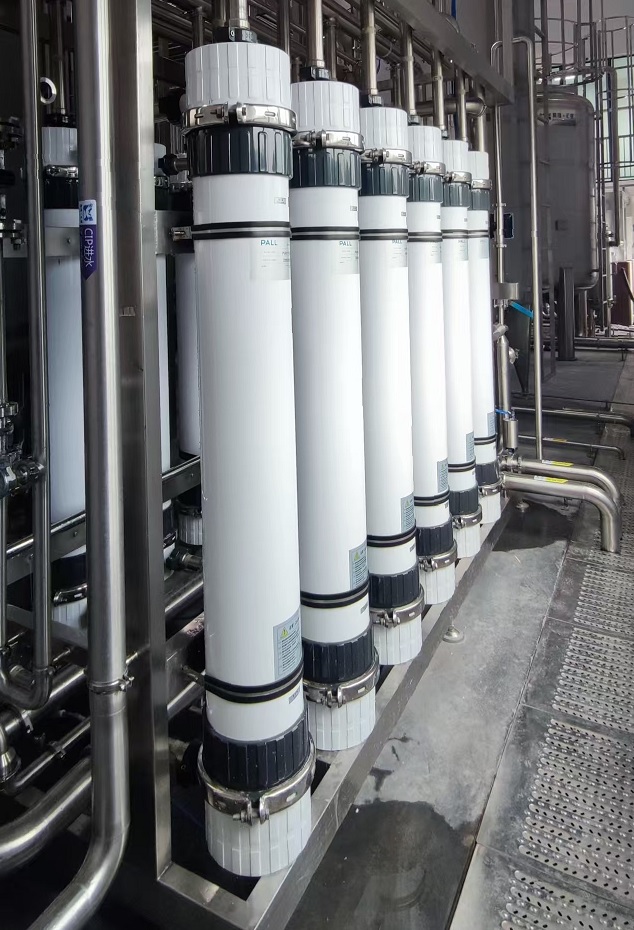
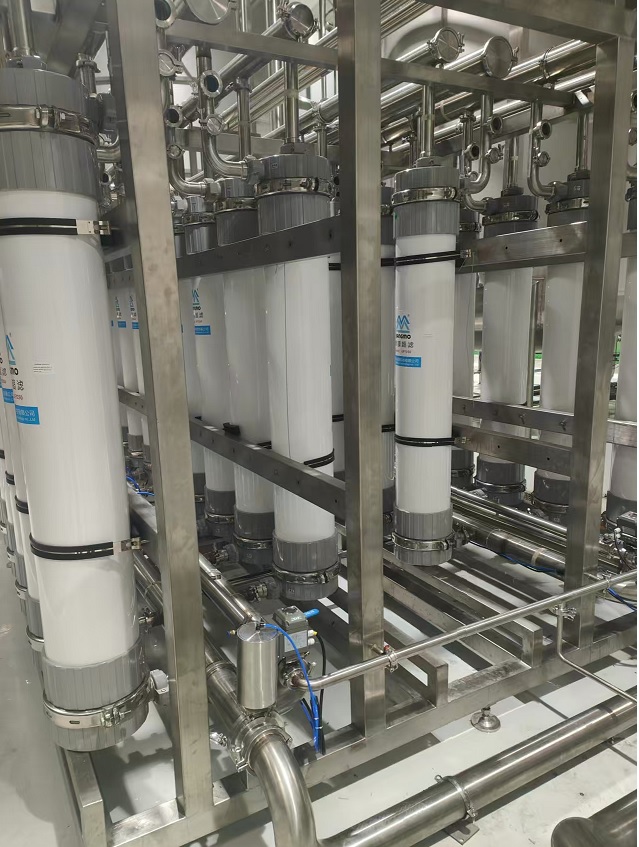
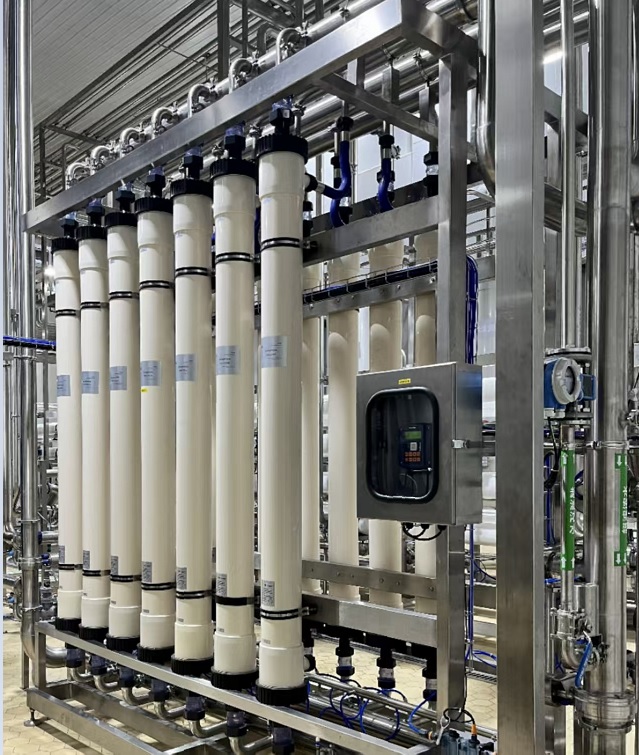
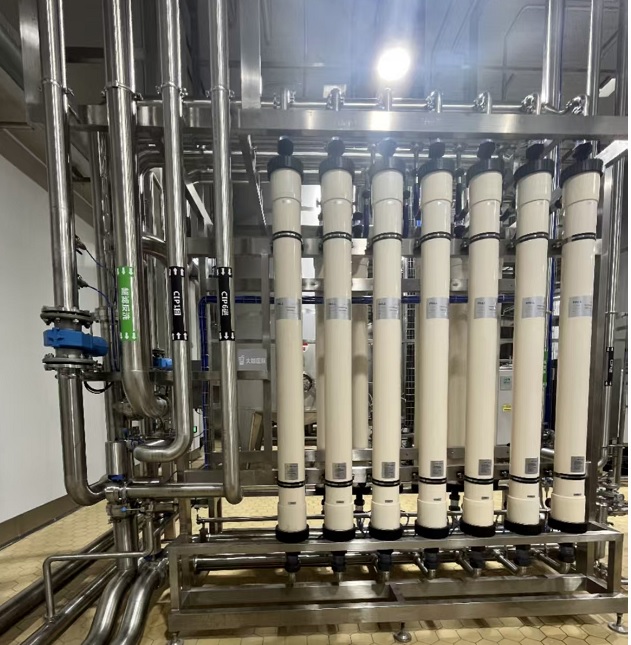
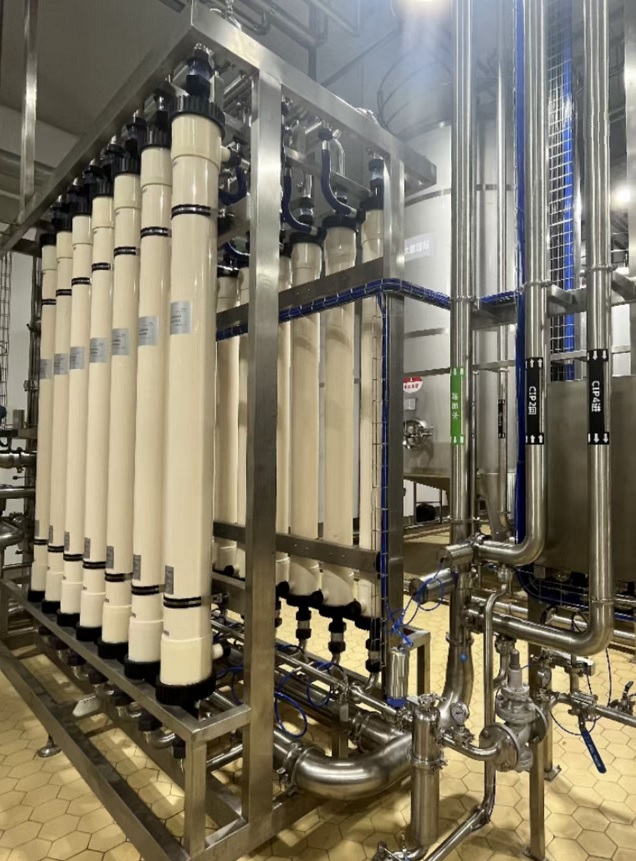
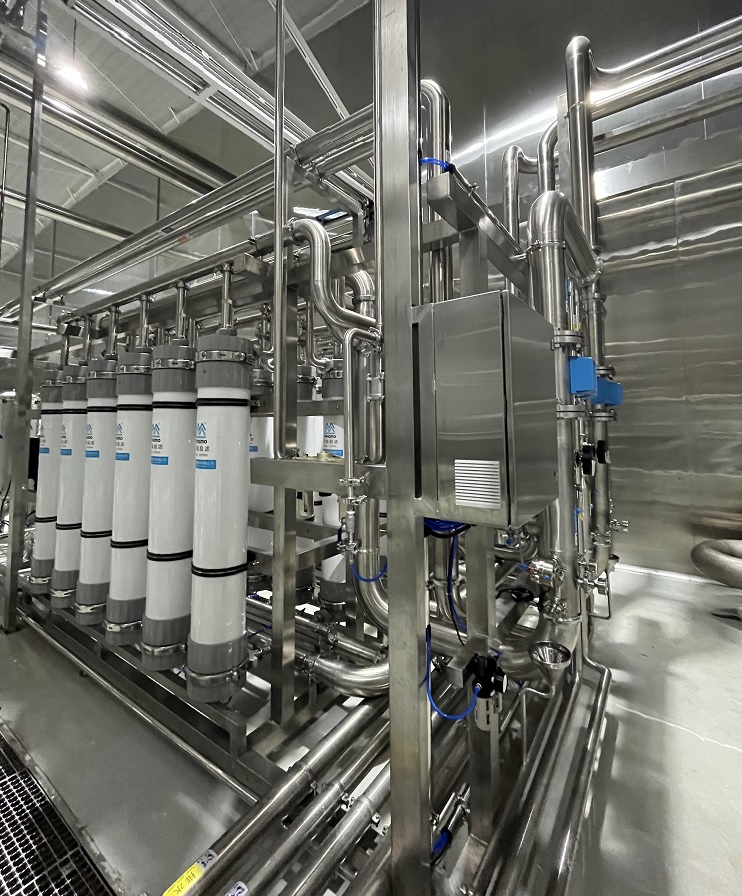
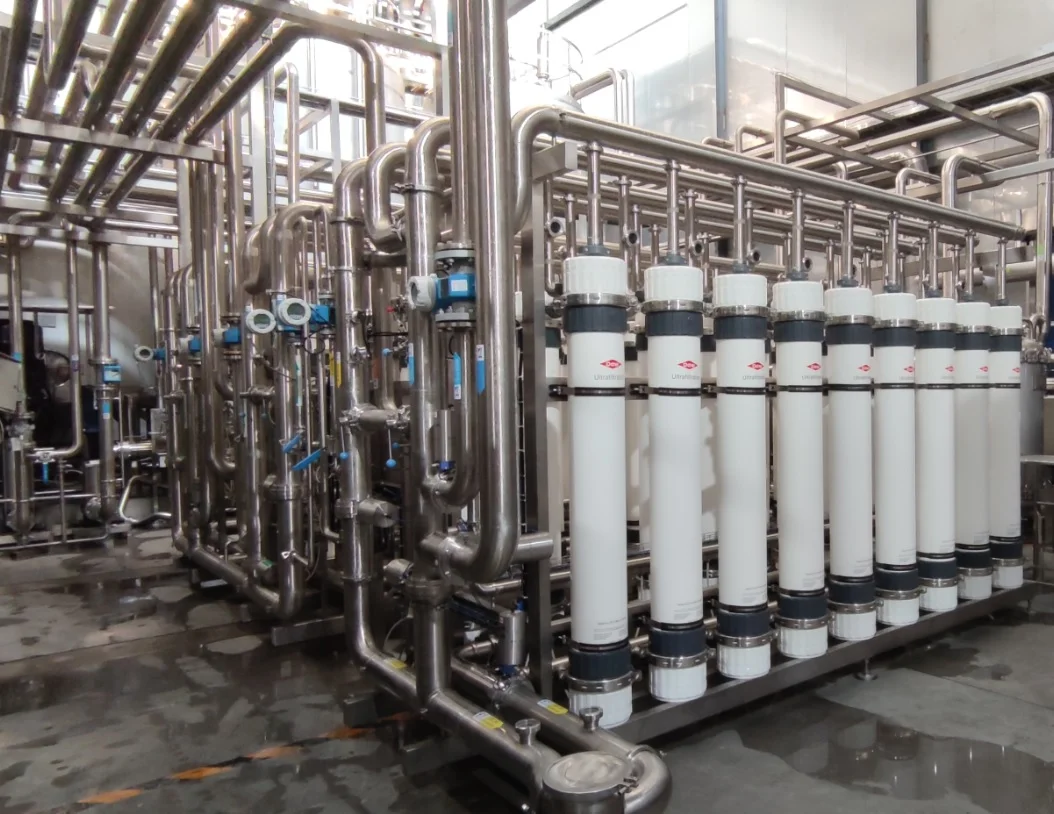
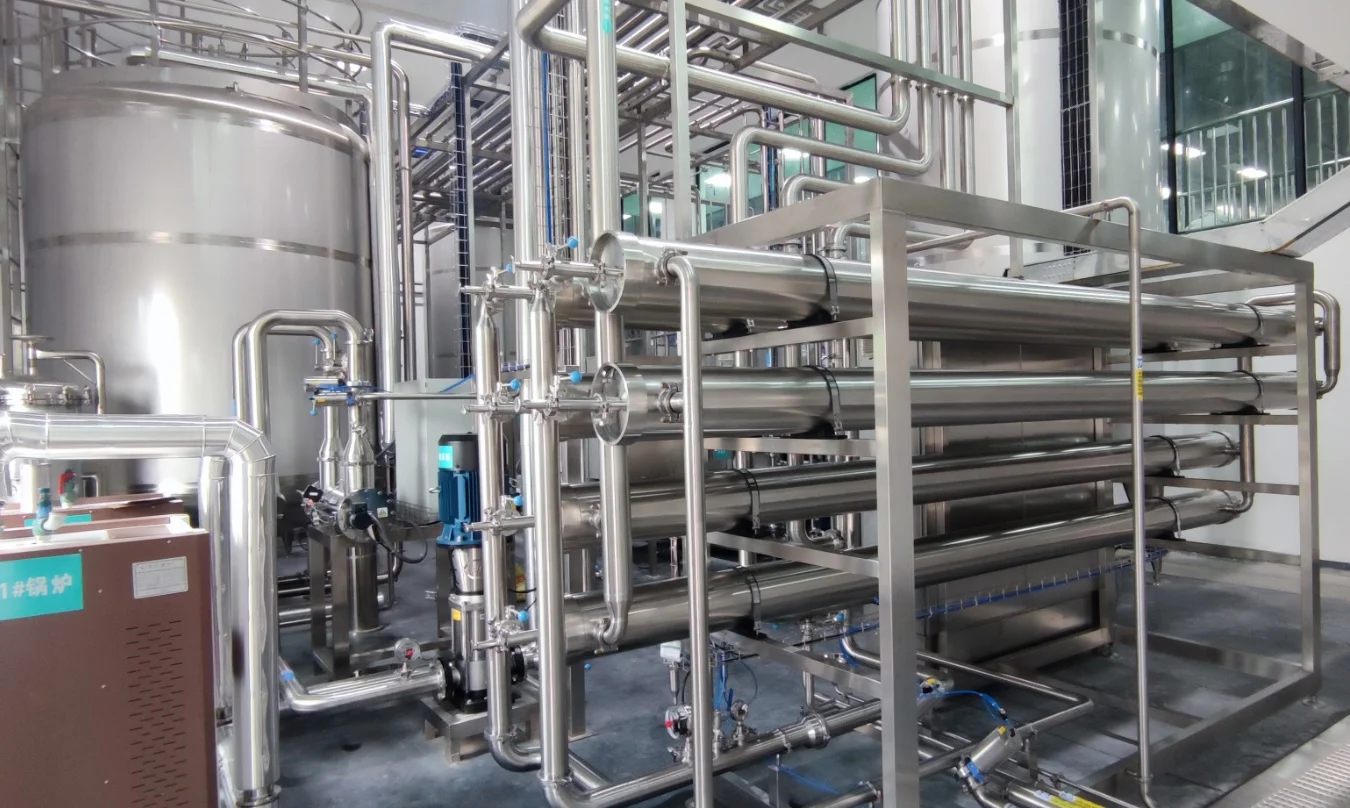
Hollow Fibre Ultrafiltration Equipment
Ultrafiltration System
The system uses pollution-resistant, hydrophilic PES, PVDF as its own building material, so it enjoys the advantage of longer lifetime, lighter weight, and compact structure. It can withstand high density residual CL-,H2O2 solution. When it is used in treating bacteria and viruses, the killing rate could reach up to 5log. As a result, the water's turbidity is below 0.01 NTU, well above American SWTR standard.
PES as its own building material, so it enjoys the advantage of longer lifetime, lighter weight, and compact structure. It can withstand high density residual CL-,H2O2 solution. When it is used in treating bacteria and viruses, the killing rate could reach up to 5log. As a result, the water's turbidity is below 0.01 NTU, well above American SWTR standard.
PVDF has become the preferred material for hollow‑fibre ultrafiltration membranes thanks to its excellent comprehensive properties. At present, hollow‑fibre ultrafiltration membrane products from many well‑known brands on the market (such as Hydranautics from the US and Toray from Japan) adopt PVDF material.
Advantages of using ultrafiltration equipment:
- Reliable physical filtration performance
Ultrafiltration relies on physical sieving to remove suspended solids, colloids, bacteria, viruses and high‑molecular organics. It produces stable permeate water quality with low turbidity, and is barely affected by fluctuations in influent water conditions.
- Low‑pressure operation & energy‑saving
It works under low operating pressure (0.1‑0.3 MPa). Compared with reverse osmosis units, ultrafiltration consumes less power and cuts down overall operating energy costs.
- Minimal chemical consumption
Pollutant separation is a physical process. No large‑dose coagulants or flocculants are required for the filtration stage. It reduces chemical costs and avoids secondary chemical pollution.
- Modular and compact structure
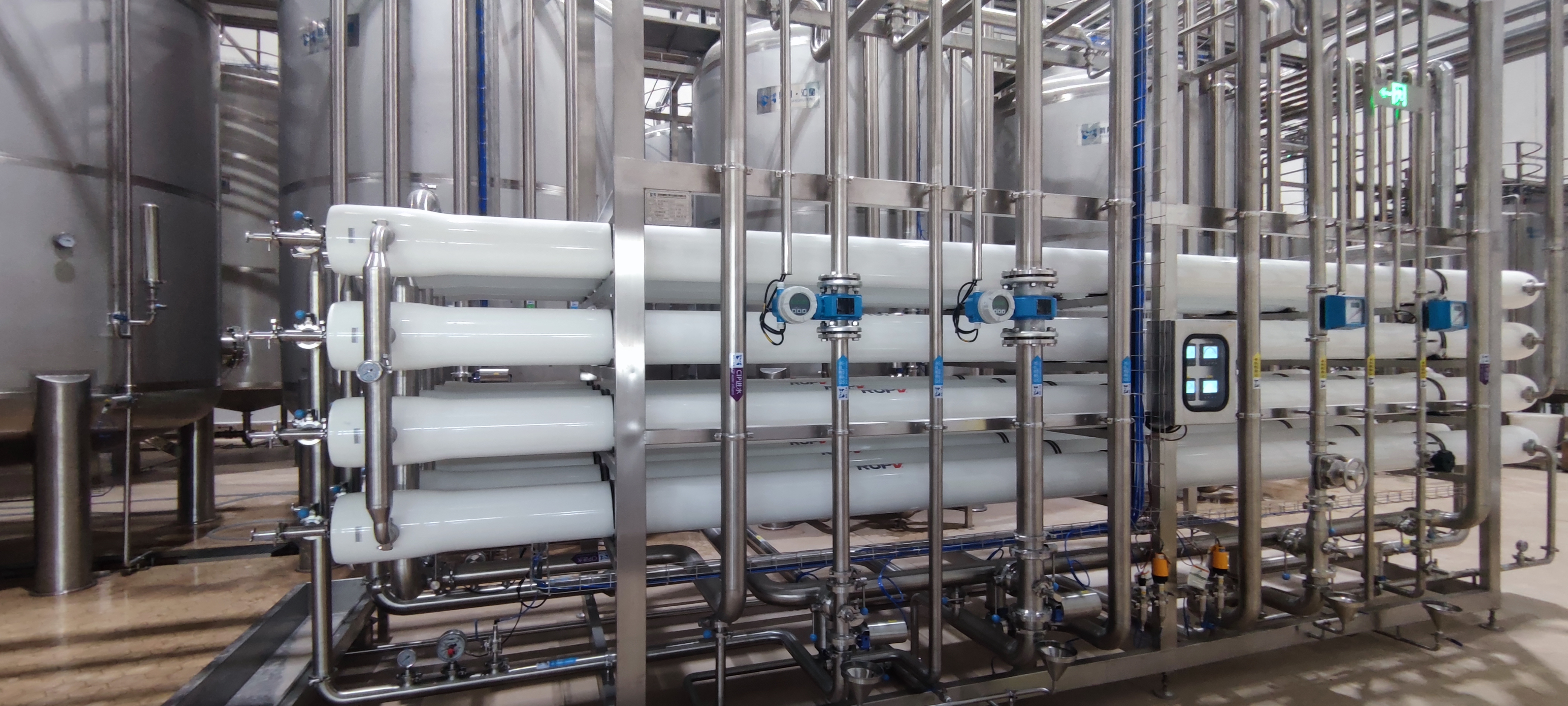
Skid‑mounted modular design saves floor space. System capacity can be flexibly expanded by adding membrane modules, which facilitates transportation, on‑site installation and project upgrading.
- High degree of automation
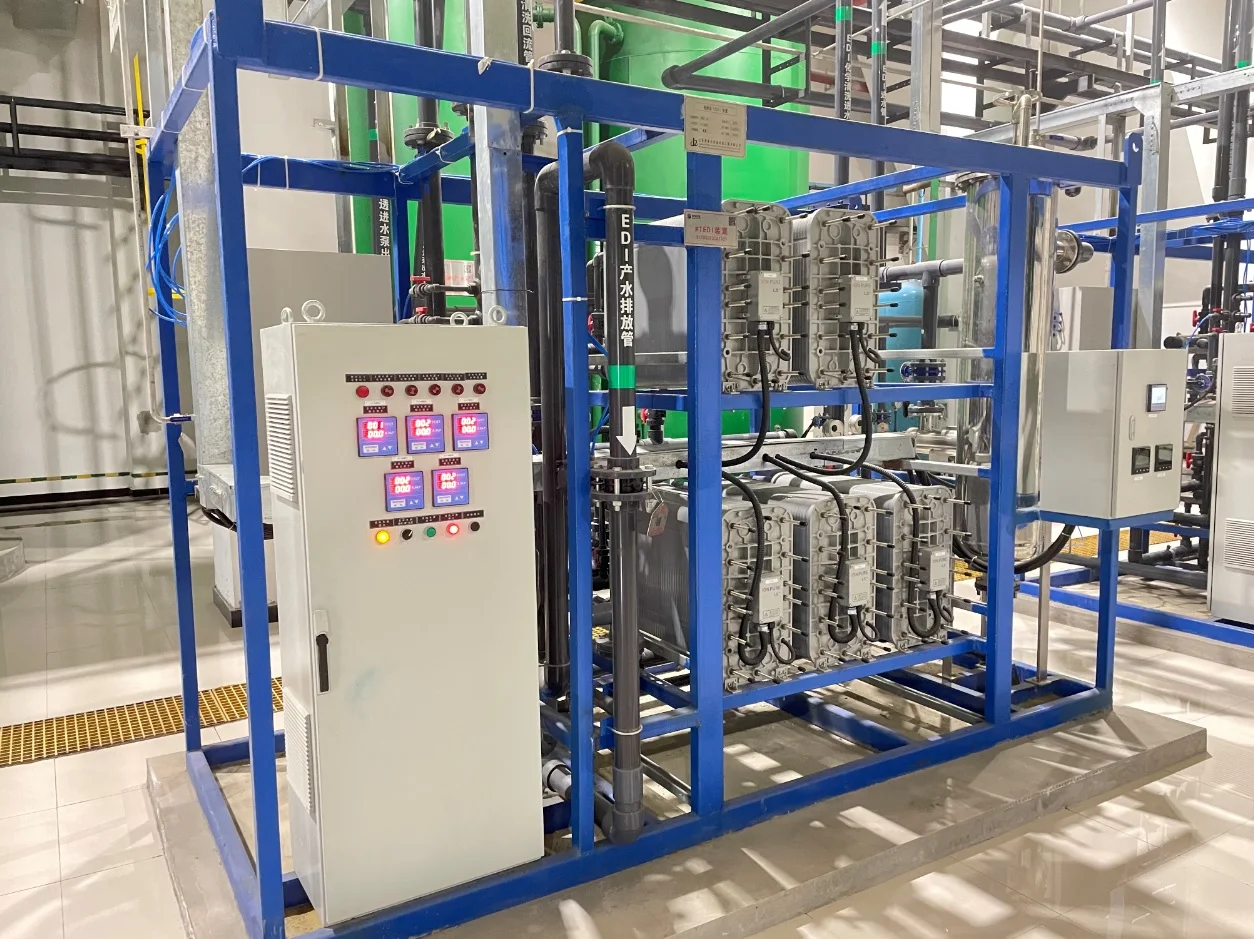
The system can realize automatic filtration, backwashing, chemical‑enhanced backwash (CEB) and fault alarm. Manual intervention is limited to routine inspection and periodic CIP cleaning, lowering labor requirements.
- Wide application versatility
It fits multiple water sources: surface water, groundwater, municipal sewage reuse, and serves as high‑quality pre‑treatment for reverse osmosis systems in industrial water projects.
- Good water recovery rate
Typical water recovery reaches 90%‑95%. Concentrate can be collected for further disposal, helping improve water resource utilization.
- Long membrane service life with proper maintenance
With standardized backwashing and chemical cleaning procedures, UF membranes can achieve 3‑5‑year service life, keeping long‑term operating costs under control.
- Good temperature resistance
Normal operating temperature can reach up to 60℃, outperforming many other materials.
Application Fields
- ✓Pre-treatment for Reverse Osmosis (RO) system
- ✓Municipal tap water purification
- ✓River / lake / groundwater treatment
- ✓Wastewater recycling and reuse
- ✓Food & beverage, pharmaceutical industrial water treatment
Frequently Asked Questions
What is ultrafiltration and how does UF equipment work?
Ultrafiltration is a physical membrane separation technology. The UF membrane has tiny pore sizes ranging from 0.01 to 0.1 μm. Water molecules and small dissolved ions pass through the membrane, while suspended solids, colloids, bacteria, viruses and macromolecular organics are trapped on the membrane surface. Separation is achieved by pressure-driven sieving without chemical reaction.
What is the typical working pressure of UF equipment?
It normally operates under low pressure, usually 0.1–0.3 MPa. Low pressure saves energy compared with RO systems.
Does UF remove dissolved salts?
No. UF cannot remove dissolved ions and salts. It mainly removes particles, colloids, microorganisms and large organics. If desalination is required, UF is commonly used as pre-treatment before RO.
What is backwashing? How often should backwash be performed?
Backwashing reverses the water flow to flush away contaminants accumulated on the membrane surface. Typical cycle: backwash every 20–60 minutes, lasting 30–90 seconds. The exact interval depends on raw water turbidity and pollution load.
What is CEB / CIP cleaning?
- CEB: Chemical Enhanced Backwash, periodic chemical dosing during backwash to reduce organic and microbial fouling. - CIP: Clean-in-Place. When membrane flux drops significantly, off-line circulation cleaning with chemical agents (sodium hypochlorite, citric acid etc.) restores membrane performance.
What is the service life of UF membrane elements?
Under proper operation and maintenance, the membrane service life is generally 3–5 years. Poor raw water quality or insufficient cleaning will shorten lifespan
What is the water recovery rate of UF system?
Normally 90%–95%. The rejected concentrate contains intercepted pollutants and can be collected for further treatment.
What raw water quality can UF handle?
Suitable for raw water with turbidity less than 50 NTU. If raw water contains high oil content, large particles or excessive algae, pre-filtration is required to protect UF membranes.
What are common membrane fouling problems?
Main fouling types: particulate fouling, organic fouling, microbial fouling and inorganic scaling. Regular backwashing and chemical cleaning are the key measures to control fouling
Is UF equipment fully automatic?
Yes. Most skid-mounted UF systems support automatic running, backwashing, CEB, alarm and interlock functions. Manual operation is only needed for periodic inspection and CIP maintenance.
What is the difference between UF and RO?
- UF: low pressure, removes particles, bacteria, colloids; cannot remove salts. Used for clarification / RO pre-treatment. - RO: high pressure, removes dissolved salts, ions and small organics. Used for desalination.
Send Your Requirements
- Feed water source & raw water quality analysis report — Such as river water, lake water, groundwater, municipal wastewater, RO concentrate, etc. Please share key indicators: turbidity, COD, TSS, pH, oil content, total iron, algae content.
- Design flow rate — - Required permeate (product water) capacity: ____ m³/h or ____ m³/day - Confirm if the flow rate is peak flow or average flow
- Product water requirement — Permeate water quality standard, intended usage (RO pretreatment, drinking water, wastewater reuse, process water for factory etc.)
- Site conditions — - Available working voltage: 380V/415V, 50Hz or 60Hz - Installation environment: indoor / outdoor, available floor space, ambient temperature range - Local available chemicals for cleaning (if any)
- System configuration requirements — - Fully automatic or semi-automatic control - Material preference for membrane housing, piping and frame: PVC / FRP / SS304 / SS316L - Membrane type: hollow fiber UF membrane (inside-out / outside-in) - Include auxiliary parts: feed pump, backwash pump, chemical dosing system, control cabinet, valves, instruments
- Other requirements — - Design water recovery rate expectation - Delivery term (FOB, CIF etc.) and destination port - Required delivery lead time - After-sales service requirement, on-site installation & commissioning service or not
Related Equipment