

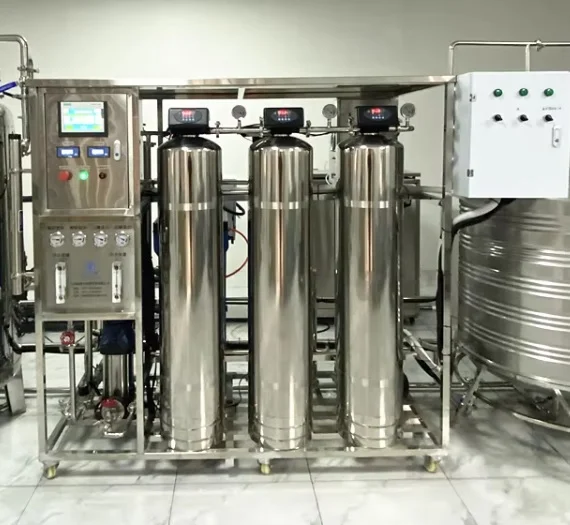

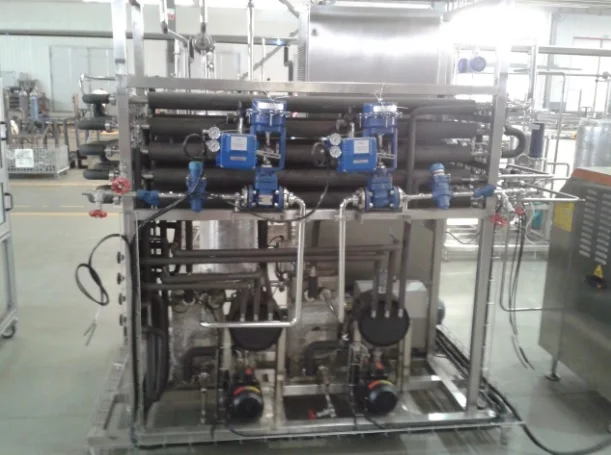
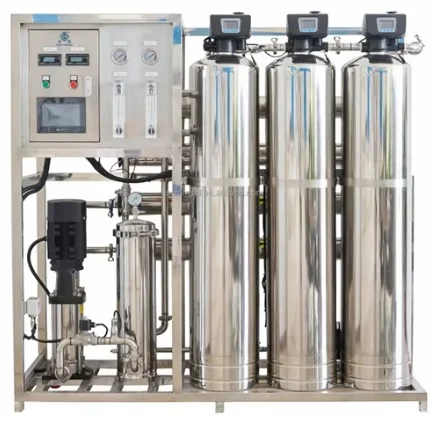
Ion Exchange System
Ion Exchanger
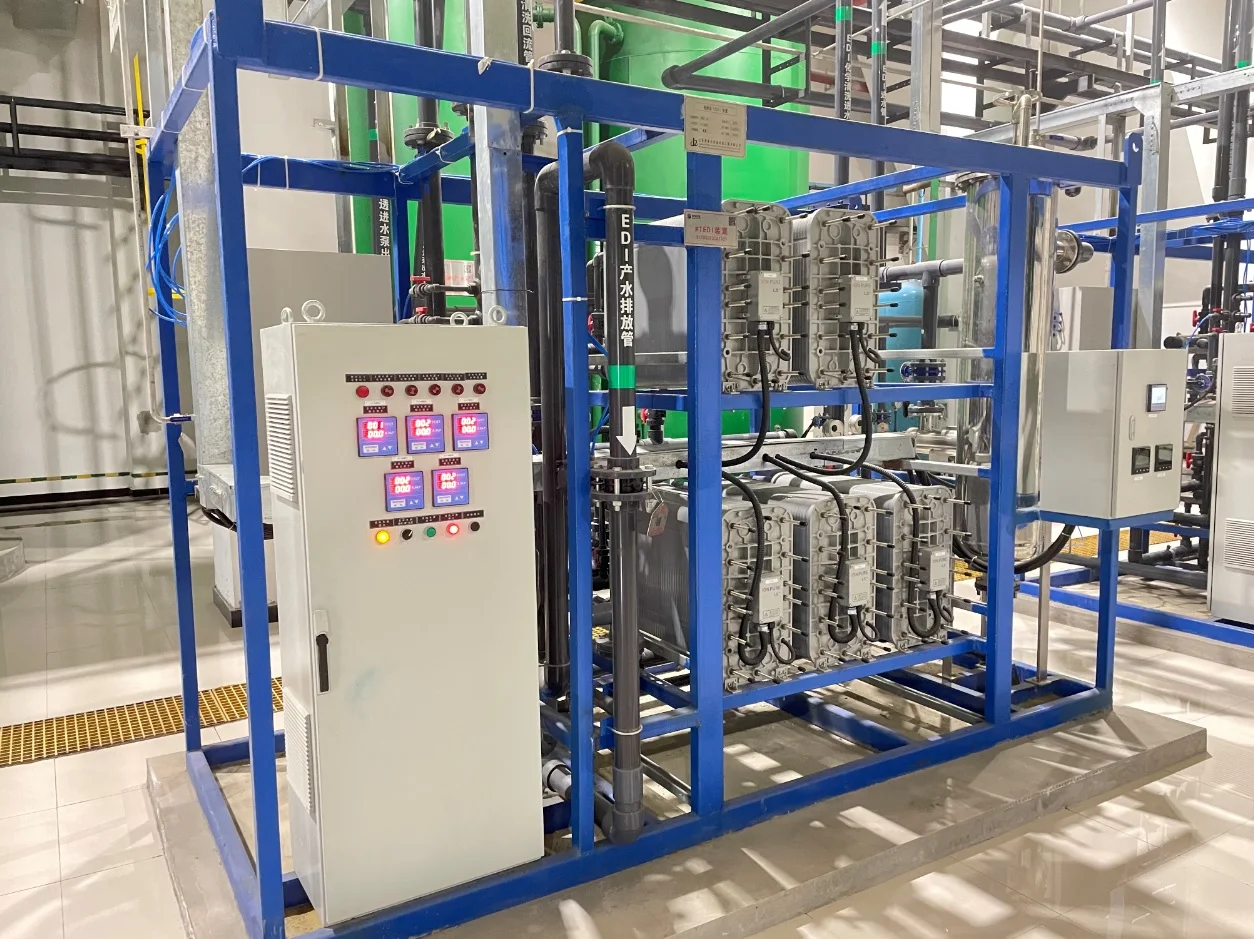
This device uses a method of ion substitution to soften hard water; in the process, Ca2+ and Mg2+ will substitute for Na+.
Depending oon the quality of raw water and water using schedules, the water softener, which has a single tank of multiple tanks, is able to make one level or two levels substitution, Moreover, with the capacity for round the clock water treating and the feature of manual operationbesides automatic operation, it is especially suitablefor supplying proper water for low and medium pressure boilers and producing softened water for other industries.
| Model | Capacity (M3/H) |
Dimension (mm) |
Port | Working Pressure | ||
| Inlet | Outlet | Drain | (MPa) | |||
| PWT-01 | 0.5-1 | Φ250*1375 | 20 | 20 | 15 | 0.2-0.3 |
| PWT-03 | 2-3 | Φ350*1650 | 25 | 25 | 20 | 0.2-0.3 |
| PWT-05 | 4-5 | Φ350*1650 | 40 | 40 | 32 | 0.2-0.3 |
| PWT-10 | 8-10 | Φ350*1650 | 40 | 40 | 32 | 0.2-0.3 |
| PWT-15 | 12-15 | Φ350*1650 | 50 | 50 | 40 | 0.2-0.3 |
| PWT-20 | 18-20 | Φ350*1650 | 50 | 50 | 40 | 0.2-0.3 |
| PWT-30 | 25-30 | Φ350*1650 | 65 | 65 | 50 | 0.2-0.3 |
| PWT-40 | 36-40 | Φ350*1650 | 65 | 65 | 50 | 0.2-0.3 |
| PWT-50 | 45-50 | Φ350*1650 | 80 | 80 | 65 | 0.2-0.3 |
| PWT-60 | 55-60 | Φ350*1650 | 100 | 100 | 80 | 0.2-0.3 |
Features
‑ Ideal for high‑volume and fluctuating water‑demand scenarios
‑ Continuous soft‑water output ‑ Consumption‑based regeneration for optimal chemical‑saving performance
‑ Simple installation and low‑maintenance design
‑ Full‑electronic control panel, supporting custom‑program settings
‑ Complete regeneration assembly with piping, configurable for on‑site layout requirements
Advantages of Ion Exchanger
- ✓High‑efficiency ion removal: Effectively eliminate calcium, magnesium, heavy metals and various dissolved ions from water. Achieve low‑conductivity demineralized water for industrial process requirements.
- ✓Flexible capacity & configuration:Available in single‑bed, double‑bed and mixed‑bed designs. Customizable resin volume to match different water flow and outlet water quality targets.
- ✓Cost‑effective operation:Regenerable ion‑exchange resins. No high‑pressure consumption; lower energy cost compared with membrane‑based desalination for certain water conditions.
- ✓Stable effluent water quality:Consistent treated‑water output, less affected by minor fluctuations of inlet water TDS. Reliable performance for continuous production scenarios.
- ✓Skid‑mount optional & easy installation:Compact skid‑mounted assembly is available. Simple layout, convenient transportation and fast on‑site commissioning.
- ✓Simple operation & maintenance:Support automatic regeneration, backwash and rinsing via PLC control. Straightforward resin inspection and replacement, low labor demand
- ✓Wide application scope:Perfect for boiler feed water, electronics manufacturing, pharmaceutical production, food‑grade water preparation and general industrial deionized water projects.
Frequently Asked Questions
What is an Ion Exchange System?
Ion exchange removes dissolved ions in water by exchanging target ions with resin functional groups. It is widely used for water softening, dealkalization, full deionization, heavy metal removal and water purification.
What are common types of ion exchange resins?
Cation resin (H-type / Na-type), anion resin (OH-type), mixed bed resin (mixed cation+anion resin)
What is water softening ion exchange?
Sodium type cation resin exchanges Ca²⁺, Mg²⁺ (hardness ions) with Na⁺, to reduce water hardness and prevent scaling. Regenerated with brine (NaCl solution).
What is the difference between IX(Ion exchange) and NF / RO?
IX: Good for low TDS raw water, removes ions completely, consumes regenerant (acid, alkali, salt); produces regeneration wastewater. NF/RO: Membrane separation, no chemical regeneration, concentrates salts into reject stream; not good for ultra-pure water polishing.
What pre-treatment is required for ion exchange system?
Raw water turbidity <5 NTU. Remove suspended solids, oil, free chlorine and heavy metals. UF or multimedia filter is usually adopted as pre-treatment to protect resin from fouling and oxidation damage.
How to regenerate ion exchange resin?
Na-cation softener: regenerated with NaCl brine. H-cation resin: regenerated with hydrochloric acid / sulfuric acid. Anion resin: regenerated with NaOH caustic soda. Mixed bed: separate regeneration of cation and anion resin.
What is the service life of ion exchange resin?
Under proper pre-treatment and regeneration, resin can last 3–8 years. Oxidation, oil fouling, organic contamination will accelerate resin degradation
What are typical applications?
Boiler feed water softening, pure water / ultra-pure water production, groundwater dealkalization, heavy metal wastewater treatment, food & beverage, pharmaceutical process water
What are common problems in ion exchange system?
Resin fouling, resin oxidation, resin breakage, channeling inside resin bed, poor regeneration efficiency, leakage of hardness or silica.
Send Your Requirements
- Raw water flow rate —
- Raw water quality report — TDS, hardness, pH, alkalinity, silica, turbidity, free chlorine
- Target treated water quality, working temperature —
- Resin type requirement —
- Material of vessels (FRP / SS304 / SS316L), —
- Automatic / manual control, —
- Delivery term —
- Destination port and after-sales requirement —
Related Equipment