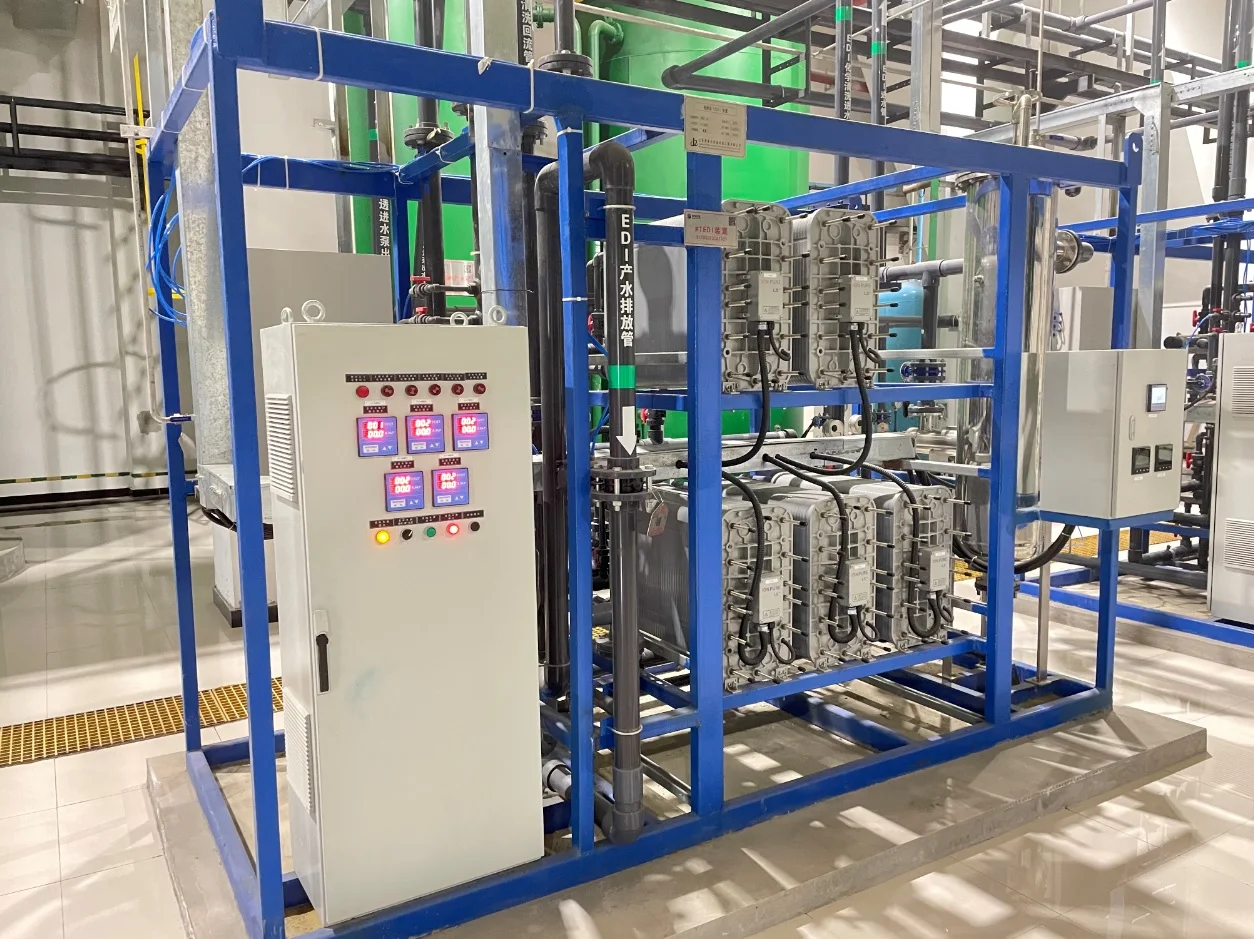


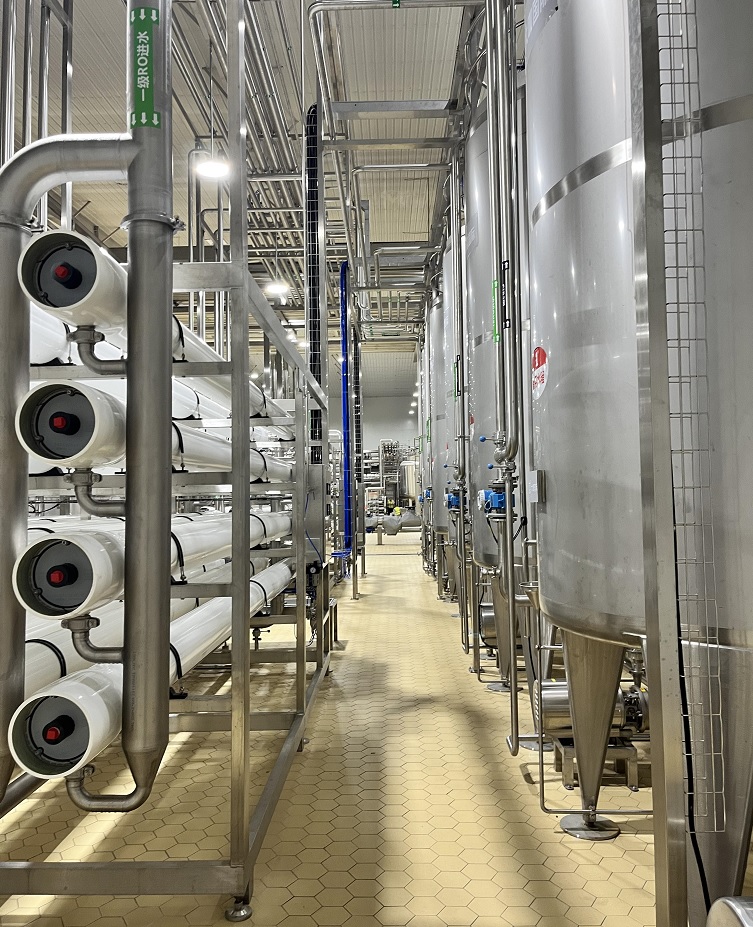
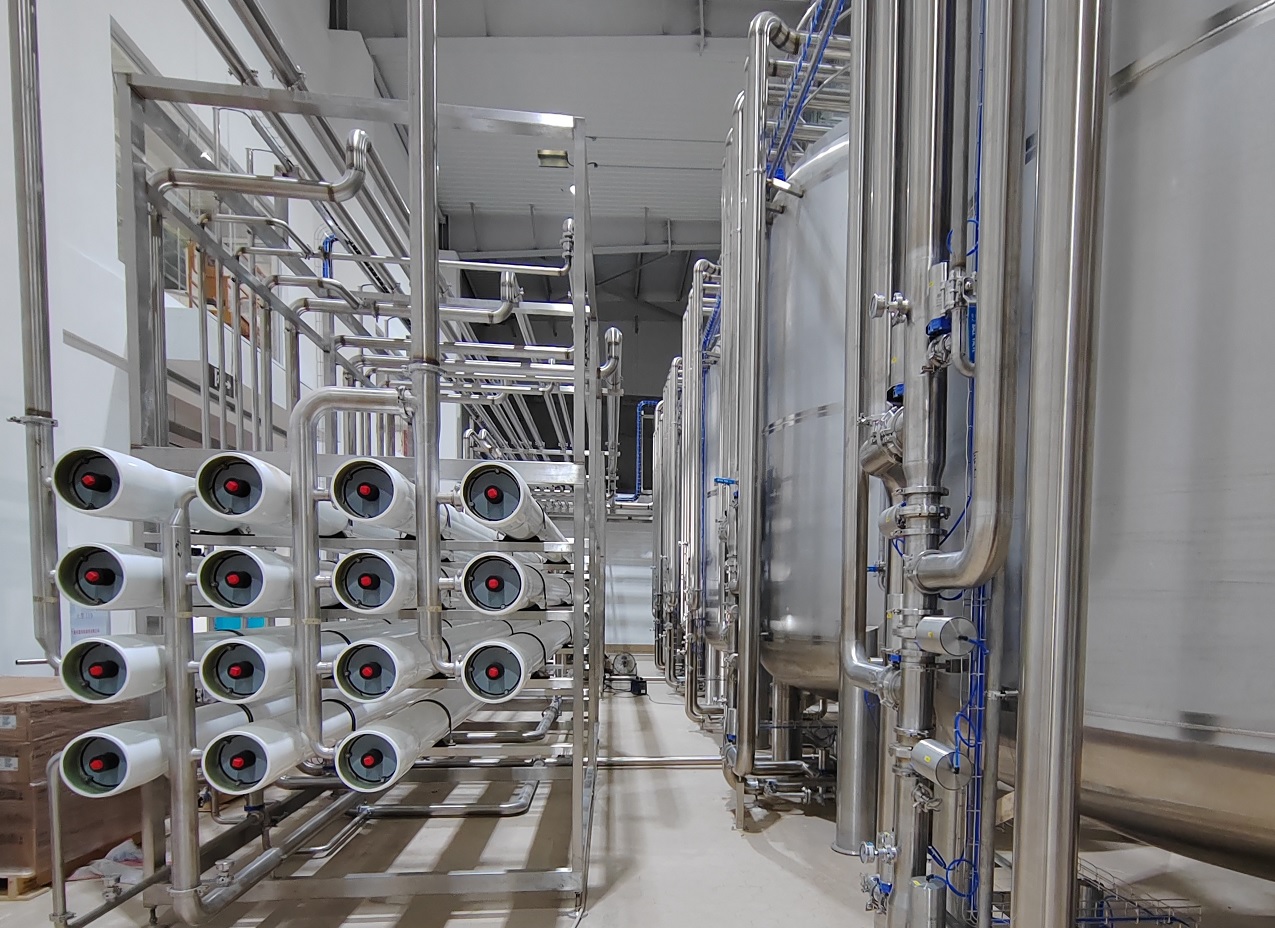
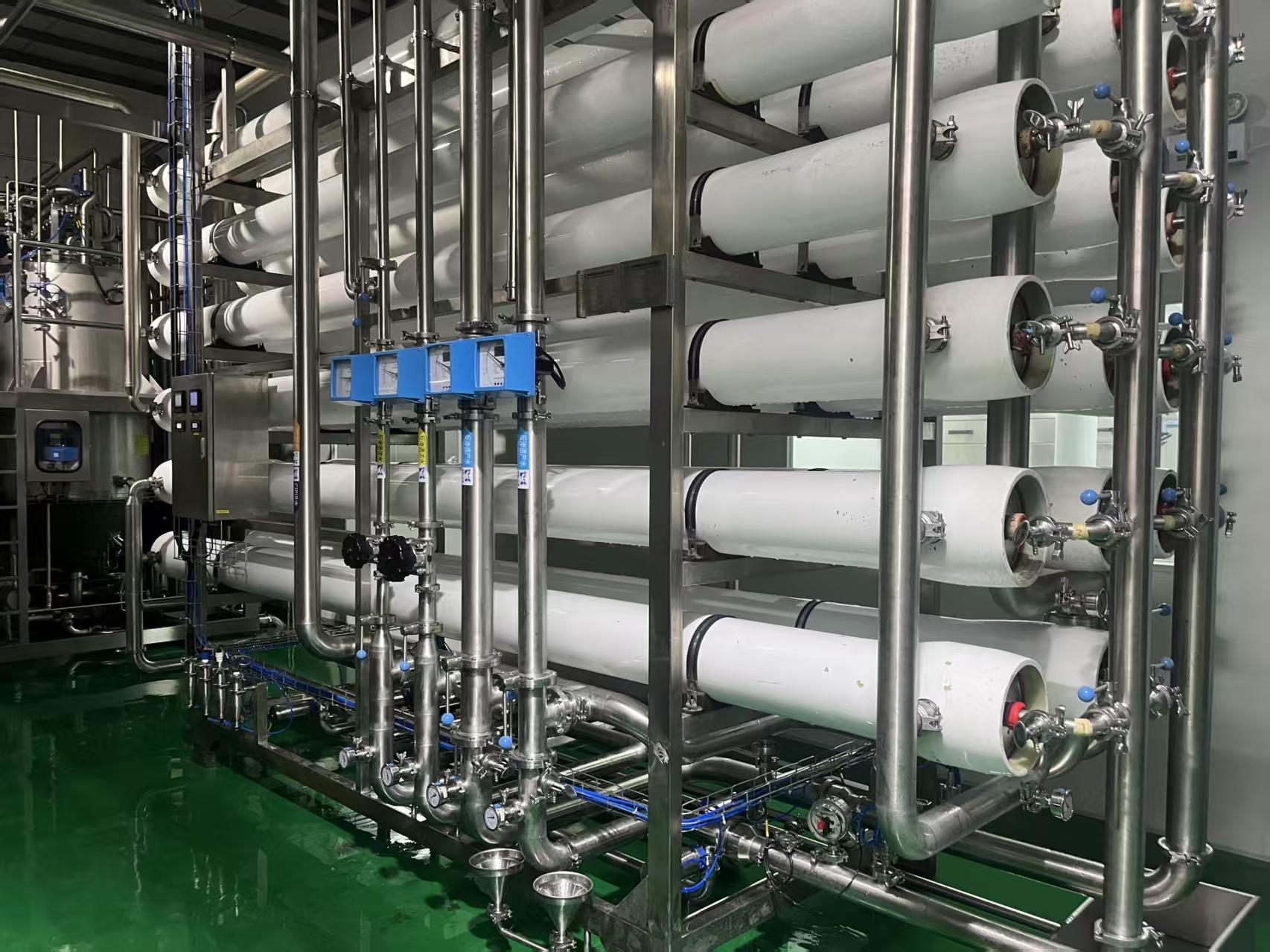
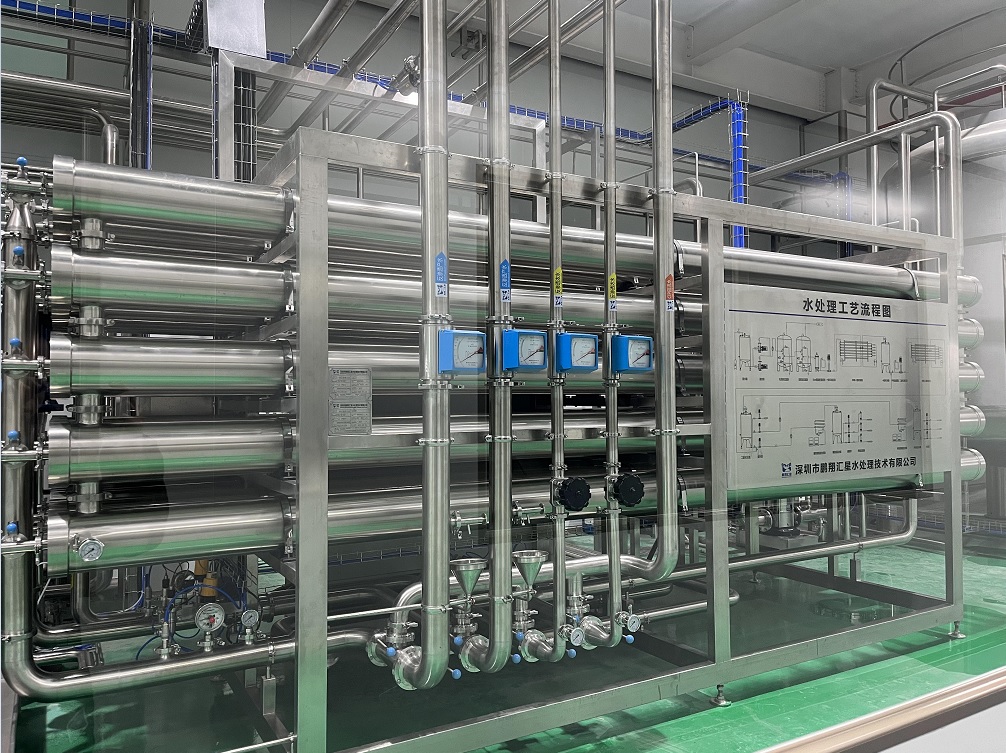
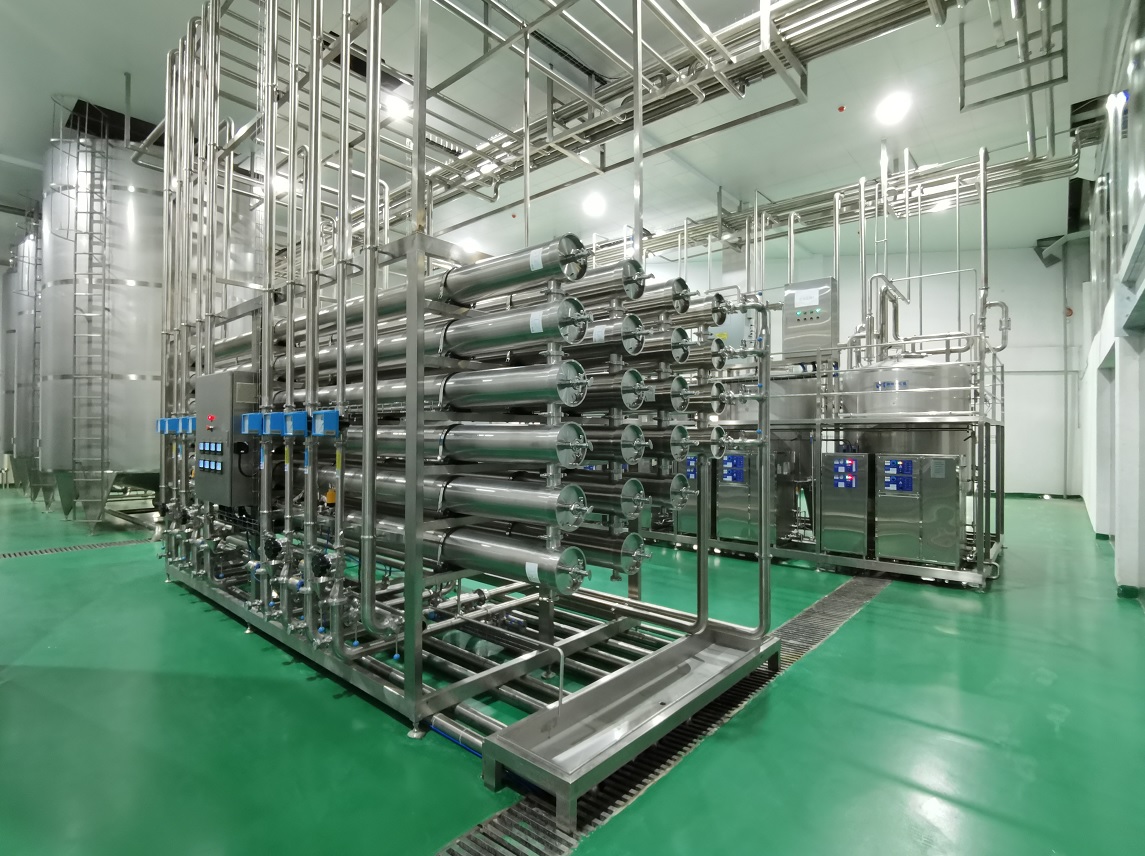
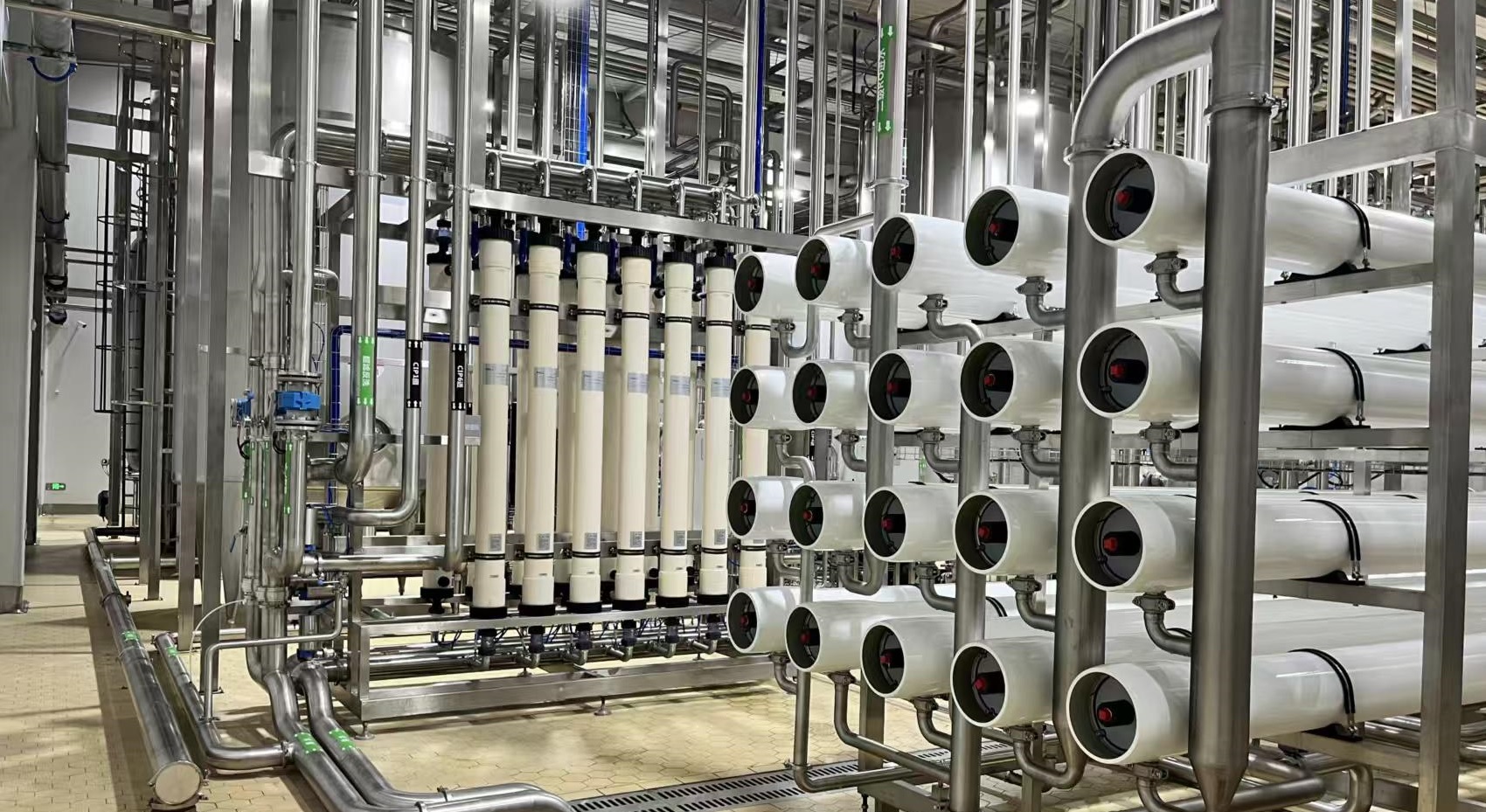
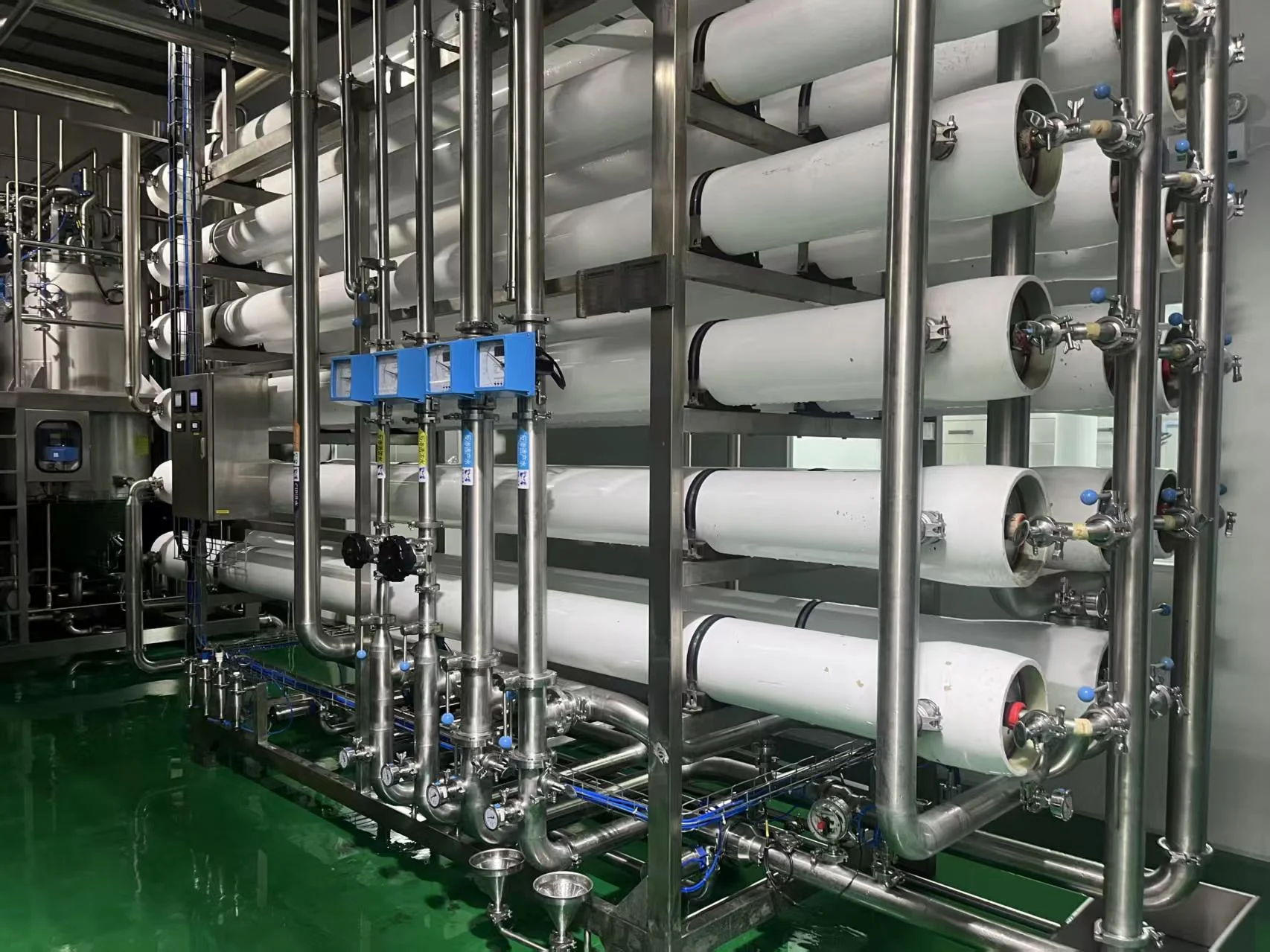
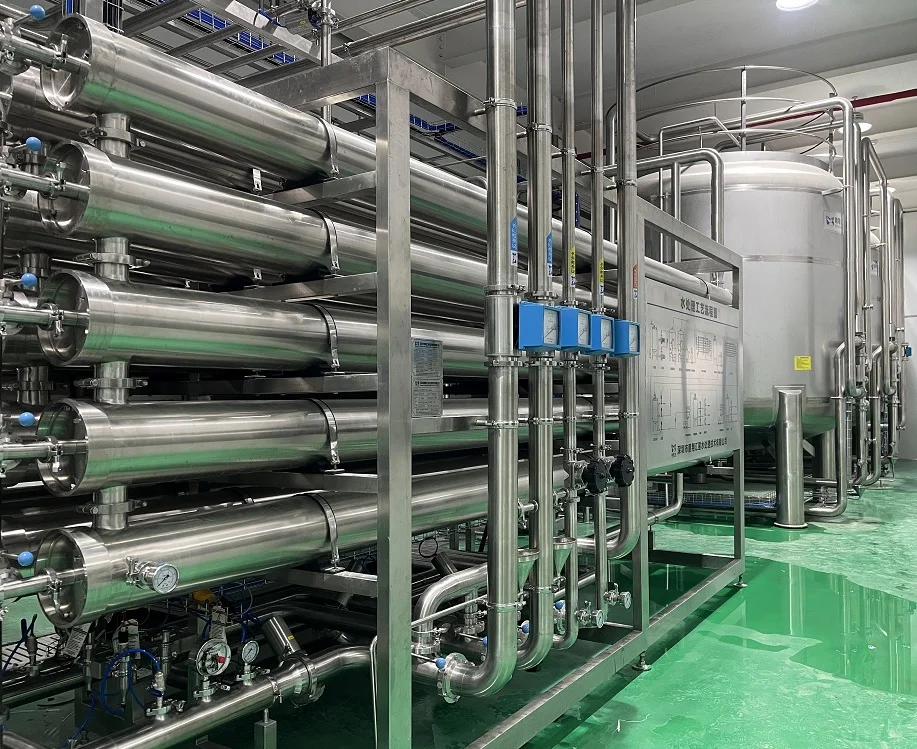
Industrial RO Water Treatment System
- ApplicationBottled purified water, beverage process water, CIP water
- CapacityProject-configurable — sized to filler consumption plus headroom
- Membrane stagesSingle pass or double pass
- Contact materialSUS304 or SUS316 by project specification
- ControlManual, semi-automatic or PLC with touchscreen
- Warranty12 months
Reverse Osmosis System
Reverse Osmosis(RO) is a membrane technology filtration method that removes many types of large molecules and ions from solutions by applying pressure to the solution when the pressure in the systemis greater than the osmotic pressure of the incoming water solution, water molecules will contnue to penetrate the membrane, while impurities in the wate such as ions,organic matter, bacteria, viruses. It are trapped on the inlet side of the membrane and pass through the water production channel. flow out ot achieve the purpose of separation and purification.
Reverse osmosis is most commonly known for its use in drink water purification from seawater, removing the salt and other substances from the water molecules. It is used in many industries, especially in the treatment of drinking water. Its advantages of high purity, high effciency and low cost make it an important equipment in modern water treatment technology.
Core Benefits
- High‑efficiency removal of salts, heavy metals, bacteria, viruses and organic contaminants
- Produces stable high‑purity treated water for diverse industrial requirements
- Fully‑automatic operation with auto‑flushing function, minimal manual intervention
- Modular design, flexible capacity customized according to raw‑water conditions
- Compact footprint, saves workshop installation space
- Reliable desalination performance for seawater & brackish water treatment
- Low chemical consumption, easy daily maintenance
- Widely used to make purified water, ultrapure water and process water
| Model | Rated Permeate Capacity(m³/h) | Membrane Qty & Spec | Membrane Housing | Total Power(kW) | Recovery Rate | Typical Salt Rejection |
| RO‑0.5T | 0.5 | 2 pcs 4040 | 2 pcs | 1.5 | 50‑55% | ≥97.5% |
| RO‑1T | 1.0 | 4 pcs 4040 | 4 pcs | 2.2 | 55‑60% | ≥97.5% |
| RO‑2T | 2.0 | 8 pcs 4040 | 8 pcs | 4.0 | 55‑60% | ≥98.0% |
| RO‑3T | 3.0 | 3 pcs 8040 | 3 pcs | 4.5 | 55‑65% | ≥98.0% |
| RO‑5T | 5.0 | 5 pcs 8040 | 5 pcs | 8.0 | 60‑68% | ≥98.0% |
| RO‑8T | 8.0 | 8 pcs 8040 | 8 pcs | 13.5 | 60‑70% | ≥98.2% |
| RO‑10T | 10.0 | 10 pcs 8040 | 10 pcs | 18.0 | 65‑70% | ≥98.2% |
General Technical Specifications
- Power supply: 380V/415V, 50/60Hz, 3‑phase
- Feed‑water requirement: SDI ≤4, free chlorine<0.1 ppm, pH 4‑11, temperature: 5‑40℃
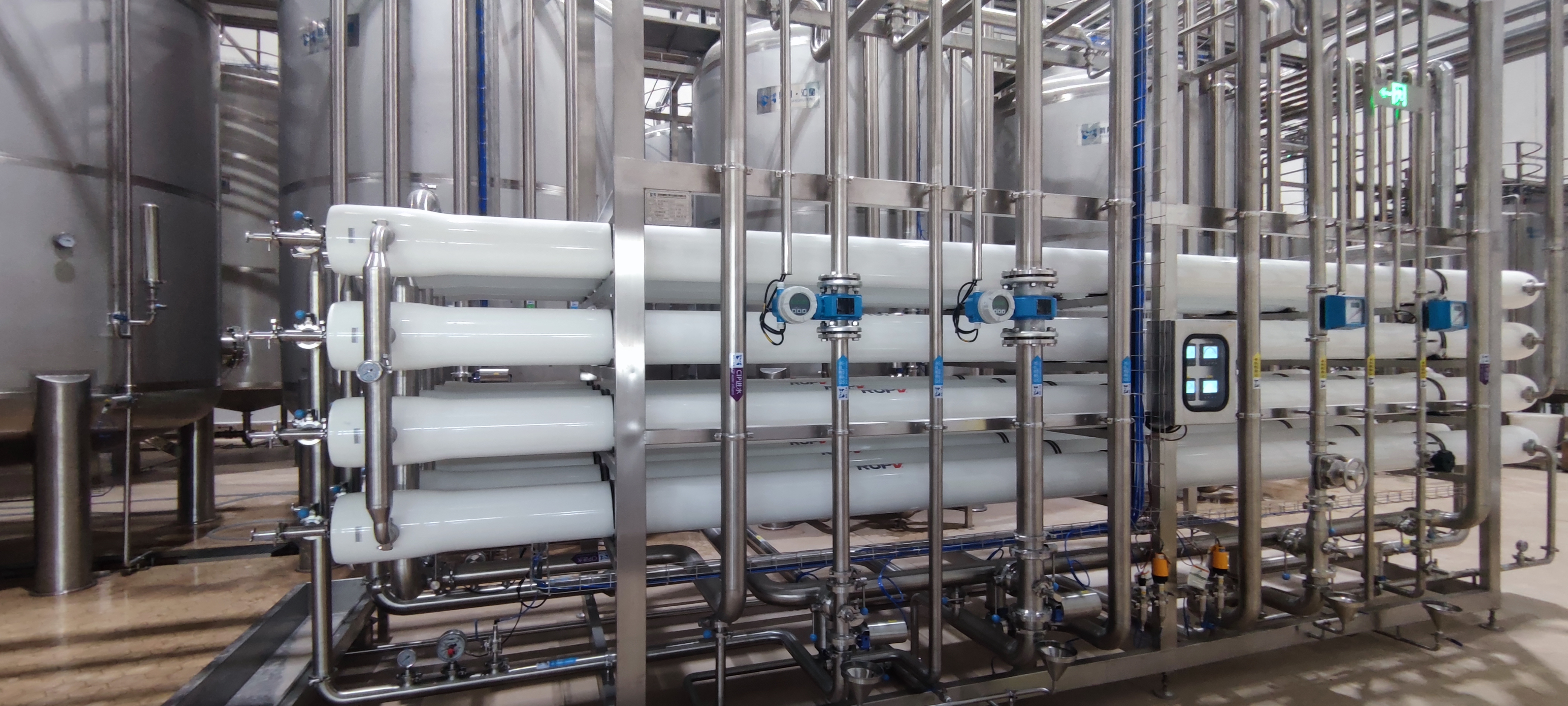
- Skid‑mounted design: complete with membrane housings, RO membranes, high‑pressure pump, pressure gauges, flow meters, PLC automatic control & auto‑flushing function
- Permeate TDS: subject to feed‑water quality; lower TDS available with double‑pass RO configuration
- All models can be re‑configured according to customer’s raw‑water report
Technical Specifications
| Product type | Industrial reverse osmosis water treatment system |
|---|---|
| Nominal capacity | Project-configurable · example design point 25℃2-100 Ton/hour |
| Source water | Tap water, well water or other source, subject to laboratory analysis |
| Main process | Pretreatment → precision filtration → reverse osmosis → terminal disinfection |
| Membrane stages | Single pass or double pass, according to required treated-water quality |
| Contact material | SUS304 or SUS316, according to water chemistry and process standard |
| Control system | Manual, semi-automatic or PLC control with operator interface |
| Power supply | Built to the electrical standard of the destination country |
| Documentation | Operation manual, electrical drawings and agreed test records |
| Line integration | Treated-water tank and distribution connection to processing or filling equipment |
Design Options
Membrane area, pump pressure and recovery rate are calculated from your laboratory analysis, target output and required treated-water quality.
Single pass suits most bottled water. Double pass is specified where conductivity targets are stricter or where the source has high dissolved solids.
SUS304 covers most beverage applications. SUS316 is specified where chloride content or the destination market's process standard requires it.
Manual valves for simple installations, semi-automatic for mid-size plants, or PLC with touchscreen, automatic flushing and conductivity monitoring for continuous production.
Voltage, frequency, phases and protection devices built for the destination country, so no site modification is needed at commissioning.
Treated-water tank sizing, distribution pipework, terminal disinfection and interlocks with the downstream filler or processing system.
Scope of Supply
- ✓RO skid with membrane housings and membranes
- ✓High-pressure pump and motor
- ✓Precision cartridge filter ahead of the membranes
- ✓Control cabinet built to destination electrical standard
- ✓Instrumentation — pressure, flow and conductivity
- ✓Skid-mounted pipework and valves
- ✓Operation manual and electrical drawings
- ✓Factory acceptance test records
- ✓Export packing for sea freight
- ✓12-month warranty and remote technical support
Site Requirements
- Floor spaceLevel concrete area with clearance around the skid for membrane replacement
- Power supplyVoltage, frequency, phases and available capacity confirmed in advance
- Feed waterSupplied at the pressure and flow stated in the technical agreement
- DrainageFloor drain sized for concentrate discharge and flushing water
- Ambient conditionsProtected from frost and direct sunlight; ventilated space
- Chemical storageSeparate, ventilated area for cleaning chemicals if CIP is included
Frequently Asked Questions
What is RO Reverse Osmosis System?
RO (Reverse Osmosis) system is a pressure-driven water purification equipment. It removes salts, heavy metals, bacteria, colloids and suspended impurities from raw water to produce purified water for bottling, EDI feed water and industrial use.
What information is needed to size an industrial RO system?
A recent raw-water analysis, the treated-water quality you need to reach, hourly capacity, daily operating hours, target recovery rate, destination country and the utilities available on site.
Can the RO system be integrated with a beverage filling line?
Yes. The system is engineered with treated-water storage, distribution, disinfection and controls for connection to beverage processing or filling equipment. Capacity is normally sized above nominal filler consumption to allow for CIP and peak demand.
Is SUS304 or SUS316 available?
Both. Material selection follows water chemistry, hygiene requirement, process standard and project budget. Confirm before fabrication starts, as changing material later is costly.
How often do RO membranes need replacing?
Membrane life depends on feed-water quality, pretreatment effectiveness, cleaning frequency and operating recovery rate. Adequate pretreatment and a regular CIP schedule are the two factors that extend it most.
Do you supply spare membranes and consumables?
Yes. We supply replacement membranes, cartridges, seals and instrumentation, and can provide a recommended spare parts list with the equipment so critical items are stocked before start-up.
What raw water sources can RO system handle?
It can treat tap water, well water, underground water and surface river water. The system design depends mainly on raw water quality report, especially TDS value
What TDS reduction performance can RO achieve?
RO membrane can remove 95%~98% of total dissolved solids. If raw water TDS<1000ppm, permeate TDS can reach 10~50ppm to meet drinking purified water standard.
What pre-treatment units are matched before RO membrane?
Standard pre-treatment sequence: Raw water tank → raw water pump → quartz sand filter → activated carbon filter → water softener → 5μm security filter.
What material for RO pressure vessel and pipeline?
RO pressure vessel: FRP fiberglass. Process pipeline: UPVC or SUS304 stainless steel as option.
What RO membrane brands can you supply?
We can configure Vontron, DOW, Hydranautics RO membranes based on customer requirements
What is the service life of RO membrane?
With qualified pre-treatment and standard daily operation, RO membrane service life is about 2–3 years.
What is the water recovery rate for single-stage RO?
Single stage RO recovery rate ranges 50%~75%. Two-stage RO can realize higher water recovery.
Is CIP cleaning system included with RO?
CIP unit is optional. It is strongly recommended for long-term running to remove organic fouling and scaling on RO membranes.
Can RO system run automatically?
Yes. Automatic version equipped with PLC + touch screen, auto start-stop, low pressure / high pressure protection. Manual control is available for small capacity RO.
What routine maintenance work is required?
1. Replace security filter cartridge regularly. 2. Regenerate resin of water softener periodically. 3. Monitor TDS, inlet pressure and concentrate pressure daily. 4. Perform CIP cleaning when pressure difference rises obviously.
Lines That Include This Equipment
Send Your Requirements
- Raw-water analysis — laboratory report, if available
- Water source — municipal, borehole, spring or surface
- Required output — litres per hour and daily operating hours
- Treated-water standard — the product specification you must meet
- Destination — country, port and electrical standard
Related Equipment