


In today’s global beverage and liquid processing industry, efficiency is no longer just an operational advantage—it is a long-term strategy for survival and competitiveness. As production costs rise and environmental regulations become more stringent, manufacturers are increasingly turning to modern water treatment systems to reduce energy consumption, optimize resource utilization, and improve overall plant performance.
Water is at the core of nearly every beverage production process. From raw water intake to final product formulation, its quality directly influences product safety, taste stability, and equipment lifespan. However, traditional water treatment approaches often rely on outdated filtration and disinfection methods that consume excessive energy and require frequent maintenance. Modern systems, by contrast, integrate intelligent control, advanced membrane technology, and automated monitoring to significantly improve efficiency while reducing operational costs.
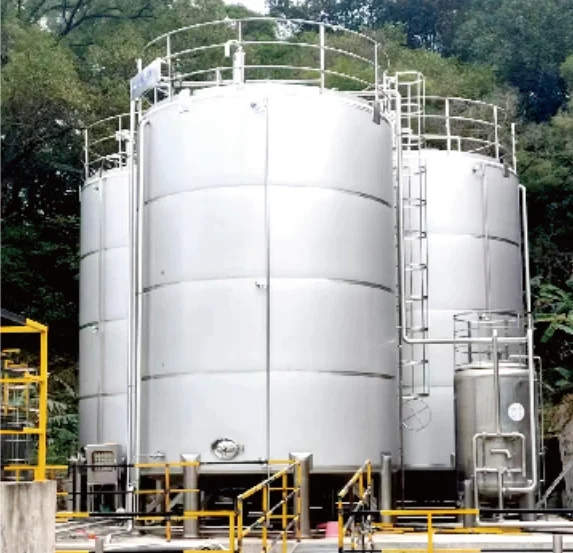
The Role of Water Treatment in Industrial Efficiency
A well-designed water treatment system is not just about purification. It is a foundational infrastructure that determines how smoothly a production line operates. In beverage manufacturing, inconsistent water quality can lead to downtime, product rejection, and increased chemical usage.
Modern systems address these challenges through multi-stage processes such as sediment filtration, activated carbon absorption, reverse osmosis, and advanced sterilization. Each stage is optimized to remove impurities while minimizing pressure loss and energy consumption.
For manufacturers looking to upgrade their production capabilities, integrating a smart becomes a critical step toward achieving stable output and lower utility costs.
Energy Efficiency Through Intelligent System Design
One of the most significant advantages of modern water treatment technology is its focus on energy optimization. Traditional systems often operate at constant load, regardless of real-time demand. This results in unnecessary energy consumption during low-production periods.
New-generation systems, however, use variable frequency drives (VFDs), real-time sensors, and automated flow control to adjust energy usage dynamically. Pumps and filtration units operate only at the required capacity, reducing electricity waste without compromising output quality.
Additionally, energy recovery technologies are being incorporated into reverse osmosis processes, allowing systems to reuse pressure energy that would otherwise be lost. Over time, these improvements translate into measurable reductions in operational expenses.
Cost Savings Beyond Energy Reduction
While energy efficiency is a key benefit, modern water treatment systems also generate cost savings in several other areas.
First, improved filtration precision reduces chemical usage. By ensuring consistent pre-treatment quality, downstream sterilization systems require fewer disinfectants and additives. This not only lowers procurement costs but also minimizes environmental impact.
Second, automated monitoring systems reduce the need for manual inspection and maintenance. Predictive maintenance technology can detect early signs of membrane fouling, pump wear, or flow inconsistencies, allowing operators to address issues before they escalate into costly downtime.
Third, equipment lifespan is significantly extended. Stable water quality reduces scaling and corrosion in filling machines, boilers, and pipelines, leading to fewer replacements and repairs.
Integration with Modern Beverage Production Lines
In today’s highly automated beverage factories, water treatment systems are no longer standalone units. They are fully integrated into production ecosystems that include PET bottle manufacturing, filling, labeling, and packaging.
Companies like Pengxiang Huixing play a critical role in this integration. As a comprehensive manufacturer of beverage packaging machinery and intelligent factory solutions, Pengxiang Huixing provides complete system planning that connects water treatment with upstream and downstream production processes.
Their portfolio includes water treatment systems, beverage pre-treatment solutions, PET blow molding machines, blow-fill-cap production lines, labeling systems, conveyor systems, and secondary packaging equipment. This integrated approach ensures that every stage—from raw water processing to final packaging—is synchronized for maximum efficiency.
By designing intelligent workshops and smart factory layouts, the company helps global clients achieve seamless production flow and reduced operational waste. Their engineering philosophy emphasizes “introduction and improvement, technological advancement,” which has driven continuous innovation over the past two decades.
Improving Production Stability and Product Quality
Energy efficiency and cost reduction are important, but the ultimate goal of any water treatment system is to ensure product quality consistency. In beverage production, even minor fluctuations in water composition can affect taste, carbonation levels, and shelf stability.
Modern systems use real-time monitoring sensors to track parameters such as turbidity, pH level, conductivity, and microbial content. This data is continuously analyzed to maintain optimal water conditions.
When integrated into a full production line, these systems support stable operation of filling and sealing machines, reducing the risk of contamination or batch rejection. The result is a more reliable production process and stronger brand reputation in competitive markets.
Smart Factory Development and Industrial Automation
The evolution of water treatment technology is closely tied to the broader trend of smart manufacturing. Factories are increasingly adopting digital control systems, IoT-based monitoring, and centralized data management platforms.
Pengxiang Huixing has positioned itself at the forefront of this transformation by offering end-to-end intelligent factory planning. Their systems are designed to connect water treatment, production, packaging, and logistics into a unified digital ecosystem.
This level of integration allows manufacturers to track energy consumption, water usage, and equipment performance across the entire production chain. Decision-making becomes more data-driven, enabling continuous optimization and long-term cost reduction.
Global Applications and Market Reach
With more than 20 years of experience in the beverage packaging machinery industry, Pengxiang Huixing has developed a strong global presence. Its products are widely used across China and exported to countries including the United Arab Emirates, Oman, Vietnam, the Philippines, and Malaysia.
The company has obtained ISO9000 quality management certification and is recognized as a national high-tech enterprise in China. These certifications reflect its commitment to quality, innovation, and engineering excellence.
Its solutions are particularly valued in markets where water quality variability and production efficiency are critical concerns. From bottled mineral water plants to carbonated beverage production lines, the company’s systems are designed to adapt to diverse industrial requirements.
Conclusion
Modern water treatment systems are no longer optional components in beverage manufacturing—they are essential drivers of efficiency, cost reduction, and product quality assurance. By integrating intelligent control, energy-saving technologies, and automated monitoring, these systems enable manufacturers to achieve higher productivity with lower resource consumption.
When combined with comprehensive production solutions such as those offered by Pengxiang Huixing, water treatment becomes part of a larger smart manufacturing ecosystem. This holistic approach ensures that every stage of production—from water purification to final packaging—is optimized for performance, sustainability, and long-term profitability.
As global demand for high-quality beverages continues to grow, investing in advanced water treatment technology will remain one of the most effective strategies for manufacturers seeking to stay competitive in an evolving industrial landscape.