


In modern beverage production, water is more than a basic ingredient. It directly affects product quality, equipment performance, cleaning efficiency, and production stability. For bottled water, juice, carbonated beverages, and other liquid drinks, inconsistent water quality can create problems throughout the production process. This is why reliable water treatment has become an essential part of an efficient beverage manufacturing system.
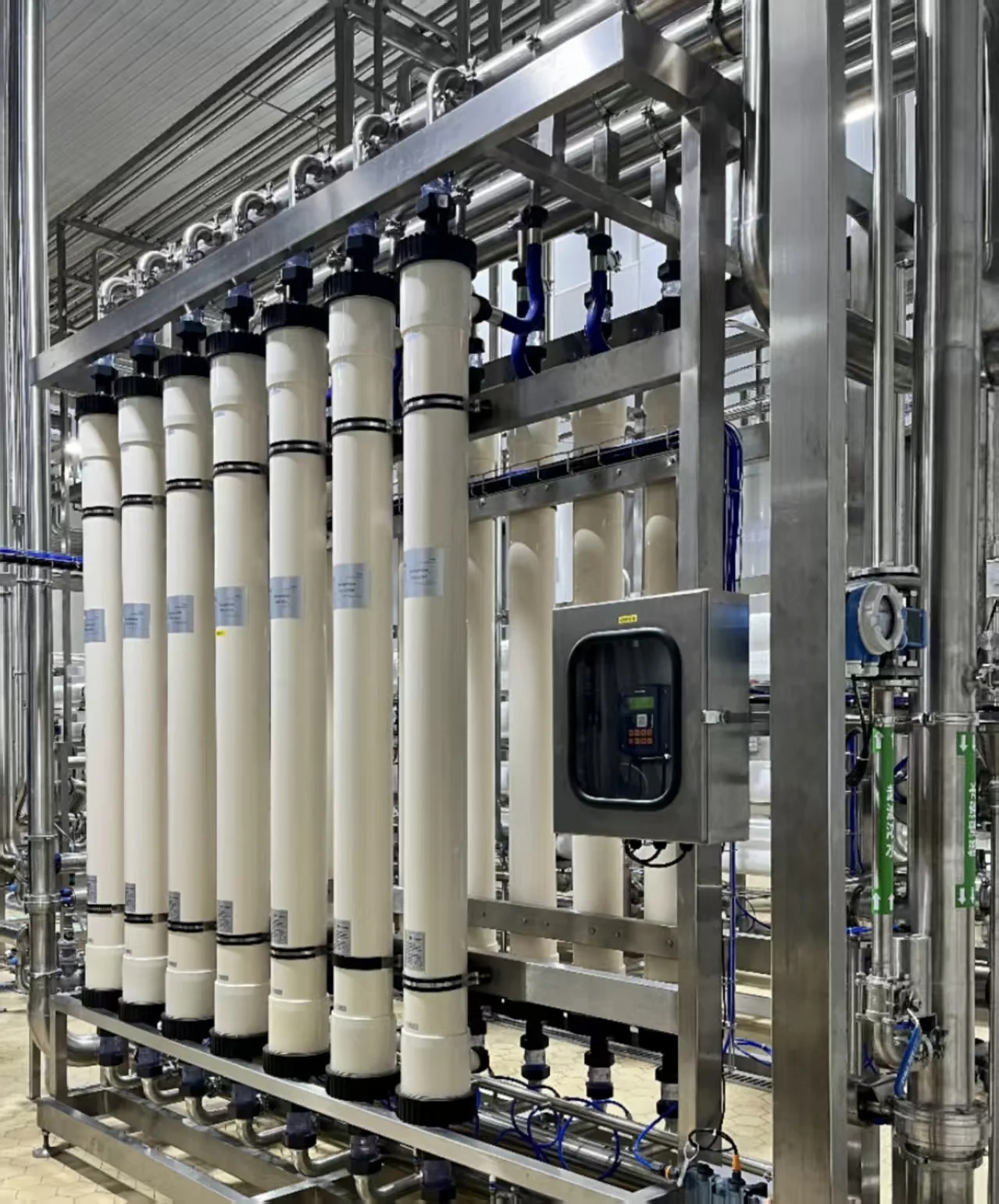
Advanced membrane treatment systems provide a practical way to address these challenges. By using membrane-based separation technologies, manufacturers can remove unwanted particles, microorganisms, dissolved substances, and other impurities while maintaining better control over treated water quality. When properly designed and integrated, membrane treatment can also support more stable production, easier process management, and improved equipment utilization.
Why Water Treatment Matters in Beverage Production
A beverage production line may contain many interconnected processes, including water treatment, ingredient preparation, blending, sterilization, filling, capping, labeling, conveying, and secondary packaging. Water quality can influence several of these stages.
For example, untreated or poorly treated source water may contain suspended solids, microorganisms, hardness, organic matter, or dissolved minerals. Depending on the beverage being produced, these substances can affect taste, appearance, product consistency, and the performance of downstream equipment.
Water quality also matters when water is used for equipment cleaning. Deposits and contaminants can accumulate inside pipelines, tanks, valves, filling equipment, and other components. Over time, this may increase cleaning requirements and contribute to maintenance issues.
A properly selected membrane treatment system helps establish a controlled water source for subsequent production processes. Instead of relying on inconsistent incoming water conditions, beverage manufacturers can build a more stable treatment stage into the overall production line.
How Advanced Membrane Treatment Systems Improve Efficiency
One of the key advantages of membrane technology is its ability to perform separation without relying solely on traditional chemical treatment methods. Depending on the process requirements, different membrane technologies can be used for different treatment objectives.
Microfiltration, ultrafiltration, nanofiltration, and reverse osmosis each have different separation characteristics. The appropriate configuration depends on the source water, required water quality, beverage formulation, production capacity, and downstream process.
For instance, ultrafiltration can be used to reduce suspended particles and microorganisms, while reverse osmosis is commonly applied when a higher degree of dissolved substance removal is required. A combination of treatment technologies may provide better overall results than relying on a single process.
The practical benefit is not simply cleaner water. A well-engineered system can help manufacturers create a more predictable production environment.
Stable Water Quality Supports Stable Production
Production stability is particularly important for beverage manufacturers operating continuously or managing multiple product lines.
When water quality changes significantly, operators may need to adjust treatment parameters, inspect equipment more frequently, or respond to unexpected process variations. A membrane treatment system with suitable monitoring and pretreatment can reduce these fluctuations.
Consistent treated water can contribute to:
-
More stable beverage formulation
-
Better control of product quality
-
Reduced risk of equipment fouling
-
More predictable cleaning cycles
-
Improved downstream process consistency
-
Easier production management
This is especially useful for manufacturers producing bottled water, fruit beverages, carbonated drinks, and other products with strict requirements for water quality.
Membrane Treatment Must Be Designed as Part of the Whole System
A common mistake is to treat water treatment equipment as an isolated machine. In reality, the treatment system should be considered as one component of the complete beverage production process.
Before selecting a membrane system, manufacturers should evaluate the source water and determine the actual treatment requirements. Factors such as turbidity, hardness, conductivity, microbial conditions, organic content, and seasonal changes can all influence system design.
Pretreatment is equally important. Depending on the incoming water conditions, pretreatment may include filtration, softening, activated carbon treatment, or other processes. Proper pretreatment helps protect membrane elements and maintain their operating performance.
The treated water then needs to be connected correctly with storage tanks, pumps, pipelines, sterilization systems, and production equipment. This integrated approach makes it easier to maintain stable water quality from treatment through to final beverage production.
Reducing Unplanned Downtime Through Better Process Control
Equipment downtime can interrupt an entire production schedule. If a problem occurs in the water treatment section, the effects may extend to blending, filling, cleaning, and packaging.
Modern membrane treatment systems can incorporate monitoring and control functions for important operating parameters. Depending on the system design, operators may monitor pressure, flow rate, conductivity, water quality, and other process indicators.
These measurements help operators identify abnormal conditions earlier. For example, changes in pressure or flow may indicate membrane fouling or other operating problems. Detecting these changes early allows maintenance teams to investigate the cause before performance deteriorates further.
This approach is more practical than waiting until a system failure affects production.
Cleaning and Maintenance Are Critical
Membrane equipment requires appropriate cleaning and maintenance to maintain reliable performance. The cleaning method and frequency should be determined according to the feed water, operating conditions, membrane type, and level of fouling.
This is where an integrated cleaning strategy becomes valuable.
For beverage manufacturers, automated cleaning systems can help standardize cleaning procedures and reduce dependence on manual operations. Pengxiang Huixing provides intelligent cleaning systems, on-site automatic cleaning systems, and industrial cleaning solutions that can be integrated with beverage production equipment.
A coordinated approach between membrane treatment and cleaning equipment can help operators manage the entire production environment more efficiently. It also makes operating procedures easier to standardize across different production shifts.
Supporting Smart Beverage Factories
As beverage manufacturers move toward smart workshops and smart factories, water treatment systems also need to become more connected and manageable.
Pengxiang Huixing focuses on high-end planning and design for intelligent workshops and smart factories, combining water treatment with beverage pretreatment, filling, packaging, conveying, and other production processes.
This means that the water treatment section does not have to operate independently. It can be planned together with the production line according to factory layout, capacity requirements, process flow, cleaning requirements, and future expansion plans.
For manufacturers evaluating membrane technology, a dedicated membrane treatment system can provide a practical foundation for building a controlled and efficient water treatment process.
Integrating Water Treatment with Beverage Packaging Equipment
Operational efficiency becomes more meaningful when individual systems work together.
Pengxiang Huixing provides a broad range of beverage production and packaging solutions, including water treatment production lines, beverage pretreatment systems, PET blow molding equipment, blow-fill-seal production lines, filling and capping systems, labeling systems, conveying systems, and secondary packaging equipment.
The company's main solutions also include gallon water production lines, sterilization equipment, bottled water production lines, juice and carbonated beverage production lines, beverage filling machinery, and intelligent cleaning systems.
By coordinating these systems during project planning, manufacturers can reduce unnecessary transfers between different equipment suppliers and create a more logical production flow. Water treatment, beverage preparation, filling, labeling, conveying, packaging, warehousing, and logistics can be considered as interconnected stages rather than independent installations.
This system-level approach is particularly useful when designing new beverage factories or upgrading existing production facilities.
Practical Considerations When Choosing a Membrane System
Before investing in a membrane treatment solution, beverage manufacturers should focus on actual operating requirements rather than selecting equipment based only on capacity.
Several questions should be considered:
-
What is the source water condition?
A detailed analysis of incoming water helps determine the required pretreatment and membrane configuration. -
What water quality is required?
Bottled water, juice, carbonated beverages, and process water may have different requirements. -
What is the required production capacity?
The treatment system should match current demand while allowing reasonable room for future expansion. -
How will the system be cleaned?
Cleaning procedures should be considered during the initial design rather than added later. -
How will treated water be stored and distributed?
Tanks, pumps, pipelines, valves, and sterilization equipment should be coordinated with the treatment system. -
How will operators monitor the system?
Appropriate monitoring and control functions can make daily operation and maintenance more manageable. -
How will the system connect with the beverage line?
The water treatment process should support the requirements of the downstream production and packaging equipment.
Building a More Reliable Production Process
Advanced membrane treatment is not simply about adding another filtration unit to a beverage factory. Its real value comes from creating a more controlled and predictable water treatment process that supports the entire production operation.
With suitable membrane technology, effective pretreatment, automated cleaning, process monitoring, and proper integration with downstream equipment, beverage manufacturers can improve water quality management while making daily operations more consistent.
With around 20 years of experience in beverage packaging machinery and related technologies, Pengxiang Huixing has continued to develop and improve integrated solutions for beverage manufacturers. The company combines research and development, manufacturing, engineering design, and technical services to support customers across procurement, production, packaging, warehousing, logistics, distribution, and consumption.
Its products have been supplied across more than 20 provinces in China and exported to markets including the United Arab Emirates, Oman, Vietnam, the Philippines, and Malaysia. With ISO9000 quality management system certification and recognition as a Chinese high-tech enterprise, Pengxiang Huixing continues to focus on practical equipment development and integrated beverage production solutions.
For beverage manufacturers looking to improve operational efficiency, membrane treatment should therefore be considered as part of a complete production strategy. The right system can provide a stable water treatment foundation while working together with pretreatment, cleaning, filling, packaging, and intelligent factory systems to create a more reliable production operation.