


In beverage production, taste consistency and odor control are two of the most important factors affecting consumer satisfaction. Whether producing bottled water, fruit drinks, tea beverages, or carbonated soft drinks, the quality of the water used in production directly influences the final product. Even when the ingredients and production process are carefully controlled, unwanted odors, chlorine residues, organic compounds, and impurities in the water source can negatively impact flavor.
Activated carbon filtration has become one of the most widely used technologies for improving water quality in beverage manufacturing. By using the adsorption characteristics of activated carbon, these filtration systems effectively remove substances that affect taste and odor, helping beverage manufacturers achieve cleaner, fresher, and more stable products.
For modern beverage factories, activated carbon filters are not only water purification equipment but also an important part of the overall production process. Companies such as Pengxiang Huixing provide integrated beverage production solutions covering water treatment, beverage pre-processing systems, PET blowing equipment, filling systems, labeling systems, conveyor systems, and secondary packaging equipment. Through advanced equipment design and intelligent factory planning, beverage manufacturers can improve production efficiency while maintaining strict product quality standards.
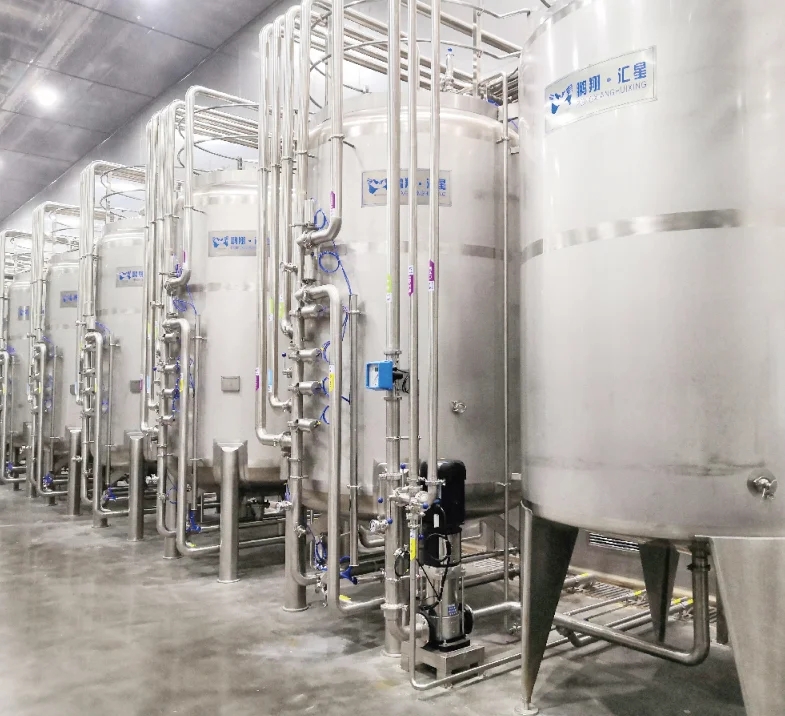
The Role of Water Quality in Beverage Production
Water is the primary ingredient in many beverages, especially bottled water and soft drinks. Its chemical composition and purity have a direct impact on the taste, appearance, and shelf stability of the finished product.
Natural water sources often contain various substances, including:
-
Chlorine used during municipal water treatment
-
Organic compounds from natural environments
-
Unpleasant odors caused by dissolved gases
-
Residual chemicals from industrial or agricultural activities
-
Trace impurities that influence flavor balance
Although these substances may exist at very low concentrations, human taste and smell receptors are highly sensitive. A small amount of unwanted compounds can create noticeable differences in beverage quality.
For this reason, beverage manufacturers typically use multiple stages of water treatment before production. Activated carbon filtration is usually an essential step because it specifically targets compounds responsible for unpleasant taste and odor.
How Activated Carbon Filters Work
Activated carbon filters operate through a process called adsorption. Unlike absorption, where substances are taken into another material, adsorption occurs when unwanted molecules attach to the surface of activated carbon.
Activated carbon has a highly porous structure, creating a large internal surface area. These tiny pores capture and retain various organic molecules and chemical compounds as water passes through the filter.
The effectiveness of activated carbon filtration comes from several key characteristics:
Large Surface Area
The manufacturing process of activated carbon creates millions of microscopic pores. This structure allows the material to contact and trap a large number of contaminants.
Strong Adsorption Capacity
Activated carbon can attract and hold many organic compounds, including those responsible for unpleasant smells and unusual flavors.
Chemical Compatibility
Activated carbon works effectively in water treatment systems because it improves water quality without adding chemicals to the production process.
In beverage plants, this makes activated carbon filtration a reliable solution for preparing high-quality process water.
Removing Chlorine and Improving Beverage Flavor
One of the most common applications of activated carbon filters in beverage production is chlorine removal.
Municipal water supplies often contain chlorine to prevent bacterial growth. While chlorine is useful for water disinfection, residual chlorine can negatively affect beverage taste. It may create a chemical smell or interfere with sensitive beverage ingredients.
Activated carbon efficiently removes chlorine through catalytic reactions and adsorption. By reducing chlorine levels before beverage processing, manufacturers can achieve:
-
Cleaner water taste
-
Improved ingredient stability
-
Better flavor preservation
-
Reduced risk of unwanted chemical reactions
For bottled water producers, removing chlorine is particularly important because consumers expect a fresh and natural drinking experience.
For juice, tea, and carbonated beverage manufacturers, high-quality water treatment helps maintain the intended flavor profile of the final product.
Controlling Organic Compounds and Unwanted Odors
Many odor problems in beverage production come from organic compounds present in raw water. These compounds may originate from natural sources such as soil and vegetation or from environmental contamination.
Activated carbon filters are highly effective at reducing:
-
Geosmin, which can create an earthy smell
-
Organic chemicals affecting taste
-
Volatile compounds causing unpleasant odors
-
Residual substances from water sources
By removing these contaminants, activated carbon filtration creates a neutral water base. This allows beverage ingredients such as fruit extracts, flavors, and sweeteners to express their intended characteristics without interference.
Activated Carbon Filtration in Complete Beverage Production Lines
A successful beverage manufacturing process requires more than individual equipment. Each stage, from water treatment to packaging, must work together to ensure stable production.
Pengxiang Huixing specializes in providing complete beverage packaging machinery solutions for global customers. Its product range includes water treatment systems, beverage pre-processing equipment, filling and sealing production lines, PET blowing machines, intelligent cleaning systems, and packaging solutions.
In a complete beverage production line, activated carbon filtration is usually integrated into the water treatment section. After filtration, the purified water can continue through additional treatment processes such as:
-
Precision filtration
-
Reverse osmosis
-
Sterilization
-
Mineral adjustment
-
Mixing and blending
This integrated approach ensures that water quality meets production requirements before entering the filling process.
Supporting Stable Production and Quality Management
Modern beverage manufacturers face increasing demands for consistent quality. Consumers expect every bottle of a product to have the same taste and quality, regardless of production batch or location.
Activated carbon filters help manufacturers achieve this consistency by providing stable water treatment performance. However, the effectiveness of the system depends on proper design, installation, and maintenance.
Important considerations include:
Selecting the Right Carbon Material
Different activated carbon materials have different adsorption abilities. Beverage factories need to choose suitable carbon types based on raw water characteristics and production requirements.
Designing Proper Filtration Capacity
The filter size and flow rate must match production demand. An incorrectly designed system may reduce treatment effectiveness or increase maintenance requirements.
Regular Maintenance and Replacement
Over time, activated carbon becomes saturated and loses adsorption efficiency. Regular inspection and replacement schedules are necessary to maintain stable filtration performance.
Professional equipment manufacturers can help beverage companies design systems that match their production capacity and water quality conditions.
The Importance of Intelligent Beverage Factory Planning
With the development of smart manufacturing, beverage factories are moving toward more automated and integrated production models. Water treatment systems, filling equipment, cleaning systems, storage, and logistics are increasingly connected through intelligent management platforms.
Pengxiang Huixing focuses on intelligent workshop and smart factory planning, combining beverage packaging machinery technology with automation solutions. The company provides services covering the entire production chain, from raw material processing and manufacturing to packaging, warehousing, and distribution.
Through continuous research and innovation, Pengxiang Huixing has developed competitive beverage production solutions that meet the requirements of different markets. Its products have passed ISO9000 quality management system certification and the company has been recognized as a Chinese high-tech enterprise.
With more than 20 years of experience in the beverage packaging machinery industry, Pengxiang Huixing has introduced and improved international beverage equipment technologies while developing its own technical advantages. Its solutions are widely used in domestic markets and exported to countries and regions including the United Arab Emirates, Oman, Vietnam, the Philippines, and Malaysia.
Future Trends in Taste and Odor Control Technology
As consumers become more focused on beverage quality and health, water treatment technology will continue to play a critical role in the beverage industry.
Future developments will focus on:
-
More efficient filtration materials
-
Automated monitoring of water quality
-
Energy-saving treatment systems
-
Intelligent maintenance management
-
Higher integration between water treatment and production equipment
Activated carbon filtration will remain an important technology because of its reliability, efficiency, and ability to improve sensory quality without adding chemicals.
For beverage manufacturers, investing in advanced water treatment systems is not only about meeting production standards but also about building long-term product quality and consumer trust.
Conclusion
Activated carbon filters play a vital role in improving beverage taste and controlling unwanted odors. By removing chlorine, organic compounds, and other flavor-affecting substances, they help manufacturers produce cleaner and more consistent beverages.
In a modern beverage production environment, activated carbon filtration works together with advanced filling systems, intelligent cleaning solutions, and automated packaging equipment to create a complete quality control system.
With professional experience in beverage machinery manufacturing and smart factory solutions, Pengxiang Huixing continues to help global beverage companies improve production efficiency, product quality, and operational reliability through advanced technology and integrated solutions.