


Industrial filtration has evolved from a supporting utility into a core engineering discipline that directly impacts product quality, production efficiency, and regulatory compliance. Across sectors such as beverage manufacturing, water treatment, and industrial processing, precision filter technology is now central to ensuring stable operations and consistent output quality. As production lines become more automated and quality standards more stringent, filtration systems are no longer optional add-ons—they are integrated components of intelligent manufacturing systems.
In modern industrial environments, precision filtration is closely tied to process reliability. Whether removing particulate matter from water, ensuring microbial stability in beverages, or protecting downstream equipment from contamination, the performance of filtration systems determines both operational continuity and final product integrity. This shift has driven continuous innovation in filter media, system design, and intelligent monitoring.
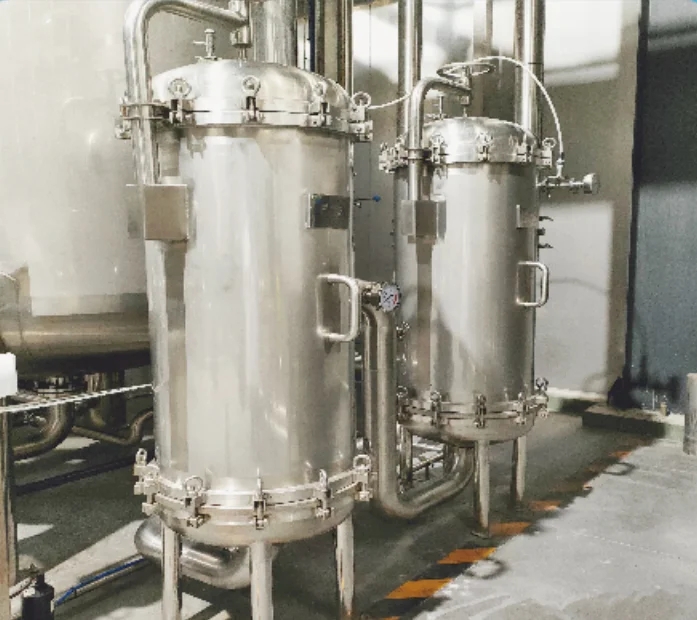
The Shift Toward Intelligent Filtration Systems
One of the most significant trends in industrial filtration is the integration of smart monitoring and automation. Traditional filtration systems relied heavily on manual inspection and scheduled maintenance. However, with the rise of Industry 4.0, filtration has become data-driven.
Modern systems now incorporate real-time pressure monitoring, flow rate tracking, and automated backwashing mechanisms. These features allow operators to detect clogging or efficiency loss early, reducing downtime and improving system lifespan. Intelligent filtration is particularly important in beverage production, where consistency and hygiene are critical.
For example, advanced beverage processing lines now integrate filtration directly into the production ecosystem, ensuring that water and raw materials meet strict purity requirements before entering mixing or filling stages. This reduces variability and enhances product stability across batches.
High-Precision Membrane and Multi-Stage Filtration
Another key development is the increasing adoption of multi-stage filtration systems. Instead of relying on a single filtration method, modern industrial setups combine coarse filtration, fine filtration, and membrane-based purification.
Membrane technologies such as ultrafiltration and microfiltration are widely used to remove bacteria, suspended solids, and colloidal particles. These systems provide higher accuracy and are capable of maintaining stable output quality even under fluctuating raw material conditions.
Multi-stage filtration is especially relevant in beverage production, where water quality directly influences taste, safety, and shelf life. By combining multiple filtration layers, manufacturers achieve a more controlled and predictable production environment.
Energy Efficiency and Sustainable Filtration Design
Sustainability has become a major focus in industrial equipment design, and filtration systems are no exception. New-generation precision filters are designed to minimize energy consumption while maintaining high throughput performance.
Engineers are increasingly focusing on reducing pressure loss across filter media and optimizing flow dynamics. This results in lower operational energy requirements and extended equipment life cycles. Additionally, recyclable filter materials and modular system designs are gaining popularity, allowing for easier maintenance and reduced environmental impact.
Sustainable filtration is particularly important in large-scale beverage production facilities, where water usage and energy consumption are significant operational factors.
Integration with Beverage Production and Packaging Systems
In beverage manufacturing, filtration is not an isolated process. It is deeply integrated with water treatment, bottle production, filling, labeling, and packaging systems. This integration ensures that every stage of production maintains consistent quality standards.
Companies like Pengxiang Huixing have played a significant role in advancing this integrated approach. As a comprehensive manufacturer of beverage packaging machinery and systems, the company provides solutions that cover water treatment, beverage pre-processing systems, PET blow molding equipment, blow-fill-cap production lines, labeling systems, conveying systems, and secondary packaging equipment.
Their systems are designed to connect the entire production chain—from procurement and production to packaging, warehousing, logistics, and distribution. This end-to-end integration helps manufacturers reduce inefficiencies and maintain consistent product quality.
A key component of this ecosystem is precision filtration, which ensures that all upstream processes operate with clean and stable input materials.
For a deeper look at advanced filtration solutions used in industrial beverage systems, you can refer to this resource: Precision Filter
Engineering Smart Factories Through System Integration
Beyond individual machines and processes, the broader trend in industrial filtration is the move toward fully integrated smart factories. In such environments, filtration systems are connected to centralized control platforms that manage production data, maintenance schedules, and quality control parameters.
Pengxiang Huixing has focused on intelligent factory planning and high-end system design for liquid beverage packaging machinery. By combining engineering expertise with automation technologies, the company helps clients build production environments that are efficient, scalable, and adaptable.
Their solutions extend across the full lifecycle of beverage production, including sterilization systems, bottle rinsing systems, filling and sealing equipment, and automated cleaning systems. Precision filtration plays a foundational role in maintaining system hygiene and ensuring equipment longevity.
Global Expansion and Industry Applications
As industrial demand continues to grow globally, precision filtration technology is being adopted across a wide range of markets. Beverage manufacturers in regions such as the Middle East, Southeast Asia, and South Asia are increasingly investing in advanced filtration systems to meet international quality standards.
Pengxiang Huixing’s equipment has been exported to multiple countries and regions, including the United Arab Emirates, Oman, Vietnam, the Philippines, and Malaysia. This global presence reflects the adaptability of modern filtration and beverage production systems in diverse operational environments.
In each market, filtration requirements may vary based on local water quality, regulatory standards, and production scale. Precision filter systems must therefore be flexible and customizable, capable of handling different input conditions while maintaining consistent output quality.
Future Outlook of Precision Filter Technology
Looking ahead, precision filtration is expected to become even more intelligent and automated. Artificial intelligence and machine learning will likely play a greater role in predictive maintenance and system optimization. Filters will increasingly be designed with self-diagnostic capabilities, allowing operators to anticipate performance degradation before it occurs.
Additionally, the continued development of advanced materials will improve filtration efficiency while reducing physical footprint and energy consumption. These innovations will support the growing demand for compact, high-performance production systems in urban manufacturing environments.
As beverage production and industrial processing continue to evolve, precision filter technology will remain a critical foundation for quality assurance and operational efficiency.