


Water filling machines are at the heart of modern bottled water production. When the equipment is running properly, bottles move through rinsing, filling, and capping with consistent speed and accuracy. However, even a well-designed filling line can experience issues caused by water quality, bottle conditions, incorrect machine settings, worn components, or insufficient cleaning.
For beverage manufacturers, identifying the actual cause of a problem is more important than simply restarting the machine. A small filling deviation can quickly develop into product loss, unstable production, contamination risks, or unplanned downtime. This guide explains several common problems with water filling machines and practical ways to troubleshoot them.
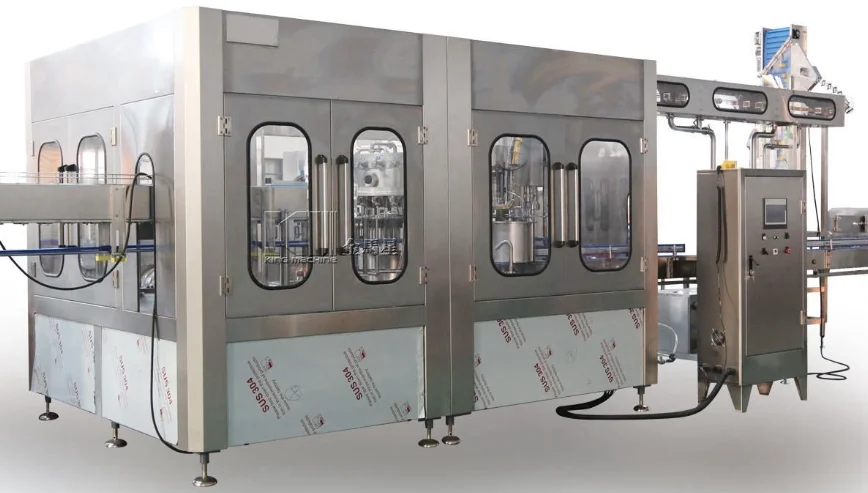
1. Inconsistent Filling Levels
One of the most common problems is inconsistent water levels between bottles. Some bottles may be overfilled, while others contain noticeably less water.
Several factors can cause this issue:
-
Unstable water supply pressure
-
Incorrect filling valve adjustment
-
Blocked or partially blocked filling valves
-
Air entering the product pipeline
-
Variations in bottle height or bottle neck dimensions
-
Incorrect filling parameters
Start by checking the water supply pressure and confirming that it remains stable during operation. If pressure fluctuates significantly, the filling valves may not receive consistent flow.
Next, inspect the filling valves. Mineral deposits, particles, or residue can affect the valve's opening and closing performance. The filling system should also be checked for trapped air, particularly after maintenance or when the product pipeline has recently been emptied.
Bottle quality should not be overlooked. If bottles have inconsistent neck dimensions or deformation, the filling head may not establish a reliable seal, which can affect filling accuracy.
For plants looking to select an appropriate system, a properly configured water filling machine should be matched to the bottle specification, production capacity, water characteristics, and required filling accuracy rather than selected only according to nominal output.
2. Filling Speed Is Lower Than Expected
A filling machine may operate normally but fail to reach its expected production capacity. Before adjusting the machine to run faster, identify where the bottleneck is located.
Check the following points:
-
Water supply capacity and pressure
-
Number of filling valves in operation
-
Filling valve flow rate
-
Conveyor speed
-
Bottle feeding stability
-
Upstream rinsing and downstream capping performance
-
PLC or control system settings
If the water supply cannot provide enough flow, increasing the conveyor speed will not solve the problem. Instead, bottles may arrive at the filling section before sufficient product is available.
Another common cause is a partially blocked filter or pipeline. Filters should be inspected according to the maintenance schedule, especially when the incoming water contains suspended particles or when pretreatment equipment is not operating correctly.
The entire production line should be evaluated rather than focusing only on the filling section. A bottleneck in bottle blowing, conveying, capping, labeling, or packaging can make the filling machine appear to be underperforming.
3. Water Leakage Around the Filling Valves
Water leakage can create sanitation problems and make the production area difficult to maintain. Leakage usually indicates a mechanical or sealing problem that should not be ignored.
Common causes include:
-
Damaged seals or O-rings
-
Loose connections
-
Worn valve components
-
Incorrect valve installation
-
Excessive water pressure
-
Foreign matter trapped inside the valve
First, stop the machine according to the plant's safety procedure and inspect the affected valve. Check seals and connection points for visible damage. If one valve leaks while the others operate normally, the problem is more likely to be local rather than related to the main water supply.
If multiple filling valves begin leaking at the same time, check system pressure and common piping components. Replacing individual seals without checking the underlying pressure or installation problem may only provide a temporary solution.
Using food-grade materials and appropriate sealing components is essential for equipment that handles drinking water.
4. Bottles Are Not Properly Positioned
Correct bottle positioning is essential for stable filling. If bottles enter the filling station at an angle or fail to align with the filling heads, the result may be splashing, incomplete filling, or production interruptions.
Possible causes include:
-
Incorrect conveyor guide adjustment
-
Unstable bottle spacing
-
Damaged bottles
-
Incorrect star wheel or gripper adjustment
-
Excessive conveyor speed
-
Bottle neck dimensions outside the expected range
Inspect the bottle transfer section first. Guide rails should hold bottles securely without creating excessive friction. If the rails are too loose, bottles can move laterally. If they are too tight, bottles may become deformed or stop moving smoothly.
Bottle handling components should also be checked for wear. In high-output production environments, continuous mechanical movement can gradually change the accuracy of transfer components.
5. Excessive Foaming or Water Splashing
Although water is less likely to foam than carbonated beverages, excessive turbulence can still cause splashing during filling. This may lead to wet bottles, inaccurate filling levels, and contamination concerns around the filling area.
Filling speed, nozzle position, bottle design, and water temperature can all influence the filling process.
If splashing occurs mainly at higher production speeds, reduce the filling speed temporarily and observe whether the problem disappears. If it does, the filling parameters may need to be optimized rather than simply increasing machine speed.
The filling valve should also be inspected for abnormal flow patterns. A damaged valve or partially obstructed flow path may create turbulence.
6. Filling Valves Do Not Open or Close Correctly
A filling valve that responds slowly or fails to close completely can cause significant production problems. The machine may produce underfilled or overfilled bottles, while water may continue dripping after the filling cycle.
Check the valve's mechanical components, pneumatic system, electrical signals, and control settings.
For pneumatic filling equipment, verify that the air pressure is within the specified operating range and that the air supply is clean and dry. For electrically controlled components, check sensors, solenoid valves, wiring, and control signals.
Do not immediately replace a valve without checking the control system. A faulty sensor or solenoid valve can produce symptoms that look like a mechanical valve failure.
7. Frequent Machine Stops
Frequent automatic stops are frustrating, but the alarm history usually provides useful information. Operators should record the exact alarm message, location, and operating condition rather than simply resetting the machine.
For example, if the machine repeatedly stops because a bottle is not detected, inspect the corresponding photoelectric sensor and bottle positioning. If the problem occurs after several hours of operation, heat, vibration, contamination, or component wear may be involved.
A practical troubleshooting record should include:
-
Date and time of the fault
-
Machine operating speed
-
Product being processed
-
Alarm message
-
Affected station
-
Corrective action
-
Whether the problem returned
This information helps maintenance teams identify recurring faults instead of treating every stoppage as an isolated event.
8. Hygiene and Cleaning Problems
Water filling equipment must be maintained under strict hygienic conditions. Residual water, microorganisms, mineral deposits, and product-contact contamination can affect both equipment performance and product quality.
Regular cleaning should cover product pipelines, filling valves, tanks, filters, and other product-contact areas. Depending on the production process, an automated Cleaning-in-Place system can improve cleaning consistency and reduce dependence on manual procedures.
Cleaning is not simply a sanitation task. It can also prevent mechanical problems. Mineral deposits can accumulate inside valves and pipelines, reducing flow and affecting filling accuracy.
For this reason, cleaning schedules should be linked to actual water quality, operating hours, production conditions, and equipment recommendations.
9. A Better Approach to Preventive Maintenance
Most filling machine problems are easier to prevent than repair. A simple preventive maintenance program can significantly reduce unexpected downtime.
Operators can perform daily checks on water pressure, filling performance, leakage, sensors, bottle positioning, and abnormal noise. Weekly or periodic maintenance can include inspection of valves, seals, filters, pneumatic components, conveyors, and electrical connections.
Critical components should have replacement intervals based on actual operating conditions. Keeping commonly used seals and other wear parts available can also reduce downtime when maintenance is required.
More importantly, operators should be trained to distinguish between process-related problems and equipment-related problems. For example, poor filling accuracy may originate from unstable water treatment rather than the filling machine itself.
Integrating Filling Equipment into a Complete Production Line
A water filling machine does not operate independently. Its performance depends on water treatment, bottle supply, rinsing, filling, capping, conveying, labeling, and secondary packaging.
This is why troubleshooting should consider the complete production process. If the incoming water quality is unstable, the filling section may experience filter blockage or valve contamination. If bottle production is inconsistent, filling and capping stations may suffer from positioning problems. If the conveyor system is poorly synchronized, even a properly adjusted filling machine may experience frequent stops.
Pengxiang Huixing provides integrated beverage production and packaging solutions covering water treatment, beverage pretreatment systems, PET blowing equipment, filling and capping lines, labeling systems, conveying systems, and secondary packaging equipment. The company also develops solutions for intelligent workshops and smart factories, helping customers connect production, packaging, storage, logistics, and distribution processes.
With around 20 years of experience in beverage packaging machinery, Pengxiang Huixing combines equipment manufacturing, engineering design, technical development, and service. Its product portfolio includes automatic blow-molding and filling-capping combination machines, gallon bottle production lines, water treatment systems, automatic CIP systems, sterilization equipment, bottled water filling lines, juice and carbonated beverage production lines, and industrial cleaning solutions.
Conclusion
Troubleshooting a water filling machine should begin with the symptoms but end with the root cause. Inconsistent filling levels, leakage, slow production, bottle positioning problems, valve failures, and frequent machine stops can often be traced to a combination of mechanical, electrical, process, and water-quality factors.
A systematic inspection process is more effective than repeated machine resets. By monitoring operating parameters, maintaining filling components, keeping water treatment systems stable, and connecting the filling machine with the rest of the production line, beverage manufacturers can achieve more reliable and consistent operation.
For companies planning a new bottled water plant or upgrading an existing production line, selecting equipment based on actual bottle specifications, water conditions, production capacity, hygiene requirements, and automation needs is equally important. A complete engineering approach can make troubleshooting easier from the beginning and provide a stronger foundation for long-term production efficiency.