


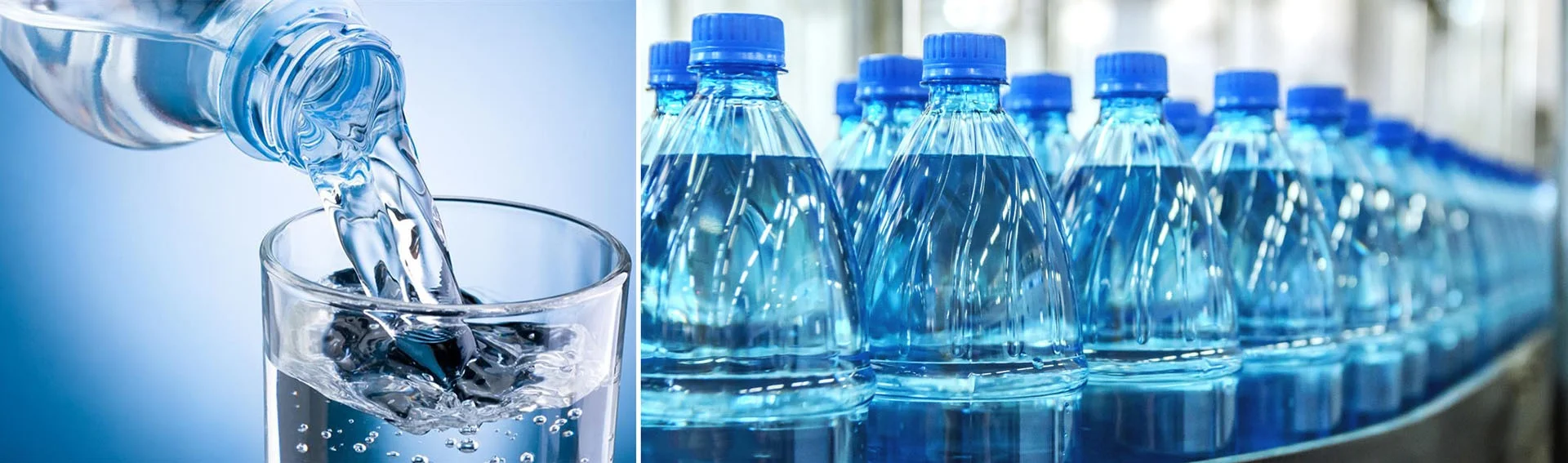
Technological advancements have made many components of filling machines more automated, programmable and reliable. Most models are custom‑built and designed to handle high‑viscosity, adhesive liquids such as coatings and similar fluids. Therefore, when processing and effectively packaging these products, it is necessary to adopt liquid filling machines and other packaging machinery that can resist chemical corrosion. Selecting appropriate liquid filling machines can prevent adverse impacts on product performance, such as coating accumulation during the packaging process.
A complete liquid filling production line consists of a bottle unscrambler, a fully‑automatic liquid filling machine, an automatic corking machine (manual cork feeding required), an automatic screw‑capping machine, a fully‑automatic double‑sided labeling machine for round bottles, and an automatic ink‑jet printer. It applies bottleneck clamping transmission technology to realize fully‑automatic procedures including bottle rinsing, filling and capping. Featuring a high degree of automation, this production line is suitable for the filling of various black‑tea drinks, carbonated beverages, fruit juices and alcoholic beverages. The equipment is equipped with a complete temperature‑control system, reflux system, as well as a full set of automatic cleaning systems and control programs.
During operation, the cleanliness of the liquid filling machine must be guaranteed. The following points should be noted:
- Ensure pipeline cleanliness: All pipelines, especially those in direct or indirect contact with materials, must be kept clean. They shall be scrubbed weekly, flushed with water daily, and sterilized on a regular basis. Material tanks shall be scrubbed and sterilized to ensure no scale or miscellaneous bacteria exist on all material‑contact parts.
- Before each production run, pre‑cool machine tanks and conveying pipelines with water at 0‑1°C. If the filling temperature exceeds 4°C, lower the temperature prior to filling operations.
- Sterilization is an effective method to guarantee the biological stability of bottled beverages during production. Strictly control sterilization time and temperature to achieve sufficient sterilization effect. Meanwhile, avoid excessive sterilization duration or over‑high temperature so as to reduce beverage oxidation. After sterilization, cool down products rapidly so that the temperature shall not exceed 35°C. Low‑temperature filling is required for beverage production. Under normal conditions, beverages are less prone to foaming at low temperatures, which facilitates filling performance.
- Adopt insulated tanks and constant‑temperature filling to maintain stable material temperature throughout the filling cycle, so as to avoid abnormal equipment operation caused by excessive temperature fluctuation.